Budit Blog
News and columns, delivered through data
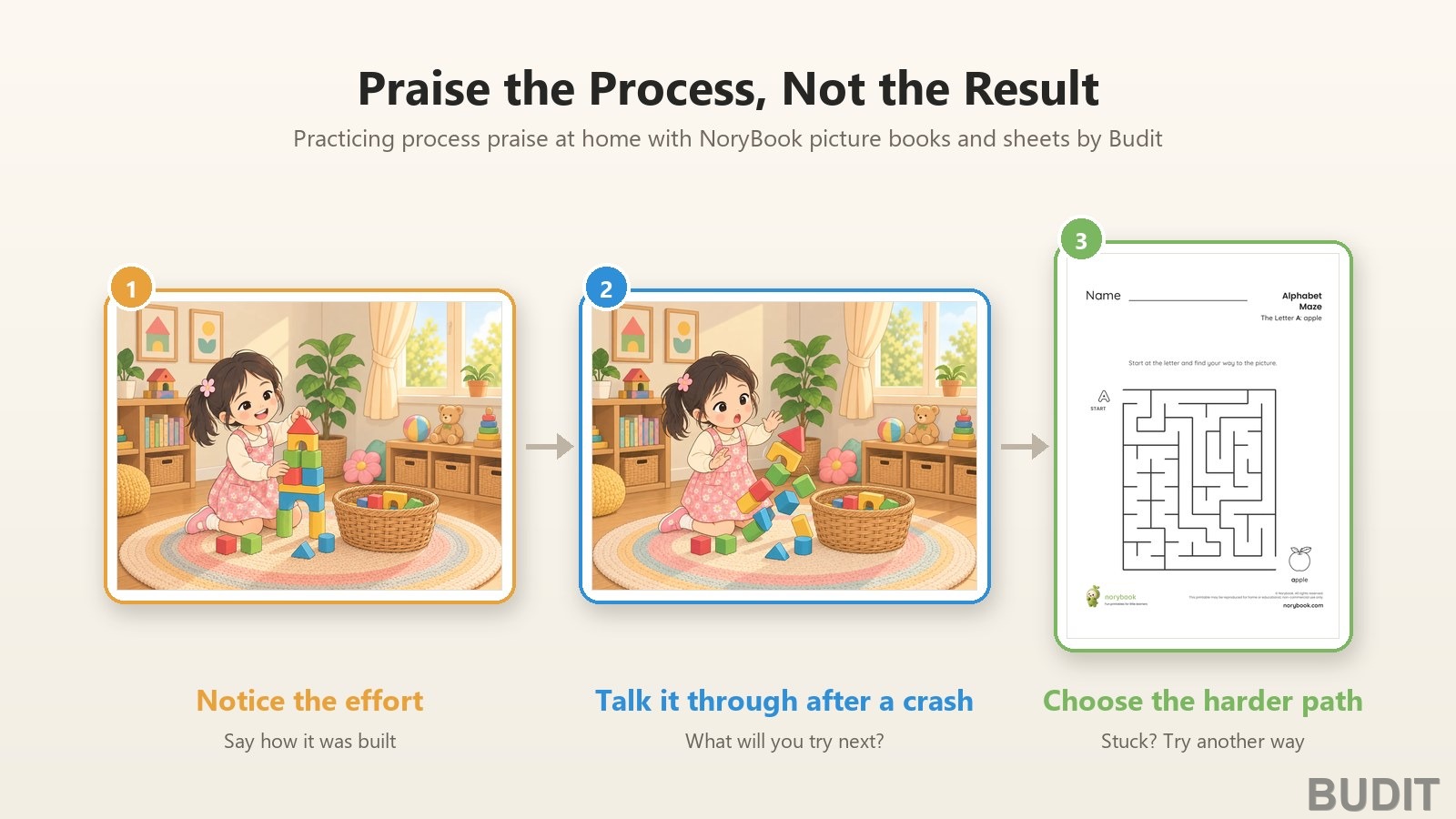
Praising the Process 『You Kept Trying Beats You're So Smart』
Which praise, instead of 『good job』 or 『so smart』, helps a child stay with something hard, from the research. The experiment in which children praised as smart chose easier problems, the difference one phrase like 『a good drawer』 makes, the study in which process praise heard as a toddler led to a love of challenge years later, and how to practice praise at home with picture books and sheets.
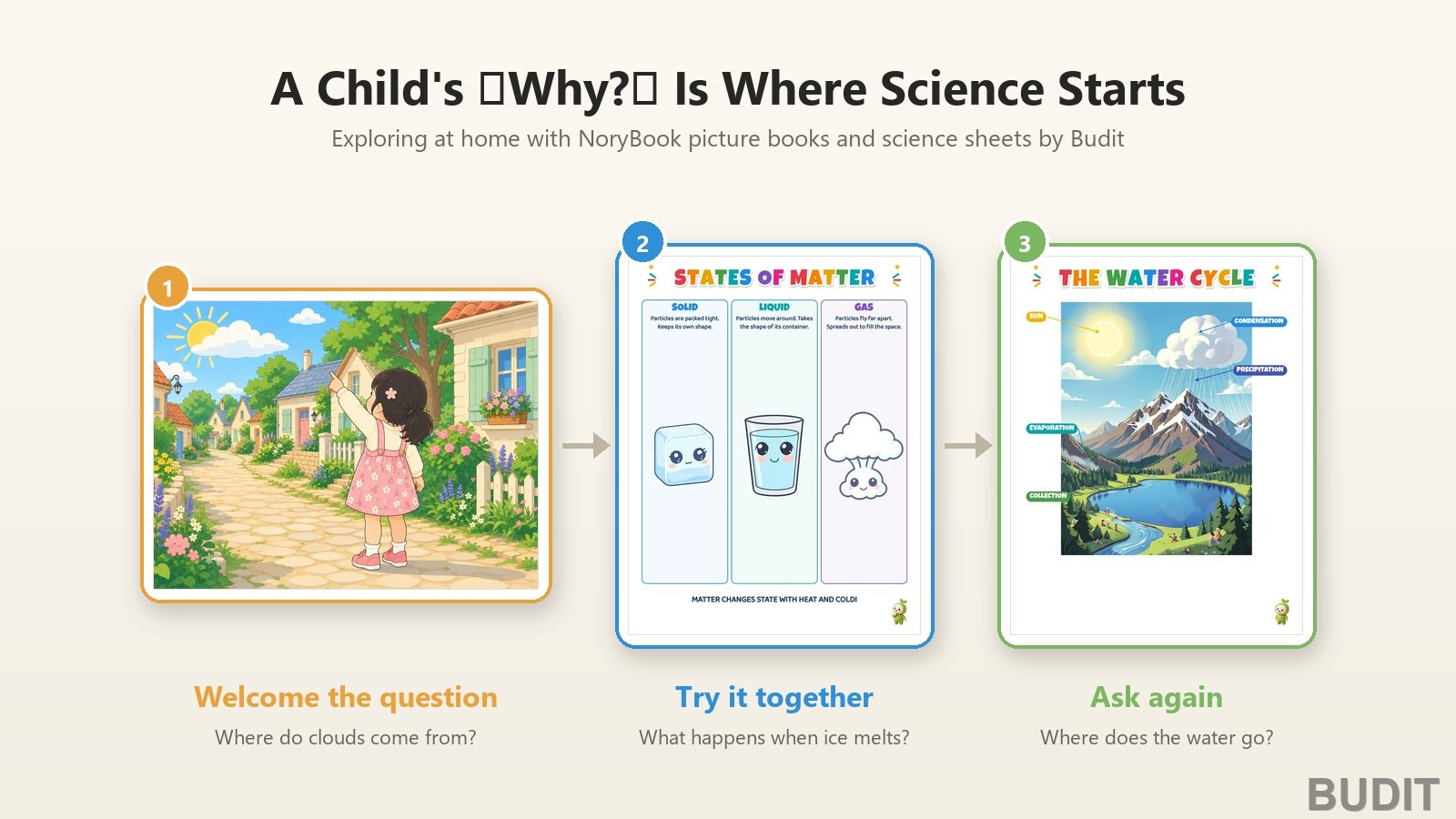
Growing Scientific Curiosity 『How to Answer a Child's Why』
How to answer a child who asks 『why?』 dozens of times a day so that curiosity keeps growing, from the research. The finding that most of a child's questions seek information, children who are satisfied only by explanations, the experiment in which showing the answer first cut exploration, and how to keep questions going at home with picture books and science sheets.
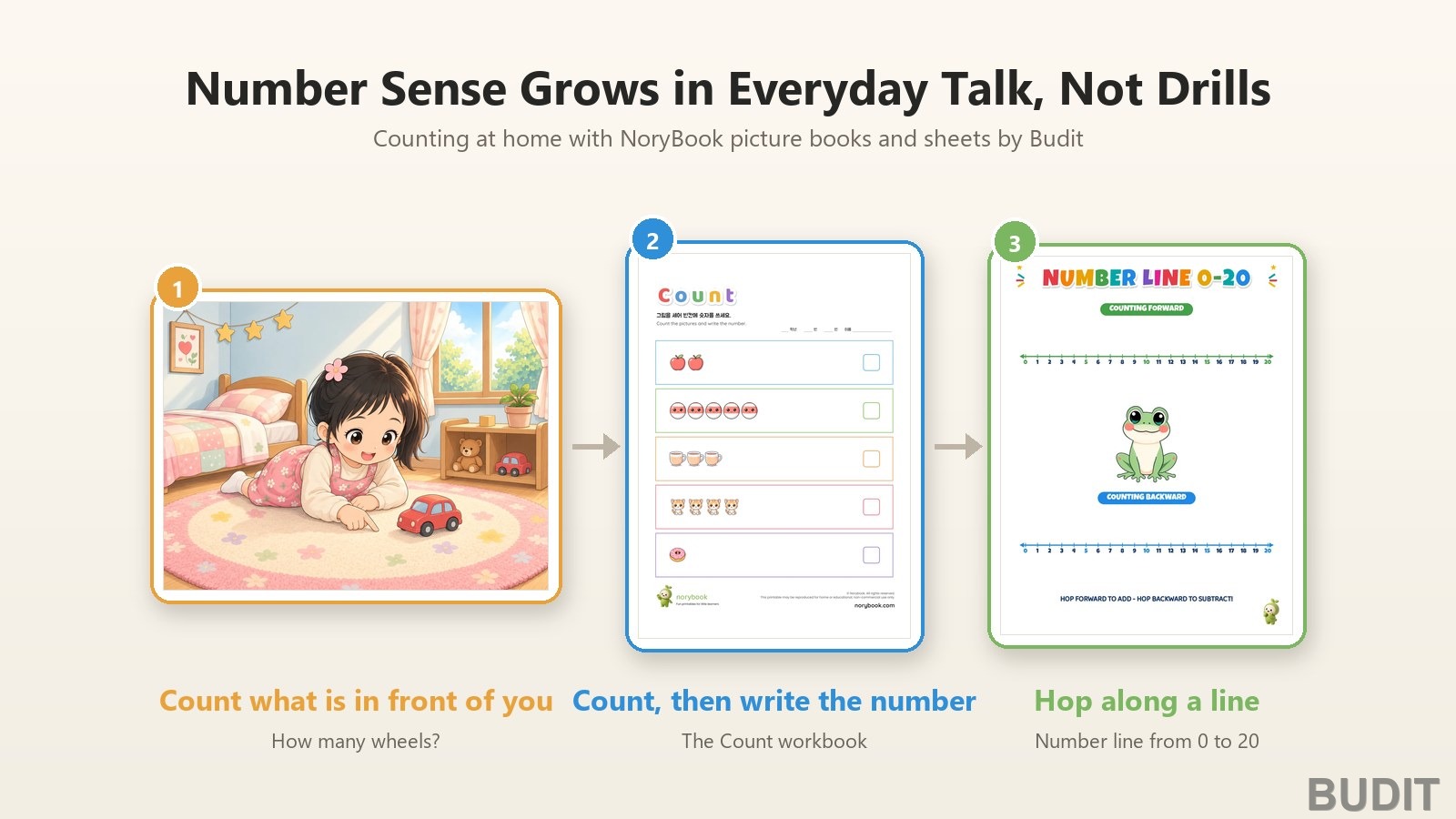
Number Sense in Everyday Life 『Counting What Is in Front of You Beats Drills』
Why a child who recites one to ten still hands over a fistful when asked for 『three』, and the difference between saying numbers and knowing them, from the research. The analysis in which number skills at school entry best predicted later achievement, the gap between homes in number talk, the effect of four sessions of a number board game, and how to do it at home with picture books and counting sheets.
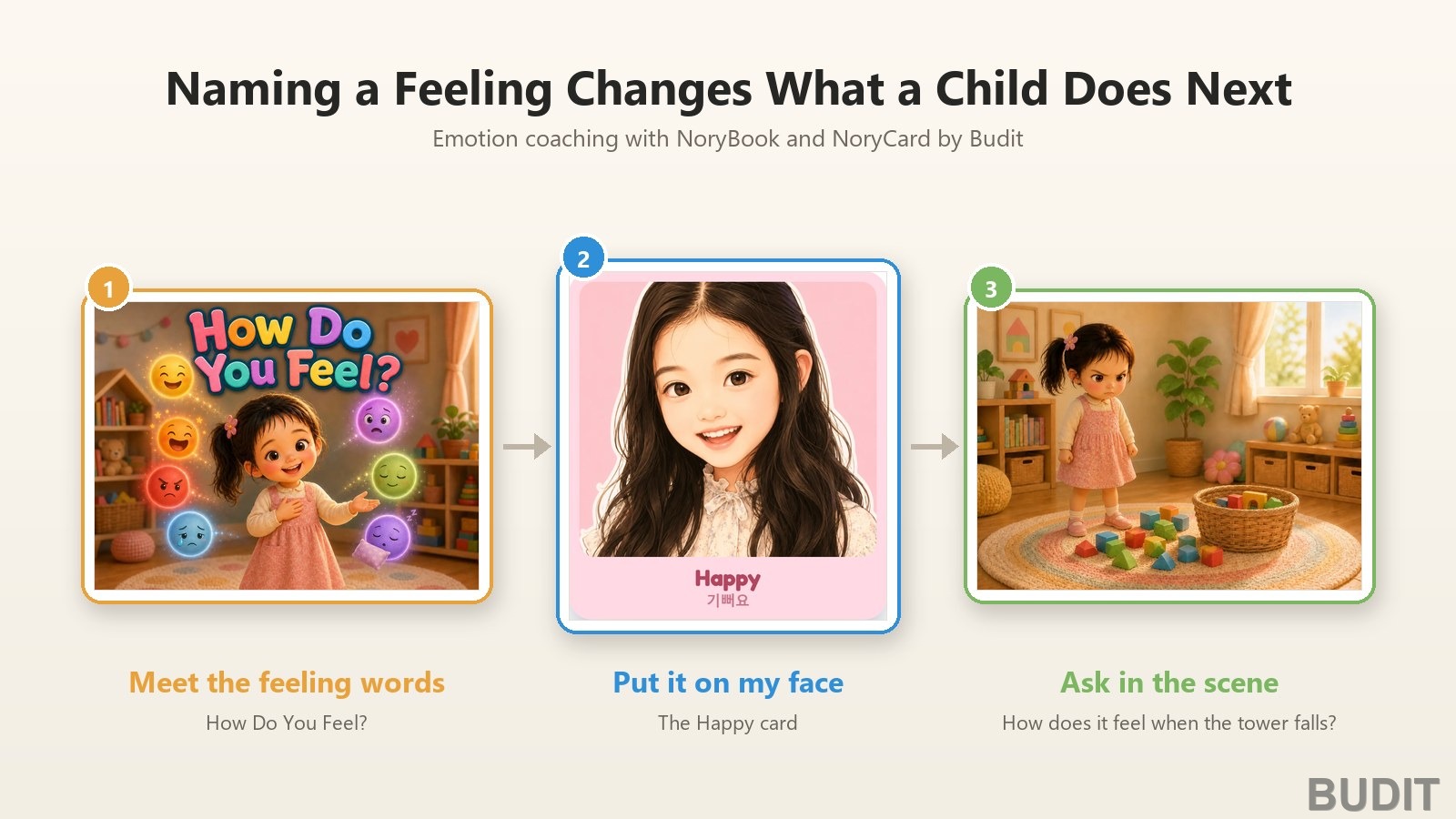
Emotion Coaching and Feeling Words 『A Feeling Gets Smaller Once It Has a Name』
Why 『you're upset』 works on a child in a tantrum when 『stop it』 does not, from the research. The five steps of emotion coaching, what happens in the brain when a feeling is named, the follow-up study in which children who heard more talk about feelings at home read others' minds better, and how to grow feeling words with picture books and emotion cards.
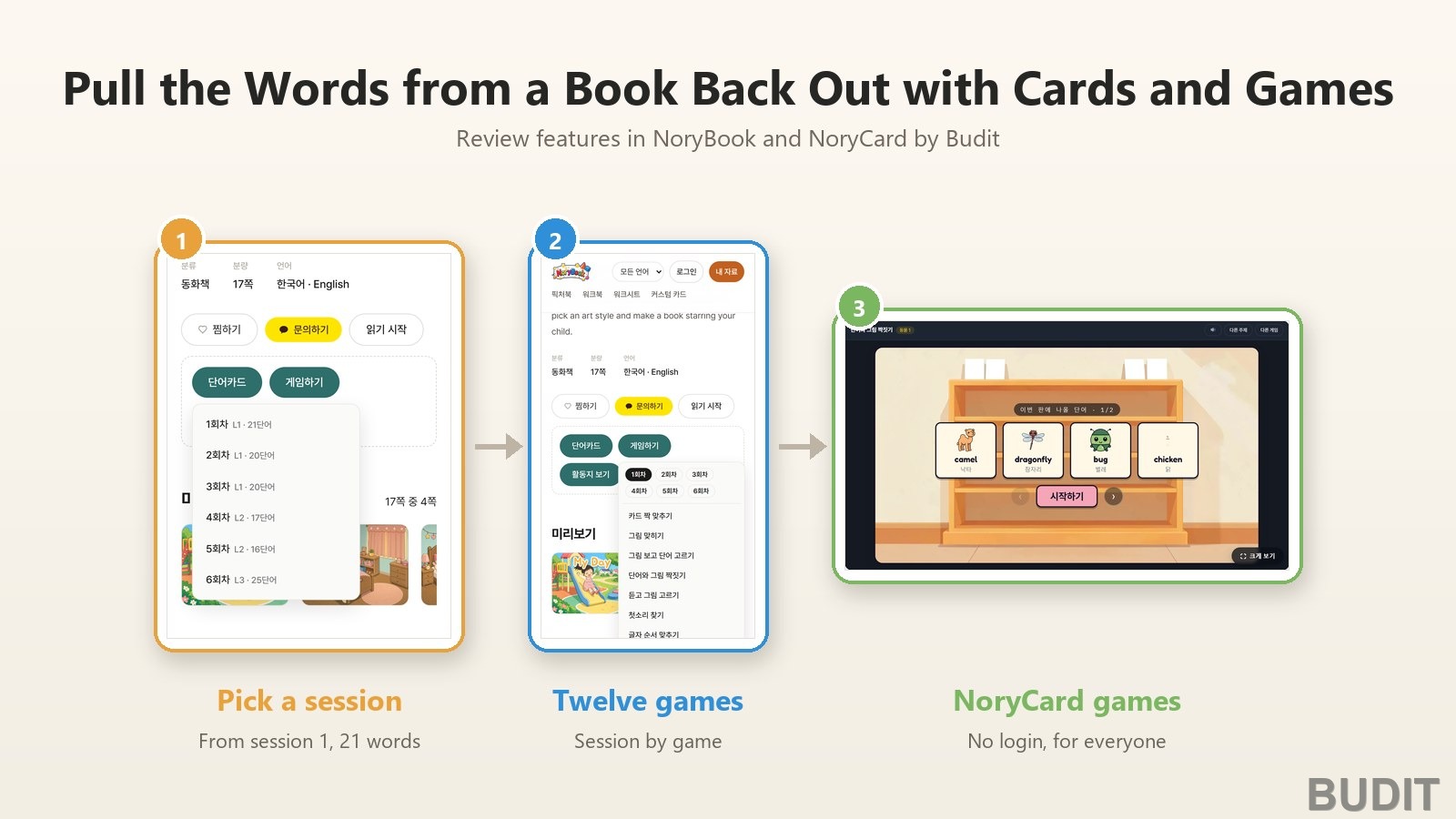
Reviewing with Word Cards and Games 『NoryBook Review Features and NoryCard Games』
After a NoryBook picture book is finished, its words carry on into word card sessions and twelve games. Which accounts they open for, the order of picking a session and a game, the NoryCard games anyone can play without logging in, and a review plan spaced over days.
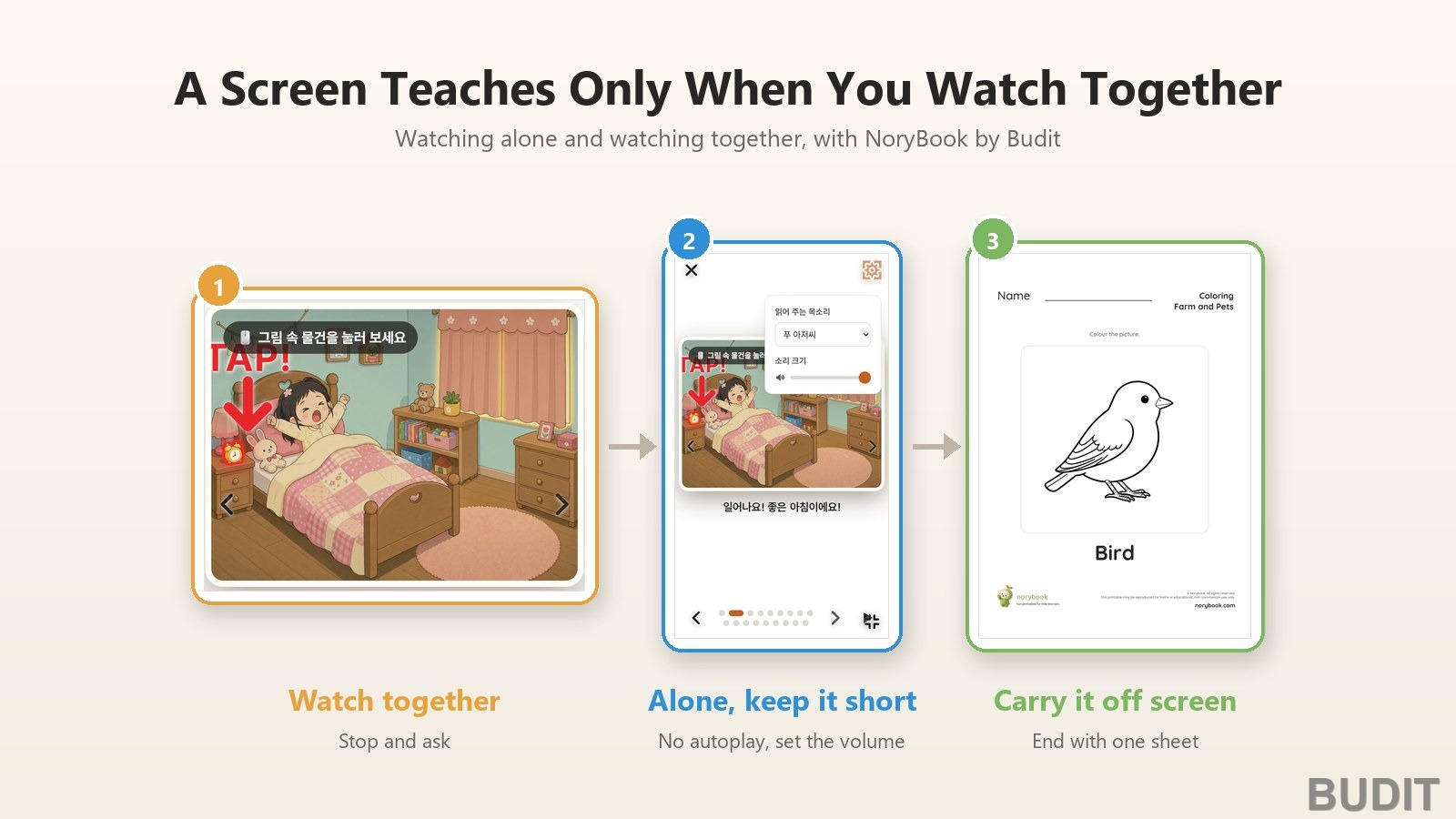
Screen Time, Alone or Together 『The Same Screen Turns on Who Is Sitting Beside the Child』
How a child watches matters more than how many minutes. The pediatric guidelines, why toddlers learn less from video, the experiment where an adult asking questions changed the outcome, and the study where an electronic book cut conversation, with house rules for screens at home.
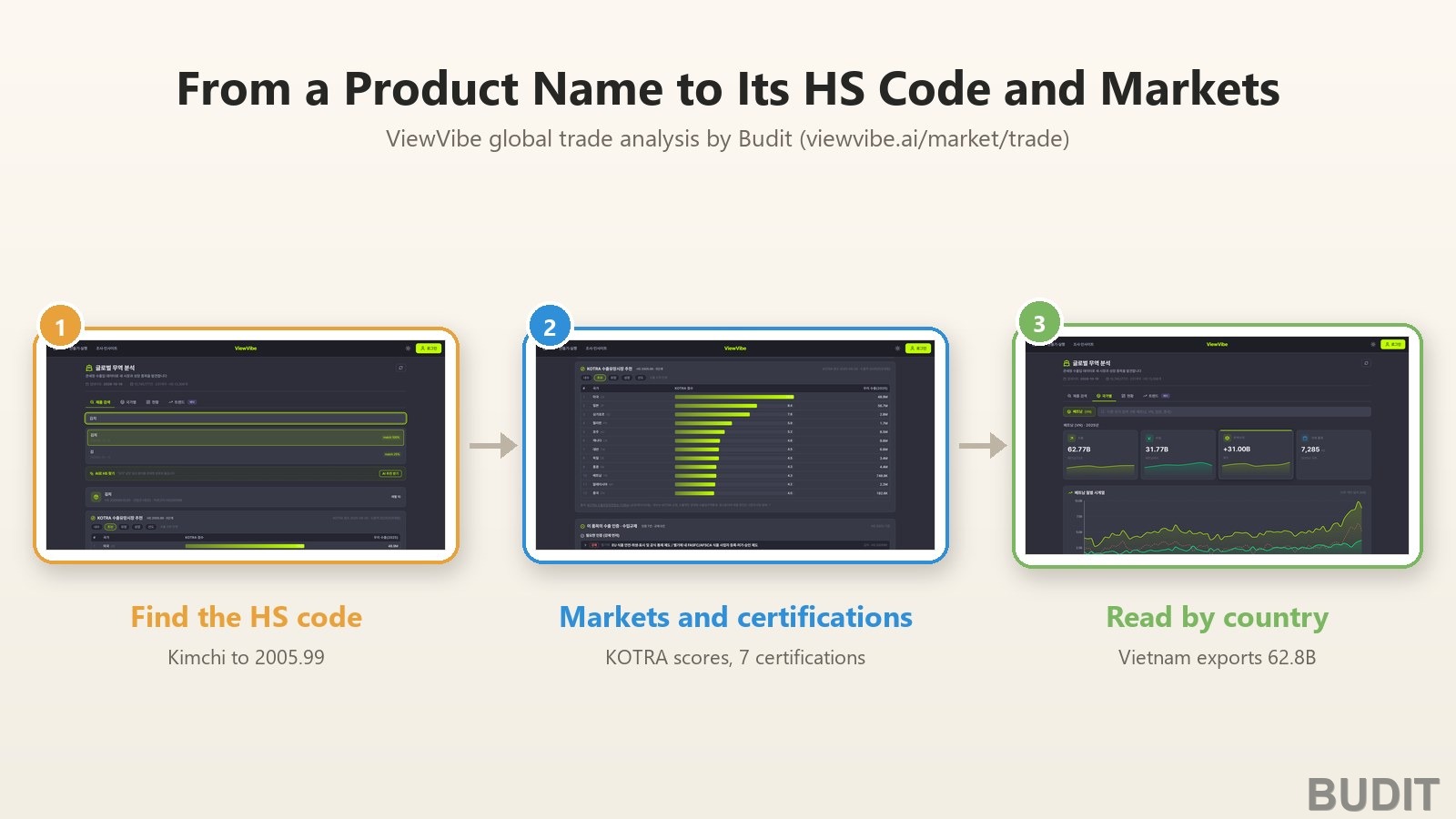
The Trade Explorer and HS Codes 『How to Use ViewVibe Global Trade Analysis』
Search for kimchi and the explorer finds HS code 2005.99, then gathers on one screen where the product sells and how much, which markets KOTRA rates as promising, and which certifications are required. A walkthrough of the product search, AI HS lookup, country and overview tabs of ViewVibe global trade analysis, no login needed.
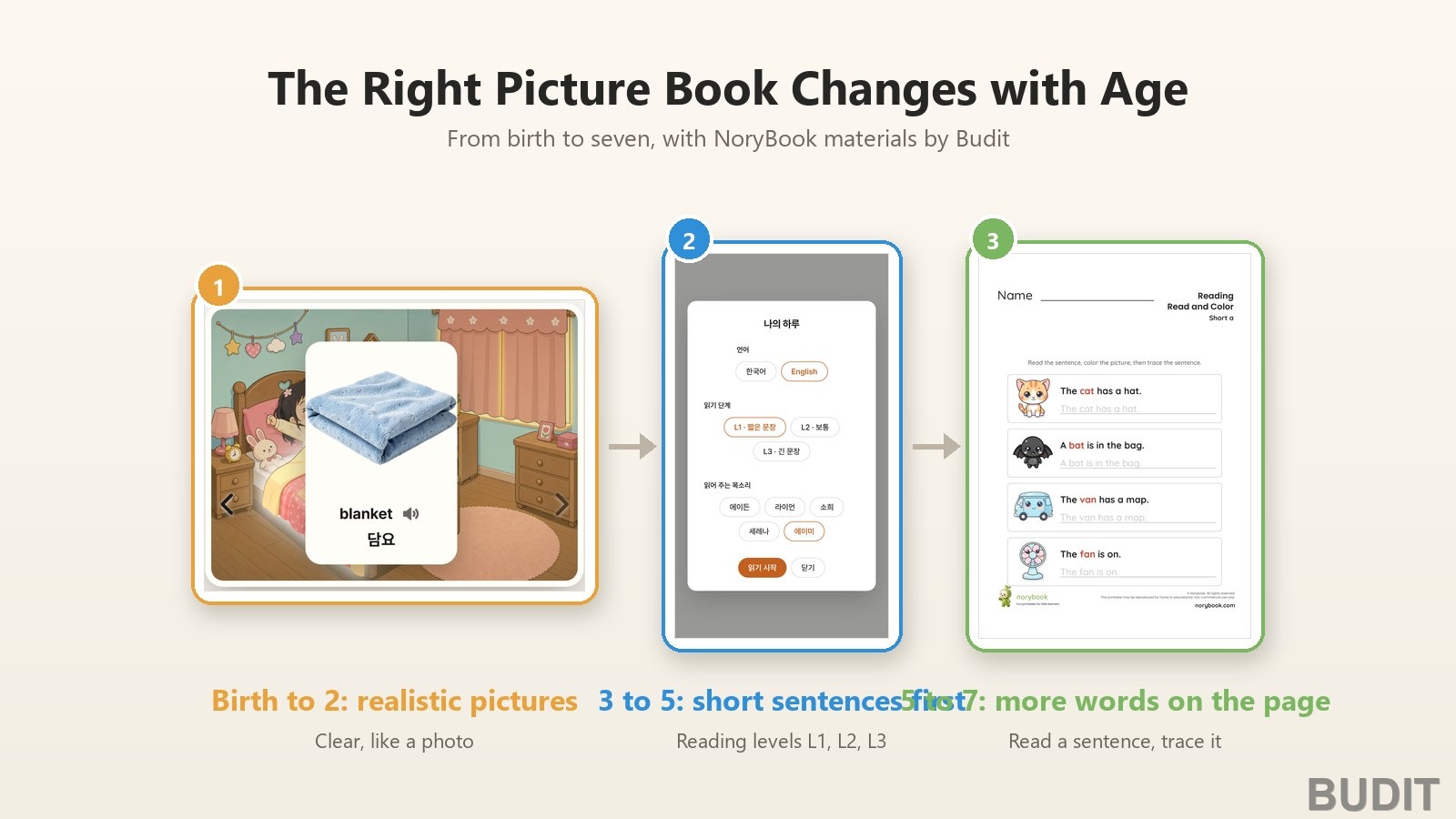
How to Choose Picture Books by Age 『From Faces to Letters』
What a newborn looks at, how a two year old understands pictures, and what a five year old takes from a book, drawn from the research. Which picture books to choose and which to skip from birth to seven, and how to read the same book to fit the age.
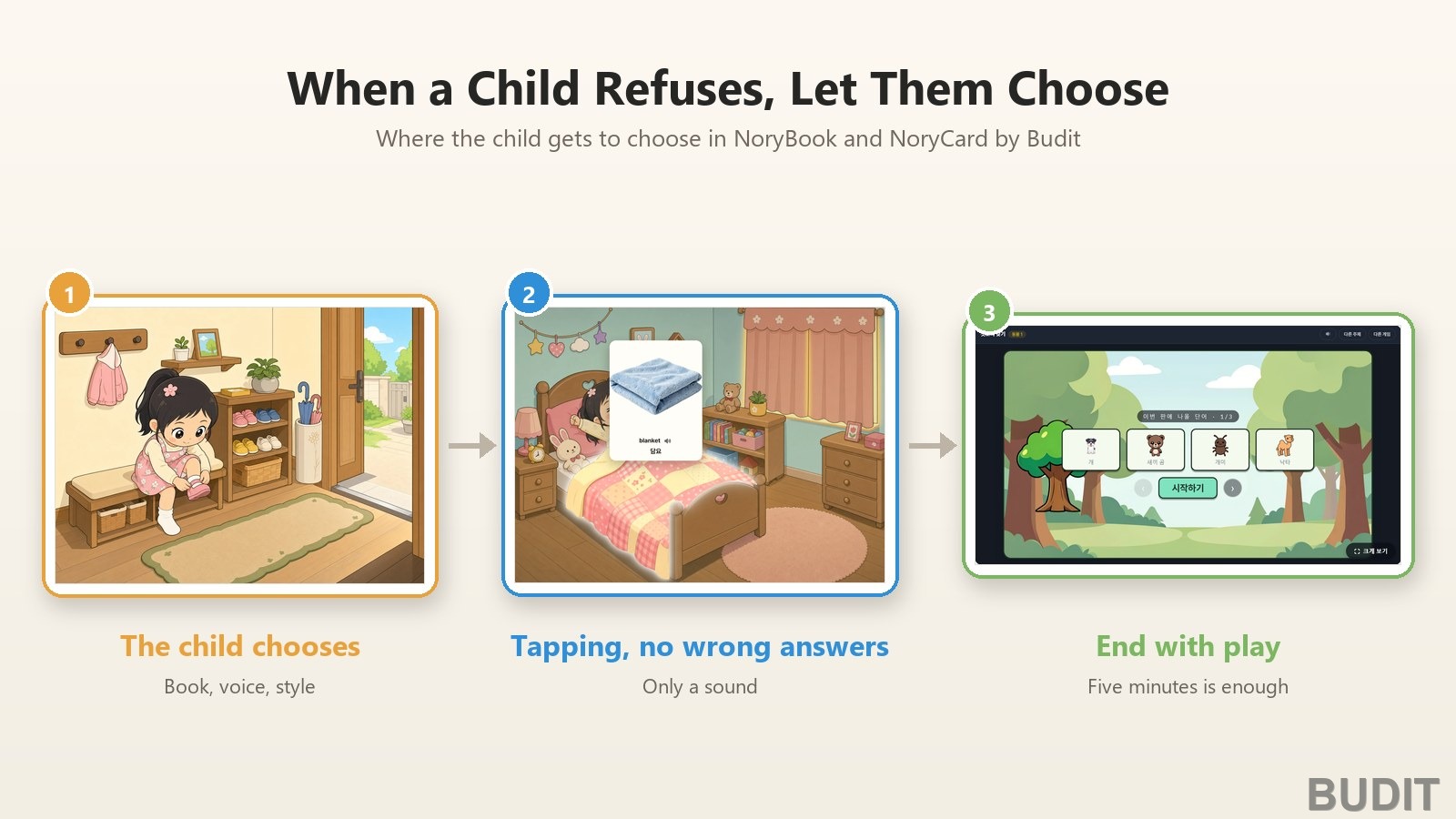
When a Child Refuses English 『Let Them Choose Instead of Pushing』
A child who shakes their head at English is common. The silent period in front of a new language, an experiment where pressure lowered interest, and studies where small choices and personalization raised motivation, put together into a way out. The core: let the child choose, leave nothing to get wrong, and keep it short.
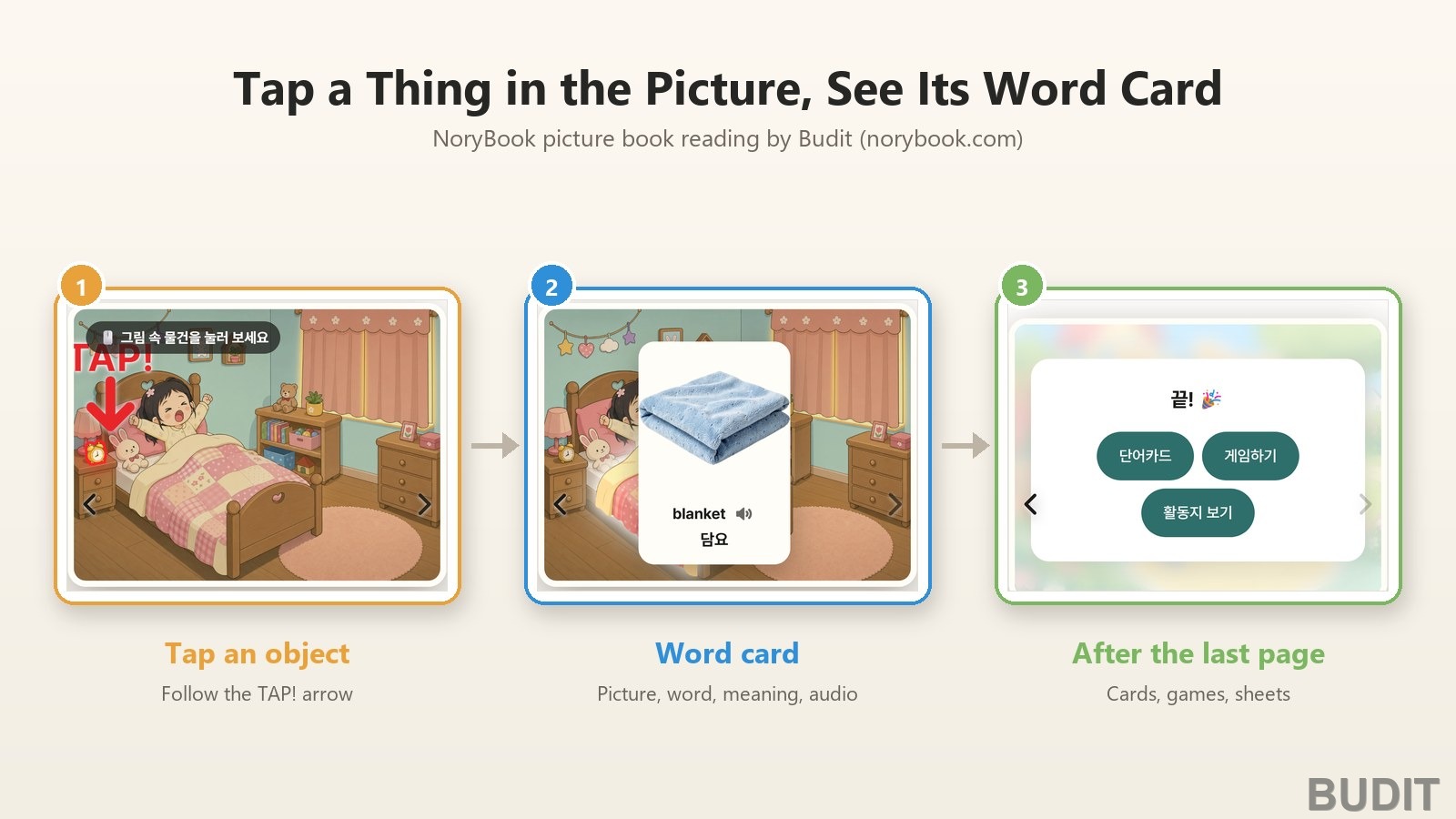
Tap the Picture, Collect the Word Cards 『Reading a NoryBook Picture Book』
While reading a NoryBook picture book, tap the bed, the blanket or the lamp in the picture and a word card appears with a photo, the English word, its meaning and the pronunciation. How to pick a reading voice, tap objects, and carry on to word cards and games after the last page, with screenshots.
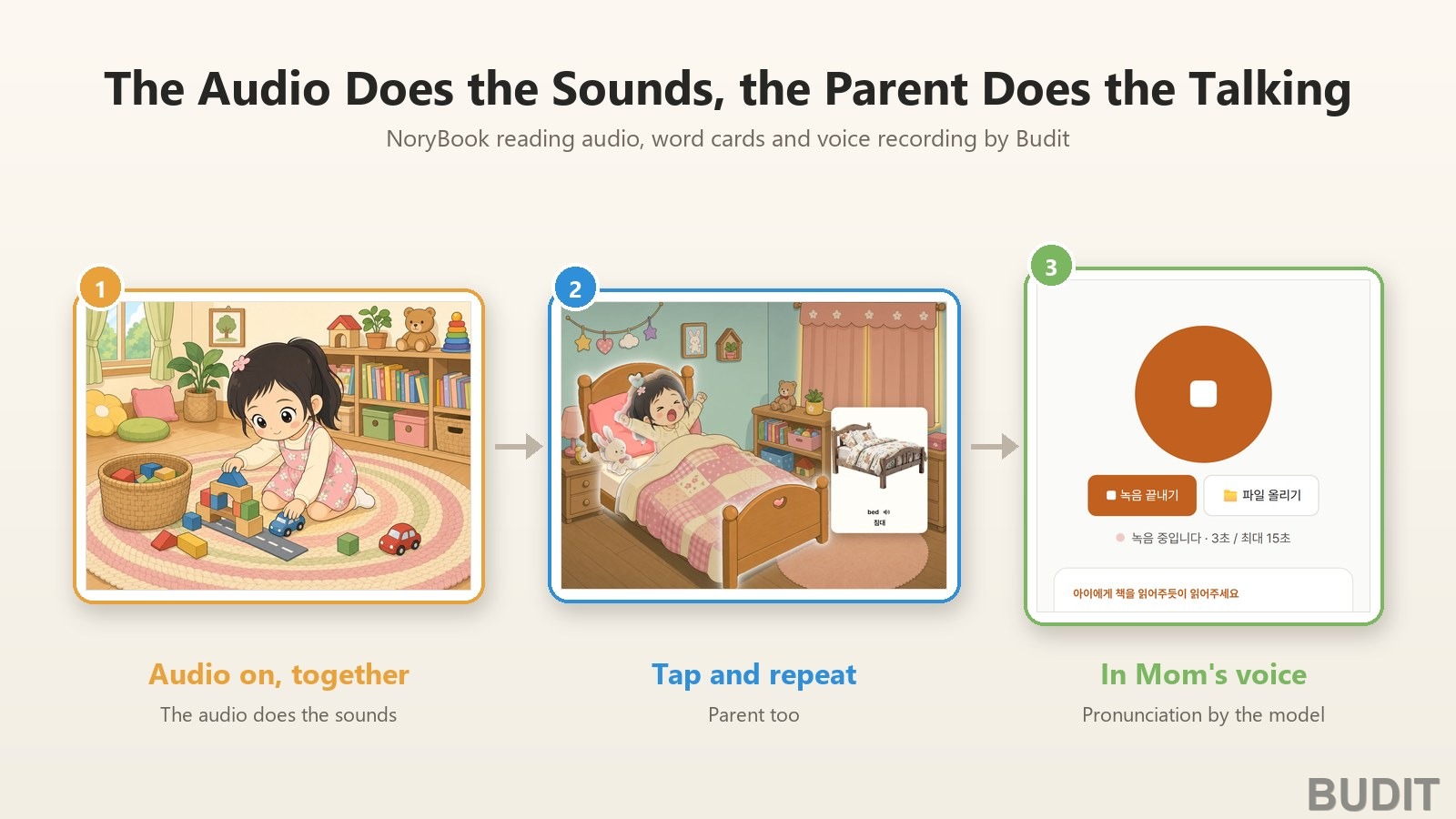
Does a Parent Need Good English 『The Audio Does the Sounds, the Parent Does the Talking』
Does a parent's accent pass to the child? How much do native speaker sounds matter? What is the parent's real job? The research, summarized: leave pronunciation to the audio and the reading voice, and take the role of asking and responding.
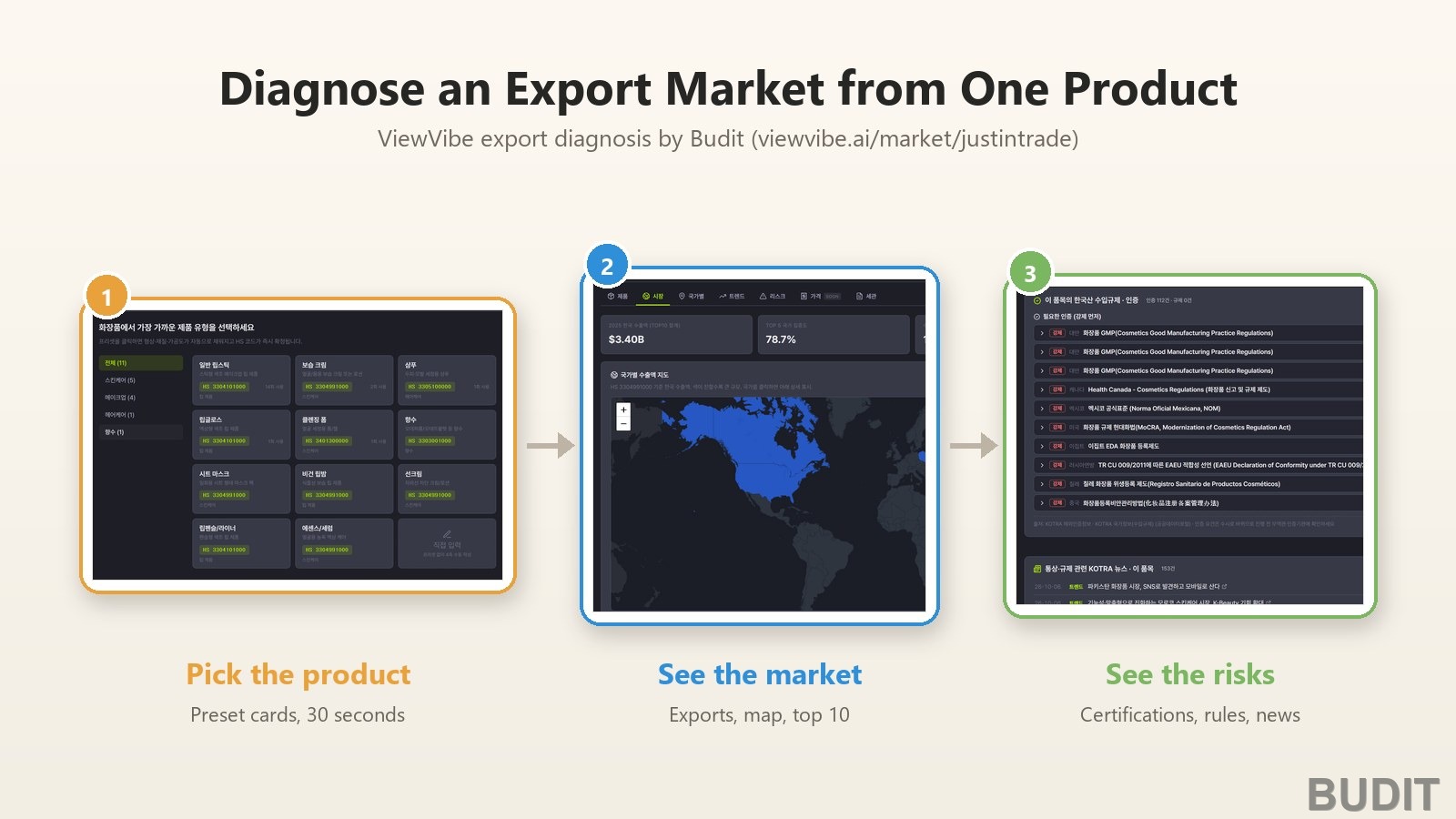
Diagnose an Export Market from One Product 『How to Use ViewVibe Export Diagnosis』
Register one sunscreen and you get which countries buy it and how much, which markets KOTRA recommends, which certifications it needs and what is happening in that market, all on one screen. A full walkthrough of ViewVibe's export diagnosis in fifteen screens, without logging in, with how to read the numbers and where every one of them comes from.
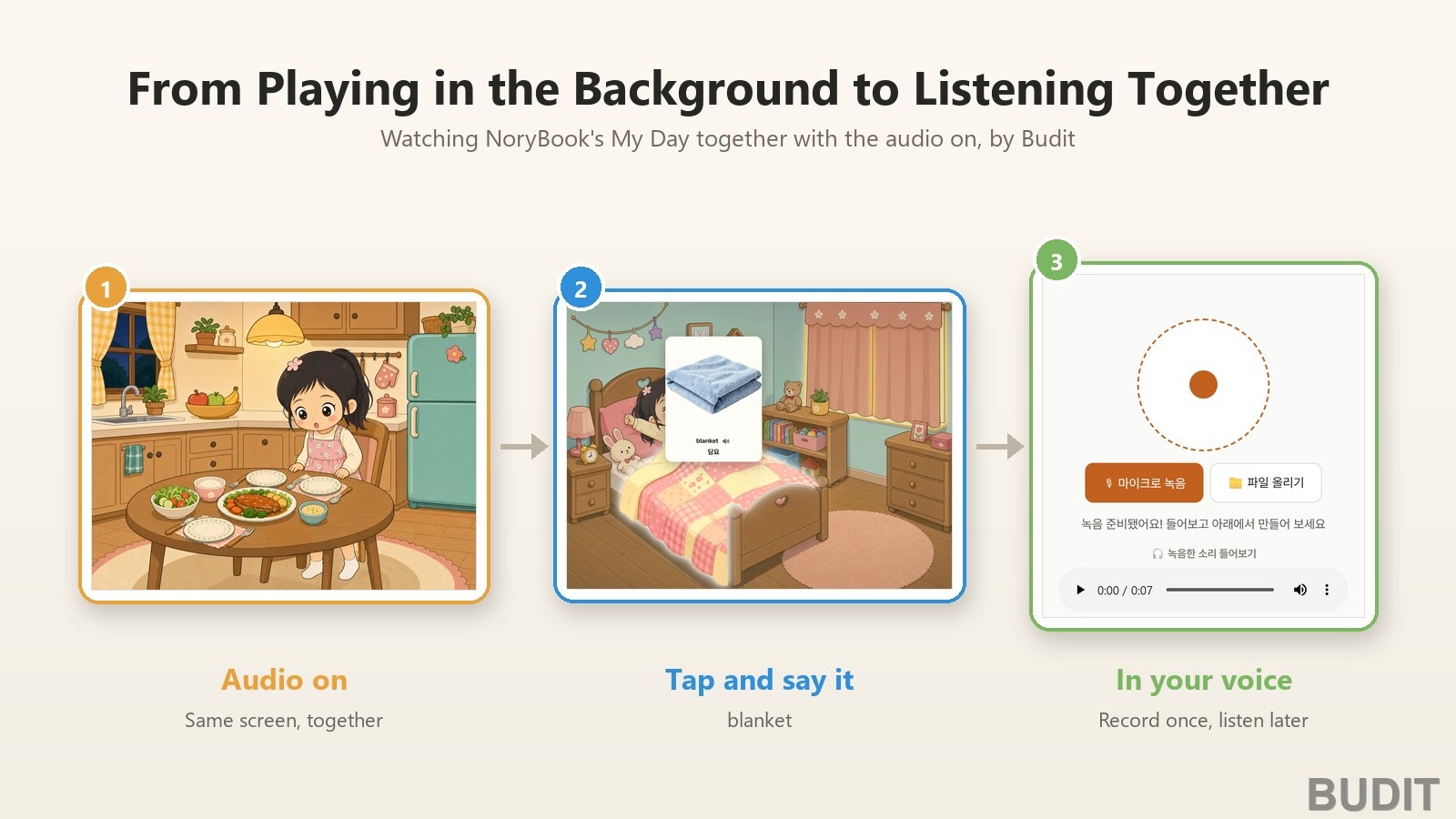
Does Background English Work 『Playing It in the Background vs Listening Together』
Does playing English audio all day teach a child English? The infant foreign language experiment, the difference between speech addressed to a child and speech overheard, and the study where background television cut parent child talk. Plus how to use background listening well.
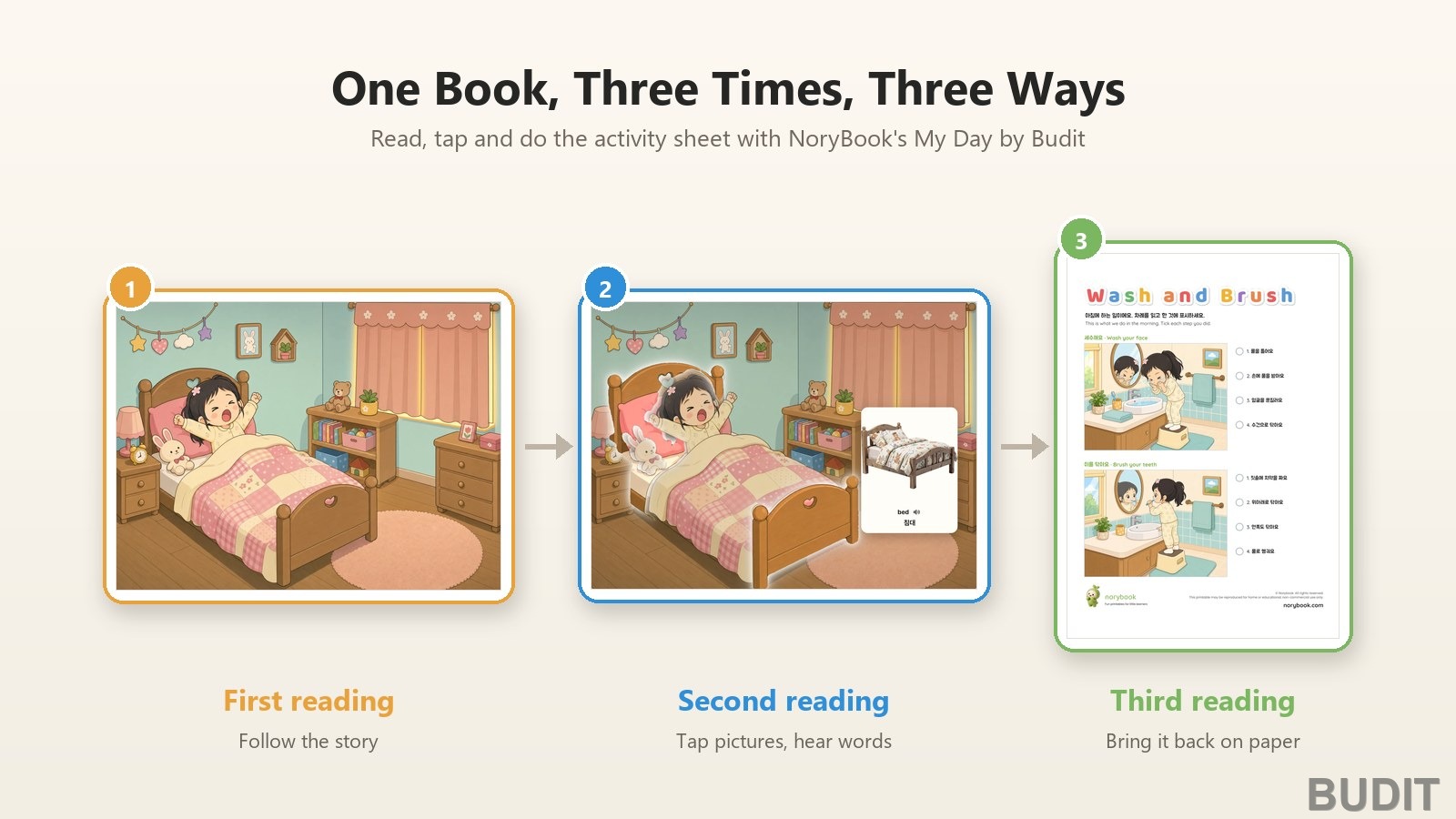
『That Book Again?』 Why Rereading the Same Book Works
There is a reason children pick the same book every night. Children who heard one book repeatedly learned more words than children who heard new books, and here is how to make the third reading different.
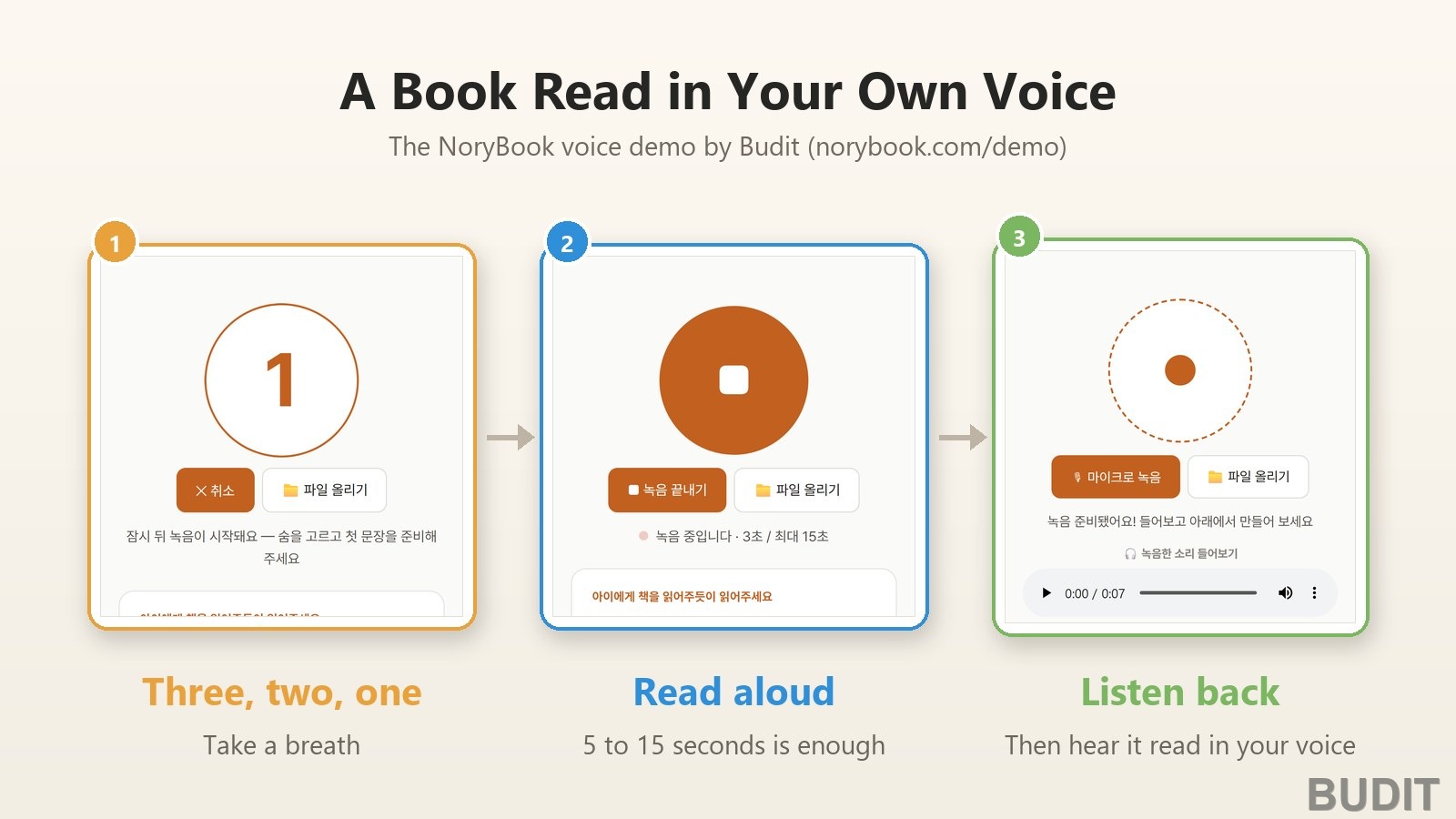
A Book Read in Mom's or Dad's Voice 『The NoryBook Voice Demo』
Record fifteen seconds and hear picture book sentences read in your own voice. How to use the NoryBook voice demo without logging in, how to record well, and how to use it at home.
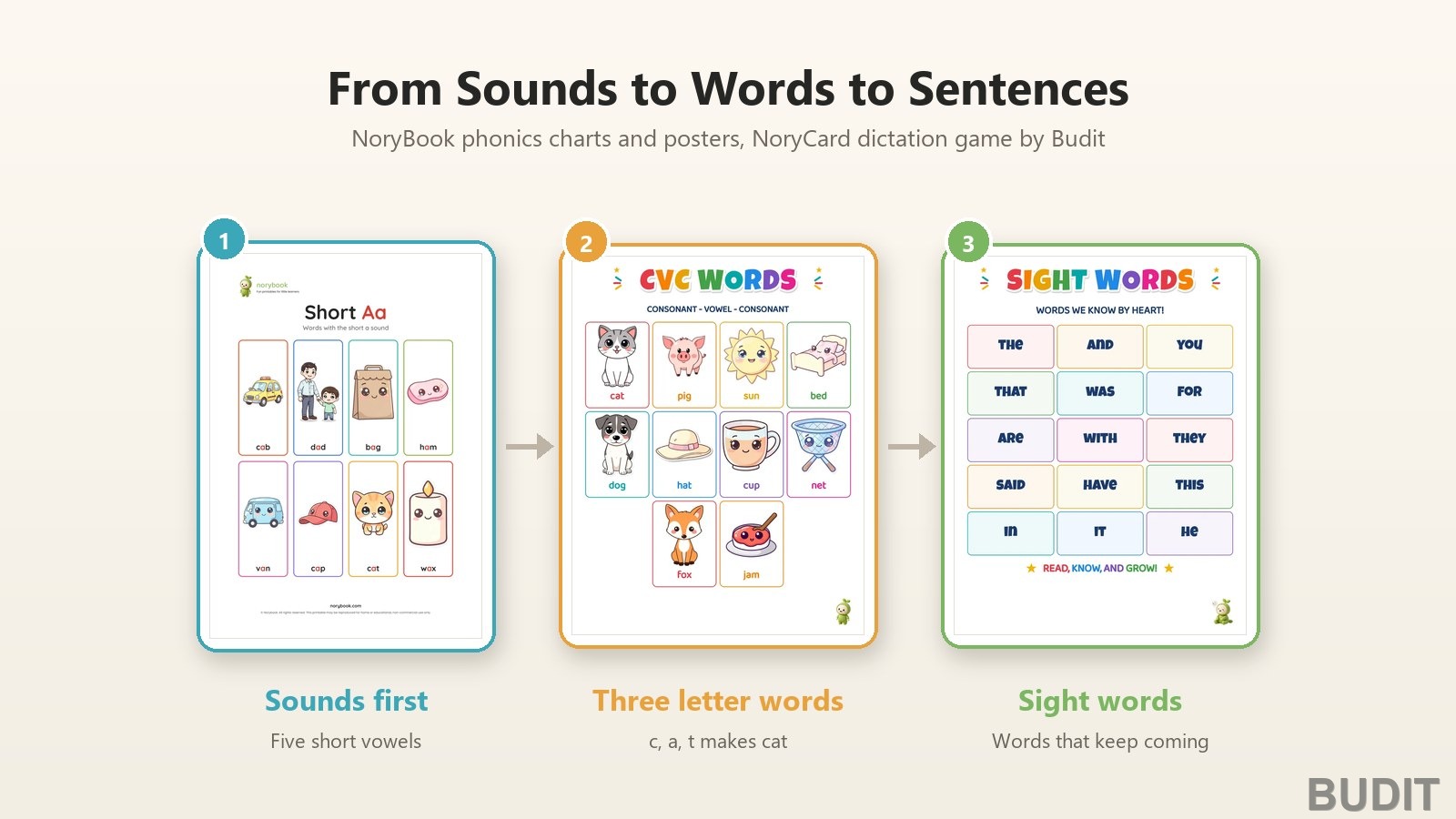
What Order for Phonics 『From Sounds to Words, Then Sight Words』
Teach phonics in alphabet order and words come late. Teach it in sound order and six letters are enough to make words. What research says about systematic phonics, and how to learn sight words without memorizing them whole.
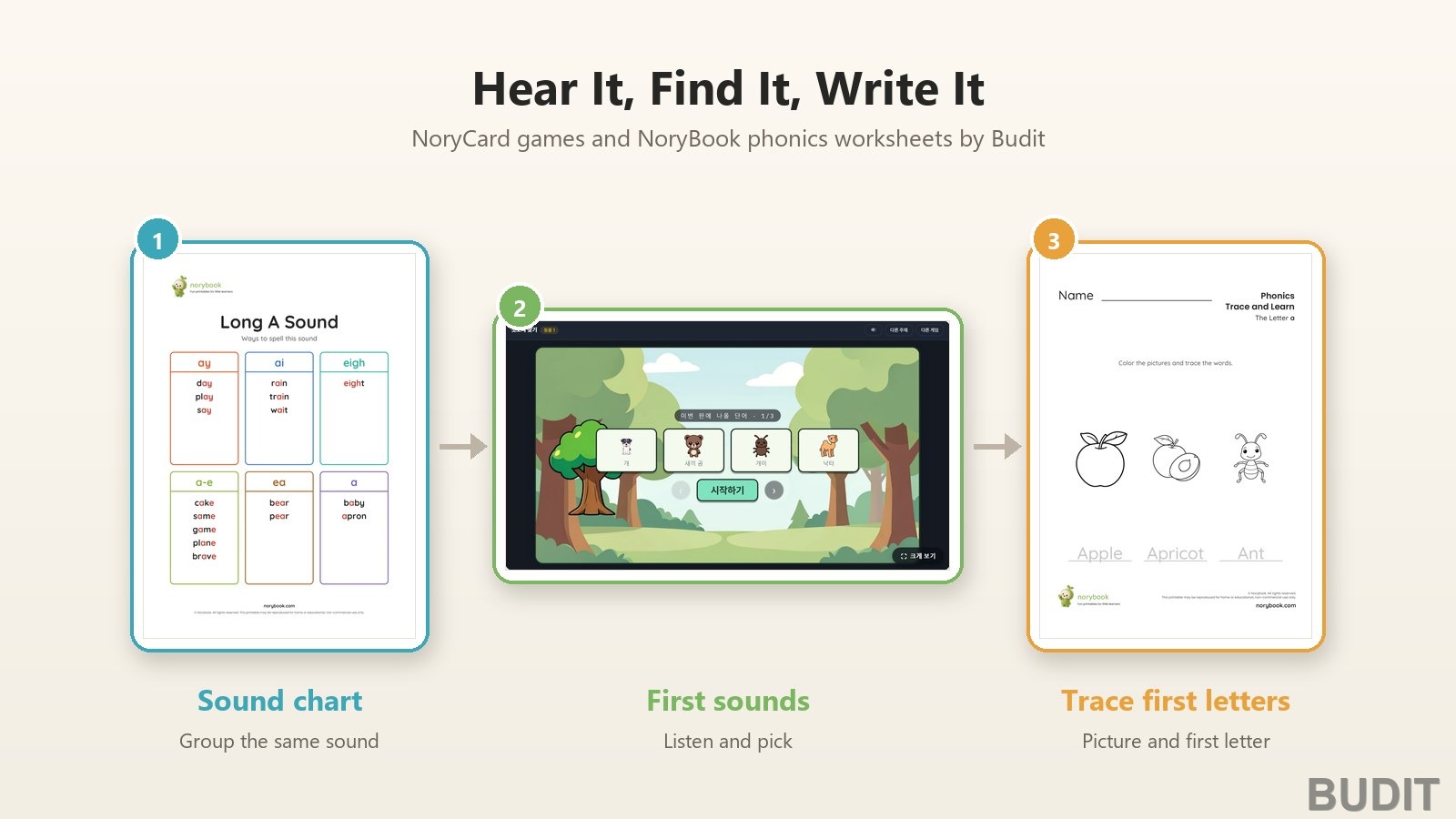
When Should Pronunciation Practice Start 『Phonological Awareness』
Before correcting pronunciation, there is a skill to build first. How phonological awareness, the ability to break speech into sounds and compare them, develops, and how it connects to reading.
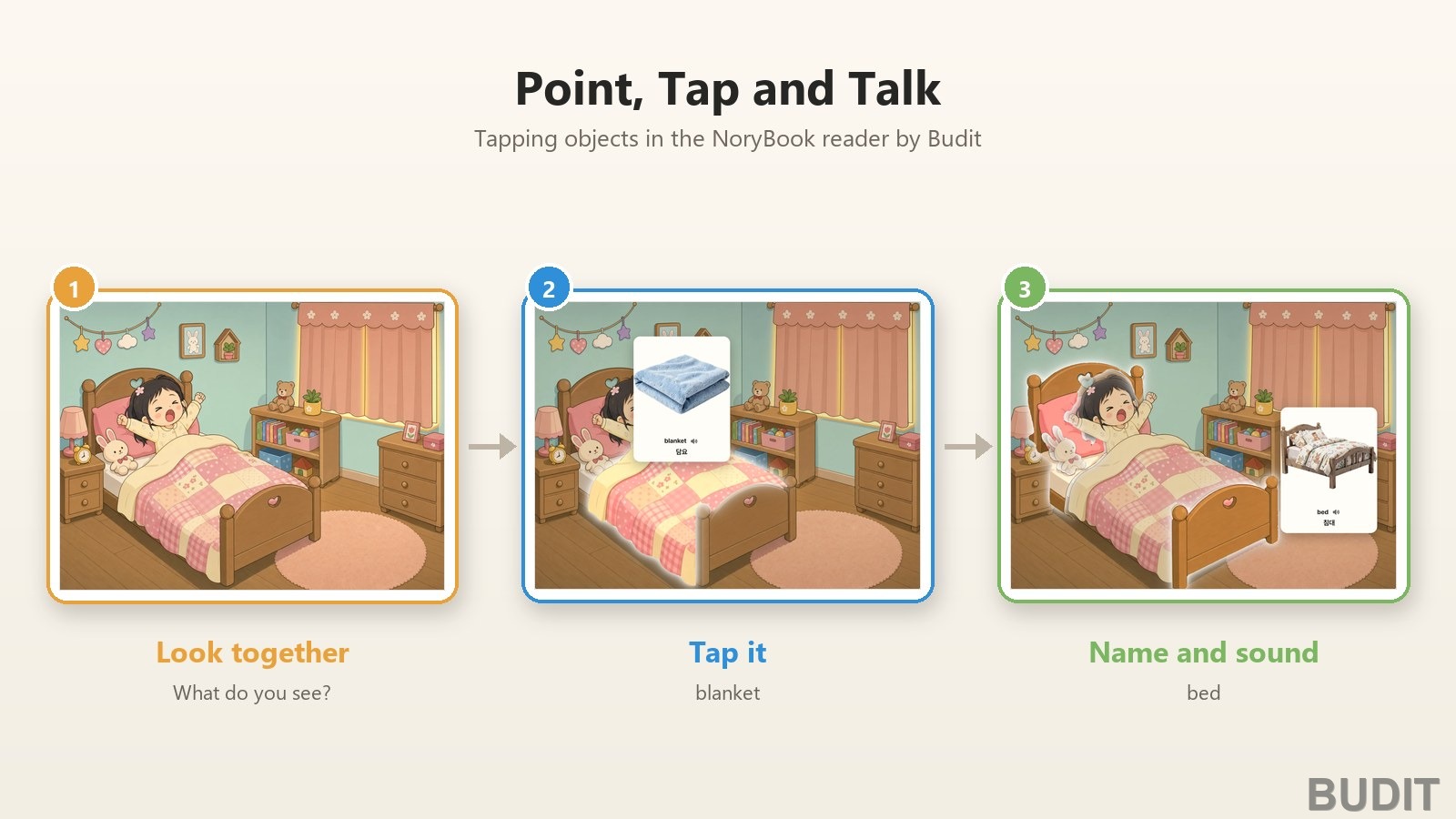
Learning Words by Pointing at Pictures 『Interactive Book Reading』
Talking about the pictures builds a child's language more than simply reading the words aloud. Research on dialogic reading, joint attention and digital picture books shows how to read while pointing at pictures.
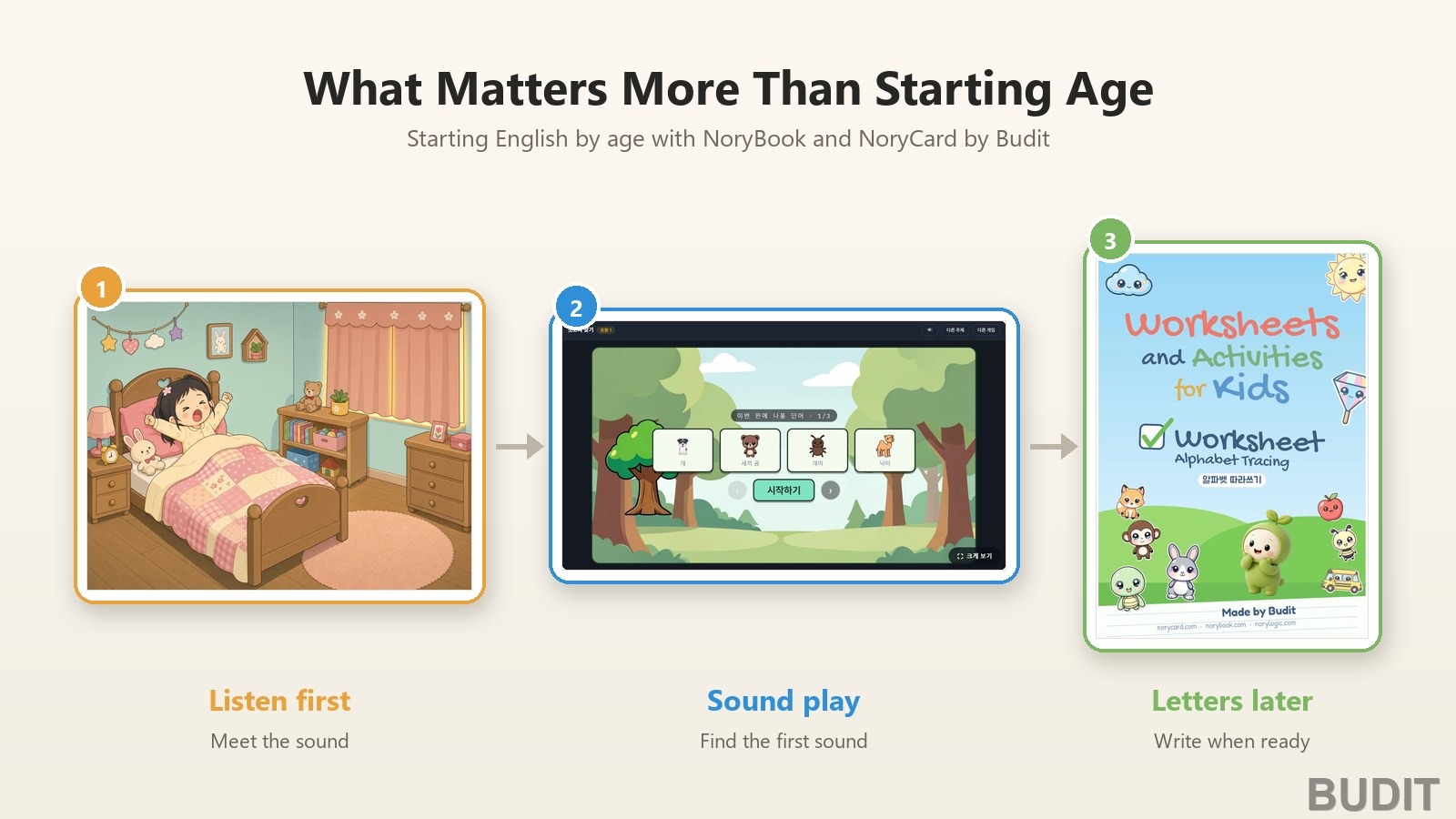
When Should a Child Start Learning English 『It Is the Method, Not the Age』
What research says about when to start English. Early exposure clearly helps with one thing, sound, while classroom style lessons favour older children. So the early years should start with sound and play. Here is what to do at each age.
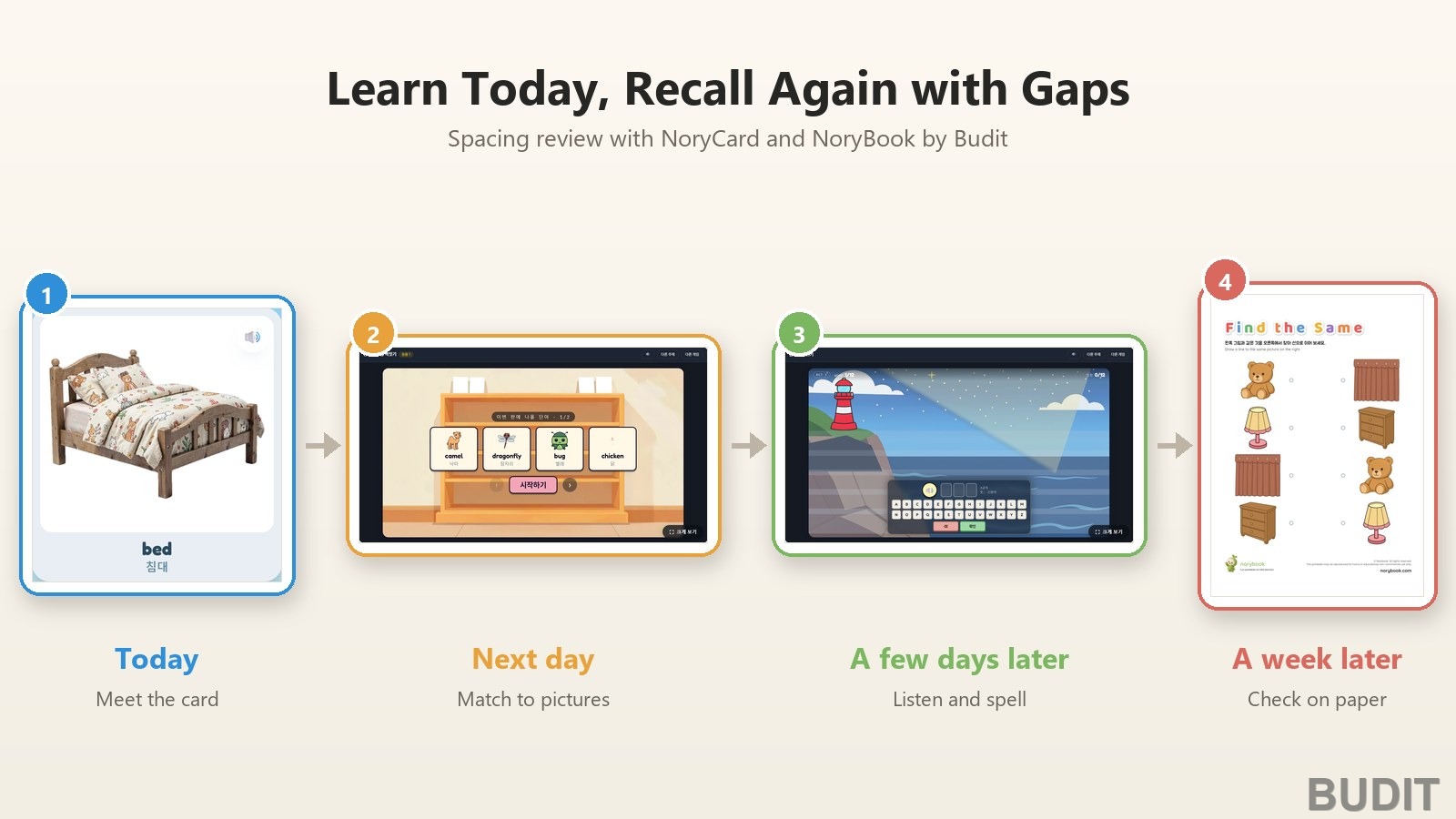
Why Game Review Helps Words Stick 『Retrieval Practice and Spacing』
Forgetting yesterday's words today is perfectly normal. Research on the forgetting curve, retrieval practice and spacing explains why reviewing with games helps memory, and how to space out review.
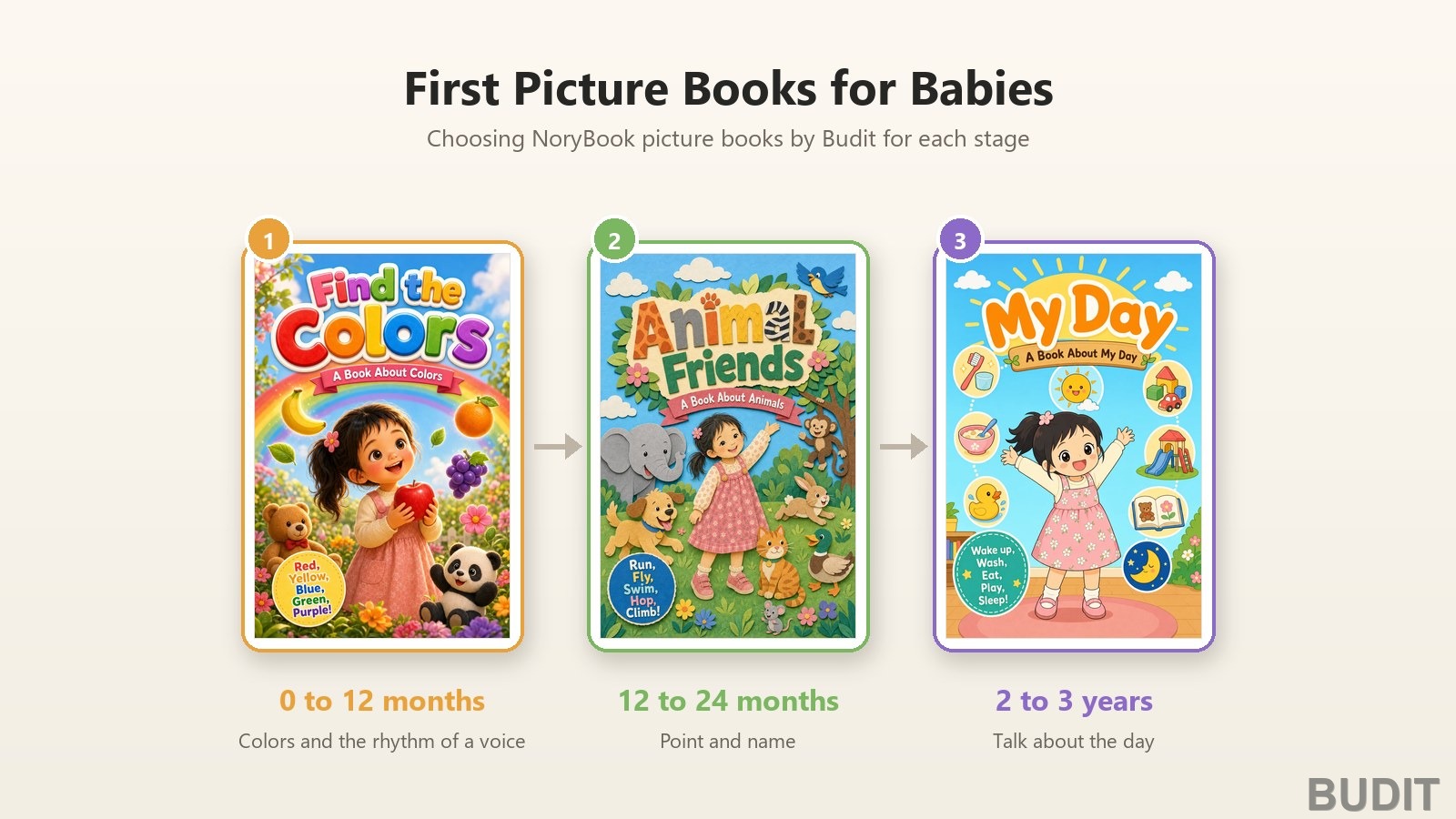
When to Start Reading Aloud 『Hearing Before Birth』
A baby's ears are working before birth. How hearing develops in the womb, newborns who remember stories they heard before birth, and what the American Academy of Pediatrics recommends about when to start reading aloud.
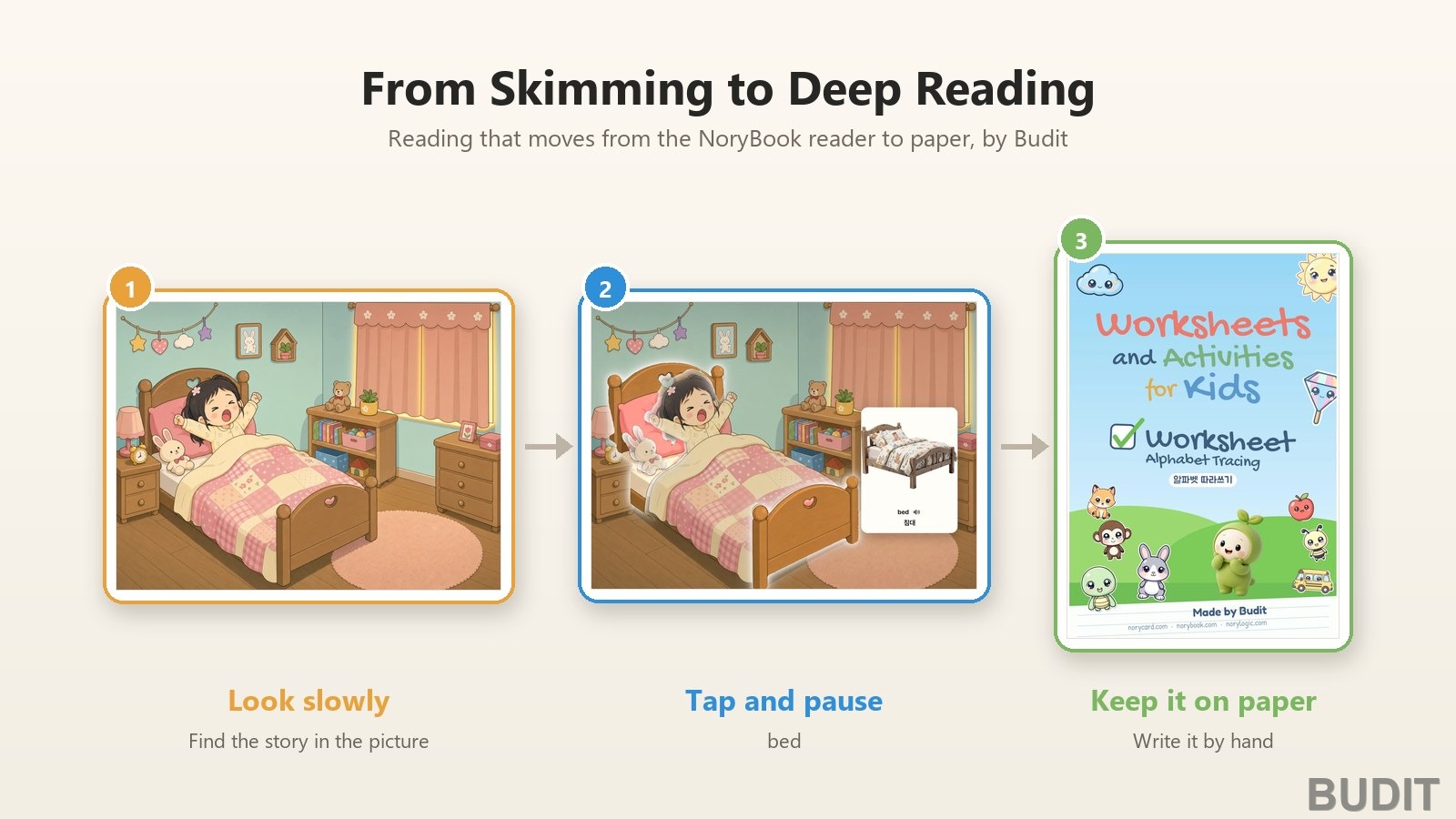
Why Deep Reading Matters in the Age of Short Form 『The Reading Brain Is Not Inborn』
Reading is not an ability we are born with. The brain builds a new circuit for it. Here is why screens pull us toward skimming, and how to protect a child's reading brain.
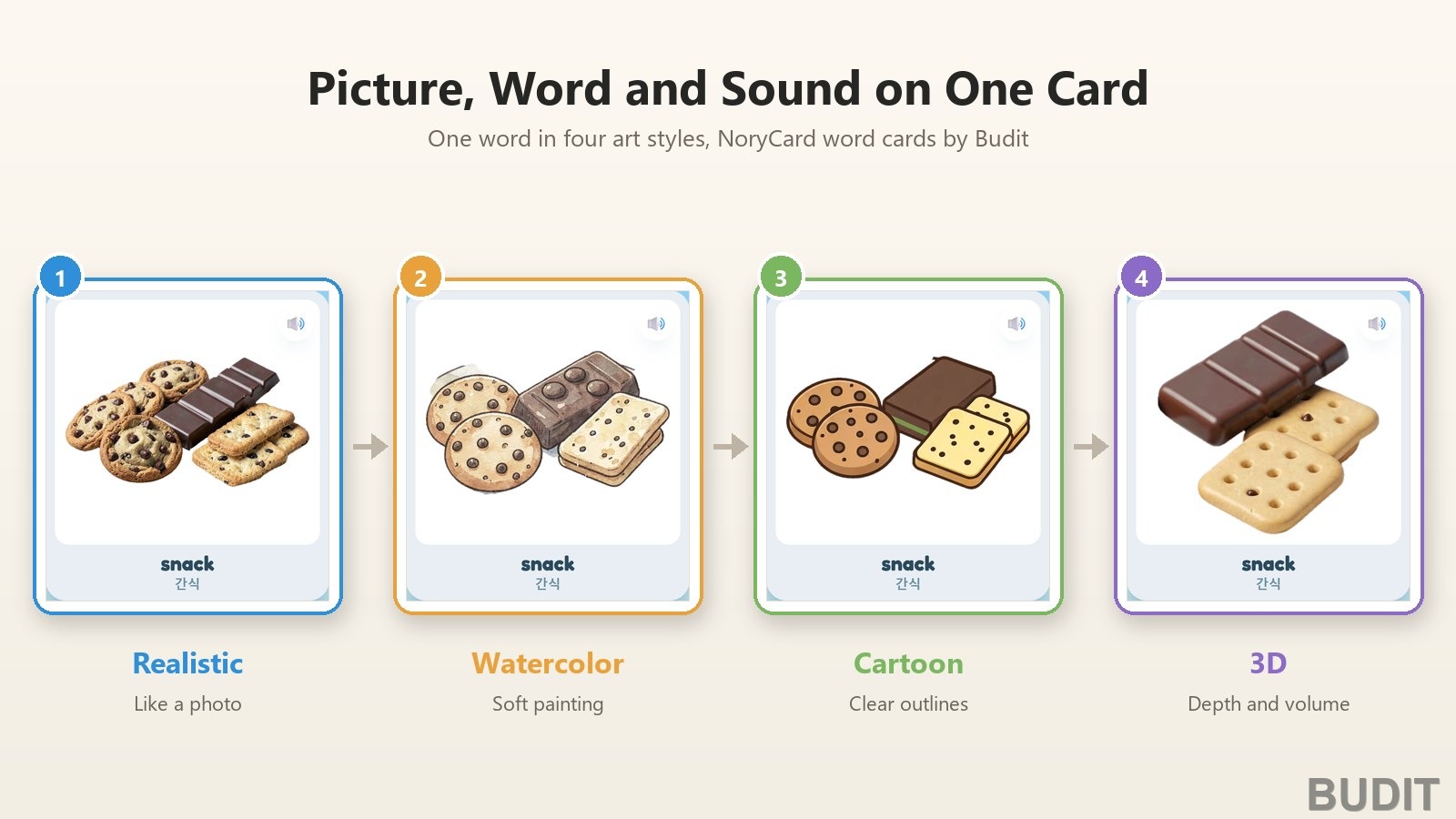
Why Show Pictures and Words Together 『Dual Coding』
Words and pictures are stored in memory in different ways. Dual coding theory, the picture superiority effect and multimedia learning research explain why word cards need pictures, and how to choose an art style.
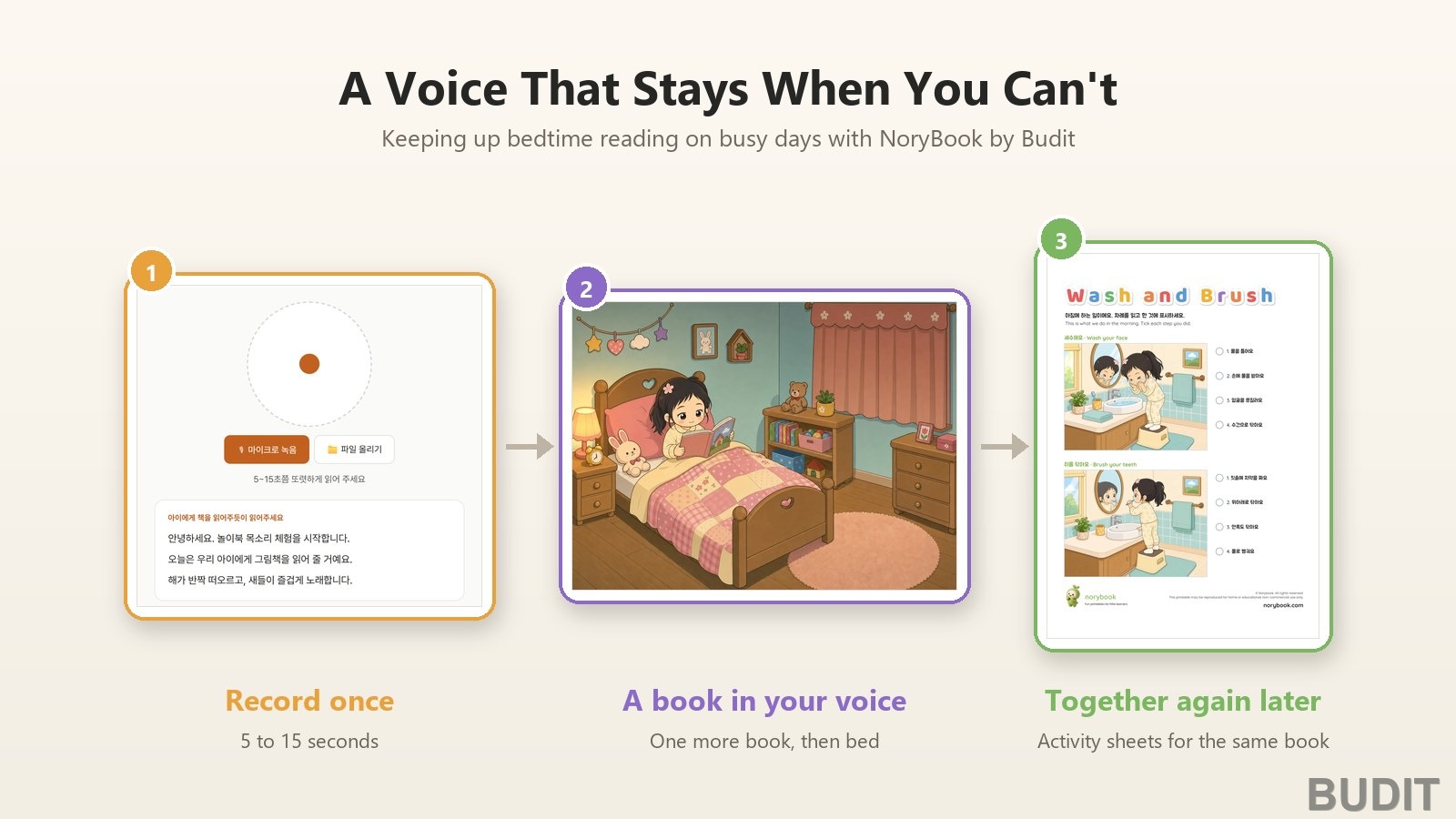
A Gift of Voice for Busy Parents 『Comfort That Reaches Across Distance』
For parents whose late nights and work trips mean many missed bedtime stories. What research says about the amount of time together, phone calls versus text messages, and video calls versus recorded video, plus a reading plan for busy days.
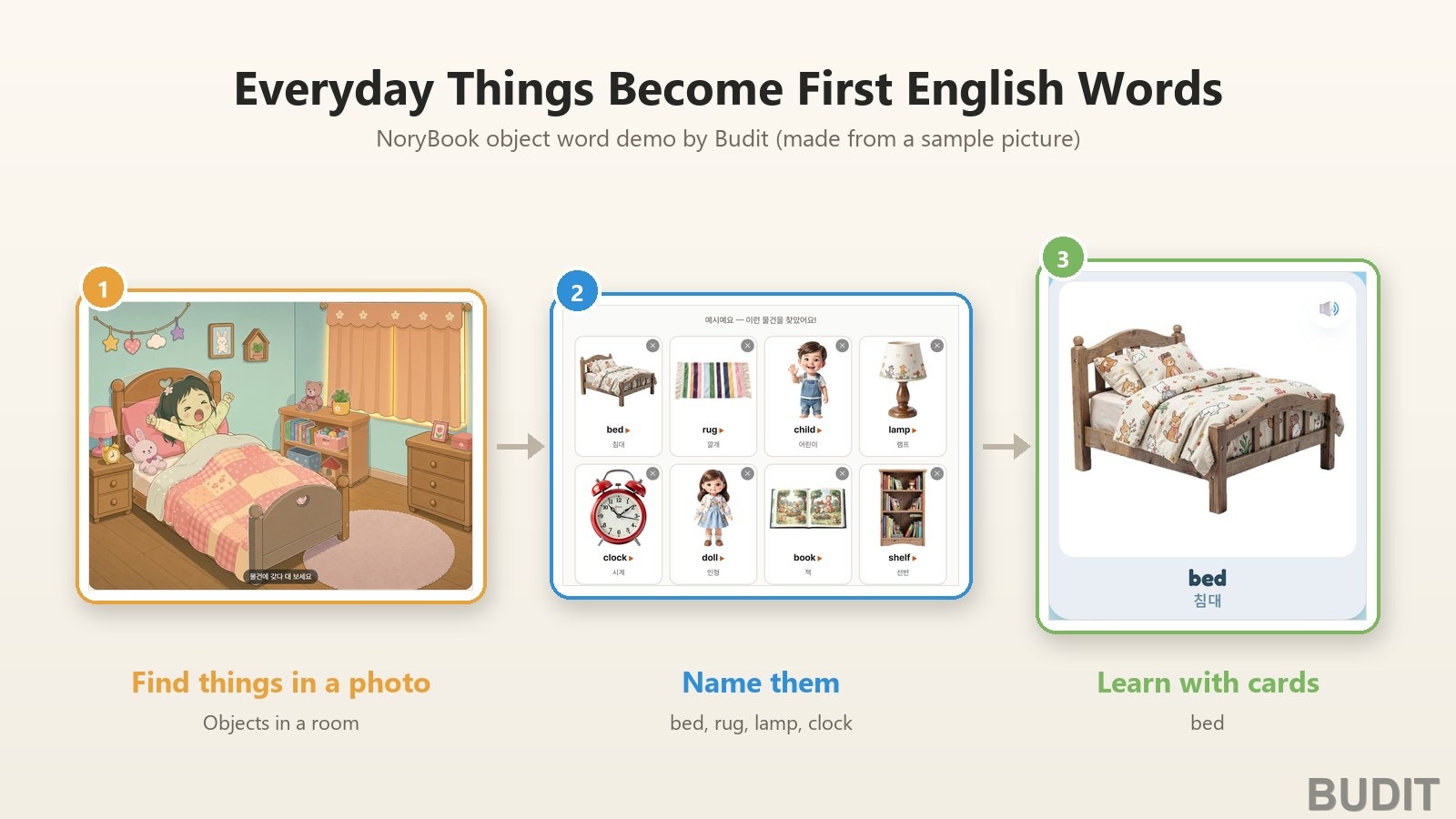
Why Start Children's English with Everyday Words 『The Vocabulary Spurt』
At some point many children start picking up new words much faster. Research on the vocabulary spurt, fast mapping and how much speech children hear explains why everyday objects make good first English words.
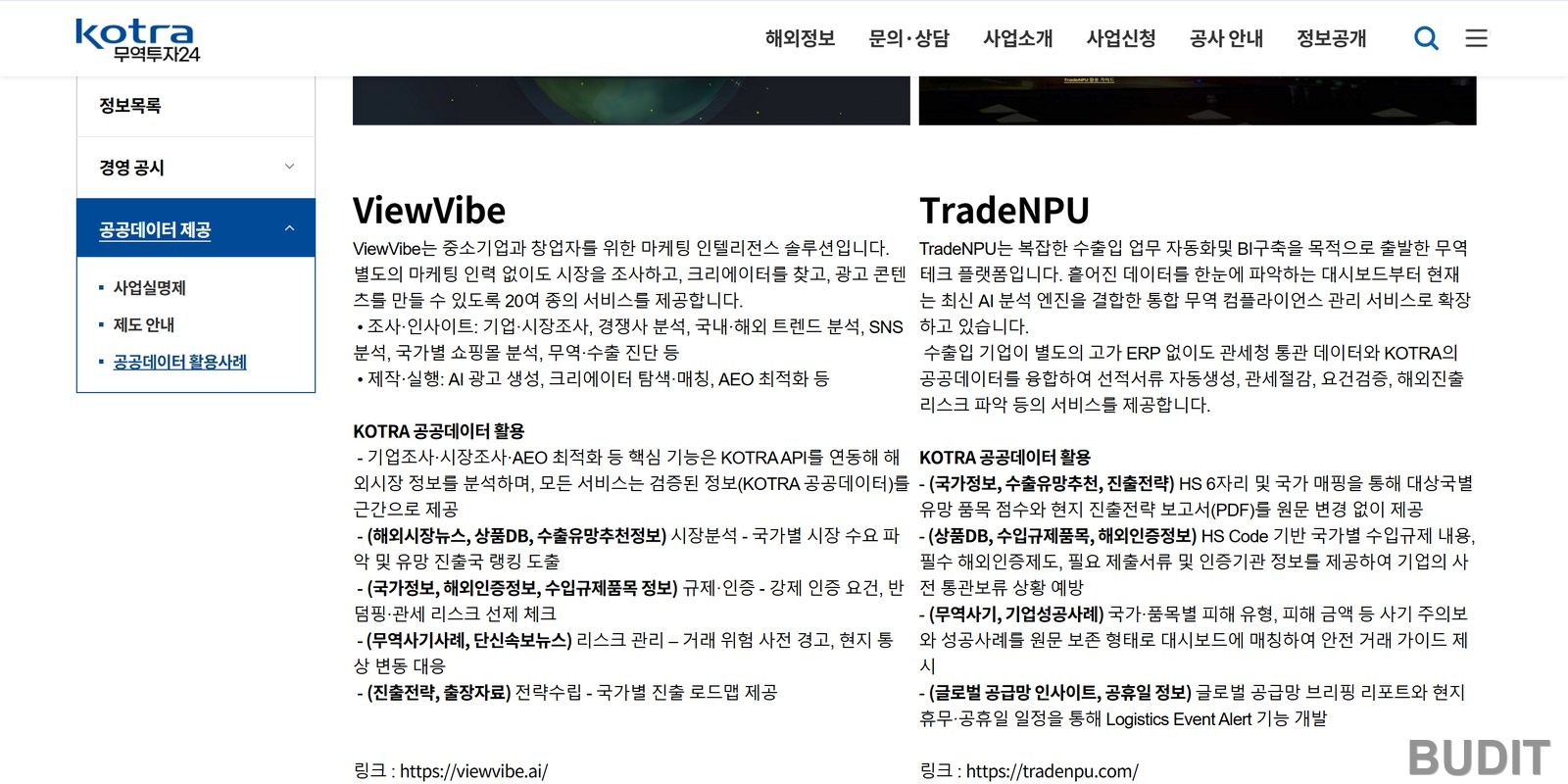
ViewVibe Named a KOTRA Public Data Use Case
Budit's ViewVibe is featured on KOTRA's 「Public Data Use Cases」 page. The story of reconciling country and HS codes across agencies, and of the 14 years of data KOTRA sent us directly.
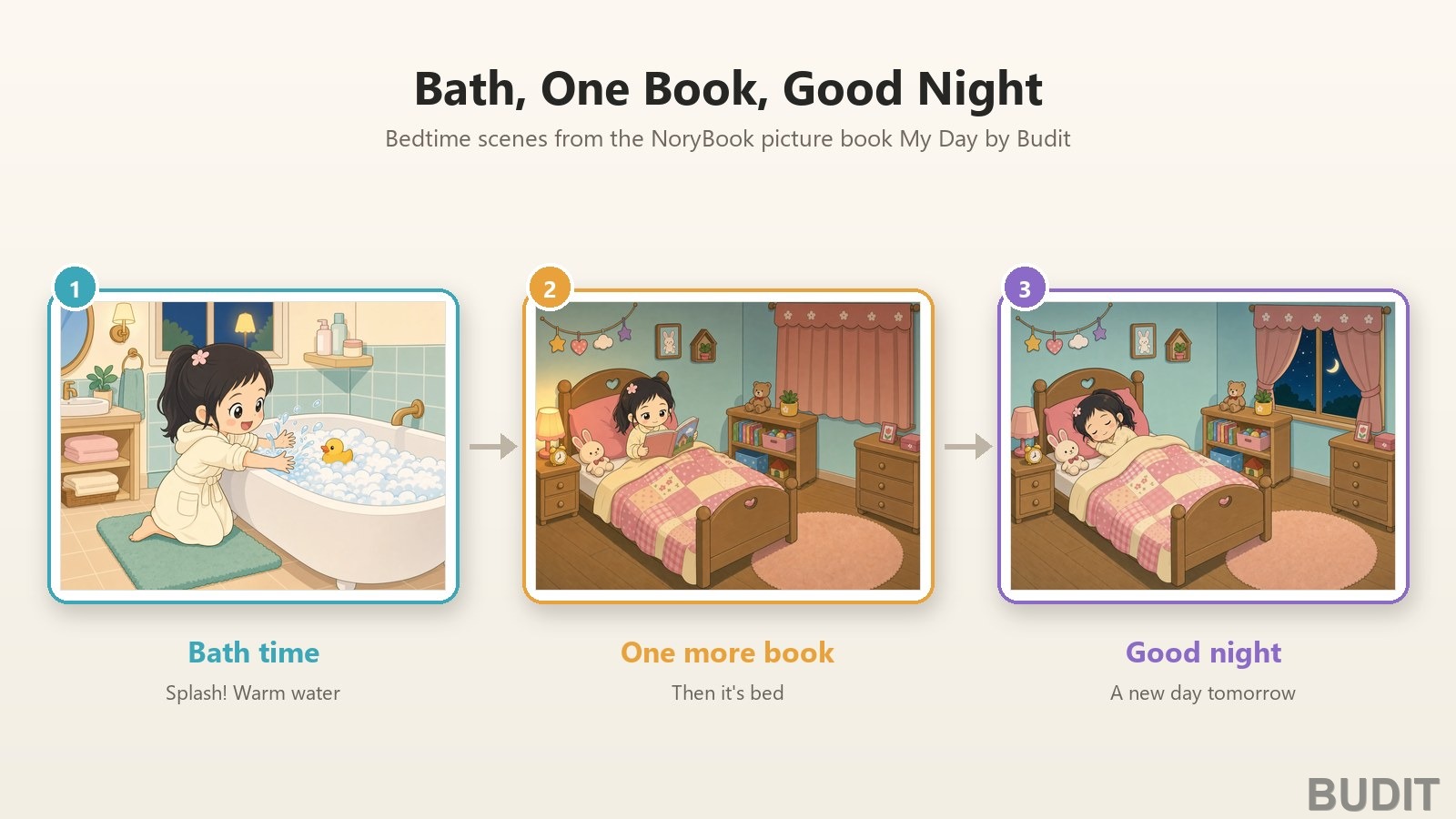
The Science of Bedtime Reading 『Emotional Security and Sleep』
A short bedtime routine done in the same order each night can help children sleep. What sleep research says about routines and bedtime reading, and how to keep screen light low.
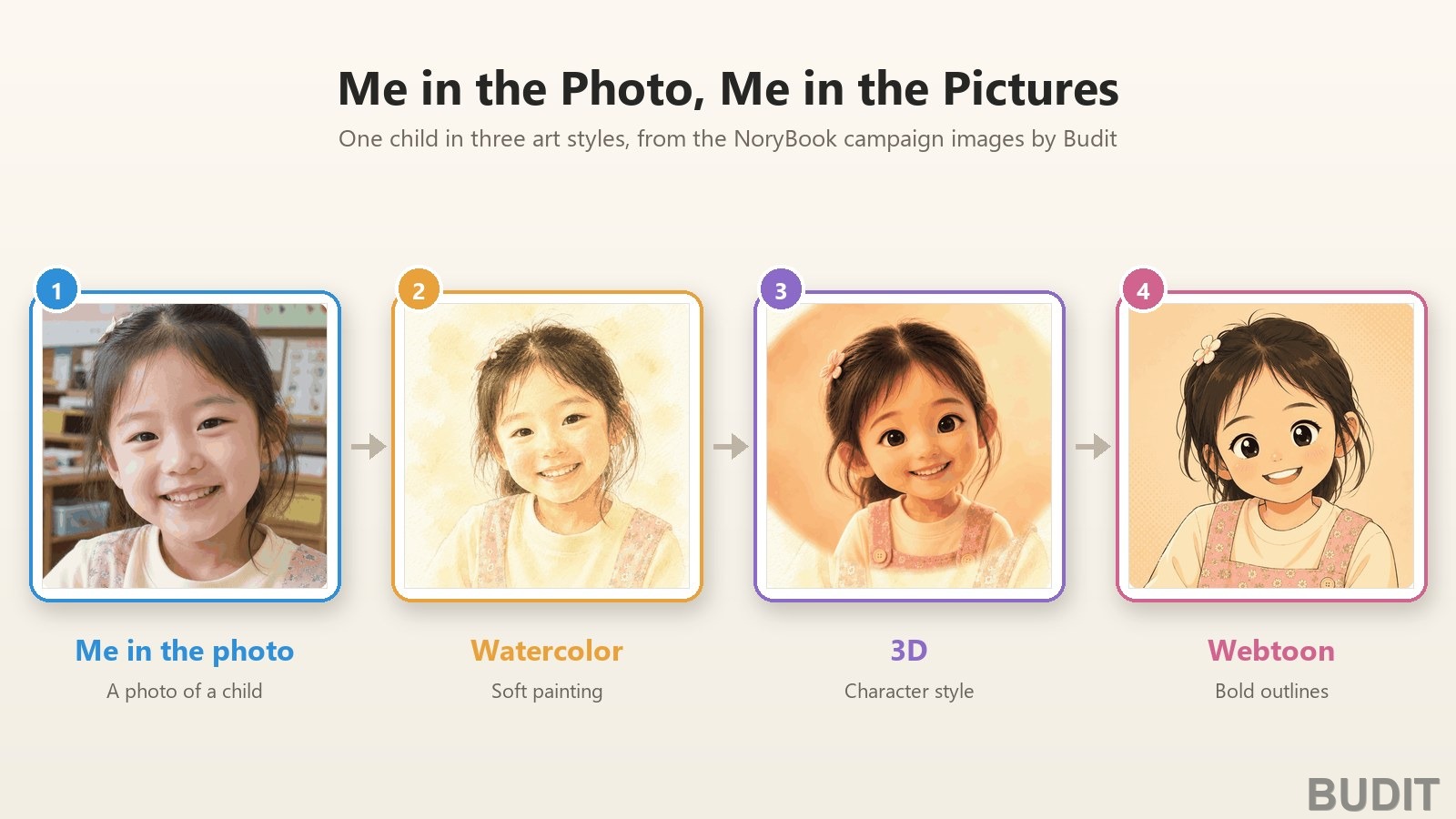
When Do Children Recognize Themselves 『The Self in the Mirror』
From the rouge test in the mirror to recognizing themselves on video, a look at the research on how children come to recognize themselves.
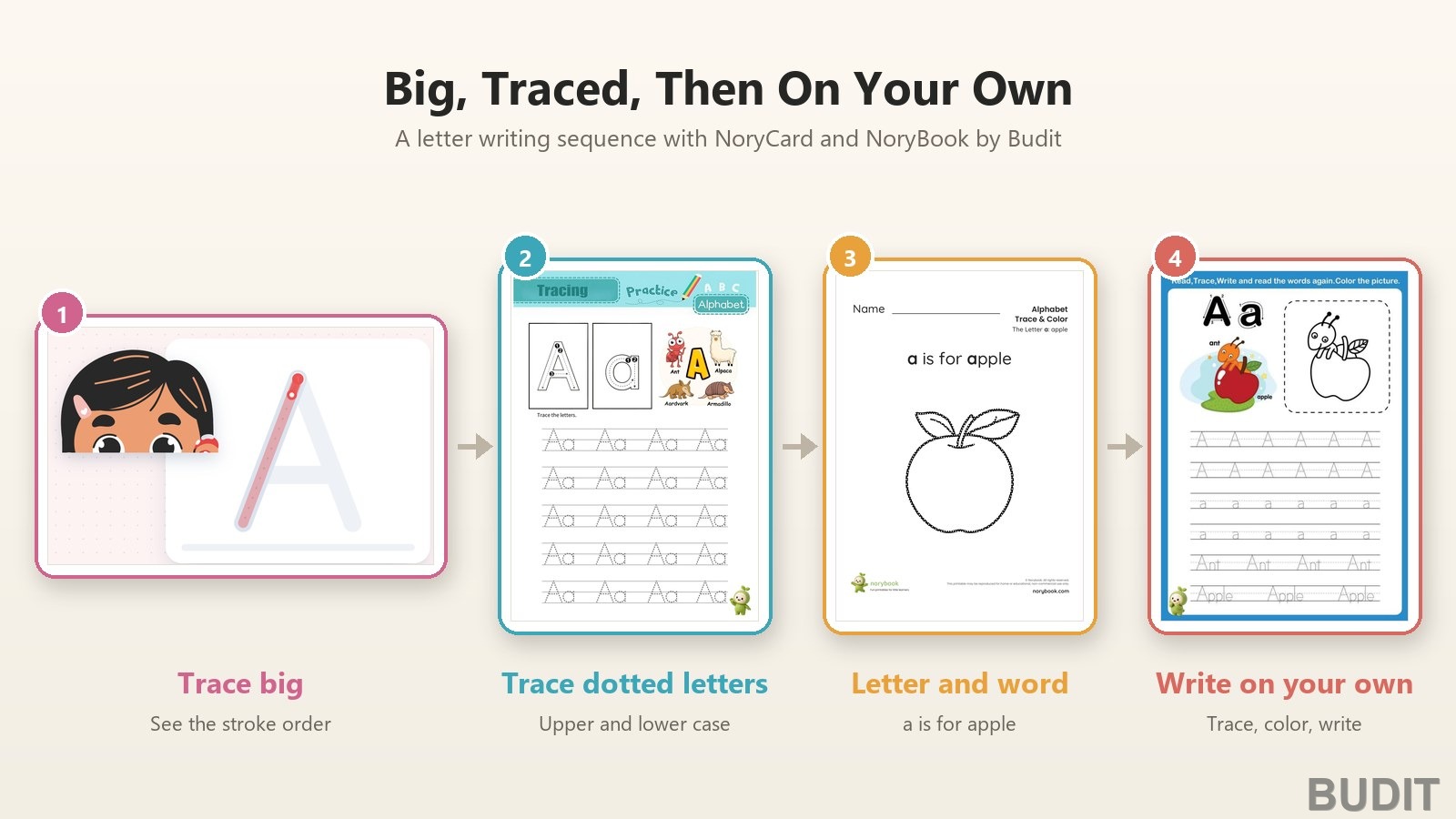
Why Dotted Tracing Is the First Step to Writing 『Motor Memory』
The movements of writing become automatic with practice, and studies suggest children recognize letters better when they learn them by hand. A look at motor memory and handwriting research.
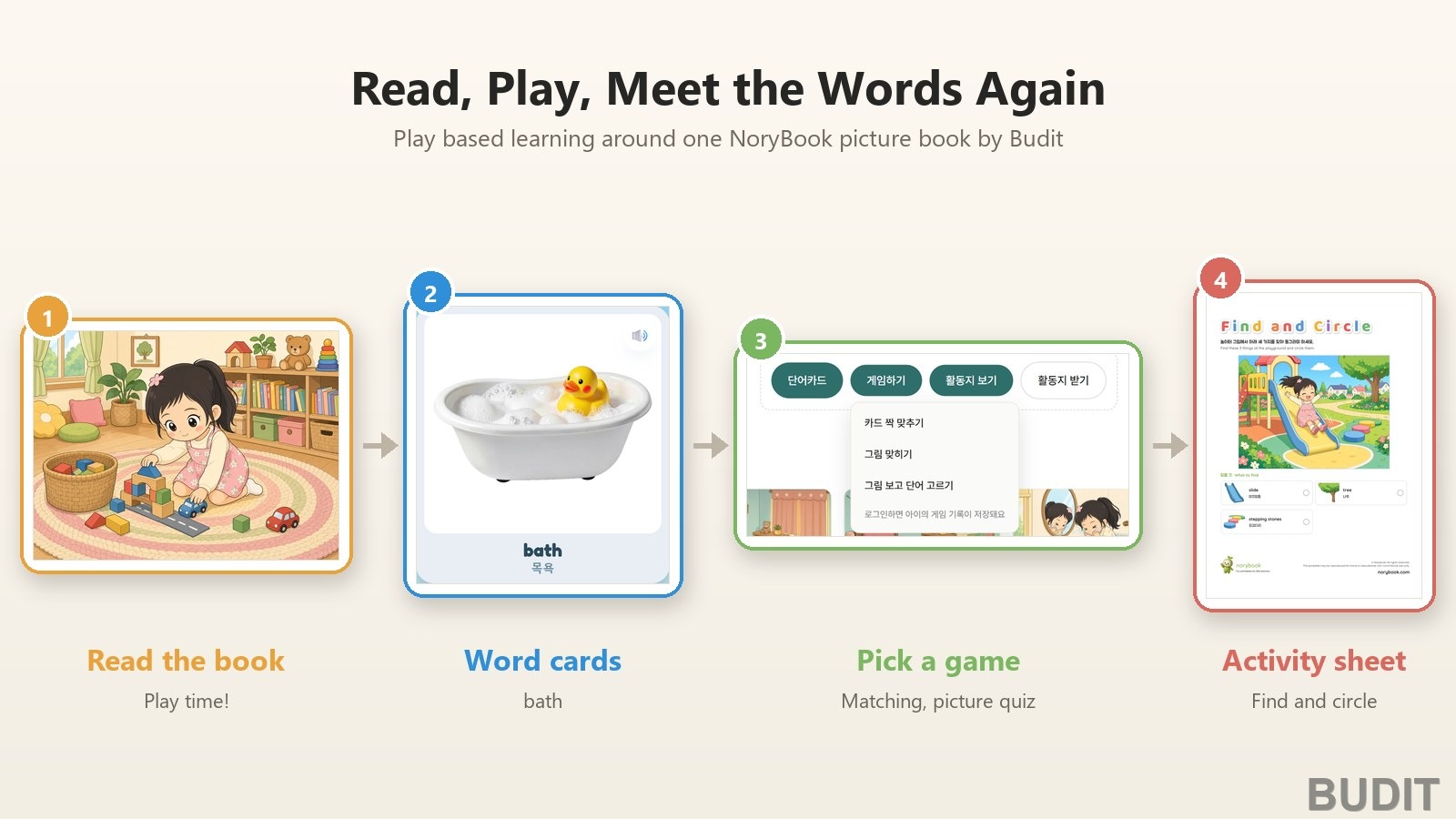
Play Is Learning 『Play Based Learning』
There is learning inside children's play. The different forms play can take, research on guided play, and what helps children learn, plus ways to bring it all together at home.
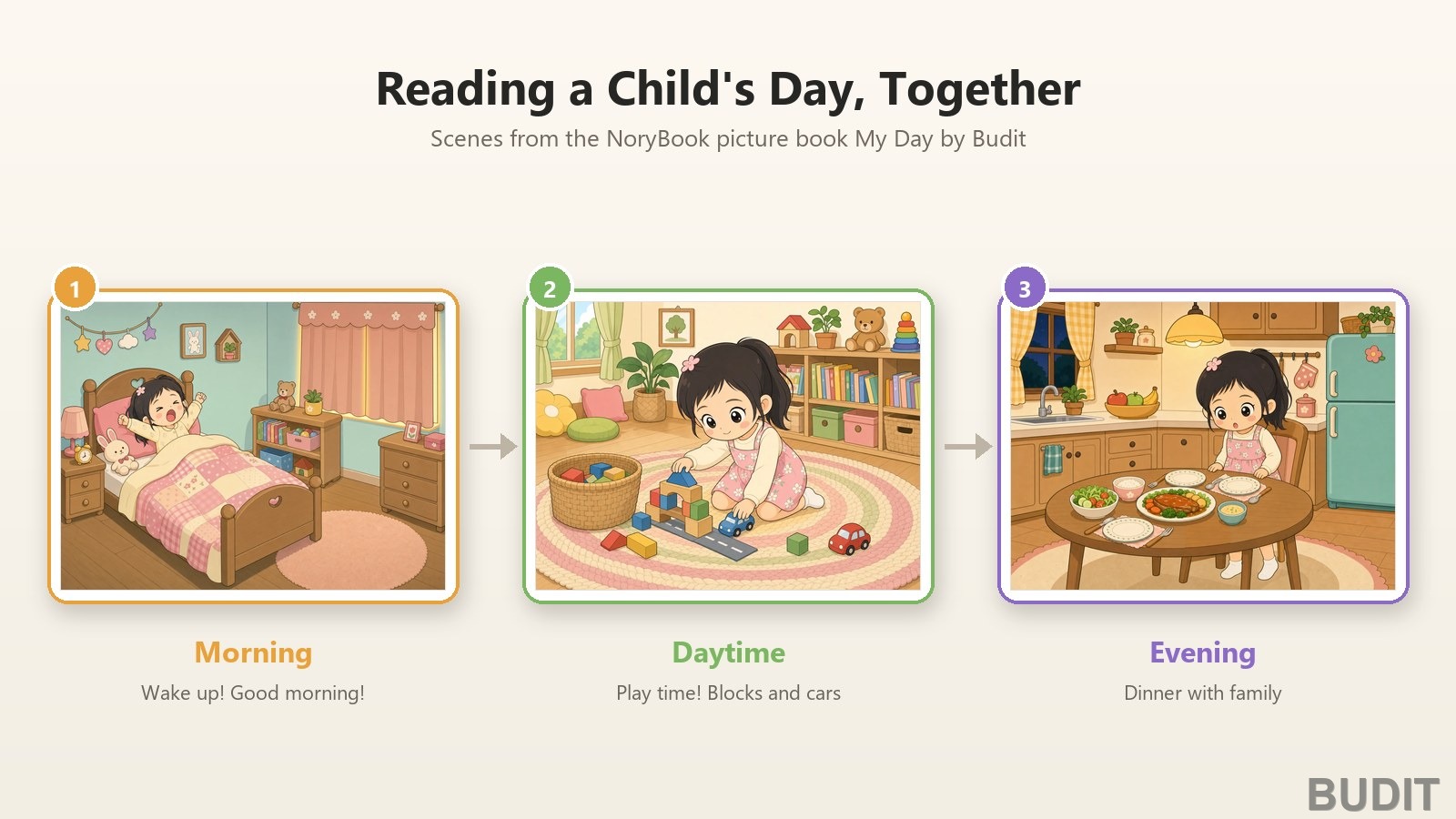
The Comfort of a Book Read in a Parent's Voice 『Attachment』
Before story time is about learning letters, it is a time for a child to lean on a parent. What attachment theory, shared reading studies and research on voices tell us about it.
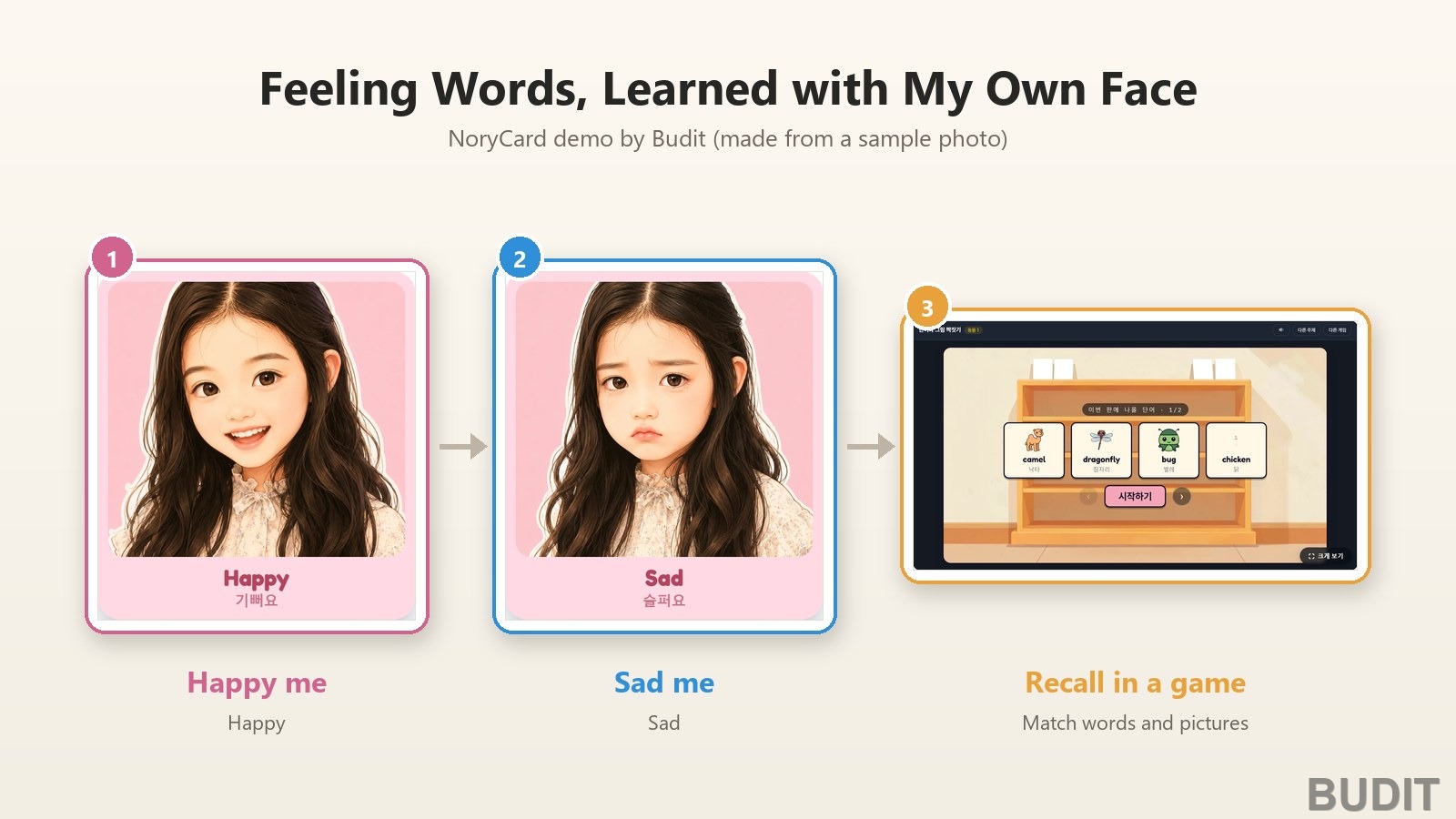
Learning Feeling Words with My Own Face 『Emotion and Memory』
Emotionally charged experiences tend to be remembered better. A look at research on emotion and memory and on recognizing and naming feelings, plus a way to meet feeling words through your child's own face.
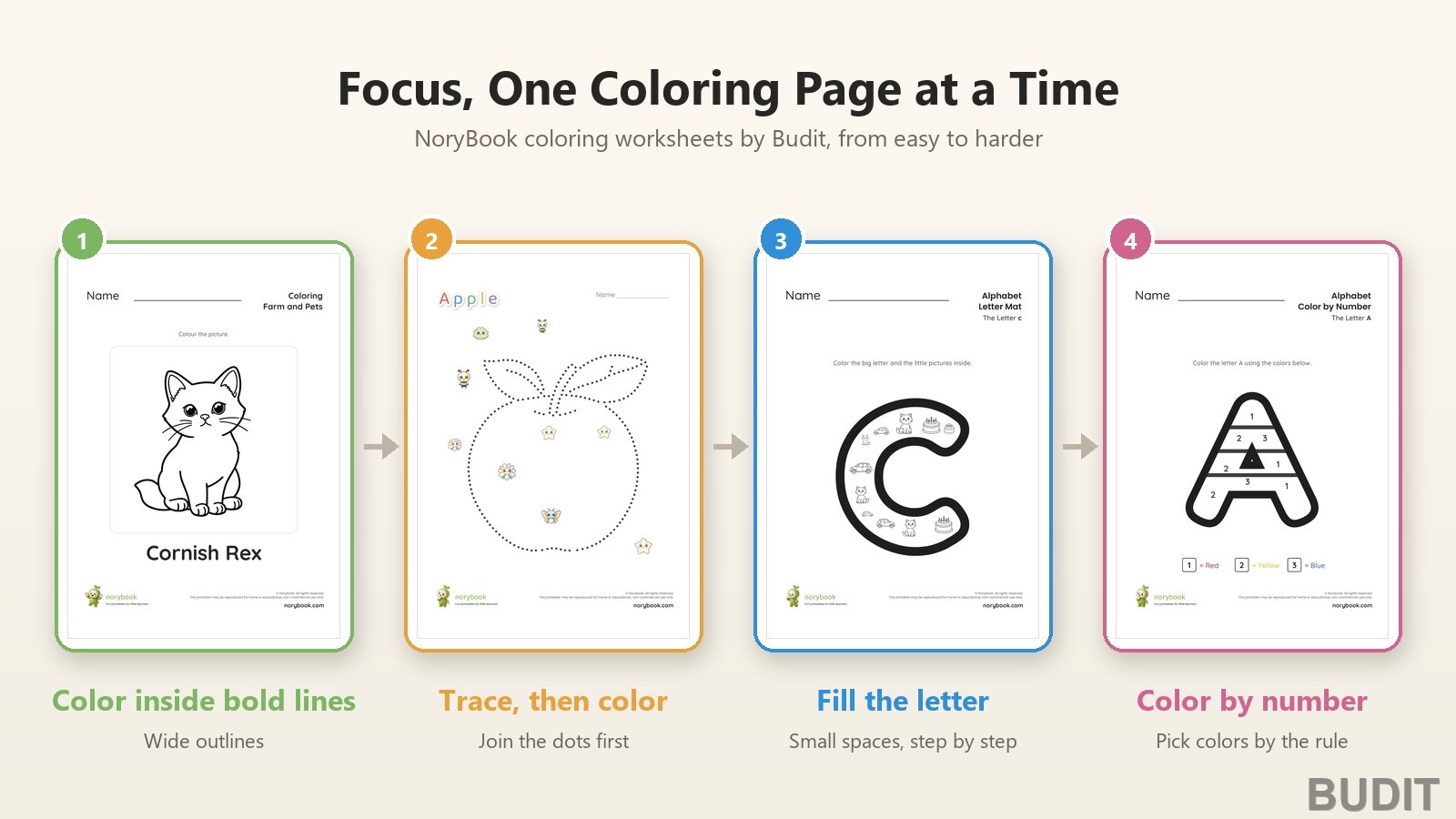
The Power of Coloring 『Focus and Eye and Hand Coordination』
Coloring inside the lines means using the eyes and hands together. A look at research on eye and hand coordination and on coloring before a test.
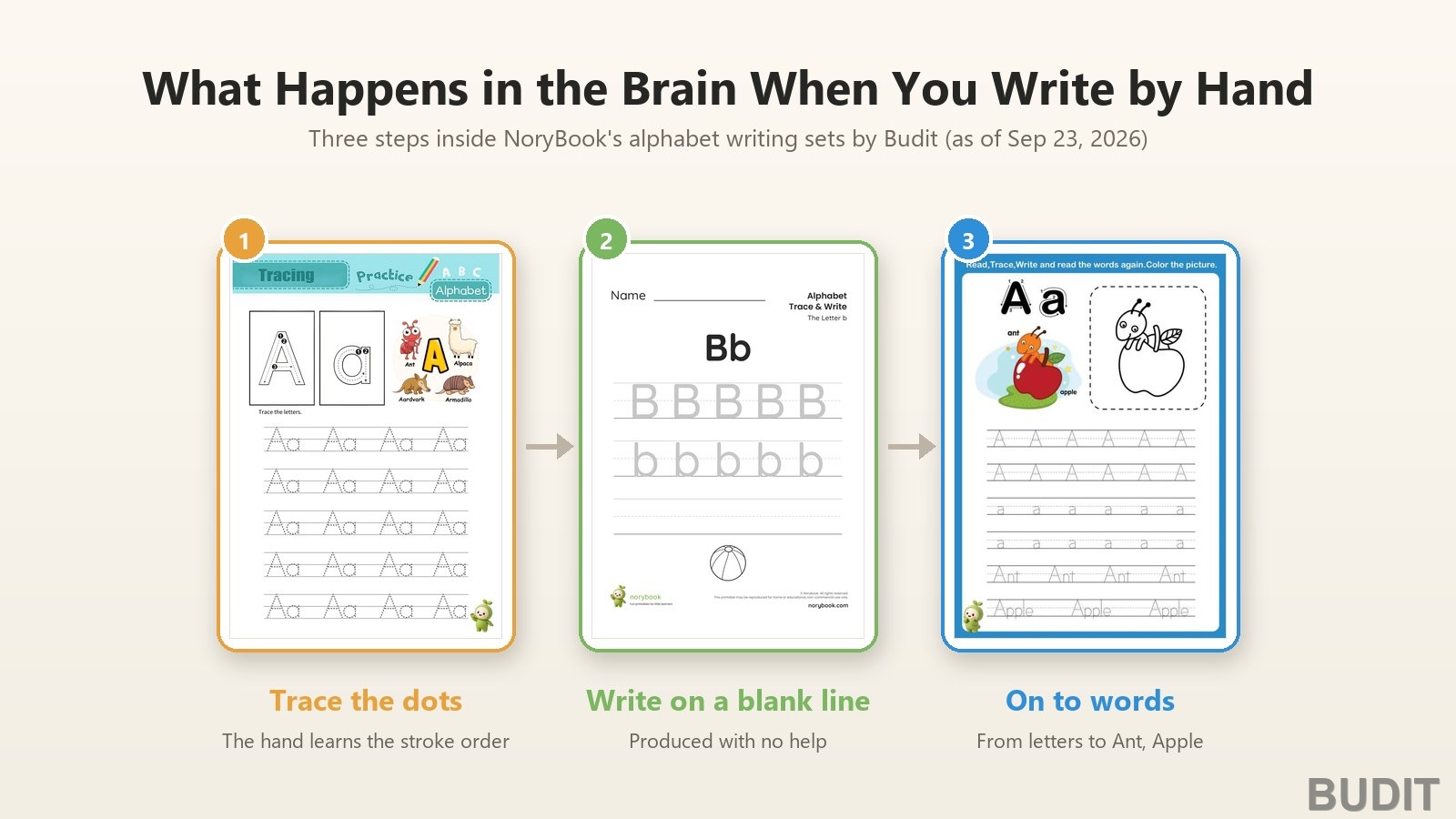
What Happens in the Brain When You Write by Hand 『Handwriting and Learning』
Studies show the brain behaves differently when writing by hand than when typing: the reading network in five year olds, EEG in twelve year olds and adults, and why NoryBook's alphabet writing sets follow the order they do.
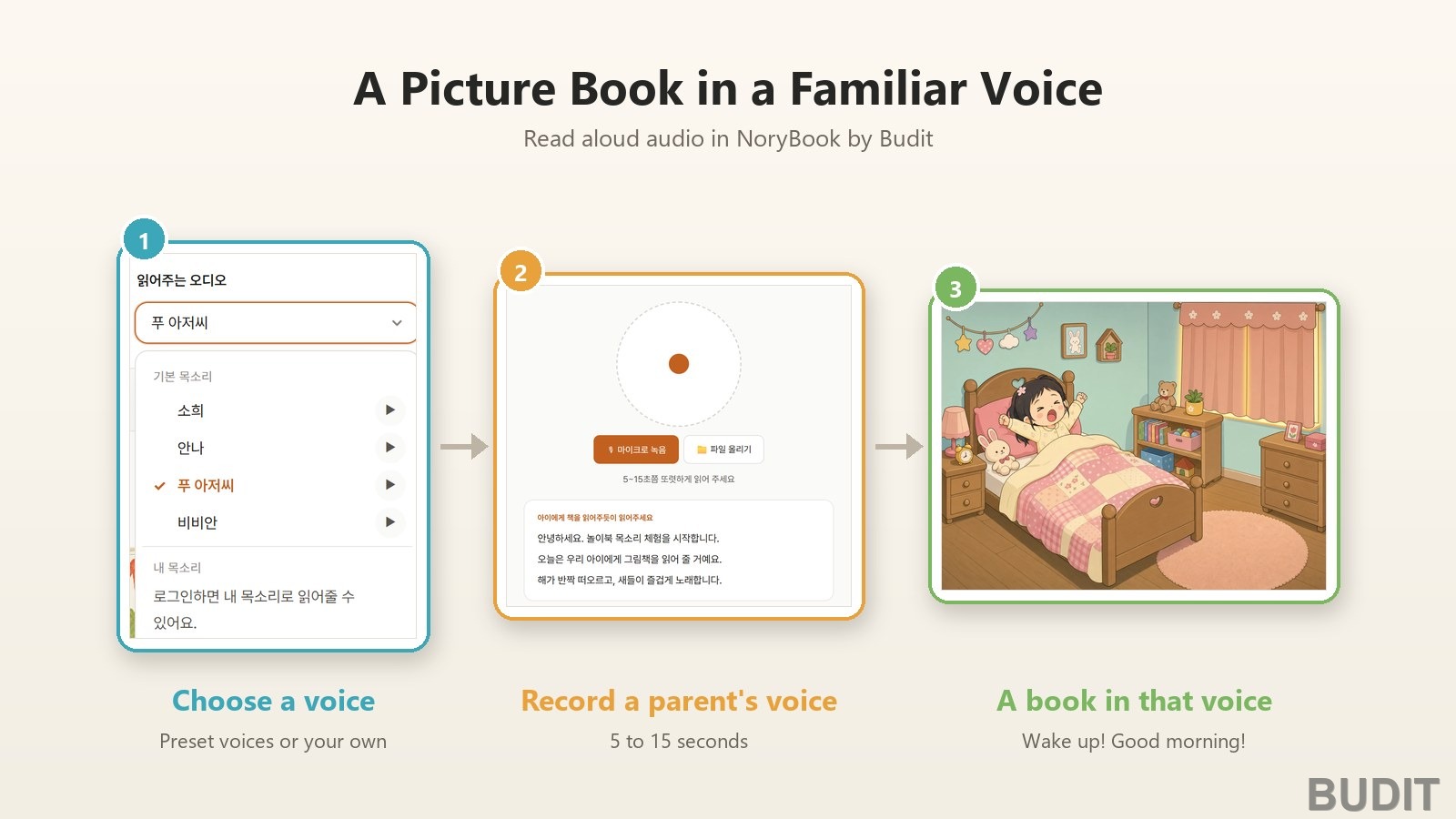
A Parent's Voice Is Special 『How Newborns Recognize Voices』
Newborns can tell their mother's voice from a stranger's and work to hear more of it. What research says about a familiarity that starts before birth, and what a parent's voice means to a child.
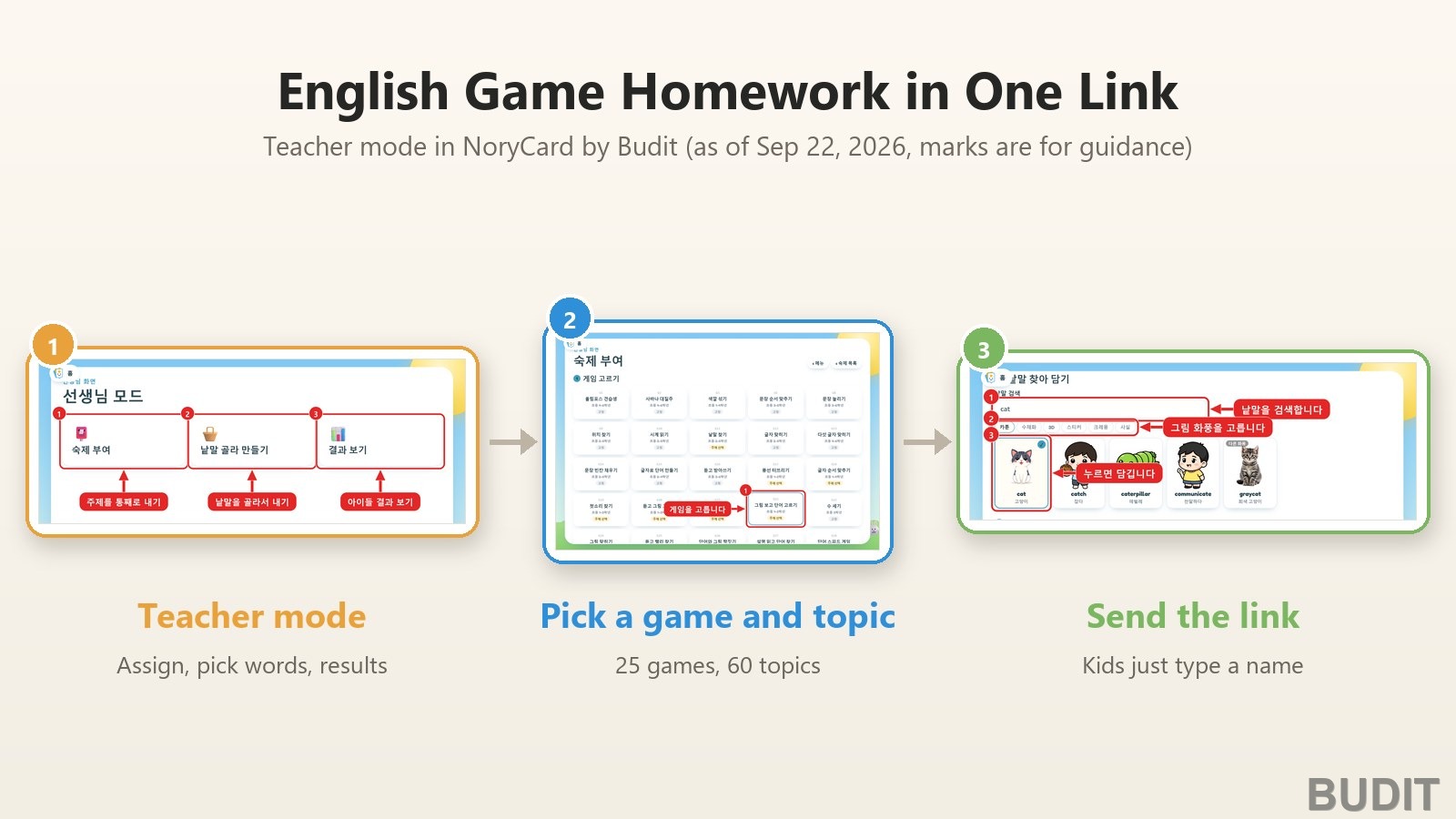
English Game Homework in One Link: How to Use 『NoryCard』 Teacher Mode
Pick a game and a topic, and you get a link to send to your students. Kids open it, type a name and play, with no login. A screen by screen guide to assigning homework, picking words and reading results in NoryCard teacher mode.
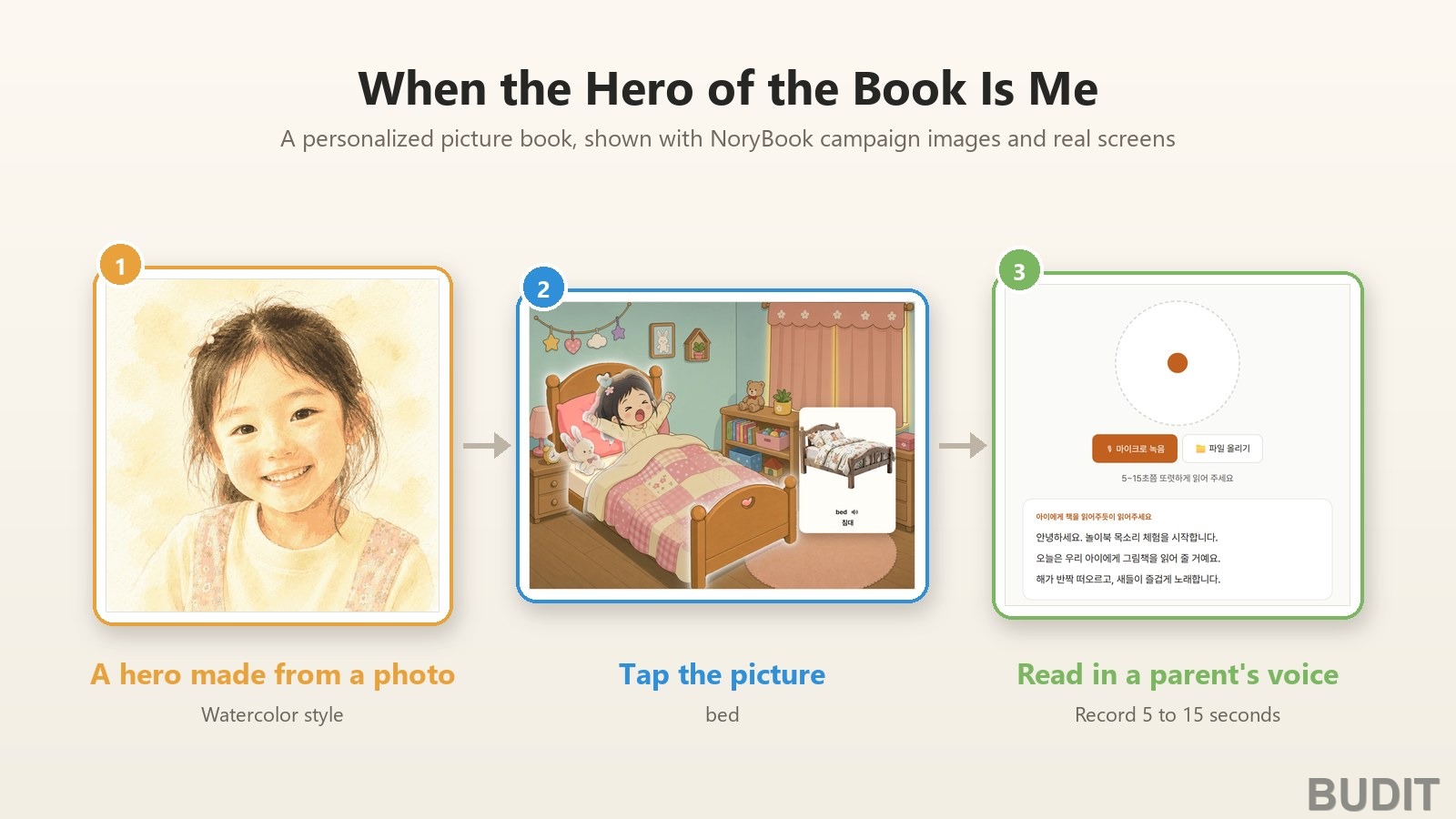
My Face in the Picture Book 『Self Concept and Personalized Books』
When the hero of the story is the child, children talk more. How young children describe themselves, and how their talk changes when a book is personalized.
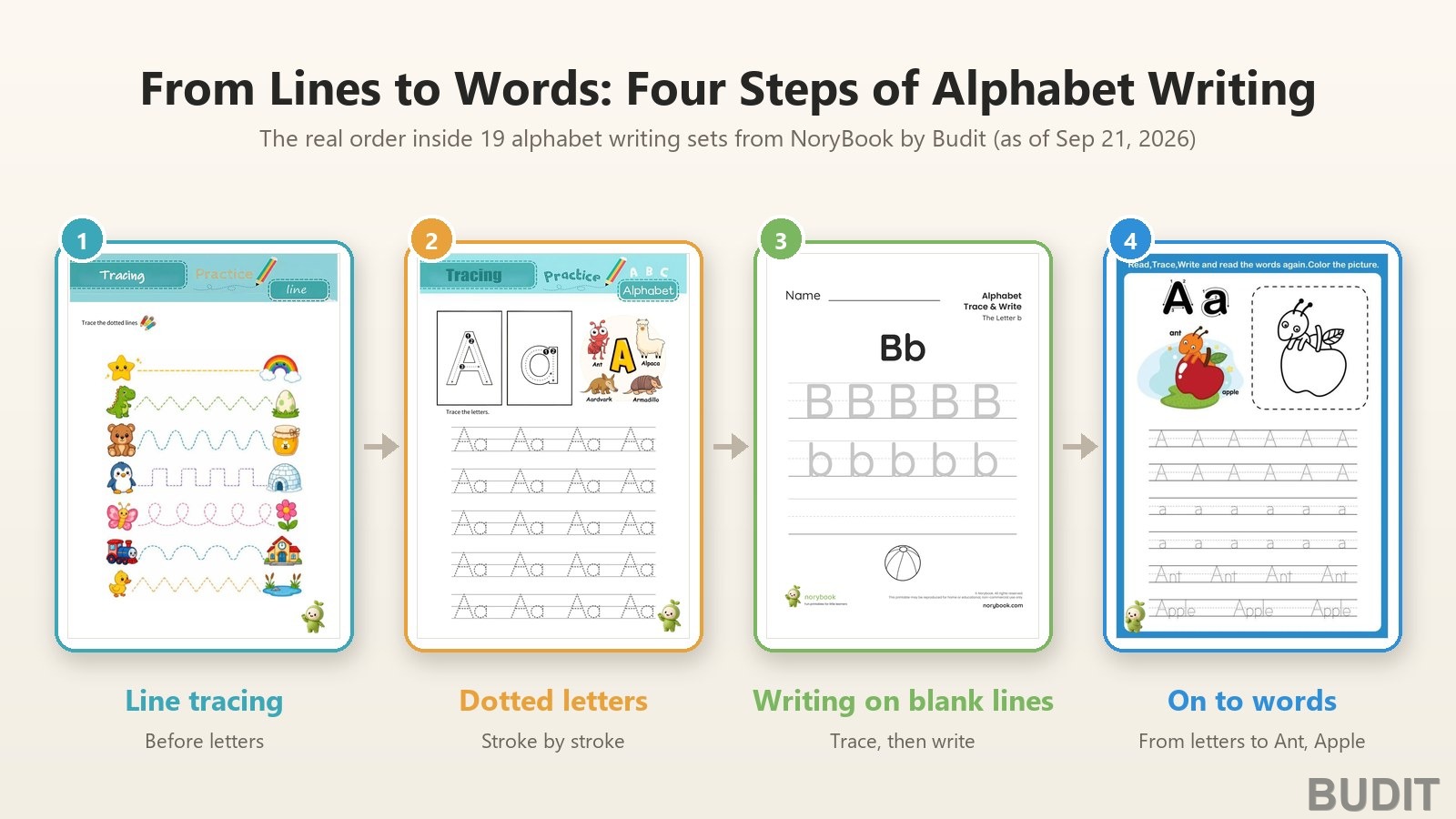
Why Alphabet Tracing Sheets Come in This Order 『Four Steps from Lines to Words』
The 19 alphabet writing sets in NoryBook start with line tracing and move on to dotted letters, writing on blank lines and writing words. Here is why that order, and how to pick the right sheet for your child.
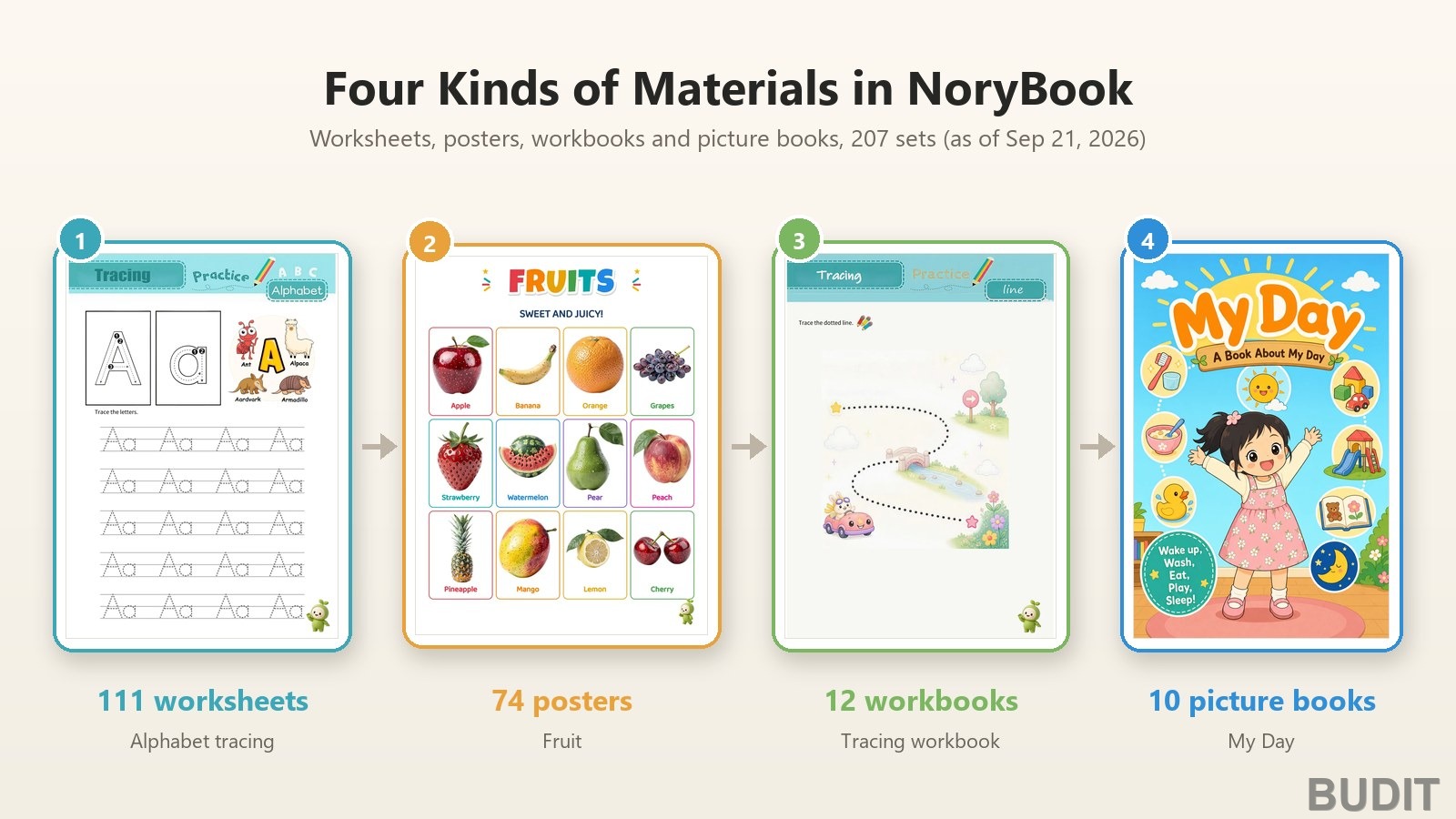
What's Inside NoryBook 『From Worksheets to Picture Books』
English worksheets for young children, alphabet tracing, phonics practice, coloring pages, learning posters and English picture books. Here are the 207 sets and 3,438 pages in NoryBook, sorted into four kinds.
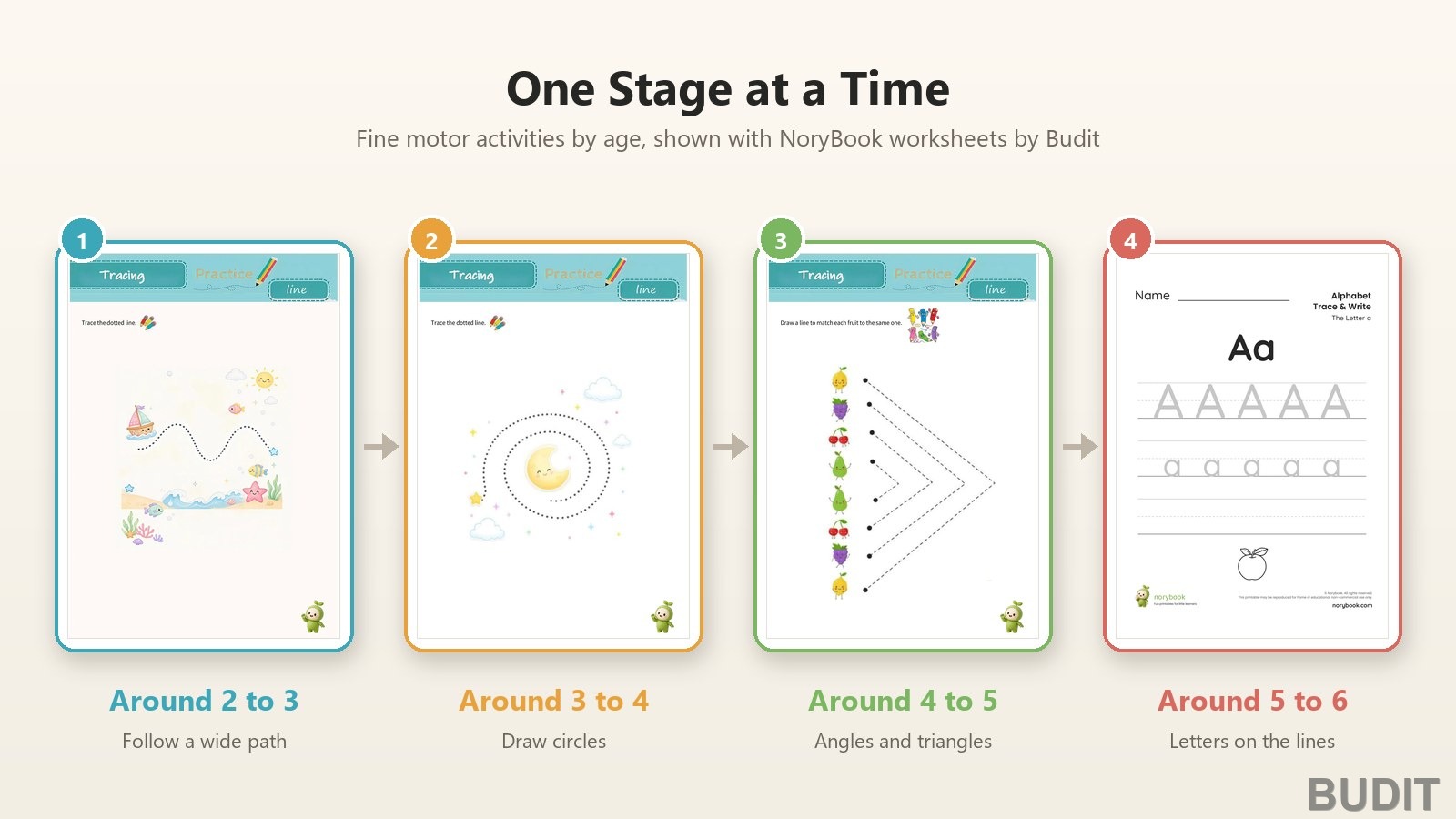
From Lines to Letters 『Fine Motor Stages by Age』
Pencil grip and the shapes a child can copy usually develop in a set order. Here are the stages and activities that suit each one.
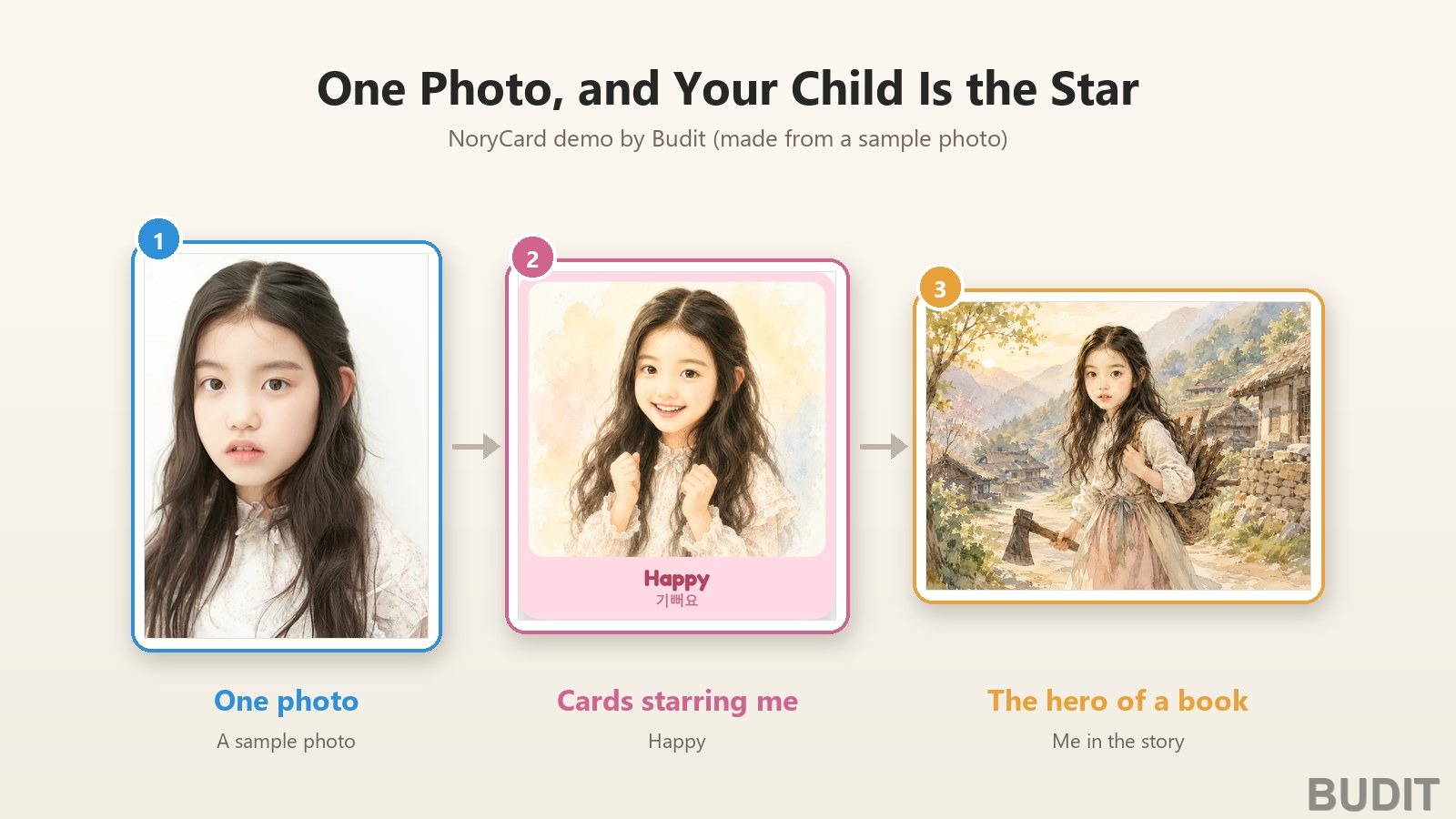
Why Children Learn Better as the Hero 『The Self Reference Effect』
We remember information about ourselves better. How the self reference effect shows up in young children, and a study where personalized picture books helped them learn new words.
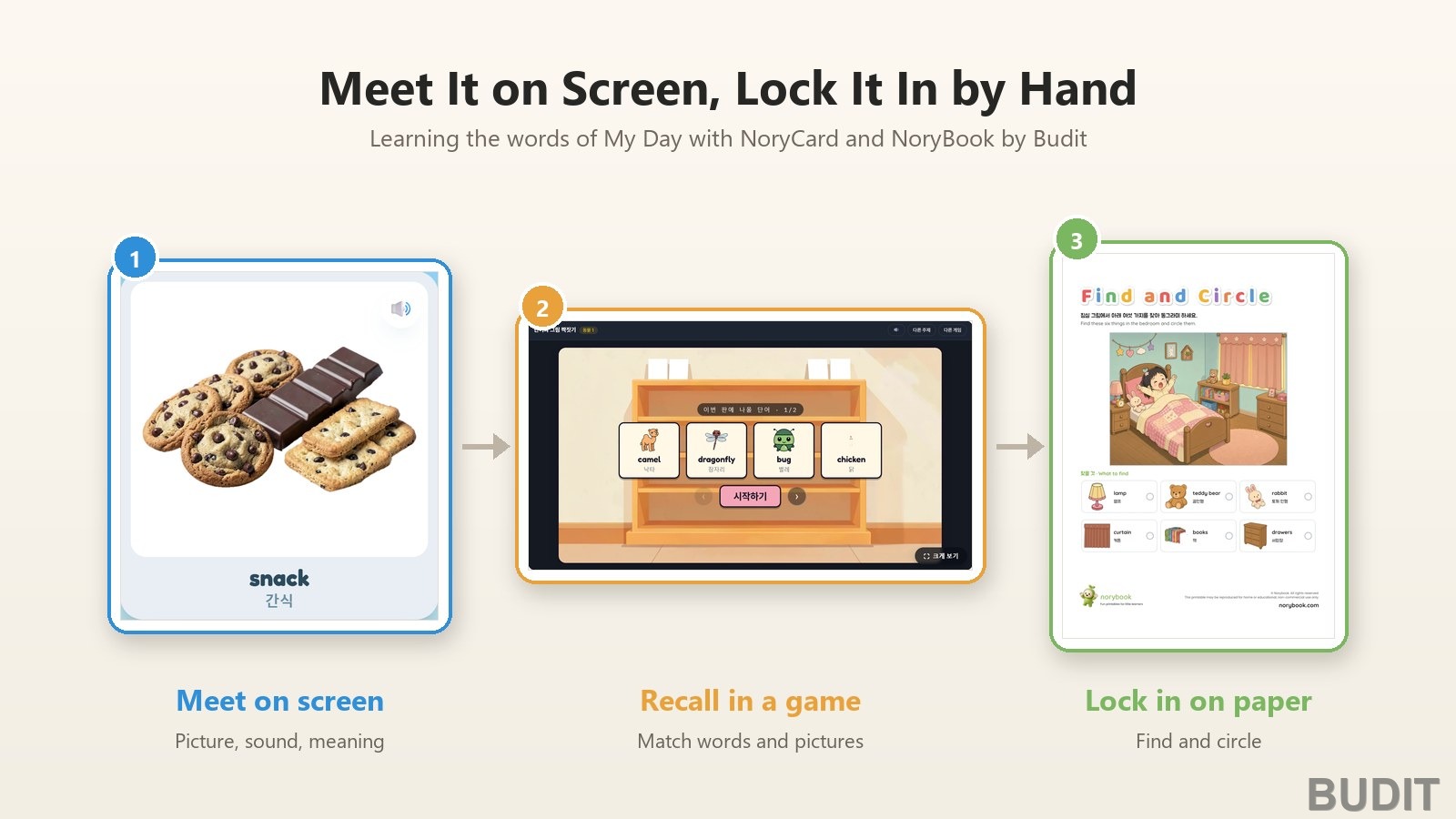
Why Paper Worksheets in a Digital Age 『The Generation Effect』
Why children remember more when they write by hand than when they only look at a screen, explained through the generation effect and handwriting research.
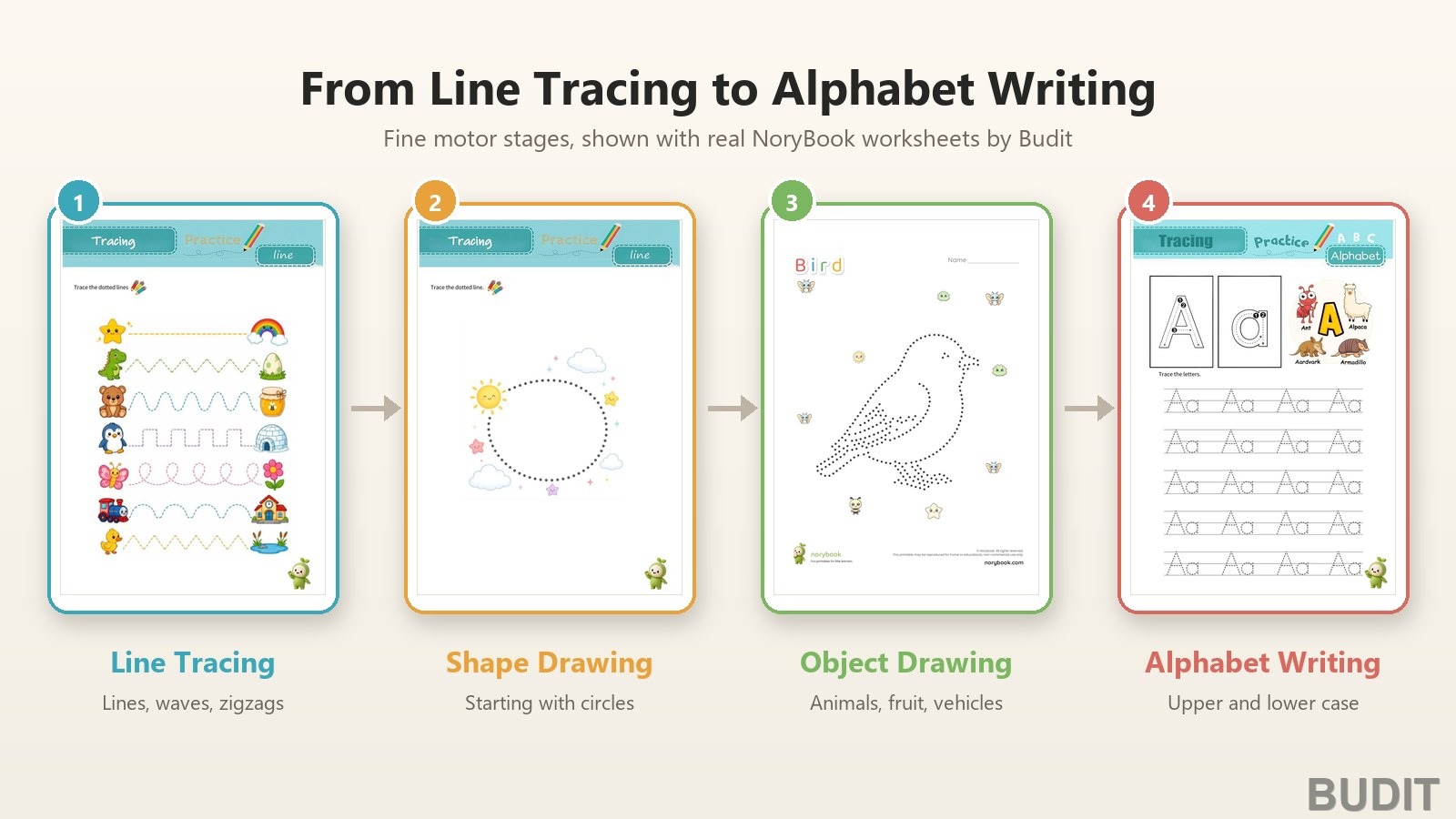
A Child's Brain Grows at Their Fingertips 『Fine Motor Skills and Cognition』
Why cutting, coloring and tracing matter, explained through developmental research on fine motor skills and school readiness.
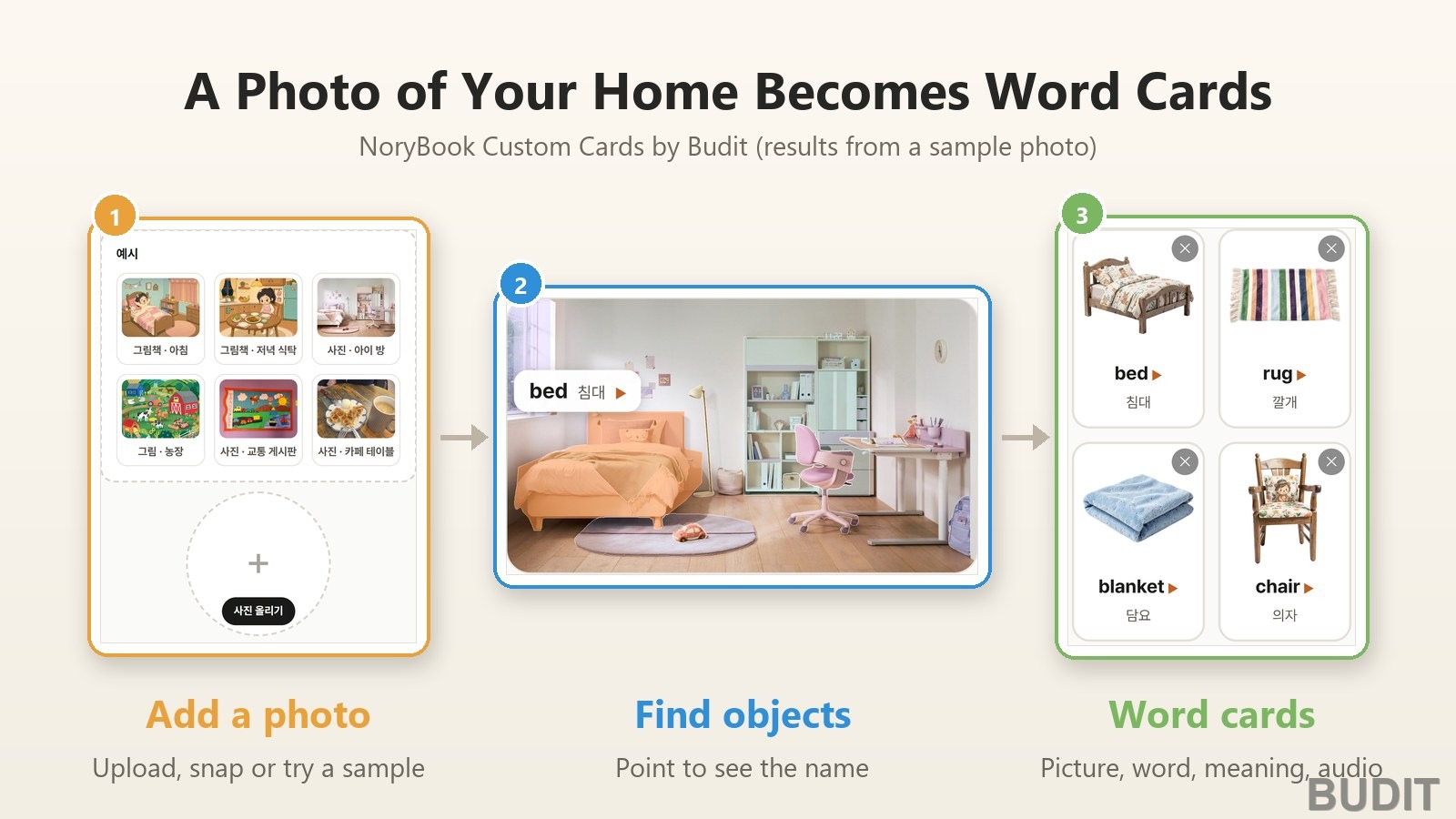
Turn a Photo of Your Home into English Word Cards 『NoryBook Custom Cards』
Upload a photo of your child's room and NoryBook finds the objects in it and shows each one as an English word card. Here is how Custom Cards works, no login needed, and a few ways to play with it at home.
Budit selected for KOCCA's 2026 Content Startup Global Accelerating Program (Launchpad)
Budit has been selected for the UAE and Singapore tracks of KOCCA's 2026 Content Startup Global Accelerating Program (Launchpad).
NoryBook, an English picture book where your child is the hero, with 10 storybooks open for Wadiz funding
Meet NoryBook, Budit's English picture book service. Tap an object in a picture to see its English word card, and have the story read by a standard narrator or a parent's recorded voice. "My Day", printable worksheets and posters, and custom word cards are available now; 10 personalized storybooks are offered through Wadiz crowdfunding.
NoryCard, English word cards where your child is the hero, ready to try today
Meet NoryCard, Budit's English phonics and vocabulary card service for preschoolers and early elementary children. Try it with a sample photo without logging in, and explore word cards in six art styles and about 30 word games.
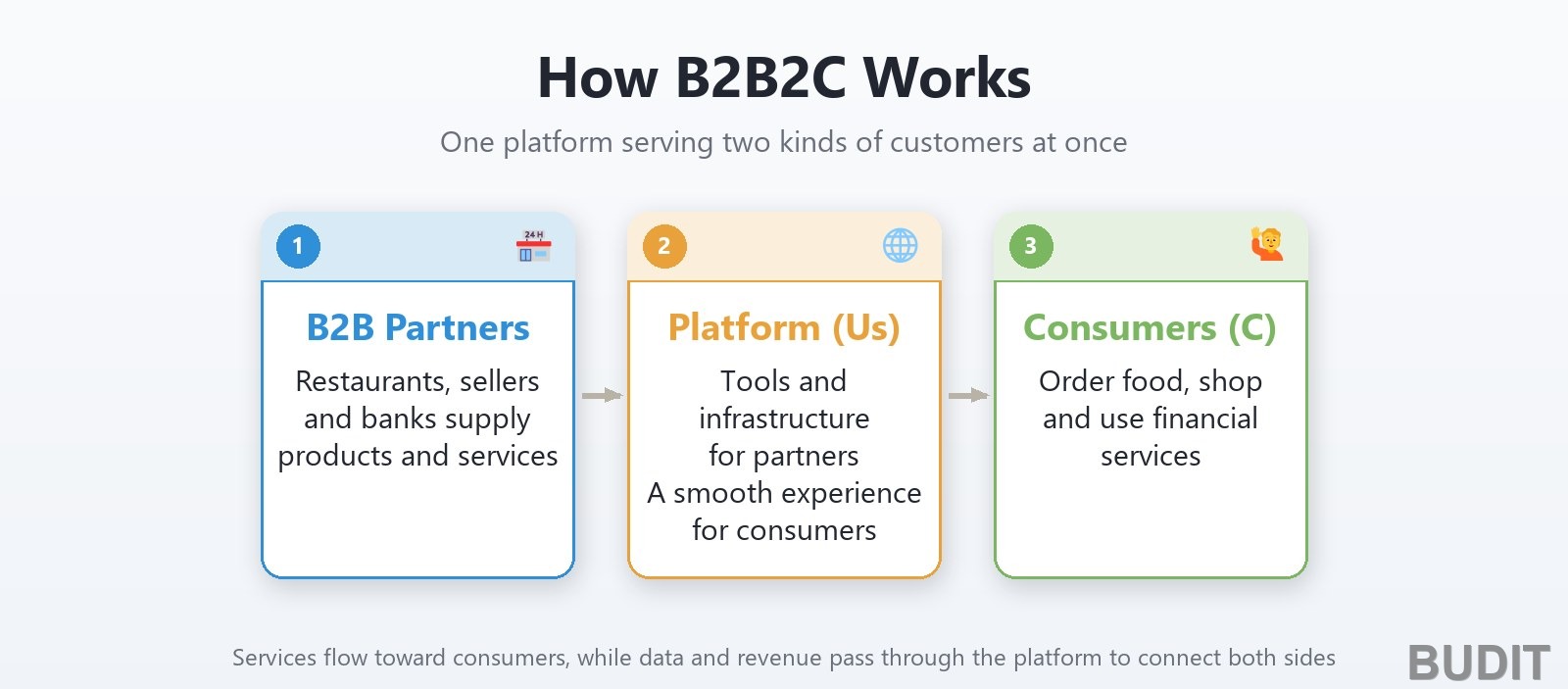
Win Both Sides of the Market: B2B2C Marketing Strategy
B2B2C means serving partners and consumers at the same time. We cover two sided markets, multilayer marketing, the chicken and egg problem and network effects.
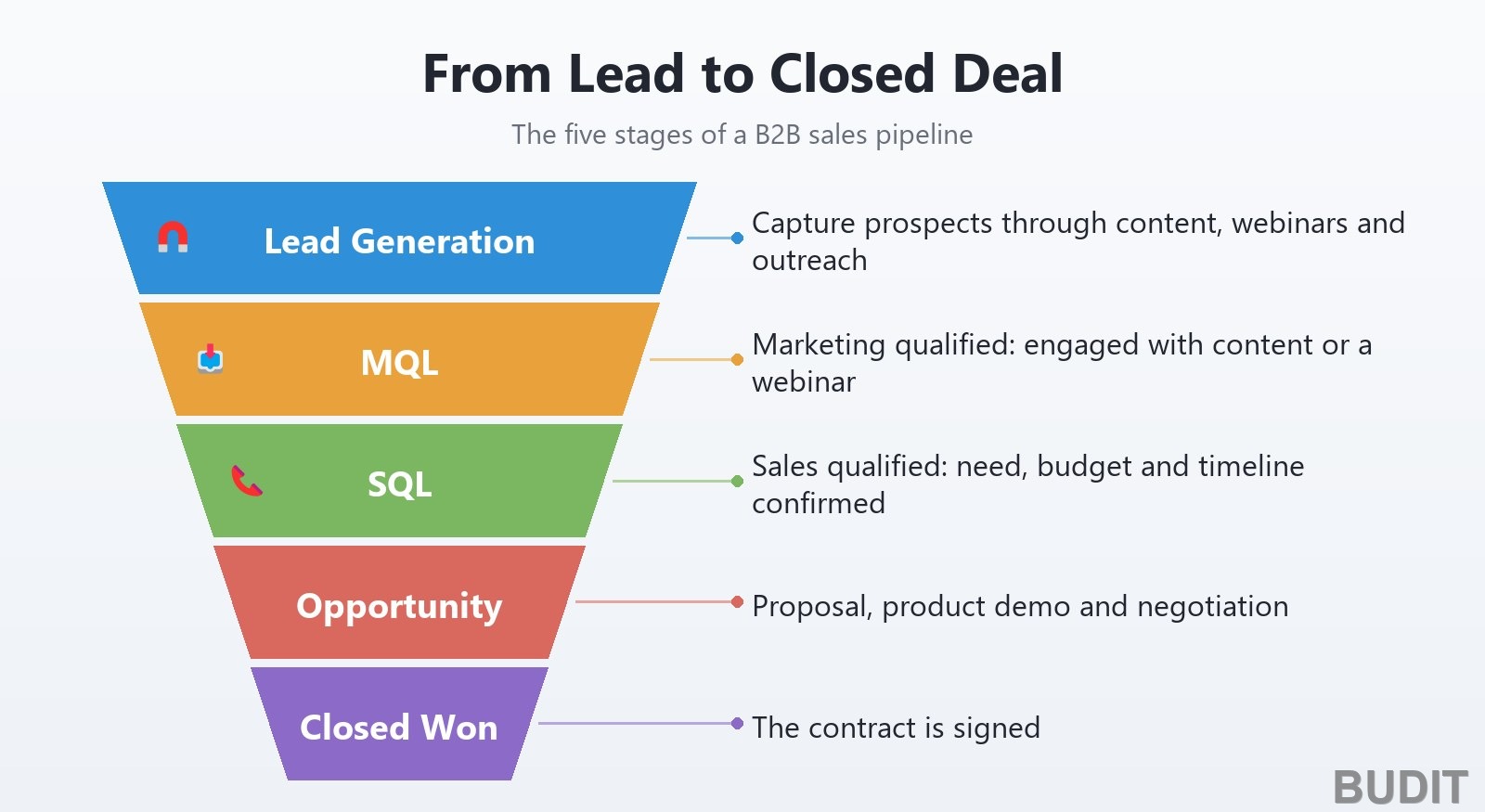
Sell to the Whole Organization, Not One Person: B2B Marketing Strategy
In B2B, groups make the buying decisions. Here's how to generate leads, win over each role in the decision making unit (DMU), and build a nurturing and sales pipeline.
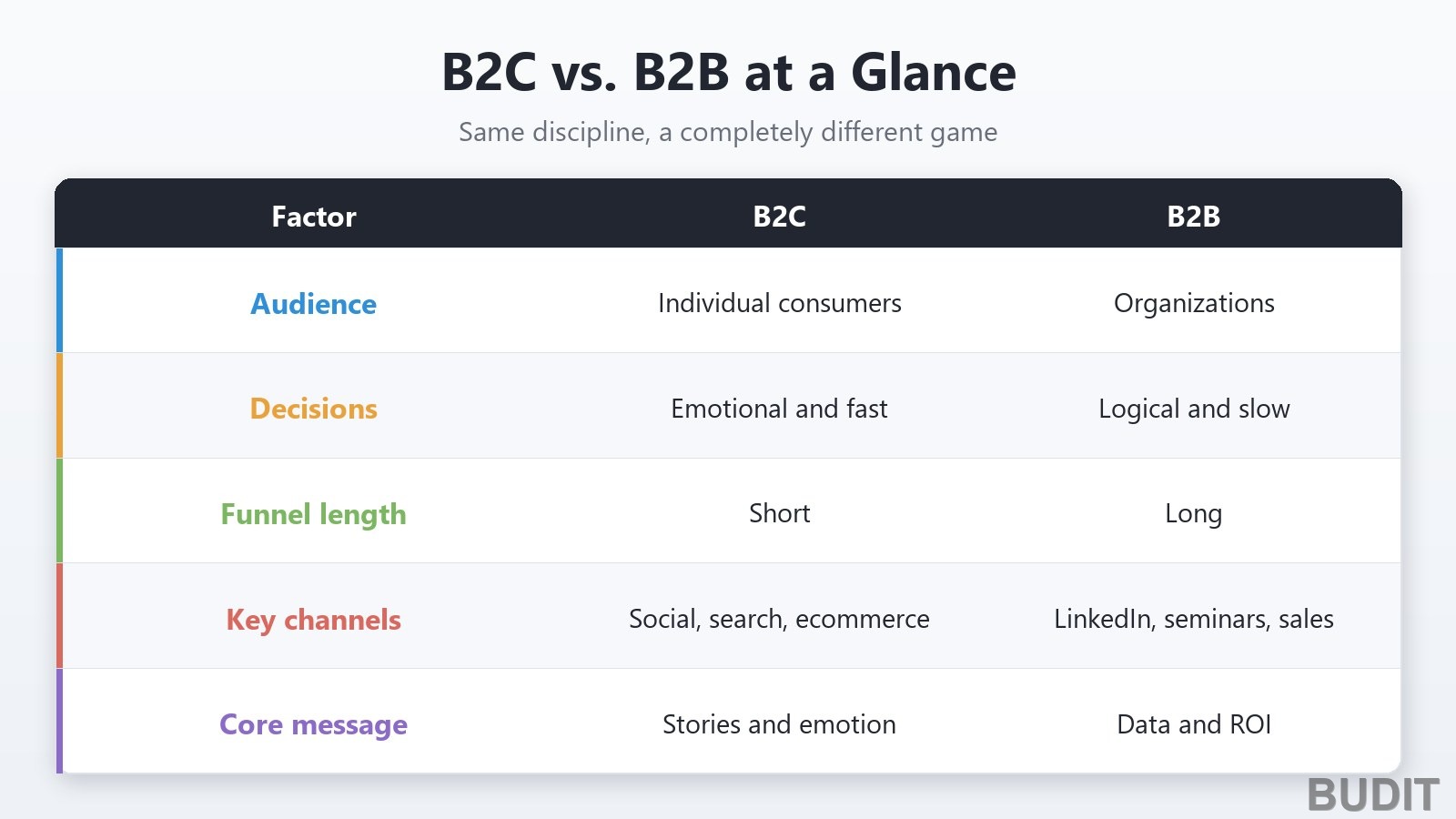
Win the Heart, Open the Wallet: A B2C Marketing Playbook
B2C marketing works by moving individual shoppers to buy quickly. Here's how to use emotional appeal, build a full funnel from discovery to repeat purchase, and set up a loyalty system that turns buyers into fans.
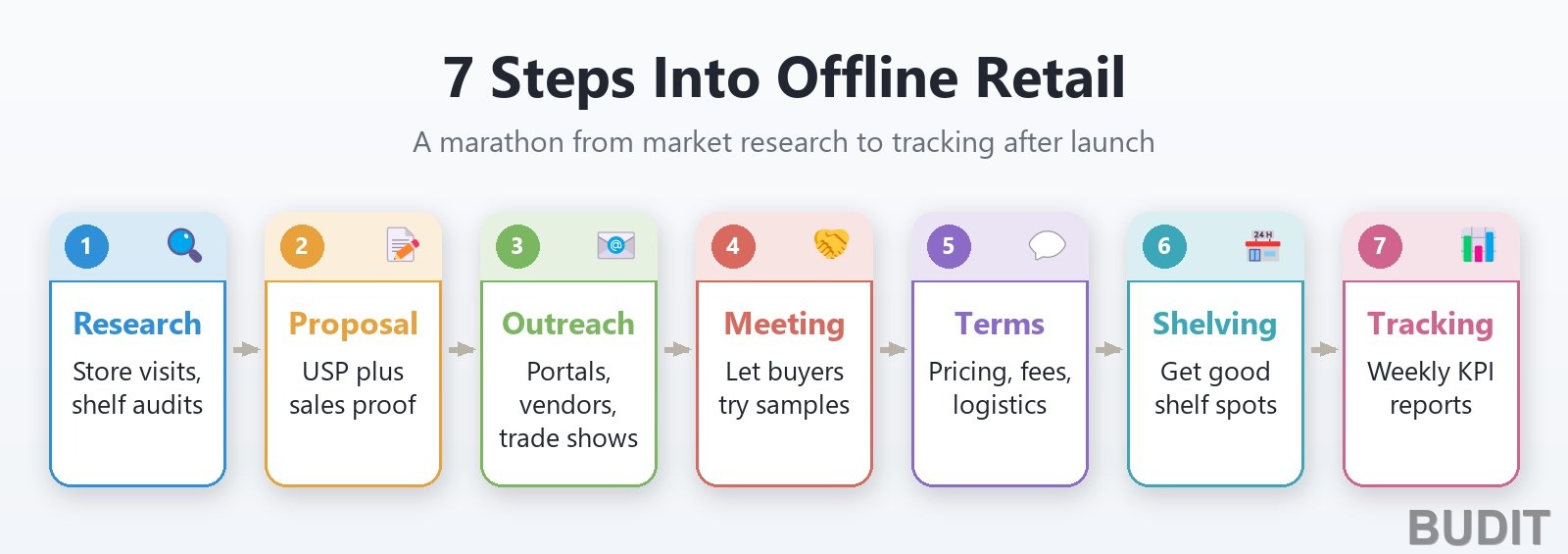
Breaking Into Offline Retail: From Buyer Meetings to Your Proposal
Getting into physical retail comes down to three stages: prepare, pitch, and manage. We cover planogram research, proof from online sales, the six sections of a retail proposal, how to reach buyers, and how to keep your shelf spot after launch.
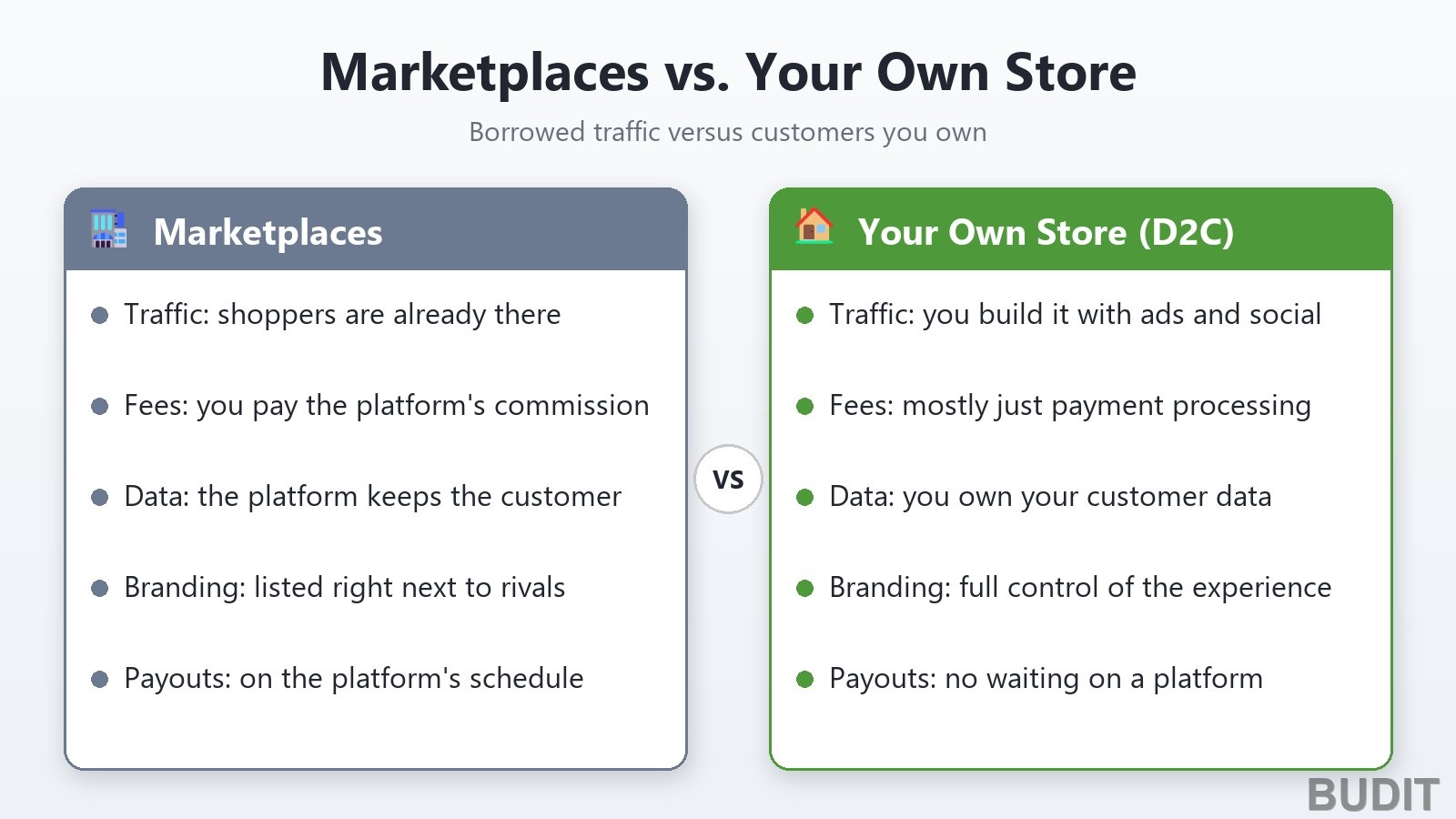
Rent a Platform or Build Your Own Store? Marketplaces, Your Own Store and D2C Strategy
Should you sell on marketplaces like Coupang and Naver or build your own online store? We compare the two, map out a hybrid plan for each growth stage, and cover what to take care of once your own store is running.
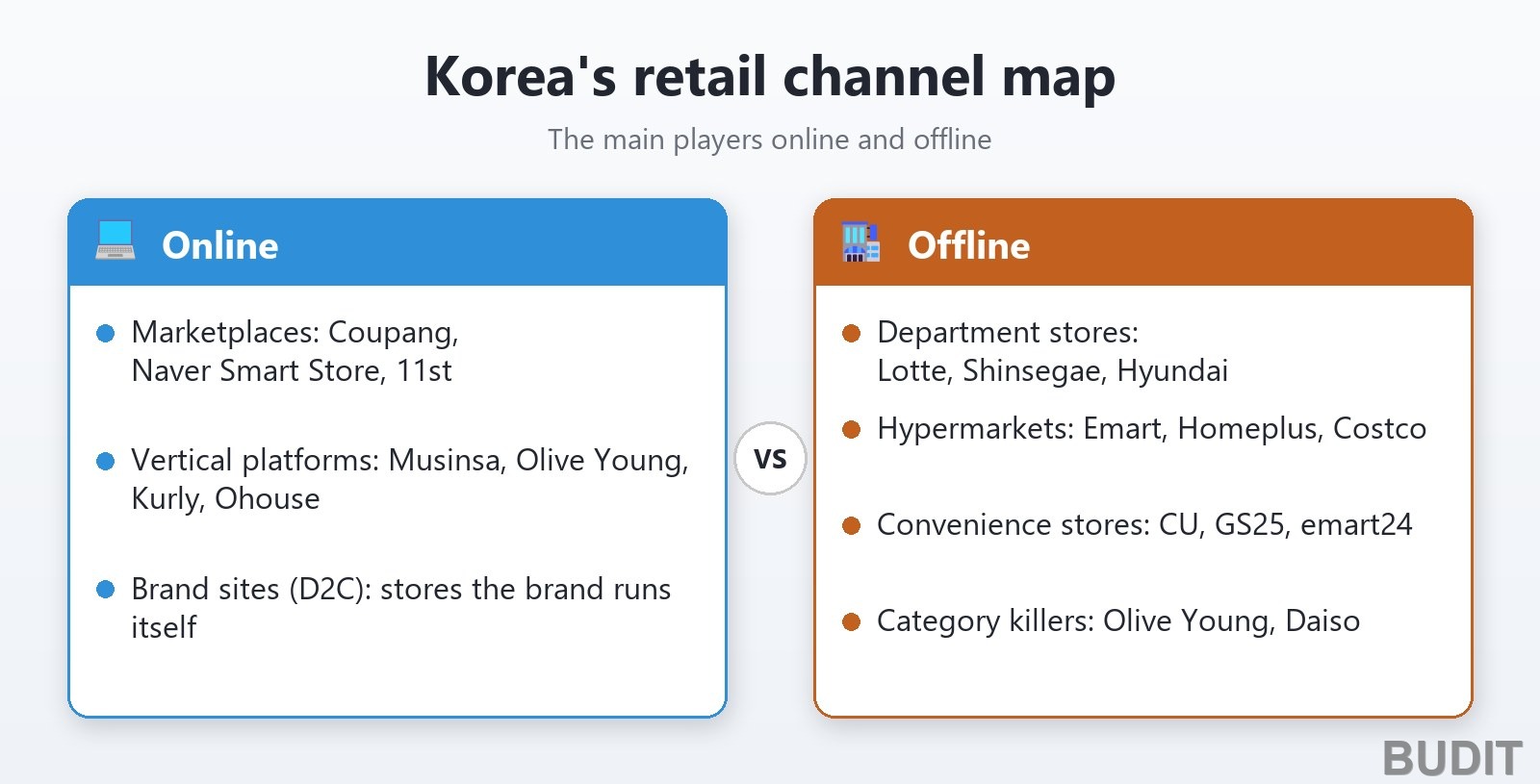
Where Should You Sell? A Map of Korea's Retail Channels
From online marketplaces like Coupang and Naver Smart Store to department stores, convenience stores and Olive Young, here's how Korea's retail channels work and how to choose the right ones for your product.
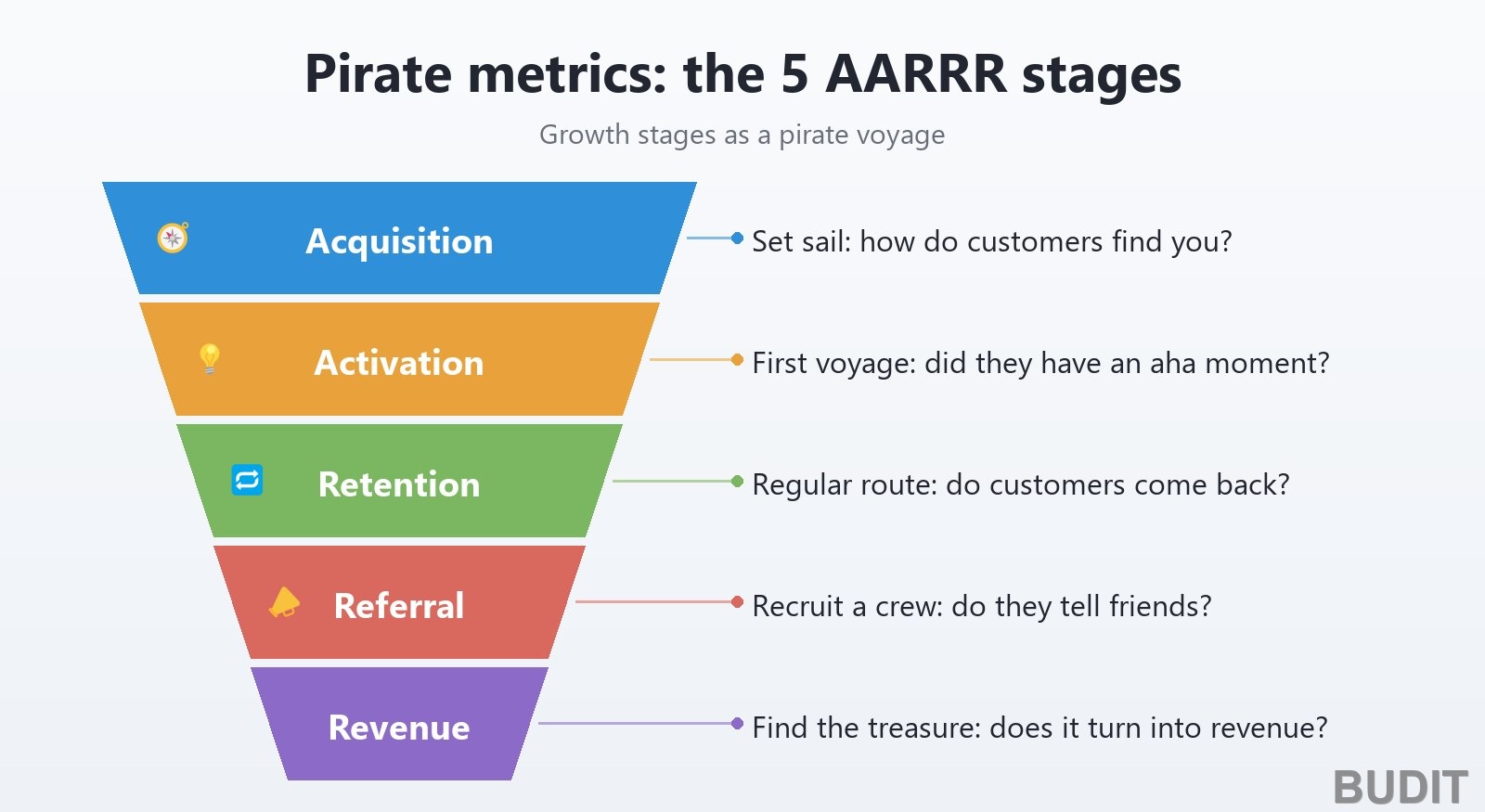
Designing Your Growth Engine: Growth Hacking and the AARRR Framework in Practice
Growth hacking builds a growth engine out of fast experiments grounded in data. Here's how to find your bottleneck with AARRR, rank experiments with ICE scores and keep growth going with growth loops.
Budit's 2026 Selections 『Seven Programs and Grants on One Page』
The seven support programs and grants Budit was selected for or joined in the first half of 2026, on one page: the AI voucher supplier program, the Everyone's Startup project, THE Waffle season 4, two high performance computing programs, the Media Startup program, and the Google for Startups Cloud Program, with organizers, support details and links to the notices.
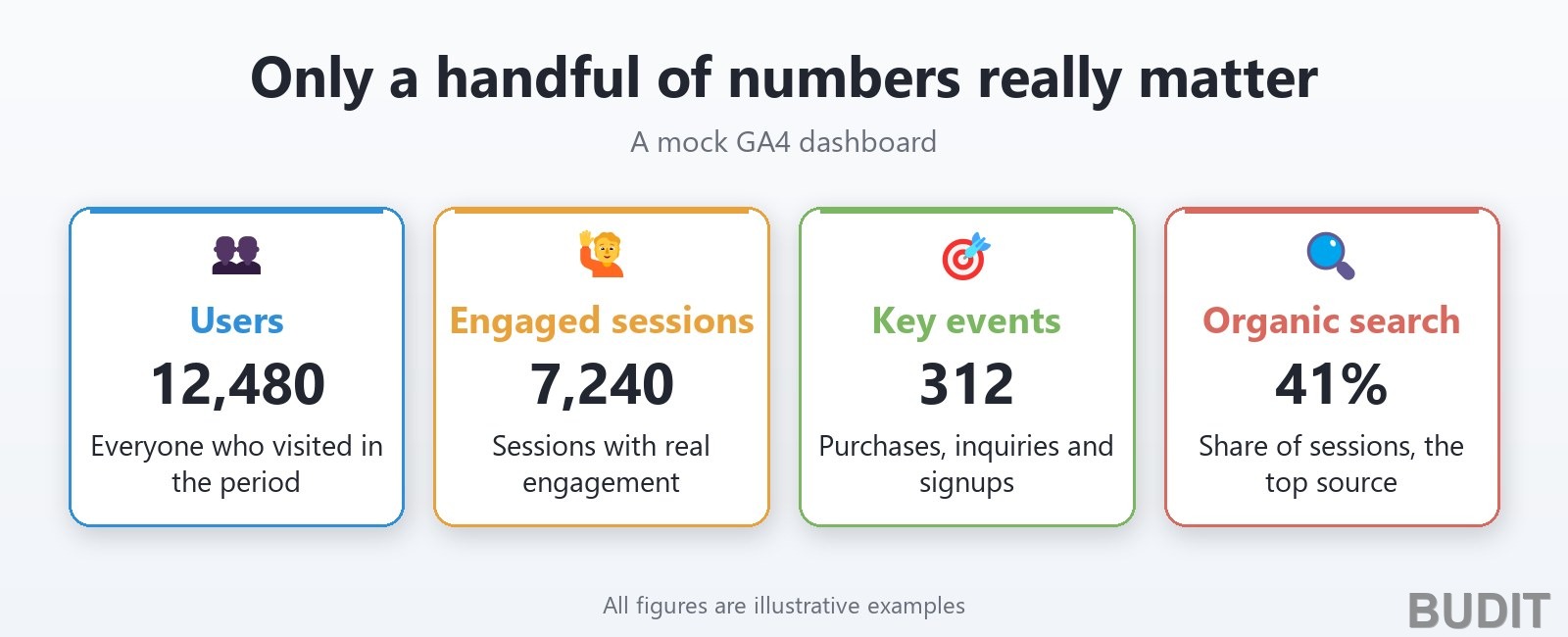
When the Numbers Start Talking: How to Read Your KPIs in GA4
Lost in GA4? Pick three to five KPIs that match your goals, then read everything else in three chunks: acquisition, engagement and conversion. We also cover the UTM and event setup that keeps your data clean.
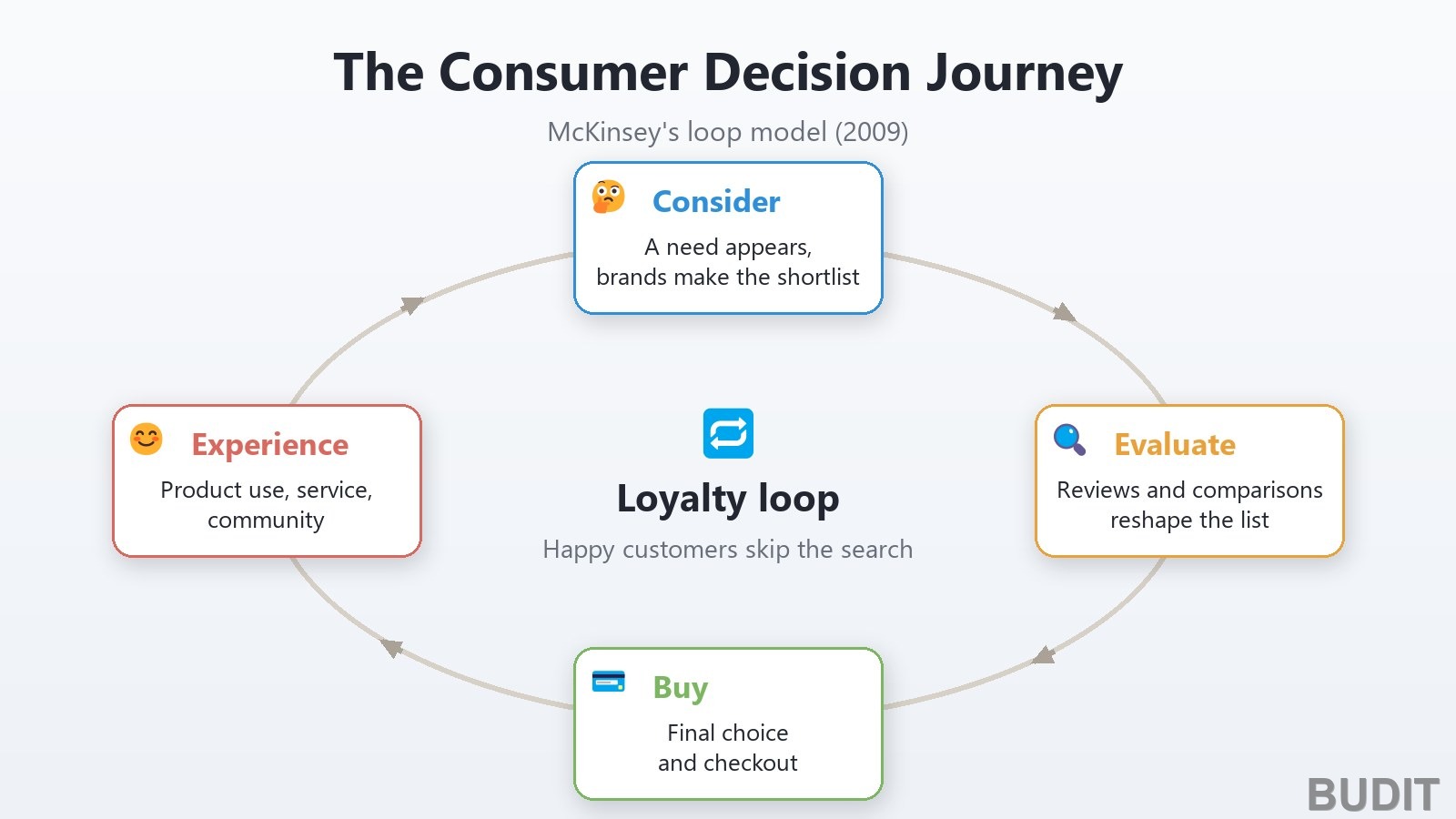
Customers Don't Move in Straight Lines: Building Your Content Strategy With a Customer Journey Map
What a customer journey map is, McKinsey's consumer decision journey loop, how to match content to each journey stage and how to connect touchpoints seamlessly.
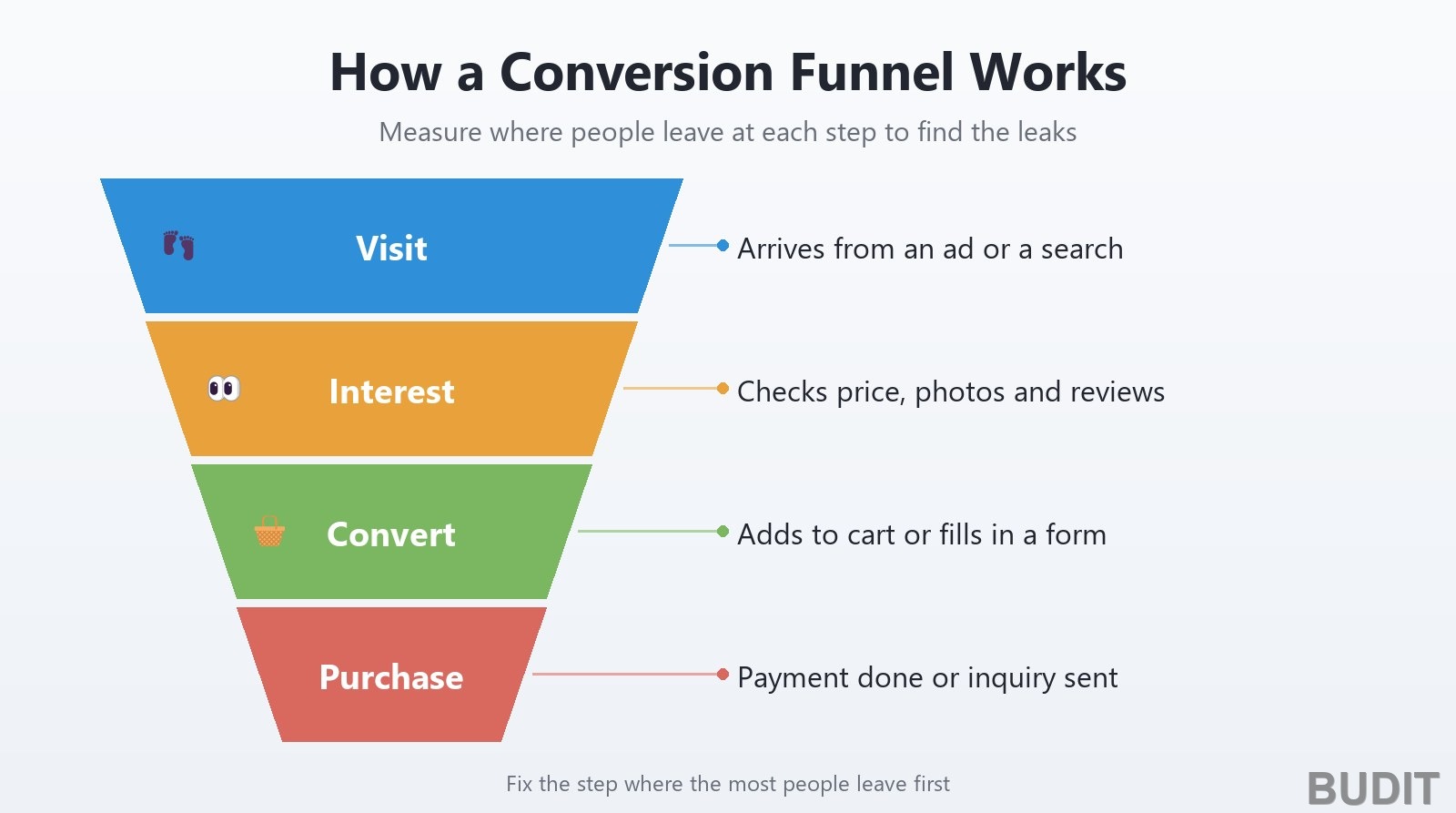
Turning Visitors Into Customers: A Practical Guide to Conversion Rate Optimization (CRO)
How CRO wins more customers from the visitors you already have: diagnosing your funnel, building a focused landing page and running an improvement loop driven by data.
Is Half Your Ad Budget Wasted? A Guide to Performance Marketing Channels and Budget Allocation
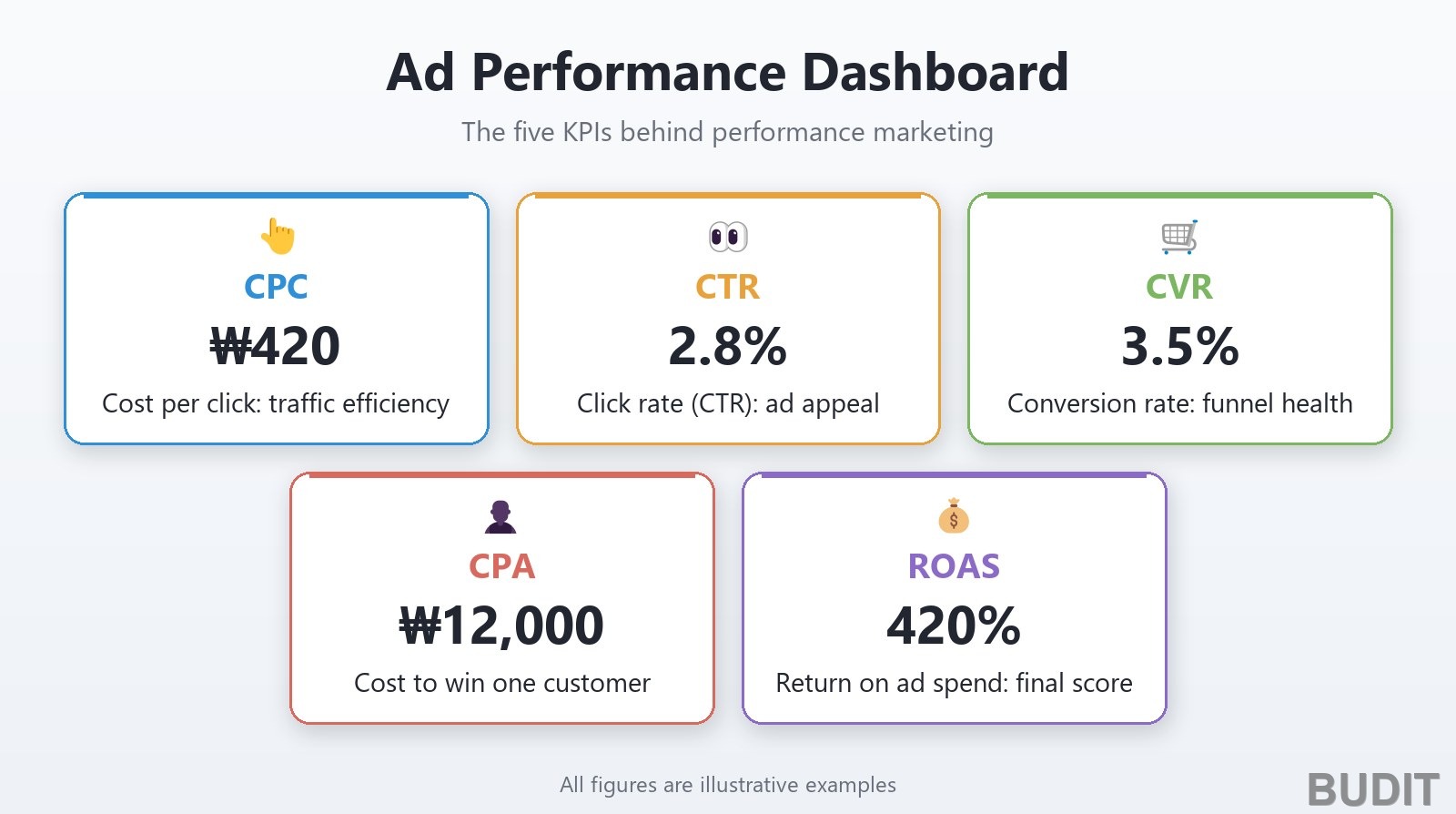
The five KPIs behind performance marketing, how search, social and retargeting ads differ, the 70/20/10 budget rule, and the testing loop that ties it together.
Stop Marketing on Gut Feel: Building Your Marketing Backbone With STP and USP
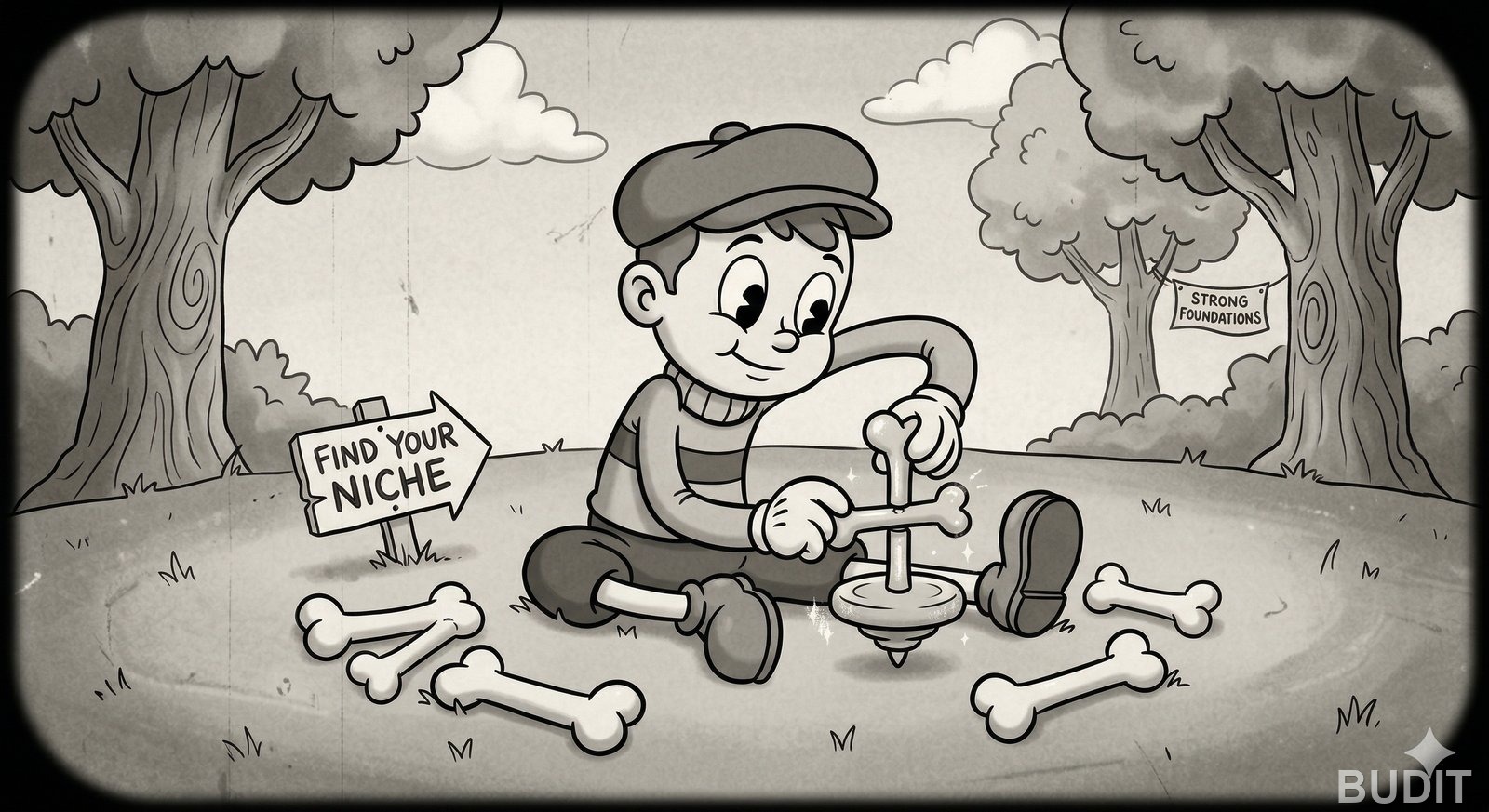
How STP (segmentation, targeting, positioning) and a USP (unique selling proposition) give your marketing a backbone, plus the five conditions of a useful segment and how customer personas help.