


Learning Words by Pointing at Pictures
Reading a book from cover to cover is not the only good way to read. Lingering on a page, pointing at the pictures and talking about them also helps a child's language grow.
Reading as a conversation
In 『dialogic reading』, the parent does more than read the text aloud. They ask questions, build on the child's answers, and gradually hand the storytelling over to the child. When the families of 30 children aged 21 to 35 months read this way for one month, the children scored higher on tests of spoken language and used longer sentences than children whose parents read to them as usual (Whitehurst et al., 1988). A meta analysis found that dialogic reading boosted the words children could say, and that the effect was clear for children aged 2 to 3 but much smaller for children aged 4 to 5 (Mol et al., 2008).
Words stick where your child is already looking
Children learned new words better when an adult named something the child was already looking at than when the adult first drew the child's attention somewhere else (Tomasello and Farrar, 1986). Instead of pulling your child's eyes to what you picked, follow their interest and name what they are looking at.
If the picture book is on a screen
A meta analysis of 43 studies on digital picture books found that animated pictures, music and sound effects helped children understand the story and learn words they could use, while interactive extras such as tappable spots, games and dictionaries tended to distract them (Takacs et al., 2015). Use tapping features sparingly, and keep the conversation going beside your child.
Four steps for reading while pointing
- 『Prompt』: point at a picture and ask, 『What is this?』
- 『Acknowledge』: take your child's answer, as in 『Yes, it's a blanket.』
- 『Expand』: add a little more, as in 『A soft blanket. In English, blanket!』
- 『Repeat』: before turning the page, ask again, 『What did we call this?』
Why everyday words make good first words is covered in our earlier article Why Start Children's English with Everyday Words.
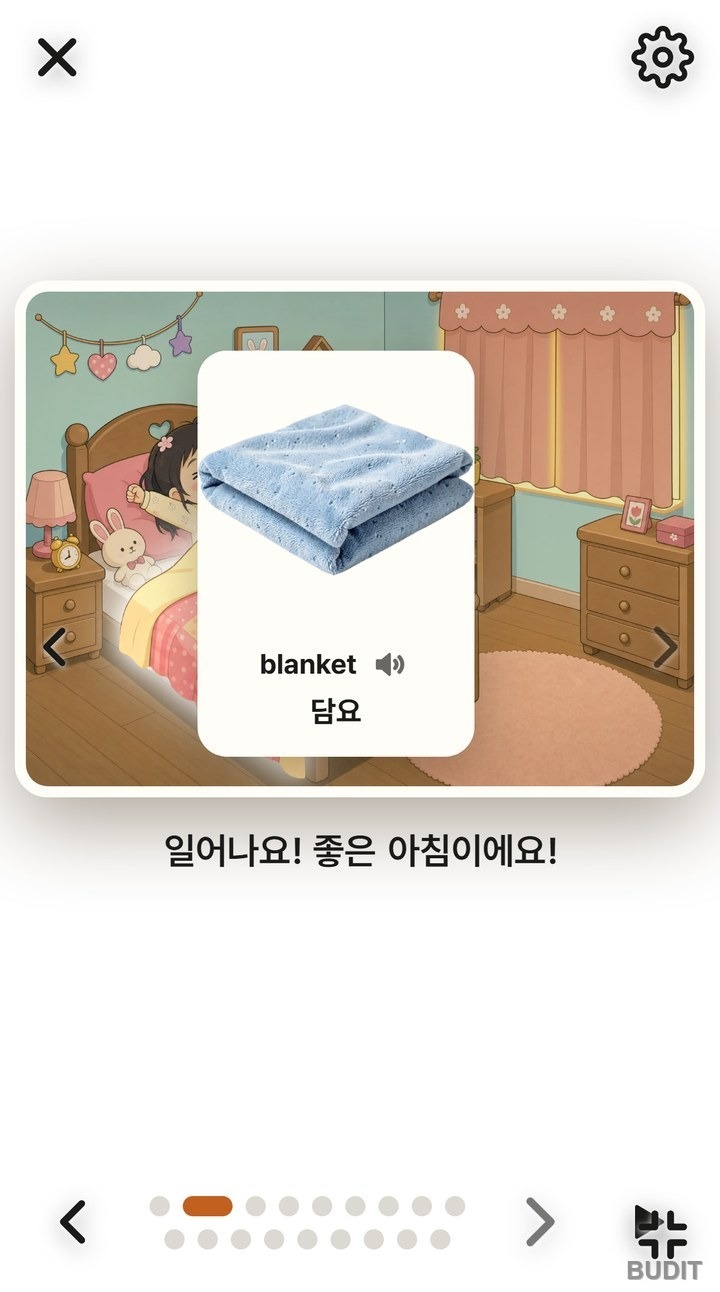
Photo: the word card that appears after tapping the blanket in 『My Day』 (as of Oct 19, 2026). Tap what the child points at and the English word, meaning and sound follow. See it
Worth watching
Video: EBS 『Literacy Kindergarten』 tip, 『Don't miss this when reading aloud』 (official YouTube channel of the EBS literacy special, Korean). A short clip suggesting you start by talking with your child about what is on the cover, such as the author, the illustrator and the translator.
How this continues in Budit
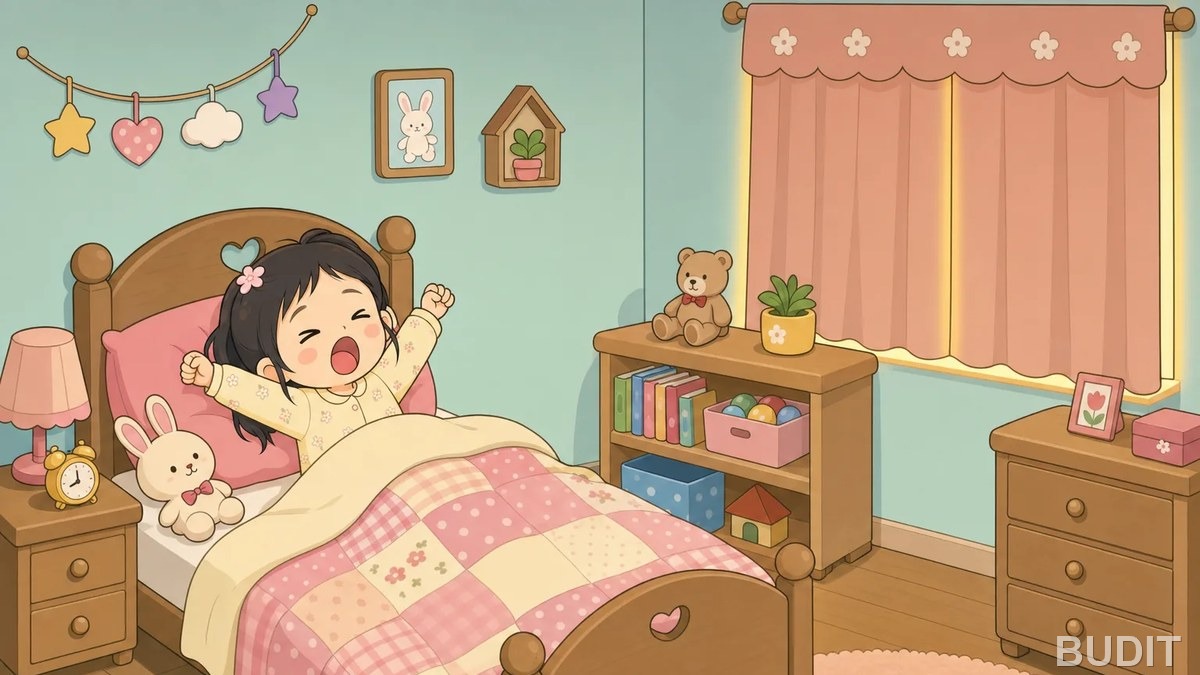
In the 『NoryBook』 reader, tapping something in a picture brings up an English word card for it. The image at the top shows the real first scene of 『My Day』.
- 『Look together』: in the reader, start by looking around the picture together and asking, 『What do you see?』
- 『Tap it』: tap the blanket your child pointed at, and a 『blanket』 card appears.
- 『Name and sound』: play the word on the card, say it together, then move on to something else, such as the bed.
Tapping is there to give the English names of things and actions in the pictures. Rather than letting your child tap alone, use it together and keep the questions going.
Related reading: 『That Book Again?』 Why Rereading the Same Book Works, The Science of Bedtime Reading 『Emotional Security and Sleep』, How to Choose Picture Books by Age 『From Faces to Letters』
References
- Whitehurst, G. J. et al. (1988). Accelerating language development through picture book reading. View the paper
- Mol, S. E. et al. (2008). Added value of dialogic parent-child book readings: A meta-analysis. View the paper
- Tomasello, M. and Farrar, M. J. (1986). Joint attention and early language. View the paper
- Takacs, Z. K., Swart, E. K. and Bus, A. G. (2015). Benefits and pitfalls of multimedia and interactive features in technology-enhanced storybooks: A meta-analysis. View the paper
This article shares general information about development and education. Every child grows at their own pace. For specific concerns, please consult a pediatrician or a development specialist.