


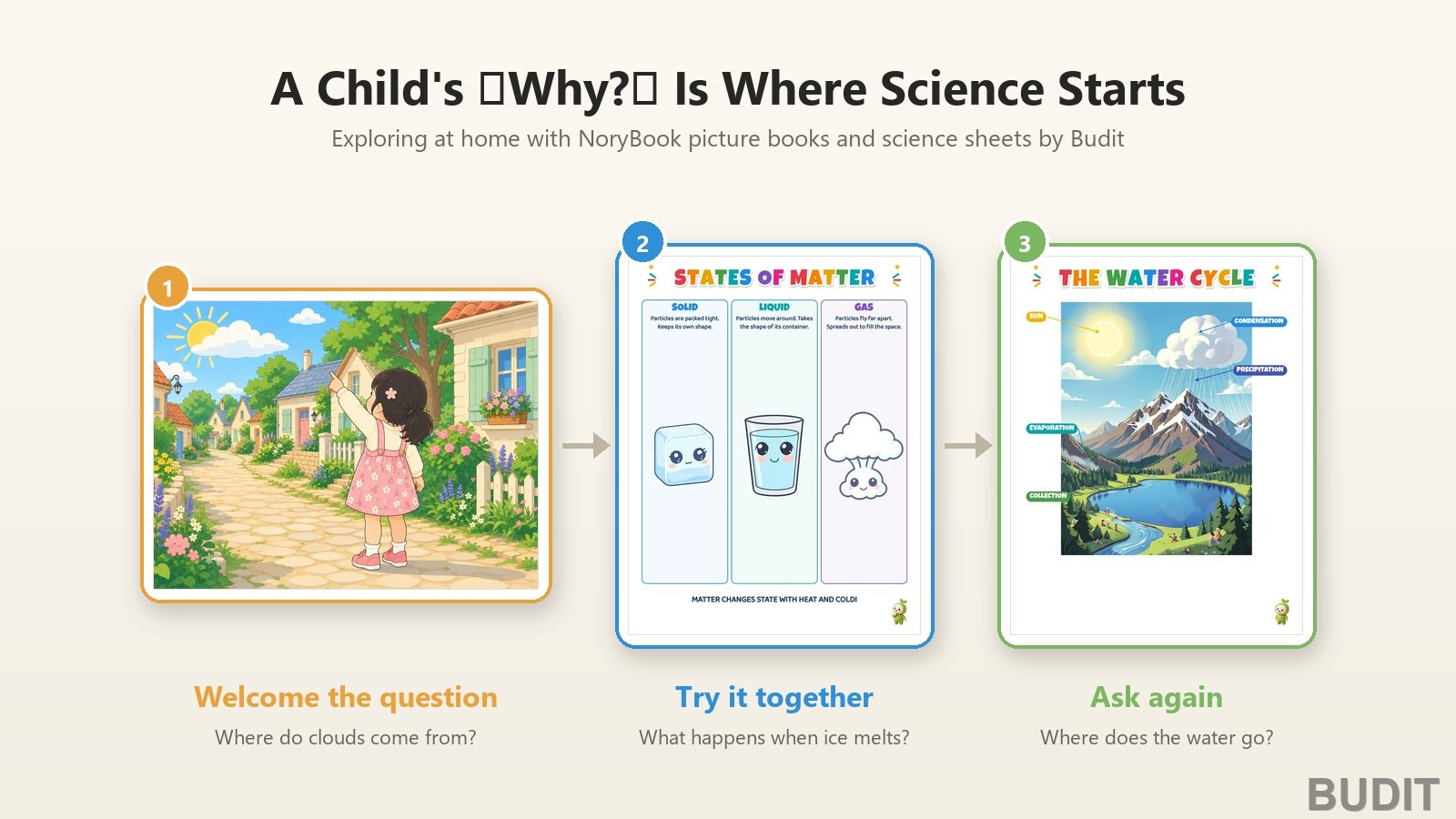
Growing Scientific Curiosity
『Why do clouds move?』 『Where did the ice go?』 Some days, worn out by questions that keep coming, we answer 『that's just how it is』. Yet a child's 『why?』 is not meant to pester. It is the fastest way they have of learning about the world. Scientific curiosity grows less from knowing many right answers than from conversations in which questions keep going.
At a glance
| Question | What the research says |
|---|---|
| Why do children ask so much | Most of their questions were not bids for attention but requests for information |
| What kind of answer works | Children given an explanation were satisfied; without one they asked again or made up their own |
| What if you show the answer first | When an adult taught one function of a toy, children found fewer of its other functions |
| Do children experiment on their own | Children given a toy whose cause was unclear played with it longer |
| What should parents watch | At a science museum, parents explained to boys about three times as often as to girls |
A child's question is a request for information
Chouinard gathered recordings and diaries of conversations between adults and children aged one to five. The children asked dozens of questions an hour, and most of them were attempts to find something out, not to get attention. They took in the answer and built their next question on it (Chouinard, 2007). Questions are how a child teaches themselves.
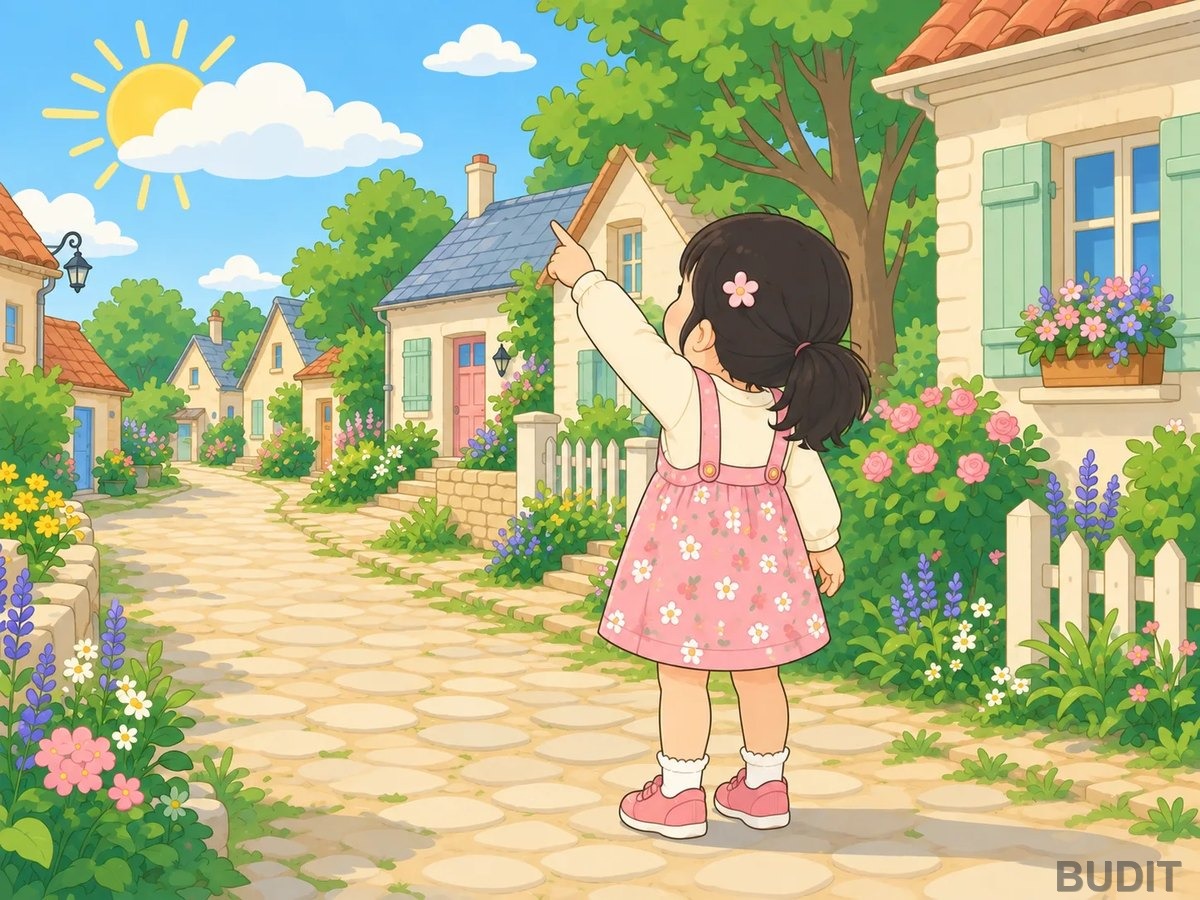
Photo: the 『Look up! A cloud!』 scene from the 『NoryBook』 picture book 『How's the Weather?』 (as of Oct 28, 2026). A good page to ask 『where did the cloud come from?』. The first five pages of this book are open as a preview. See the book
Children want explanations
Frazier and colleagues analyzed conversations between children and adults and confirmed the pattern in the lab. Children who got an explanation for their 『why?』 nodded along or moved on, while children who got an answer that explained nothing asked the same question again or offered an explanation of their own (Frazier et al., 2009). That is why 『that's just how it is』 rarely works. It does not have to be a perfect answer, though. 『I don't know either, shall we find out together?』 is an answer that keeps things going.
Showing the answer first cuts exploration
Bonawitz and colleagues gave children a toy with four hidden functions. Children whose adult said 『this is how it works』 and taught one function kept repeating that function, while children who saw an adult show one function by accident, or saw nothing, played longer and found more of the other functions (Bonawitz et al., 2011). Teaching is not bad. Asking 『what do you think will happen?』 before giving the answer leaves room for the child to find it.
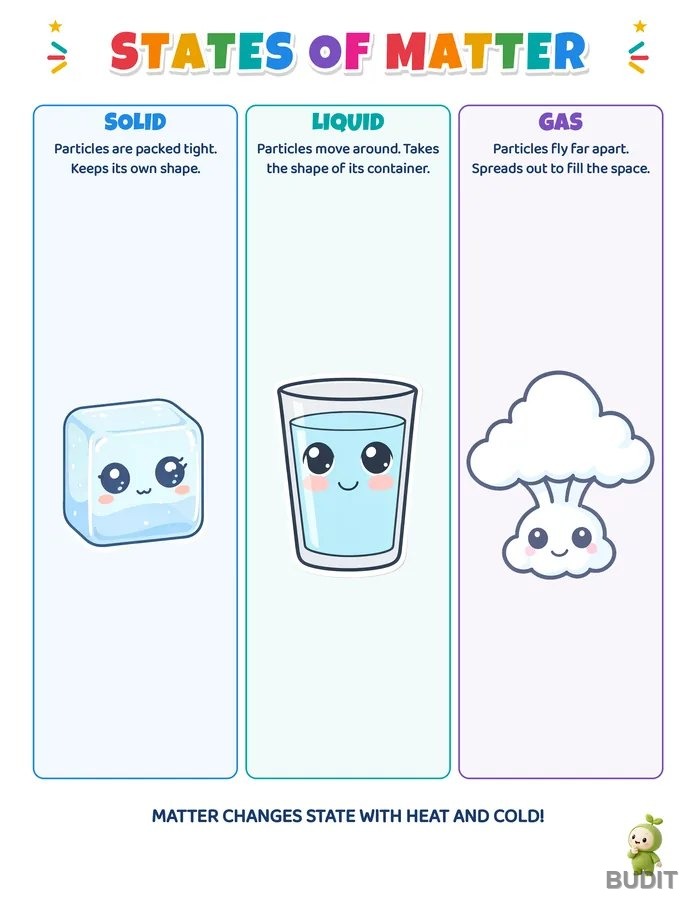
Photo: the 『NoryBook』 『States of Matter』 sheet (as of Oct 28, 2026). Put an ice cube on a plate, ask 『what will happen?』 first, then watch together. Get the sheet
Children run their own experiments
Schulz and Bonawitz used a box with two levers that made puppets pop up. Children who saw an adult always press both levers together, so it was unclear which lever did what, kept playing with that box longer even with a new toy beside it. When the cause had been shown clearly, they moved on to the new toy (Schulz and Bonawitz, 2007). Even a four year old, faced with a cause that is unclear, stays with it and explores it longer.
There are differences in how we answer, too
Crowley and colleagues recorded parents and children at a children's science museum. Boys and girls handled the exhibits in the same way, but parents explained how things worked to sons about three times as often as to daughters (Crowley et al., 2001). It is a difference parents do not notice they are making. Simply adding an explanation to a daughter's 『why?』 as readily as to a son's narrows it.
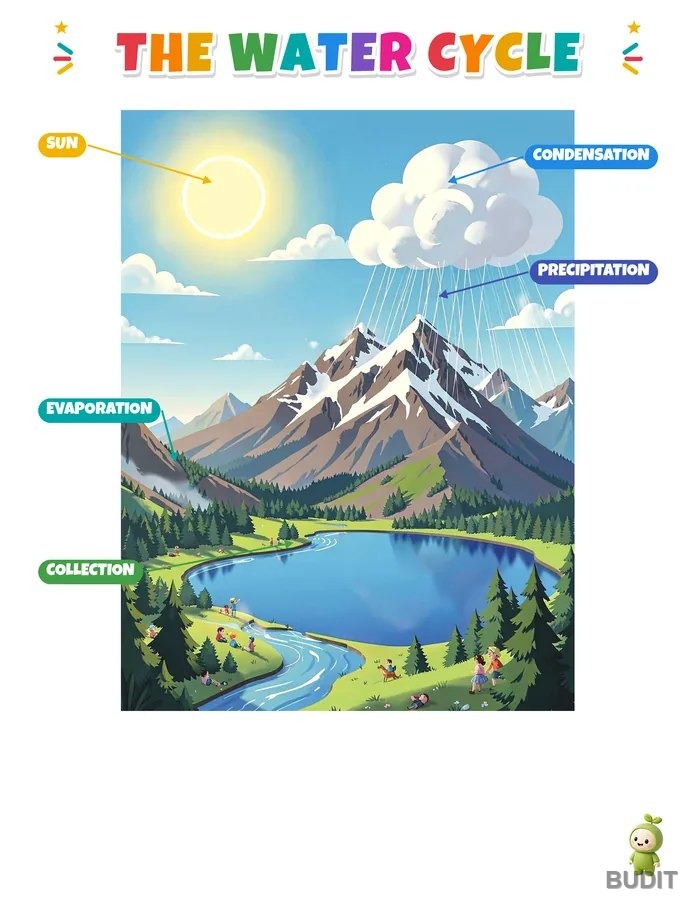
Photo: the 『Water Cycle』 sheet (as of Oct 28, 2026, for ages 7 to 9). Good for a child who noticed a puddle vanish the day after rain, to find the answer to 『where did the water go?』 together. Get the sheet
What to do at home
- Welcome the question. 『Good question』 invites the next one. When you are busy, promise 『let's find out this evening』 and keep it.
- Ask before you answer. 『What do you think will happen?』 『Why do you think so?』 It is fine if the child's guess is wrong. Predicting and then checking is the order of science.
- Add a short explanation. One line of cause and effect is enough, such as 『the sun warmed the water and it went up into the sky』.
- Try it together. Melting ice, measuring shadows, sorting what floats from what sinks. The kitchen and the playground are the lab.
- Say when you don't know. 『Shall we look it up together?』 lasts longer than a right answer, and watching an adult look something up is itself a way to learn.
- Attach English words to what was seen. Add one English name to what the child just observed, 『cloud』 while looking at clouds, 『melt』 while watching ice melt.
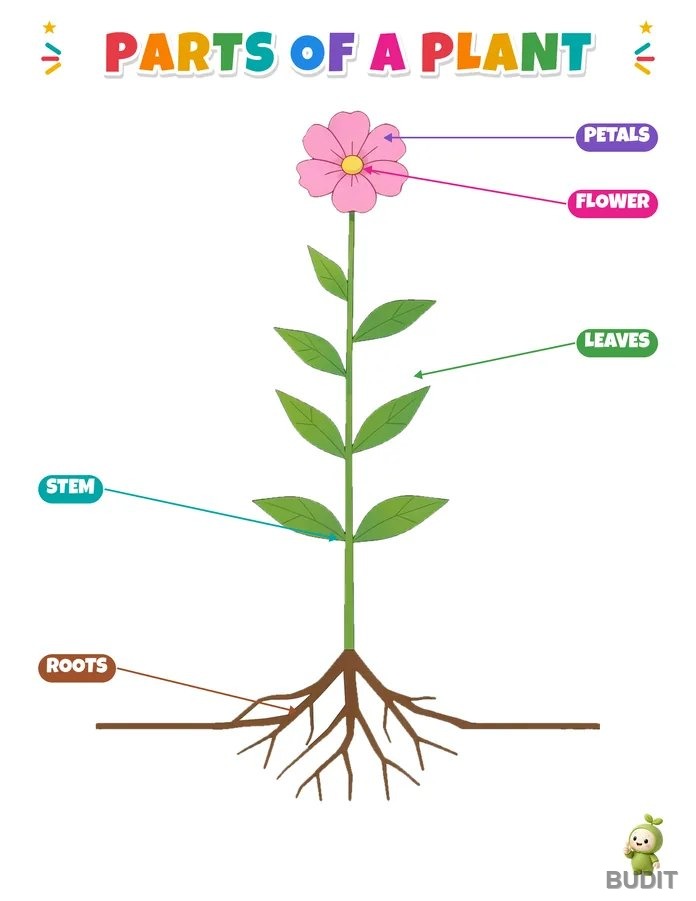
Photo: the 『Parts of a Plant』 sheet (as of Oct 28, 2026). Open it on the day the child sees the roots of a pulled weed on a walk, and the question connects to the picture. Get the sheet
Questions people ask
My child keeps asking the same question Children ask again when they feel they did not get an explanation. Rephrase the answer and add one line about the cause. If the question still comes back, ask the child 『why do you think it happens?』.
I don't know much science You don't need to. Finding out together is exploration itself. What children in the research wanted was less a perfect answer than a conversation in which explanations kept coming.
Should we start science worksheets early? Seeing, touching and asking come first. Sheets work best as a tool for organizing and naming what the child has already observed.
What about a child who doesn't ask questions? Show your own curiosity first. Thinking aloud, 『Oh, the ants are walking in a line. Where are they going?』, models what a question looks like.
How this continues in Budit
The three steps in the image at the top are the order for exploring at home.
- 『Welcome the question』: How's the Weather? shows the weather a child sees every day, sun, clouds and rain, scene by scene. The first five pages can be read as a preview.
- 『Try it together』: download the States of Matter and Weather Chart sheets from NoryBook without a login and use them with melting ice or marking today's weather.
- 『Ask again』: use the Water Cycle and Parts of a Plant sheets to name what was observed and move on to the next question.
Visit NoryBook · Open How's the Weather?
Related reading: Play Is Learning 『Play Based Learning』, Learning Words by Pointing at Pictures 『Interactive Book Reading』, Number Sense in Everyday Life 『Counting What Is in Front of You Beats Drills』
References
- Chouinard, M. M. (2007). Children's questions: A mechanism for cognitive development. Monographs of the Society for Research in Child Development. View the paper
- Frazier, B. N., Gelman, S. A. and Wellman, H. M. (2009). Preschoolers' search for explanatory information within adult child conversation. Child Development. View the paper
- Bonawitz, E. et al. (2011). The double edged sword of pedagogy: Instruction limits spontaneous exploration and discovery. Cognition. View the paper
- Schulz, L. E. and Bonawitz, E. B. (2007). Serious fun: Preschoolers engage in more exploratory play when evidence is confounded. Developmental Psychology. View the paper
- Crowley, K., Callanan, M. A., Tenenbaum, H. R. and Allen, E. (2001). Parents explain more often to boys than to girls during shared scientific thinking. Psychological Science. View the paper
This article shares general information about development and education. Every child grows at their own pace. For specific concerns, please consult a pediatrician or a development specialist.