


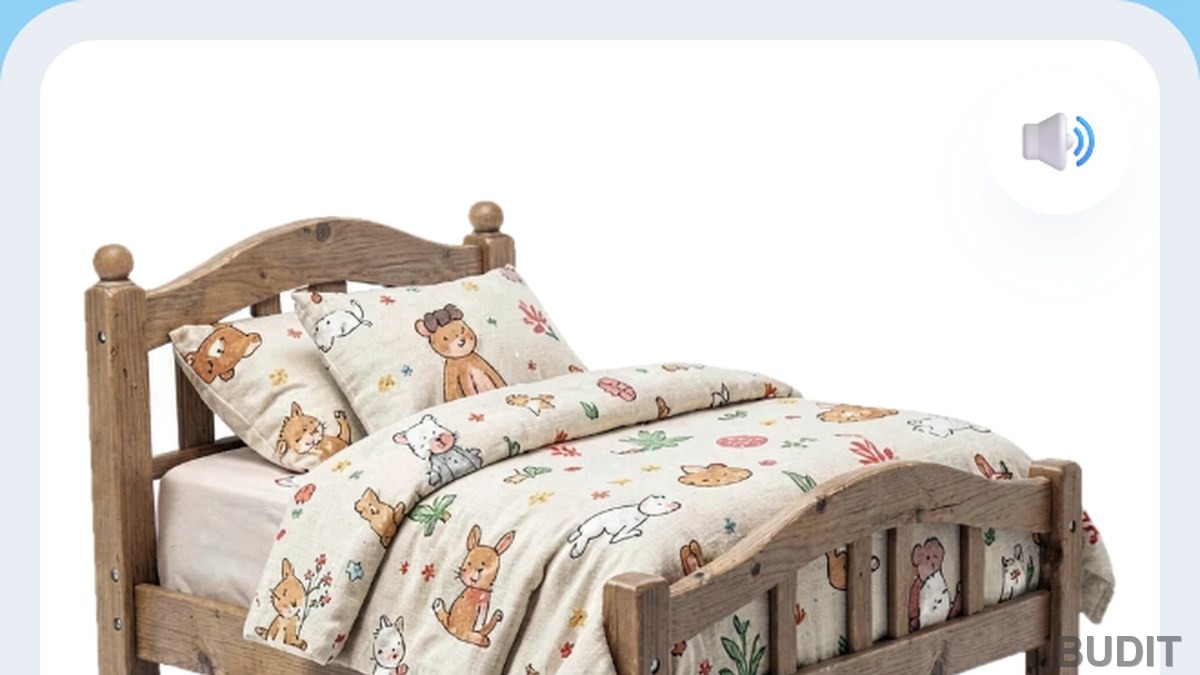
Why Game Review Helps Words Stick
Your child clearly knew a word yesterday, and today it is gone. There is no need to be disappointed. Memories naturally fade over time, and practicing recall again after a gap helps words last longer.
Memory fades quickly
In the 1880s, the psychologist Hermann Ebbinghaus memorized lists of nonsense syllables himself and tracked how much he forgot as time passed. Forgetting was fast at first and then slowed down, a pattern now known as the 『forgetting curve』 (Ebbinghaus, 1885). When he relearned a list he had studied before, he needed fewer repetitions than the first time.
Recalling beats rereading
The act of pulling something out of memory makes that memory stronger. This is called 『retrieval practice』 or the 『testing effect』 (Roediger and Karpicke, 2006). In an experiment where college students learned Swahili words, those who kept testing themselves even on words they had already gotten right remembered about 80% a week later. Those who only restudied those words remembered about 36% (Karpicke and Roediger, 2008).
Spread it out instead of cramming
Many studies have found that, for the same total study time, spreading sessions out leads to longer lasting memory than cramming them together (Cepeda et al., 2006). Young children show a similar pattern. Two year olds said new words better when they heard them spread over two weeks than when they heard them all in one day, although they understood the words equally well either way (Childers and Tomasello, 2002). Three year olds also learned more when objects were shown with gaps in between rather than back to back, both on a memory task and on a task about recognizing new objects of the same kind (Vlach et al., 2008).
Why games make good review
- A game is a natural way to practice recall. Picking the word that matches a picture works like a small quiz.
- Mistakes feel low stakes, and the right answer often shows up right away.
- The same word comes back in different forms: picture, sound and spelling.
- Games are short, so they are easy to spread over several days.
Here is one way to space out review.
| When | What |
|---|---|
| Today | Meet new words on cards |
| Next day | A game matching words to pictures |
| A few days later | Listen and pick, or listen and spell |
| A week later | Check with an activity sheet |
Why pictures and written words belong together is covered in our earlier article Why Show Pictures and Words Together.
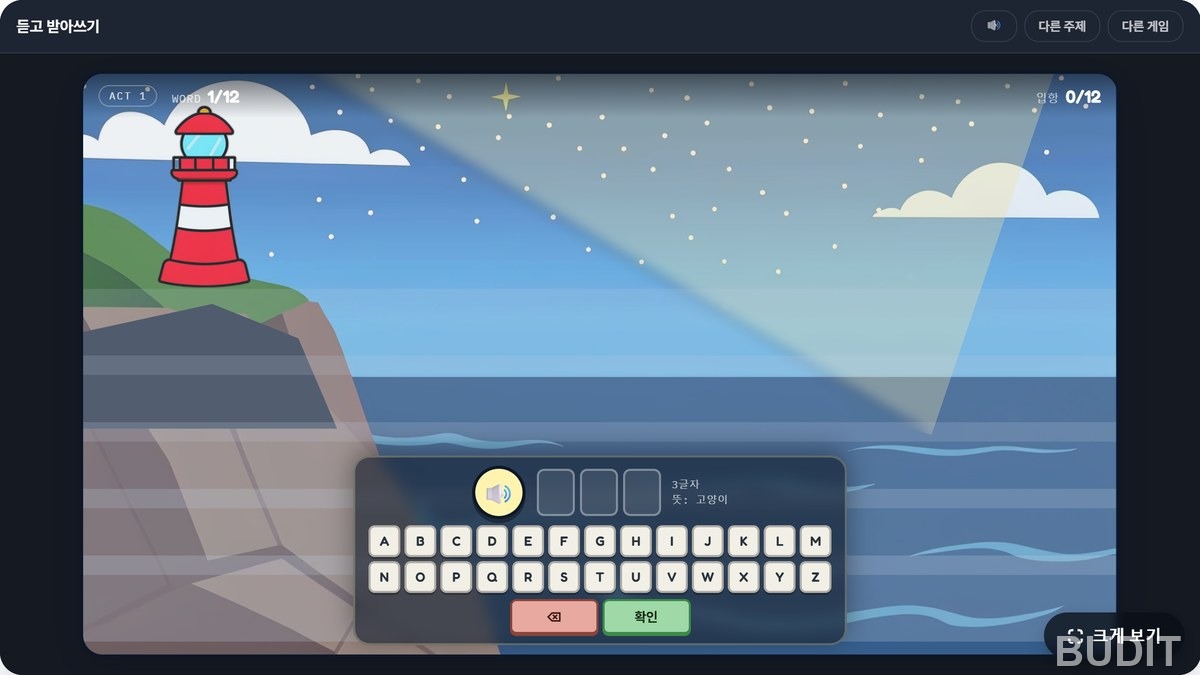
Photo: the 『NoryCard』 『Listen and Write』 game (as of Oct 19, 2026). The review a few days later, writing a word from its sound alone. See it
Worth watching
Video: EBS 『Docuprime』 education special 『Back to School』, part 3, edited cut (official YouTube channel, Korean). It follows a middle school where students took a test every week for six months and looks at how repeated testing affected their learning and test stress.
How this continues in Budit
With 『NoryCard』 and 『NoryBook』 together, you can space out review like this. The four steps in the image at the top are real screens and materials.
- 『Today』: meet new words such as bed through the 『단어카드』 (word cards) button for My Day.
- 『Next day』: recall them with 『단어와 그림 짝짓기』 (match words and pictures) in the NoryCard games, or with the book's 『게임하기』 (play games) button.
- 『A few days later』: in 『듣고 받아쓰기』 (listen and spell, for grades 3 to 6), write words from their sound alone. For younger children, 『듣고 그림 고르기』 (listen and pick a picture, for grades 1 to 3) is a better fit.
- 『A week later』: check on paper with the same book's activity sheet.
『Word cards』, 『Play games』 and 『Worksheets』 open for accounts that registered a book with a coupon (since Oct 15, 2026); reading and the NoryCard games need no login.
Related reading: When Should Pronunciation Practice Start 『Phonological Awareness』, What Order for Phonics 『From Sounds to Words, Then Sight Words』, Play Is Learning 『Play Based Learning』
References
- Ebbinghaus, H. (1885). Memory: A Contribution to Experimental Psychology. View on Google Scholar
- Roediger, H. L. and Karpicke, M. C. (2006). Test-enhanced learning: Taking memory tests improves long-term retention. View on Google Scholar
- Karpicke, M. C. and Roediger, H. L. (2008). The critical importance of retrieval for learning. View the paper
- Cepeda, N. J. et al. (2006). Distributed practice in verbal recall tasks: A review and quantitative synthesis. View the paper
- Childers, J. B. and Tomasello, M. (2002). Two-year-olds learn novel nouns, verbs, and conventional actions from massed or distributed exposures. View the paper
- Vlach, H. A., Sandhofer, C. M. and Kornell, N. (2008). The spacing effect in children's memory and category induction. View the paper
This article shares general information about development and education. Every child grows at their own pace. For specific concerns, please consult a pediatrician or a development specialist.