


Does a Parent Need Good English
『If I read in my accent, will my child pick it up?』 That worry stops many parents before they start. Put the research together and the worry is half founded and half overblown. Native speaker sounds genuinely matter, but the parent does not have to produce them. The parent's share is not pronunciation. It is conversation.
At a glance
| Question | What the research says |
|---|---|
| Does a parent's accent pass to the child | A child's accent comes from peers and surroundings more than from parents |
| Do native speaker sounds matter | Yes. Among children learning two languages, the larger the share heard from native speakers, the higher the proficiency |
| Then what does the parent do | Speech aimed at the child, and interaction. Sound alone produced no learning |
| Must the parent speak English | Asking and expanding can be done in the home language |
| So | Pronunciation to the audio and the reading voice, conversation to the parent |
A child's accent does not come from the parent
One study followed children who had moved to a new region and asked whose accent they ended up with. The children took on the accent of their new peers, not the accent they heard at home from their parents, and the younger they were, the more completely they switched (Chambers, 1992). Pronunciation and intonation come from the people a child spends the most time with.
Carried over to English, this means a parent reading a little English aloud does not fix their accent in the child. What decides is where the child hears most of their English, and that slot is filled by audio and video, and later by teachers and friends.
Native speaker sounds still matter
A study of two year olds learning two languages found that the best predictor of English proficiency was not simply how much English they heard. The larger the share of that English that came from native speakers, and the more different people who spoke to them, the higher the proficiency (Place and Hoff, 2011). English from non native speakers was less effective for the same amount of time.
This is the founded half of the worry. A parent speaking halting English to a child all day is not a good plan. But the fix is not for the parent to become fluent. It is to bring native speaker sounds in from elsewhere: songs, reading audio, picture book narration.
Sound alone teaches nothing
That does not mean leaving native audio running is enough either. In an experiment that exposed nine month olds to Mandarin, only the infants who had a person speaking to them in person kept the ability to tell Mandarin sounds apart. Infants who got the same content by video or audio alone were no different from infants who heard nothing (Kuhl et al., 2003). A study that recorded everything children heard at home across whole days found that the amount of speech aimed at the child predicted vocabulary, while overheard speech did not (Weisleder and Fernald, 2013). The details are in our earlier article Does Background English Work.
The audio makes the sound. The person beside the child is what makes the child take it in. That is the parent's seat.
The parent's job is to ask and expand
Asking a child questions during picture book reading and handing back their answers slightly expanded was shown to build vocabulary and expression (Whitehurst et al., 1988). In this method the parent's work is not pronunciation. It is asking 『What is this?』 and 『What happens next?』, and when the child says 『bed』, adding one word: 『Yes, a big bed.』
This role can be done in the home language. The English sounds come from the audio, and the questions and reactions that hold the child's attention on those sounds can be in the parent's own words. A parent with shaky English does this job better than anyone, because nobody knows better what the child is looking at and what the child likes.
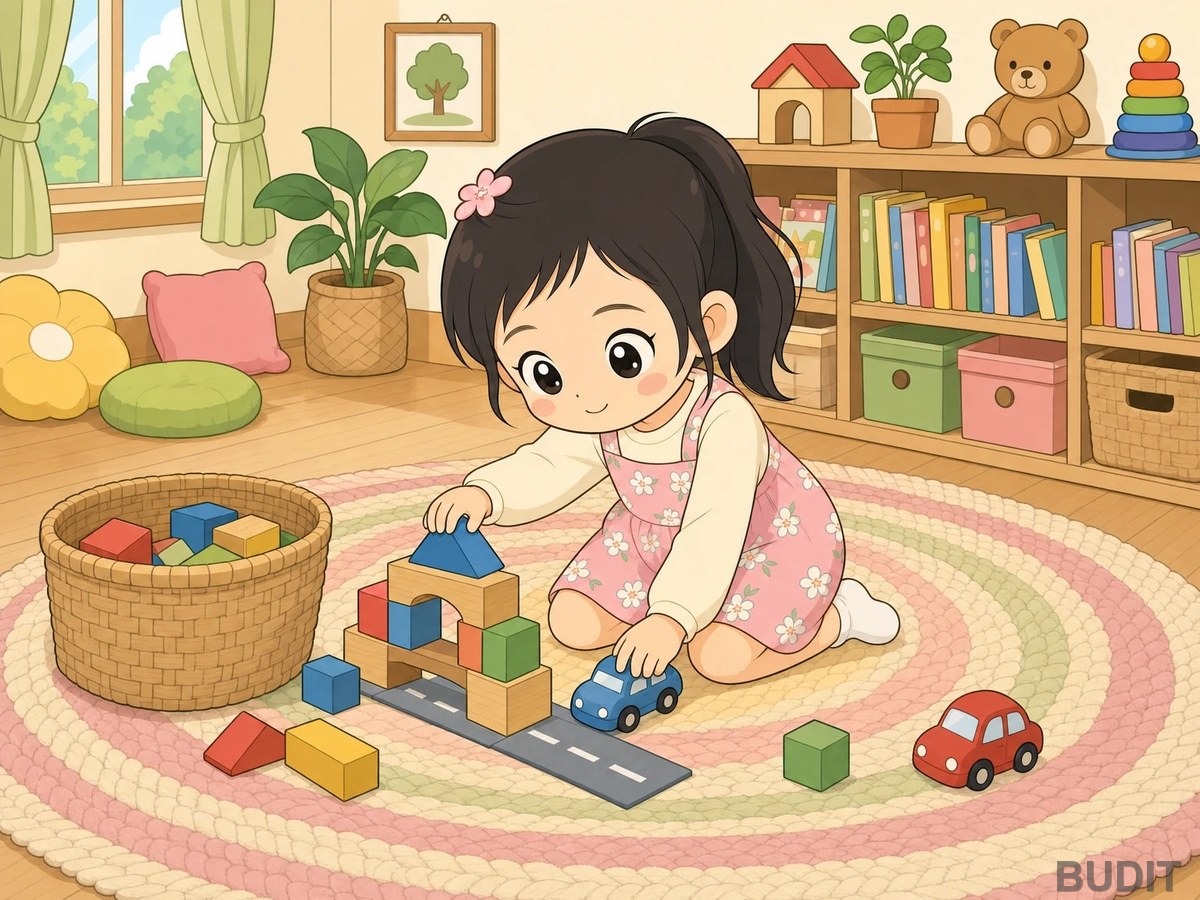
Photo: a scene from the 『NoryBook』 picture book 『My Day』 (as of Oct 14, 2026). With the audio on and the same screen shared, the audio reads the English and the parent takes the 『what is this?』 side. Open the book
What to do at home
- Turn the audio on and look together. The reading audio handles the English while the parent sits beside the child looking at the same screen. Ten minutes is enough.
- Tap a picture, hear the word, repeat it together. The parent can repeat too. Even if the parent gets it wrong, the model the child hears is the audio that just played.
- Ask in the home language. 『What is this?』 『Who is sleeping?』 When the child answers with an English word, play that word once more.
- Learn one word a day yourself. 『I did not know that either』, said in front of the child while learning together, is the best example a child can see.
- Use a book read in the parent's voice. A recorded voice reads the English sentences in the parent's timbre, with pronunciation handled by the reading model rather than by the person who recorded. Accurate English in Mom's voice, in effect.
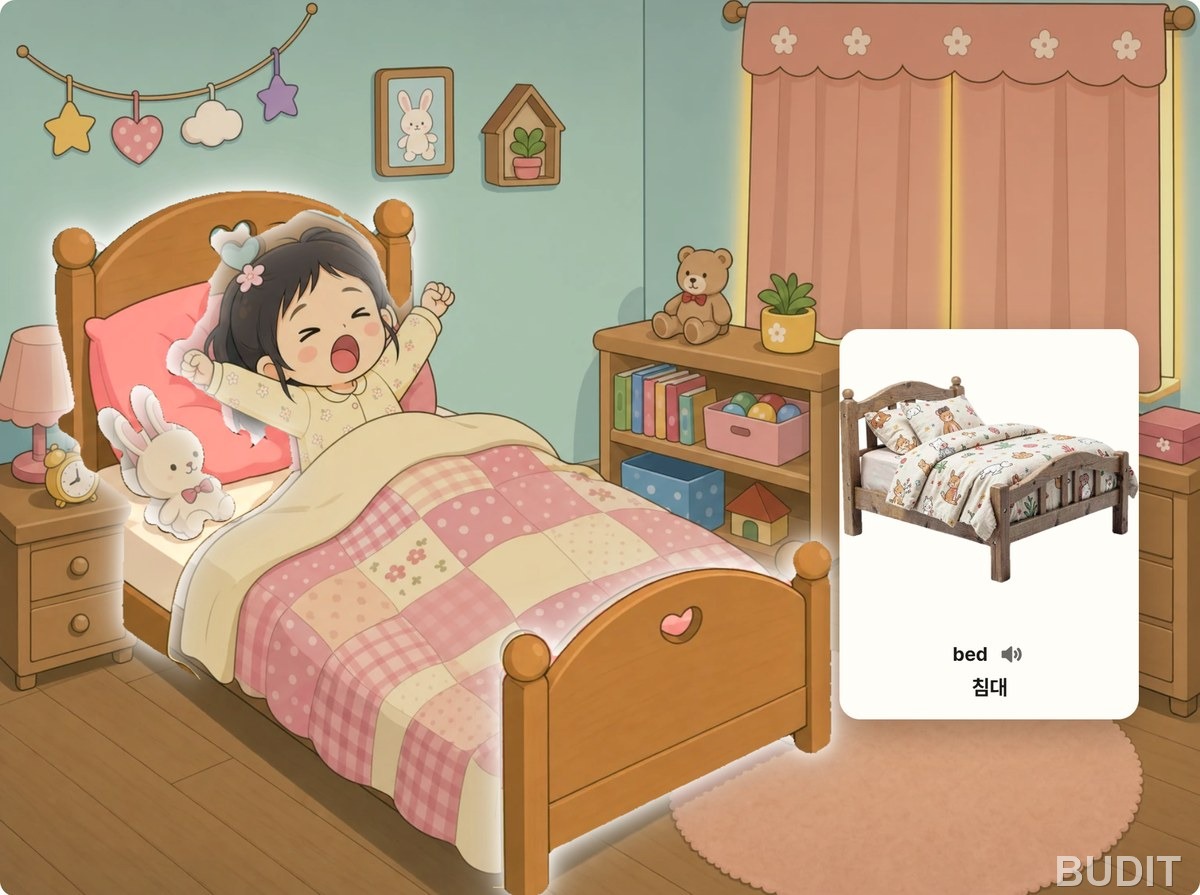
Photo: the bed tapped in the 『My Day』 reader (as of Oct 14, 2026). A tap shows the word card and plays the pronunciation. Parent and child can repeat it together. Open the book
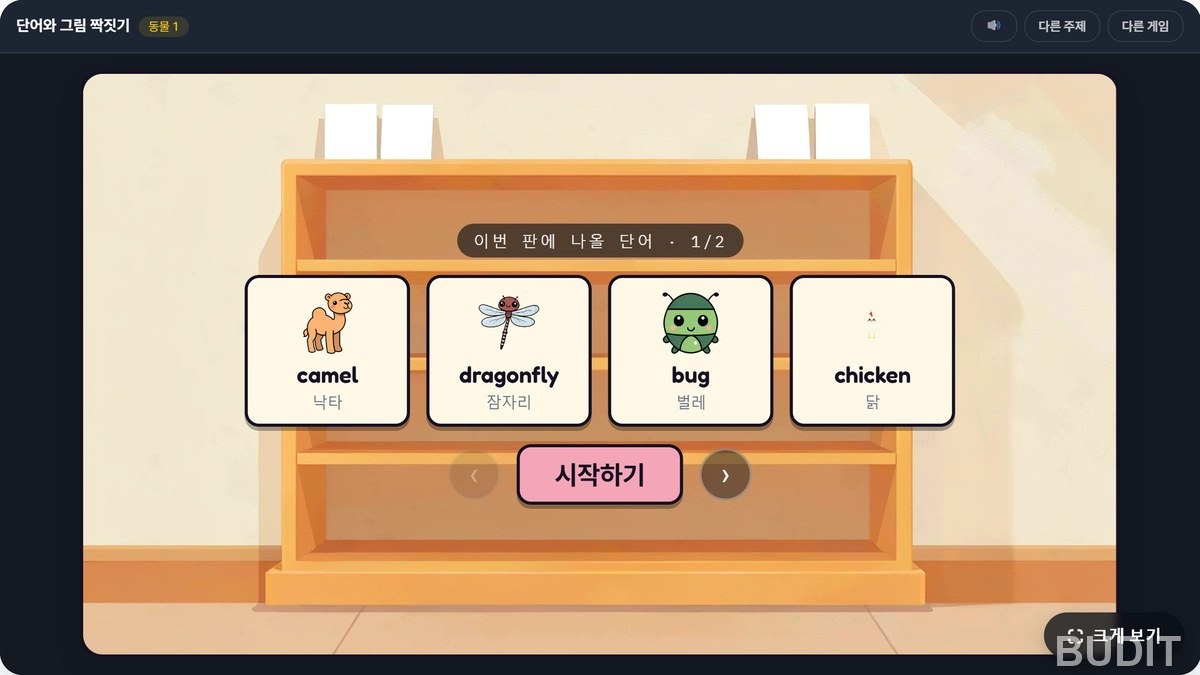
Photo: the 『NoryCard』 『word and picture matching』 game (as of Oct 14, 2026). Before a round starts it shows the words coming up with their pictures. The game plays the word sounds and the parent asks 『why did you pick that one?』. Open the game
Questions people ask
What if my child copies my accent A child follows the sounds they hear most. For a child who hears plenty of English from audio, a few words in a parent's accent do not stick. Going silent out of worry costs more.
Should I speak English to my child or can I use our own language Asking and expanding can be done in the home language. What the studies measured was whether speech was aimed at the child, not which language it was in. When an English word comes up, just play it once more.
Is a native speaker teacher essential There is research showing that a higher share of input from native speakers helps. But those sounds can also come from audio and reading voices, and in the early years the person who responds beside the child matters more. Both is best. If you must choose one, choose the person who responds.
With an English picture book, should I read it or play the audio Let the audio read and take the role of stopping and asking. If a book has no audio, read it yourself, and when a word stumps you, do not skip it: 『Let's look it up together』 works.
How this continues in Budit
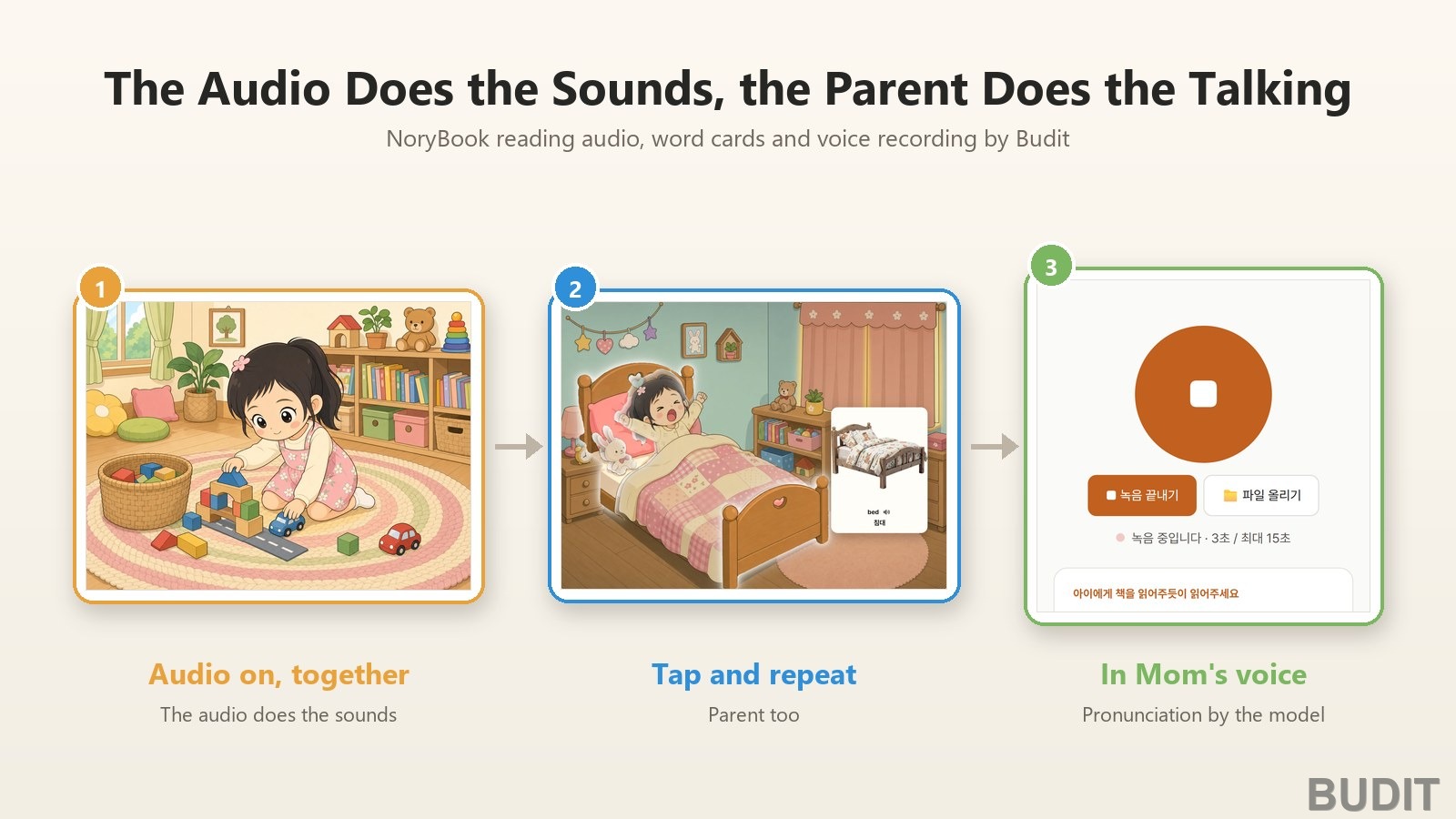
The three steps in the image at the top divide the roles.
- 『Audio on, together』: open My Day with the audio on and look together. The reading audio handles English pronunciation.
- 『Tap and repeat』: tapping an object in the picture shows its word card and plays the pronunciation. Child and parent repeat it together, and the parent asks in the home language.
- 『In Mom's voice』: record fifteen seconds at the voice demo and English sentences are read in that voice. The model handles pronunciation, so halting English is no obstacle. The steps are in A Book Read in Mom's or Dad's Voice.
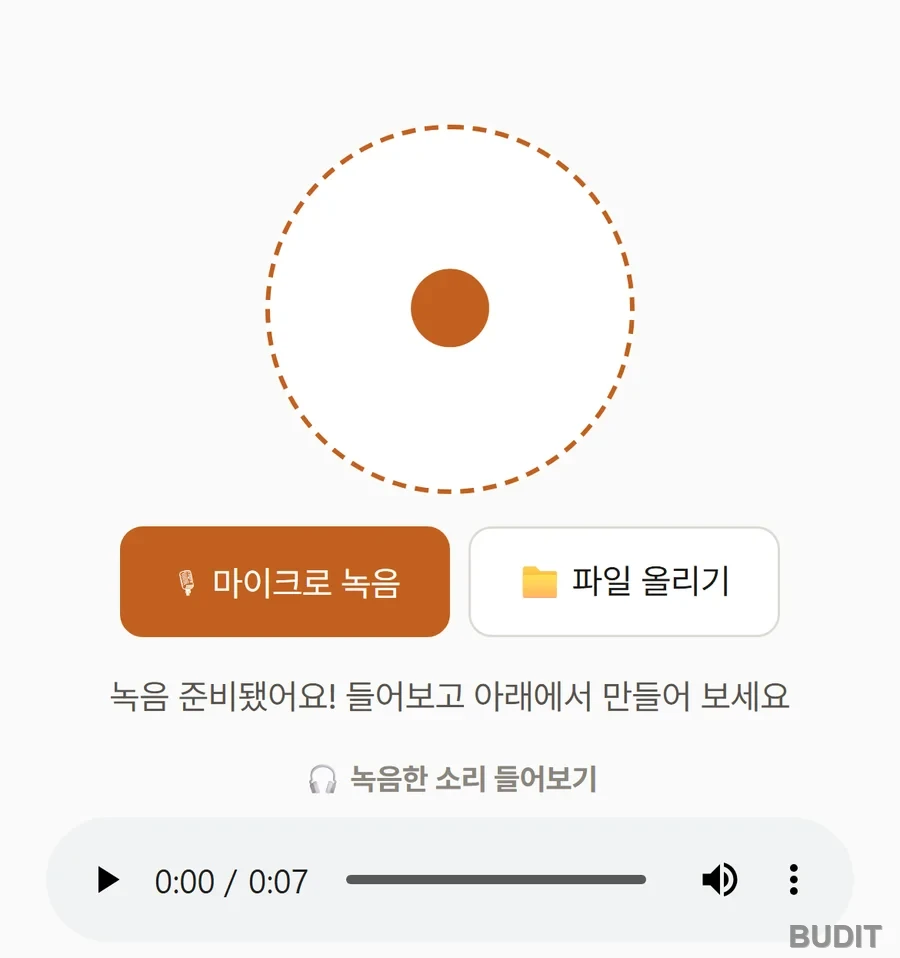
Photo: the 『NoryBook』 voice demo (as of Oct 14, 2026, Korean interface shown). After recording, choose English and the sentences are read in that voice. Try it
References
- Chambers, J. K. (1992). Dialect acquisition. View on Google Scholar
- Place, S. and Hoff, E. (2011). Properties of dual language exposure that influence 2-year-olds' bilingual proficiency. View on Google Scholar
- Kuhl, P. K., Tsao, F. M. and Liu, H. M. (2003). Foreign-language experience in infancy: Effects of short-term exposure and social interaction on phonetic learning. View on Google Scholar
- Weisleder, A. and Fernald, A. (2013). Talking to children matters: Early language experience strengthens processing and builds vocabulary. View on Google Scholar
- Whitehurst, G. J. et al. (1988). Accelerating language development through picture book reading. View on Google Scholar
This article shares general information about development and education. Every child grows at their own pace. For specific concerns, please consult a pediatrician or a development specialist.