When to Start Reading Aloud
『My baby can't even talk yet. Is there any point in reading aloud?』 The answer is 『yes, starting now』. A baby's ears are working even before birth.
Babies hear in the womb
Fetuses can start responding to sound as early as about 19 weeks into pregnancy, and the range of pitches they respond to widens as the pregnancy goes on (Hepper and Shahidullah, 1994). Sounds reach the baby through the mother's body quietly and muffled, but the rhythm and melody of speech still come through.
Newborns remember stories from the womb
When mothers read the same story aloud twice a day during the last six weeks of pregnancy, their newborns showed a preference for that story over one they had never heard (DeCasper and Spence, 1986). In another study, fetuses in late pregnancy heard an invented word many times, and after birth their brains responded to that word differently from babies who had not heard it (Partanen et al., 2013). Why a mother's voice, familiar from the womb, is so special is covered in our earlier article A Parent's Voice Is Special.
Pediatricians say start in infancy
The American Academy of Pediatrics recommends reading aloud to children every day starting in infancy, and asks pediatricians to encourage reading at regular checkups (High and Klass, 2014). In a brain imaging study of 19 children aged 3 to 5, those who were read to more at home showed more activity, while listening to stories, in brain areas that help with understanding meaning and picturing scenes (Hutton et al., 2015).
Reading aloud at each stage
| Stage | How to read |
|---|---|
| Late pregnancy | Read the same short story or sing the same song aloud every day |
| 0 to 12 months | Short sentences, a lively voice, brightly colored pictures |
| 12 to 24 months | Point at pictures and name them, and answer when your baby points |
| 2 to 3 years | Stories tied to your child's day, with questions back and forth |
You do not have to finish the book. When your baby turns away, you can stop there for the day.
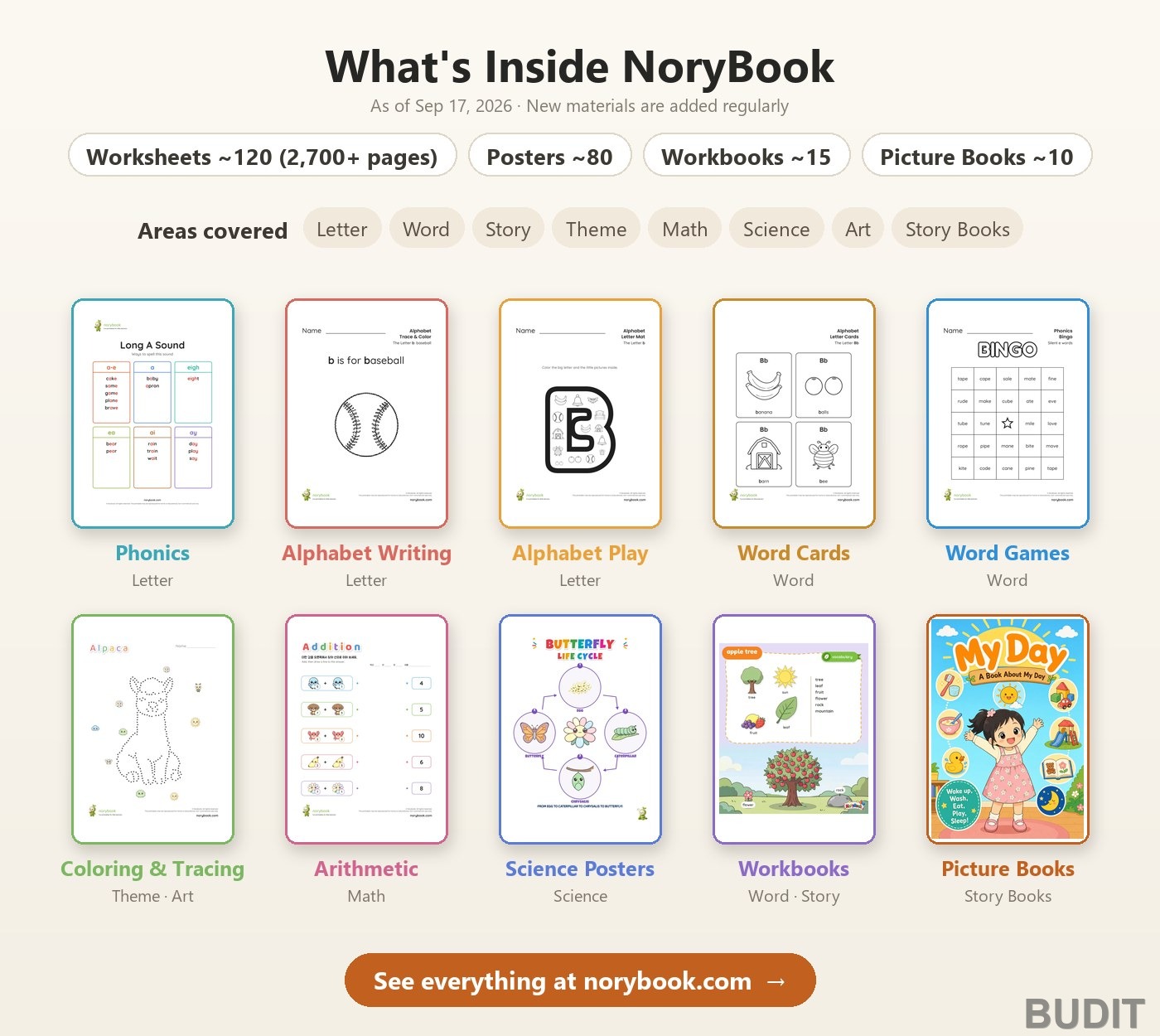
Photo: the 『NoryBook』 collection by Budit (as of Sep 17, 2026). Around 120 worksheets plus posters, workbooks and picture books cover letters, words, stories, themes, math, science and art, and new materials keep coming. See everything at norybook.com
Worth watching
Video: EBS 『News G』 on prenatal education (official YouTube channel, Korean). Along with the history of prenatal education, it covers the discovery that fetuses can hear and a study of newborns who responded to a storybook read to them before birth.
How this continues in Budit
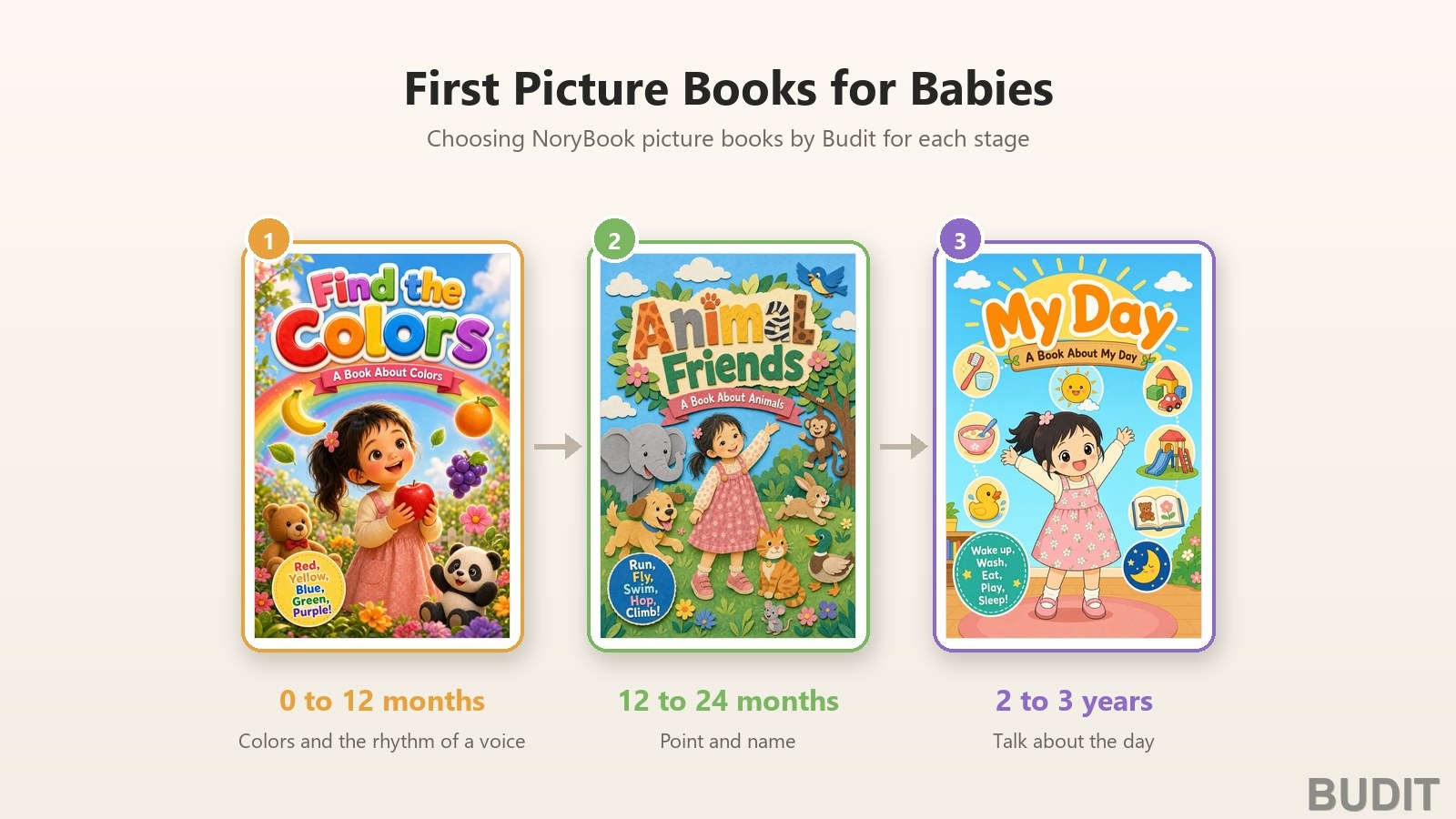
『NoryBook』 picture books have short sentences and bright pictures, which makes them easy to read aloud. The image at the top shows real book covers chosen for each stage.
- 『0 to 12 months』: read a few pages of a colorful book such as Find the Colors.
- 『12 to 24 months』: point at the animals in Animal Friends and say their names together.
- 『2 to 3 years』: talk through a story that connects to your child's own day, such as My Day.
『My Day』 is free to read now without logging in, and you can browse the other books on the picture book page.
References
- Hepper, P. G. and Shahidullah, B. S. (1994). Development of fetal hearing. View on Google Scholar
- DeCasper, A. J. and Spence, M. J. (1986). Prenatal maternal speech influences newborns' perception of speech sounds. View on Google Scholar
- Partanen, E. et al. (2013). Learning-induced neural plasticity of speech processing before birth. View on Google Scholar
- High, P. C. and Klass, P. (2014). Literacy promotion: An essential component of primary care pediatric practice. View on Google Scholar
- Hutton, J. S. et al. (2015). Home reading environment and brain activation in preschool children listening to stories. View on Google Scholar
This article shares general information about development and education. Every child grows at their own pace. For specific concerns, please consult a pediatrician or a development specialist.