


Why Show Pictures and Words Together
Does it make a difference to a child's memory whether you show just the written word 『apple』 or show it next to a picture of a red apple? Research in cognitive psychology suggests that adding the picture helps it stick.
Words and pictures are stored in two ways
『Dual coding theory』 holds that the mind represents verbal information and visual information in different ways, and that the two are linked (Paivio, 1986). By this account, a child who hears a word while looking at a picture stores the same thing in two ways, and either one can serve as a cue for the other.
Pictures are remembered better
In an experiment where people saw several hundred words, several hundred sentences and several hundred pictures and were then asked which ones they had seen, they were most accurate with the pictures (Shepard, 1967). The finding that people remember the same content better as a picture than as words is known as the 『picture superiority effect』 (Nelson et al., 1976).
Pair words with pictures, and skip the decoration
Multimedia learning research shows that people learn better from words and pictures together than from words alone. Decoration and effects that have nothing to do with the content, however, can get in the way of learning (Mayer, 2009). Word cards work best kept simple, too: one word and one picture that shows it clearly.
Start young children with realistic pictures
In a study where children aged 15 and 18 months learned new names from picture books, those who learned from photographs or realistic drawings applied the name to the real object more often than those who learned from cartoon pictures (Ganea et al., 2008). The everyday words from our earlier article Why Start Children's English with Everyday Words are also best shown to very young children through realistic pictures at first.
- Point at the picture, say the word aloud, and point to the written word as well.
- The younger the child, the more realistic the pictures should be at the start.
- Once the word is familiar, show it again in another art style and stretch the idea: 『This is a snack too?』
- Keep to one word per card.

Photo: the 『NoryCard』 『Word and Picture Matching』 game (as of Oct 19, 2026). Word and picture on one card, remembered together. See it
Worth watching
Video: EBS News, 『Does reading more raise literacy?』 (official YouTube channel, Korean, July 2026). An expert explains that children learn words when a parent's words go with the picture the child is paying attention to, and the segment covers reading habits parents often overlook.
How this continues in Budit
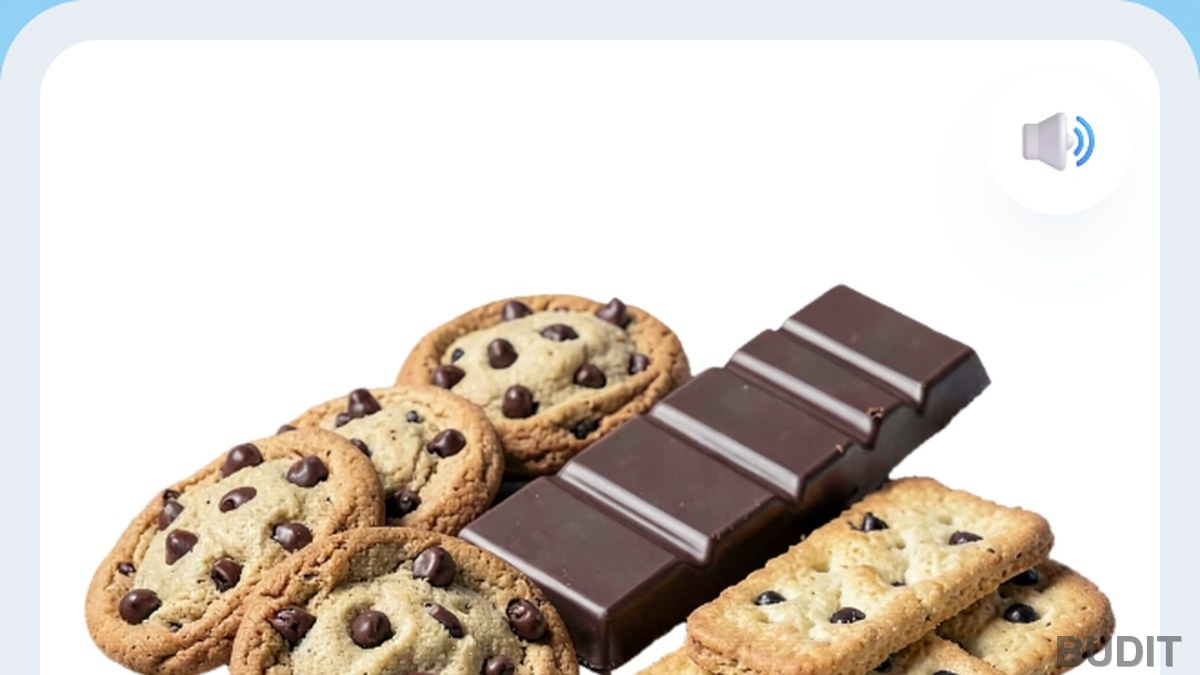
Each 『NoryCard』 word card has a picture, the English word, its Korean meaning and audio, and the same word can be viewed in six art styles. The image at the top shows the real 『snack』 card from 『My Day』 in four of those styles.
- 『Realistic』: start young children with pictures that look close to real photos.
- 『Watercolor』: once the word is familiar, meet it again in a softer picture.
- 『Cartoon』: compare shapes in a picture with clear outlines.
- 『3D』: stretch the idea of 『this is a snack too』 with a picture that has depth.
Open the cards with the 『단어카드』 (word cards) button on the My Day page, and switch art styles with the buttons above the cards.
『Word cards』, 『Play games』 and 『Worksheets』 open for accounts that registered a book with a coupon (since Oct 15, 2026); reading and the NoryCard games need no login.
Related reading: When Should Pronunciation Practice Start 『Phonological Awareness』, What Order for Phonics 『From Sounds to Words, Then Sight Words』, Why Game Review Helps Words Stick 『Retrieval Practice and Spacing』
References
- Paivio, J. (1986). Mental Representations: A Dual Coding Approach. View on Google Scholar
- Shepard, R. N. (1967). Recognition memory for words, sentences, and pictures. View the paper
- Nelson, D. L., Reed, V. S. and Walling, J. R. (1976). Pictorial superiority effect. View the paper
- Mayer, R. E. (2009). Multimedia Learning (2nd ed.). View on Google Scholar
- Ganea, P. A., Pickard, M. B. and DeLoache, J. S. (2008). Transfer between picture books and the real world by very young children. View the paper
This article shares general information about development and education. Every child grows at their own pace. For specific concerns, please consult a pediatrician or a development specialist.