


Does Background English Work
『Leave English audio on all day and the ear opens by itself』 is advice many parents hear. Put the research together and the answer is half and half. It helps a child get used to the sounds, but learning the language comes from speech addressed to the child.
At a glance
| Question | What the research says |
|---|---|
| Does playing it in the background teach anything | Infants who heard a foreign language only through audio or video showed no gain in telling its sounds apart. Only those with a person speaking to them did |
| Does overheard speech add up | The amount of speech addressed to a child predicted vocabulary. The amount of speech overheard did not |
| Is there any harm in leaving it on | With background television on, parent child interaction fell in both quantity and quality |
| So what about background listening | Use it as background for getting used to the sounds, and once a day watch the same screen and listen together |
Sound alone did not do it
In one experiment, nine month old American infants were exposed to Mandarin. One group had a Mandarin speaker play with them and talk to them in person. Another saw the same sessions on video, and a third heard them as audio only. Weeks later, only the infants who had a person speaking to them kept the ability to tell Mandarin sounds apart. The video and audio groups were no different from infants who had heard nothing (Kuhl et al., 2003).
This result marks the limit of background listening precisely. Sound reaching the ear and a child taking that sound in as language are two different things, and what links them is a person.
Speech addressed to the child is different from speech overheard
One study recorded everything nineteen month olds heard at home across whole days. The amount of speech addressed directly to the child predicted vocabulary and speed of processing speech five months later. The amount of speech overheard, between adults or from a television, was unrelated to vocabulary (Weisleder and Fernald, 2013).
Raising the sheer amount of English a child hears in a day is not the goal. The goal is how much of it is aimed at the child.
Leaving it on crowds out conversation
Another study looked at what background television does to parent child play. With adult programming on in the background, parents spoke to their children less, and the quality of the back and forth dropped (Kirkorian et al., 2009). English audio can work the same way. When sound is always on, the parent's own words that would have filled that time shrink.
What background listening still gives
Our earlier article When Should a Child Start Learning English covered how frequent early exposure helps a child hold on to the distinctions between English sounds. Songs and picture book audio running like household sounds genuinely help make English feel familiar. The problem is when that is all there is.
So use background listening like this.
- Keep background as background. Play songs and audio, but not all day. Play them at set times, such as play time or time in the car.
- Listen together once a day. Look at the same screen, hear the same sound, and name what the child is looking at. Ten minutes is enough.
- Let the child echo. When the child hums the song or repeats a word, take it and hand it back slightly expanded. 『apple』 becomes 『yes, a red apple』.
- Listen together even with a parent's voice. A recording played on its own is still background listening. It becomes listening together when the caregiver beside the child picks up the child's reactions to it.
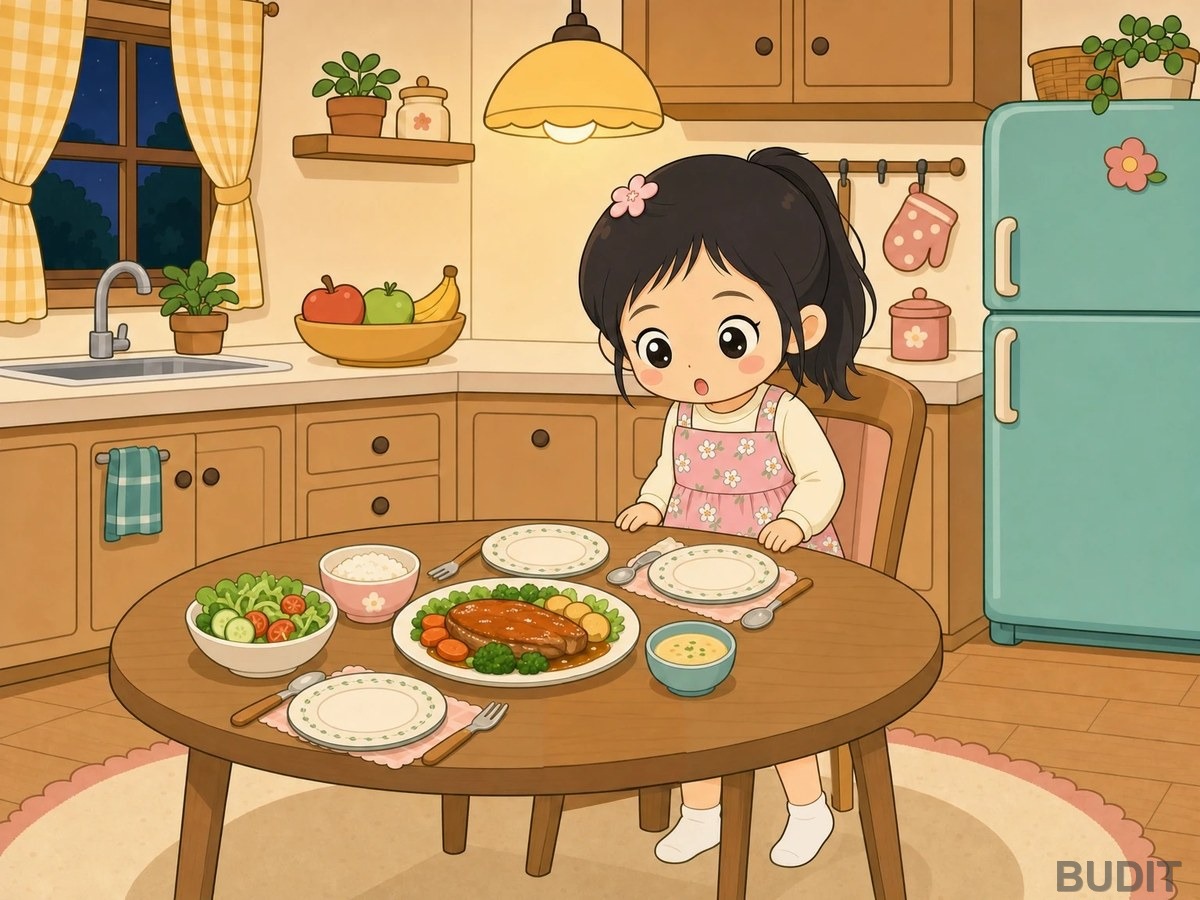
Photo: a scene from the 『NoryBook』 picture book 『My Day』 (as of Oct 12, 2026). Turn the audio on and look at the same screen together, and background listening becomes listening together. Open the book
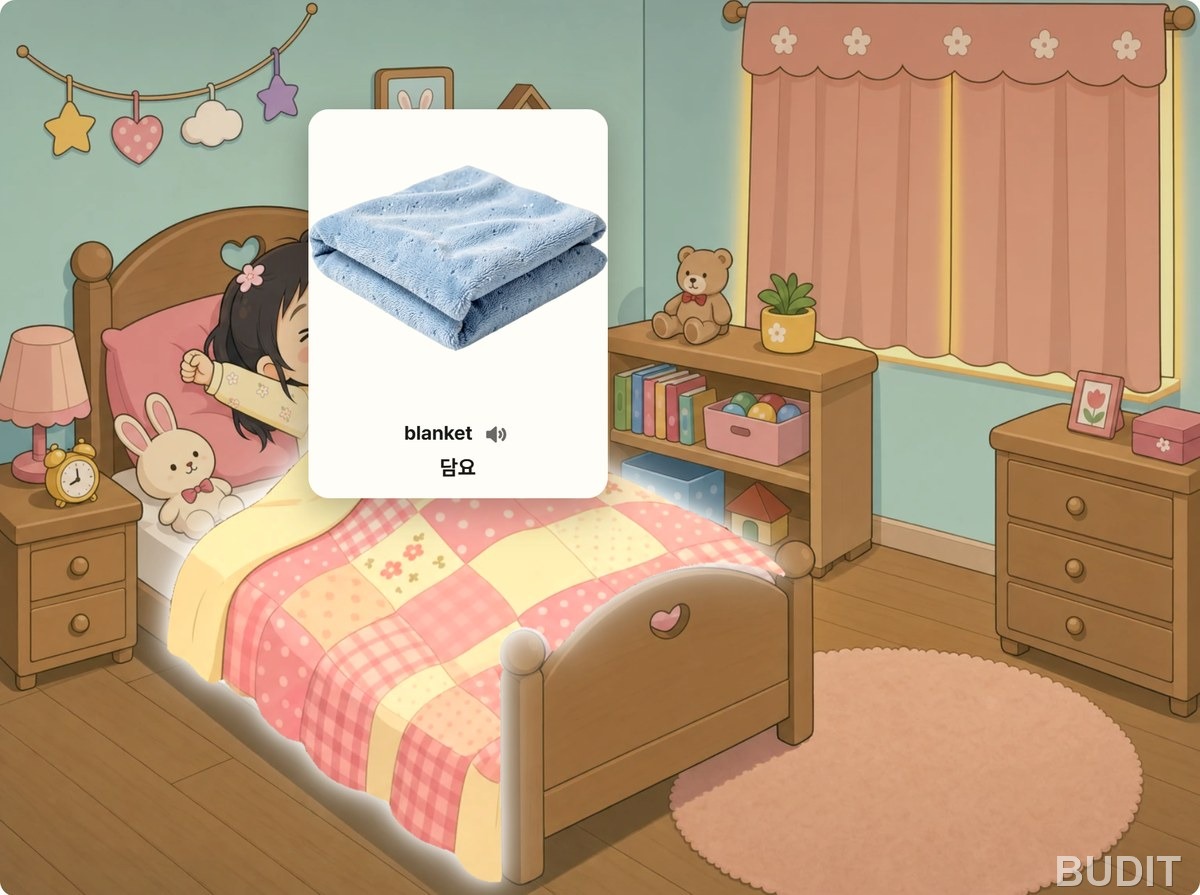
Photo: the blanket tapped in the 『My Day』 reader (as of Oct 12, 2026). The name of what the child tapped is spoken, and one word from the parent at that moment turns it into speech aimed at the child. Open the book
Questions people ask
How many hours a day should it play Timing matters more than hours. Play it at set play or travel times and keep the rest of the day quiet. When sound is always on, the parent's own words shrink.
Are English videos better than audio A video watched alone gave the same result as audio alone. Even with video, sitting beside the child and talking is better. Screens that respond, such as a video call, taught toddlers words where a recording did not, as covered in our earlier article A Gift of Voice for Busy Parents.
My own English pronunciation is poor. Should I still speak to my child Yes. What the studies above measured was not pronunciation but whether speech was aimed at the child. Let the audio and the reading voice handle accurate sounds, and take the role of talking to the child and picking up their reactions.
Should I drop background listening altogether Background English makes the language familiar. Rather than removing it, add one session a day of listening together.
How this continues in Budit
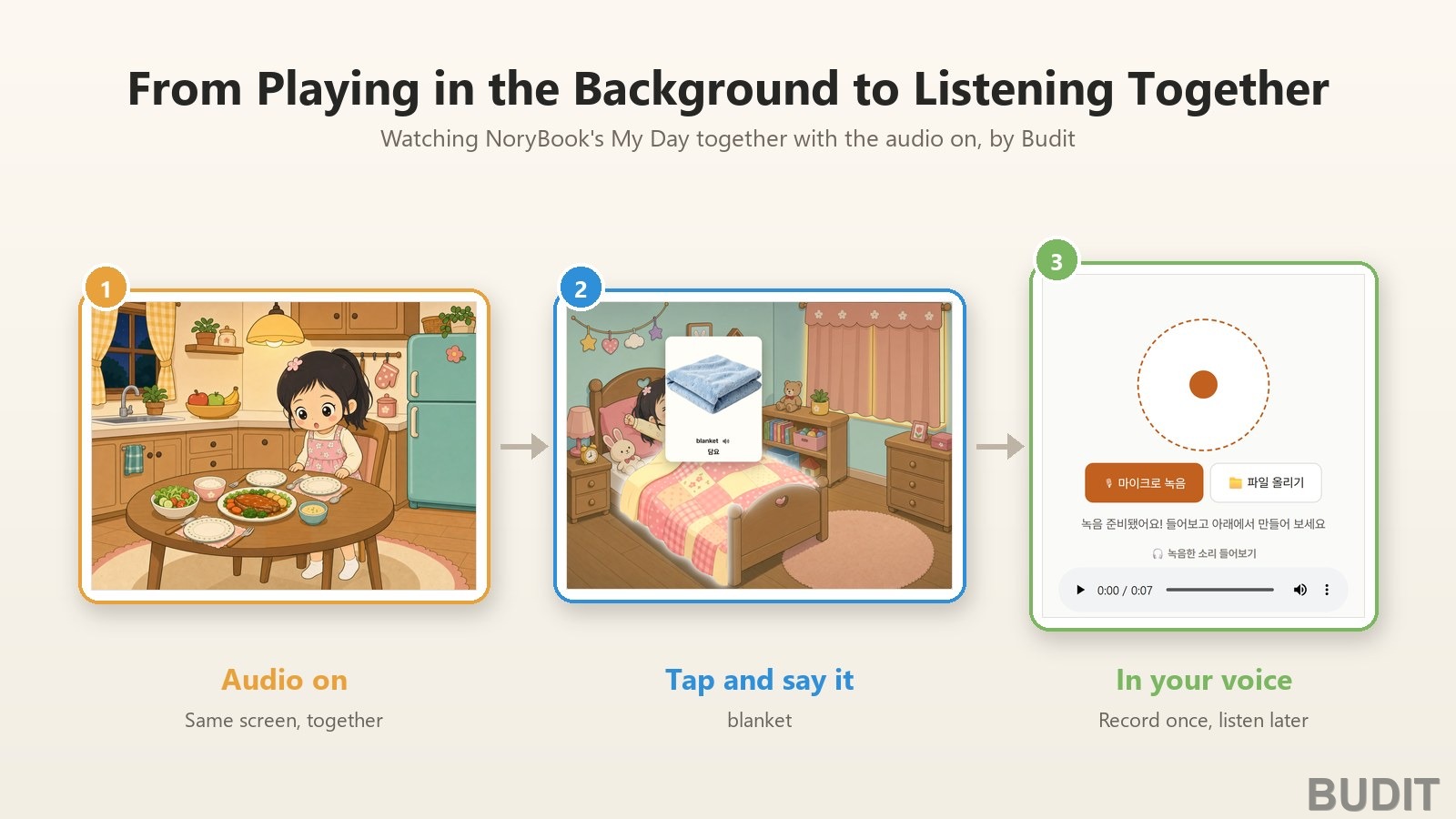
The three steps in the image at the top turn background listening into listening together.
- 『Audio on』: open My Day with the audio on and look at the same screen together. The scenes are a child's own day, so words attach easily.
- 『Tap and say it』: when the child taps an object in the picture, its name is spoken. Add one word of your own right then.
- 『In your voice』: record fifteen seconds at the voice demo and the book reads in that voice. The steps are in A Book Read in Mom's or Dad's Voice.
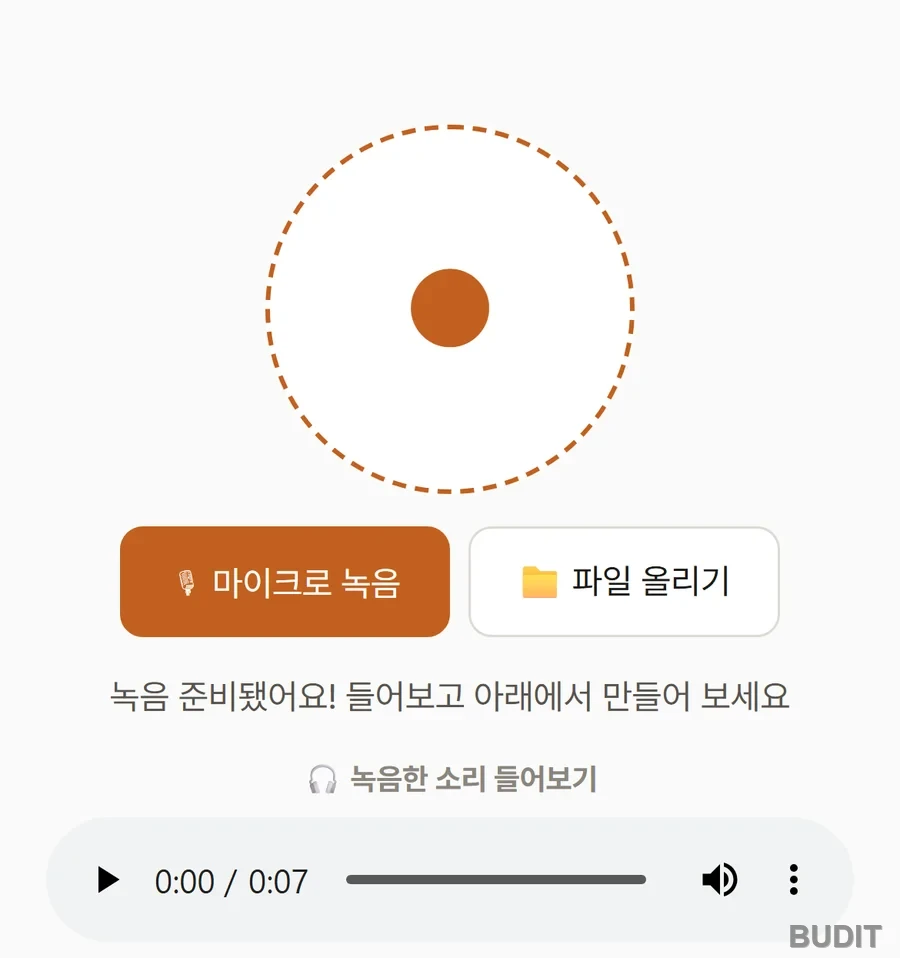
Photo: the 『NoryBook』 voice demo (as of Oct 12, 2026, Korean interface shown). Record fifteen seconds and that voice does the reading, while the adult beside the child picks up the reactions. Try it
References
- Kuhl, P. K., Tsao, F. M. and Liu, H. M. (2003). Foreign-language experience in infancy: Effects of short-term exposure and social interaction on phonetic learning. View on Google Scholar
- Weisleder, A. and Fernald, A. (2013). Talking to children matters: Early language experience strengthens processing and builds vocabulary. View on Google Scholar
- Kirkorian, H. L., Pempek, T. A., Murphy, L. A., Schmidt, M. E. and Anderson, D. R. (2009). The impact of background television on parent-child interaction. View on Google Scholar
- Roseberry, S., Hirsh-Pasek, K. and Golinkoff, R. M. (2014). Skype me! Socially contingent interactions help toddlers learn language. View on Google Scholar
This article shares general information about development and education. Every child grows at their own pace. For specific concerns, please consult a pediatrician or a development specialist.