

Praising the Process
When a child finishes a block tower, 『Wow, you're so smart!』 is what we want to say. Praise makes a child happy, but what we praise changes what they choose to do next. The research says that when we praise the effort and the strategy rather than inborn ability, children stay longer with things that are hard.
At a glance
| Question | What the research says |
|---|---|
| What about calling them smart | Children praised as smart chose more of the easy problems that would make them look good |
| And after failing | Children praised for ability enjoyed the task less and scored lower after getting stuck |
| Can one phrase matter | Four year olds told 『you are a good drawer』 gave up more easily after a mistake |
| Does early praise last | Toddlers who heard more process praise liked challenges more at seven and eight |
| What about big praise | Children with low self esteem avoided hard tasks after inflated praise |
Calling a child smart leads to the easy path
Mueller and Dweck gave fifth graders a set of puzzles and then varied the praise. Children told 『you must be smart at these』 more often picked easy problems they could look good on next, while children told 『you must have worked hard』 more often picked hard problems they could learn from. After getting stuck on difficult problems, the children praised for ability enjoyed the task less and scored lower on the final set (Mueller and Dweck, 1998). To keep the label 『smart』, a child has to choose the side where they won't be wrong.
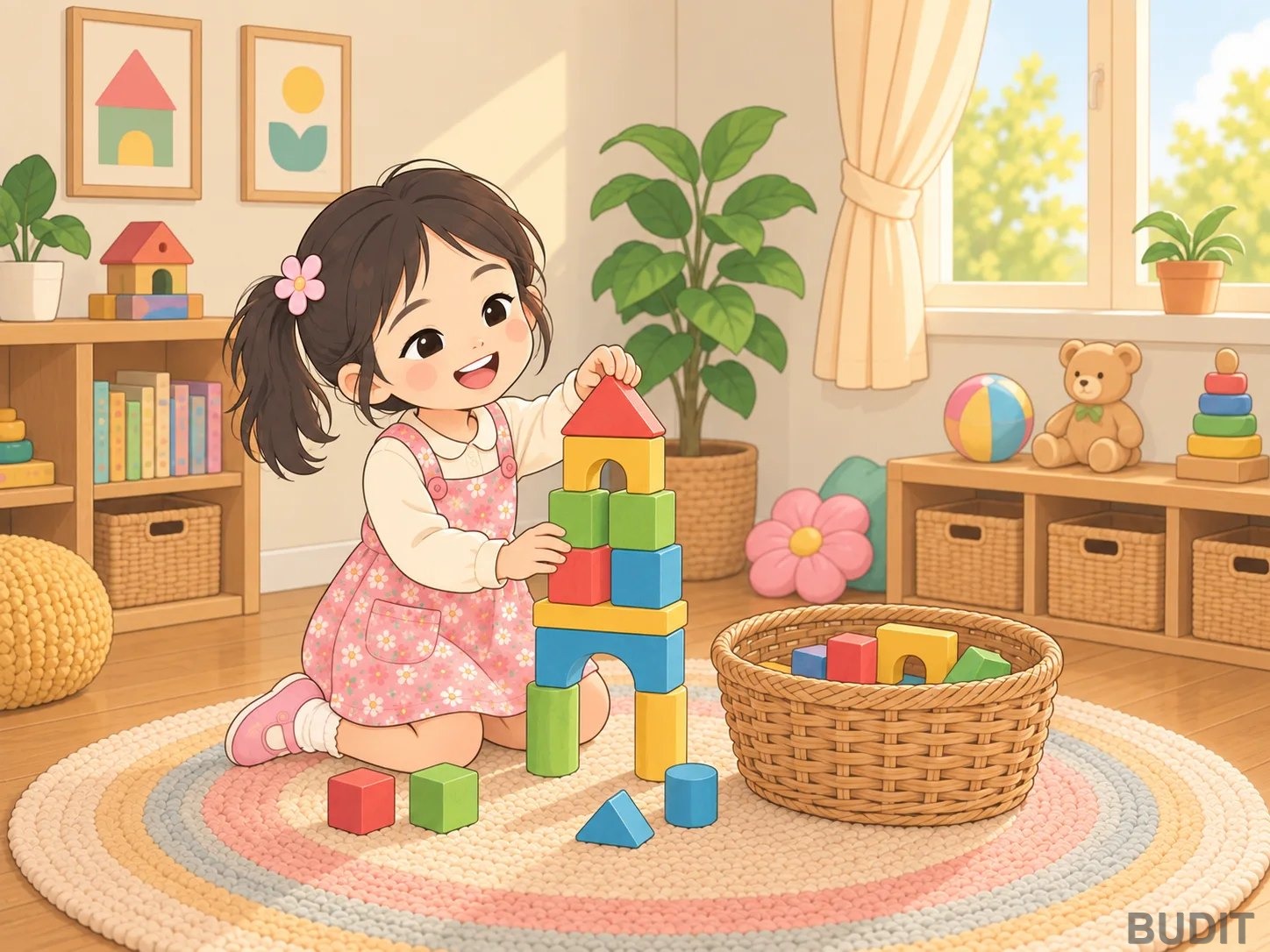
Photo: the 『Up, up, up!』 block play scene from the 『NoryBook』 picture book 『How Do You Feel?』 (as of Nov 4, 2026). A good page to name how the tower was built, 『you put the big block at the bottom』, rather than just 『so tall!』. The first five pages of this book are open as a preview. See the book
Failure is where the difference shows
Kamins and Dweck acted out stories with kindergartners using dolls. Children who heard person praise for a doll that did well, such as 『you're a good girl』 or 『you're really good at this』, rated themselves lower, felt worse and offered fewer ideas for trying again when a mistake came next. Children who heard process praise, such as 『you found a good way to do it』, came up with more ways to fix things after a mistake (Kamins and Dweck, 1999).
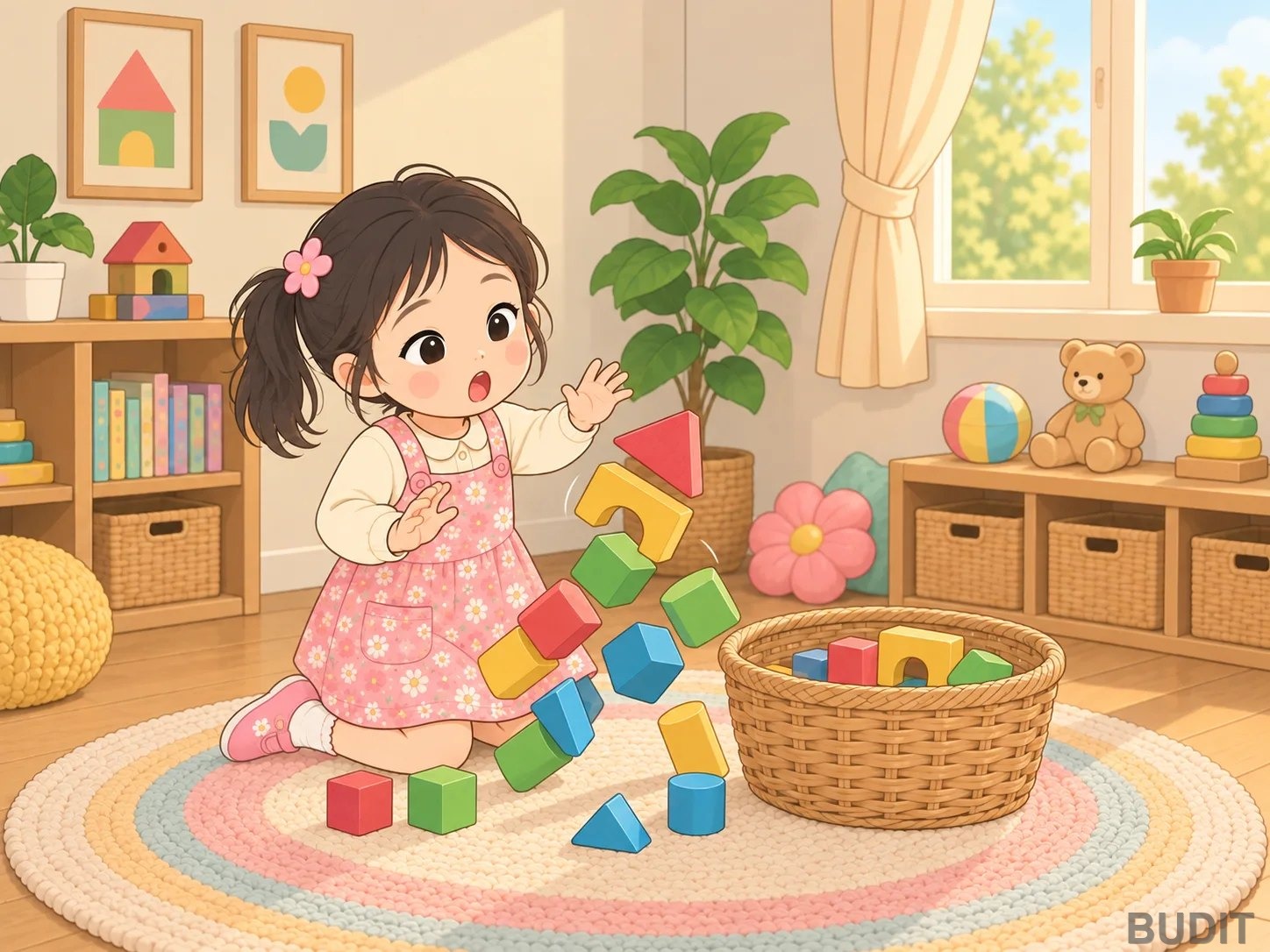
Photo: the 『Oh no! Crash!』 scene from the same book (as of Nov 4, 2026). The moment the tower falls is when process praise matters most. Try asking 『can you show me how you built it this far?』. See the book
A good drawer and a good drawing
Cimpian and colleagues played a drawing game with four year olds and changed a single phrase. Children told 『you are a good drawer』, compared with children told 『you did a good job drawing』, rated their own drawings lower after a later mistake and showed less wish to try again (Cimpian et al., 2007). 『A good drawer』 sounds like a fixed trait, while 『a good job drawing』 is about what they just did. Children hear that small difference.
Praise heard as a toddler lasts for years
Gunderson and colleagues visited homes with children aged one to three and recorded everyday life between parents and children. The larger the share of process praise among a parent's praise, such as 『you're working hard』 or 『you tried it this way』, the more the child, at seven or eight, believed ability grows with effort and preferred challenging tasks. What mattered was not how much praise there was but the share that was process praise. In the same homes, boys heard more process praise than girls (Gunderson et al., 2013).
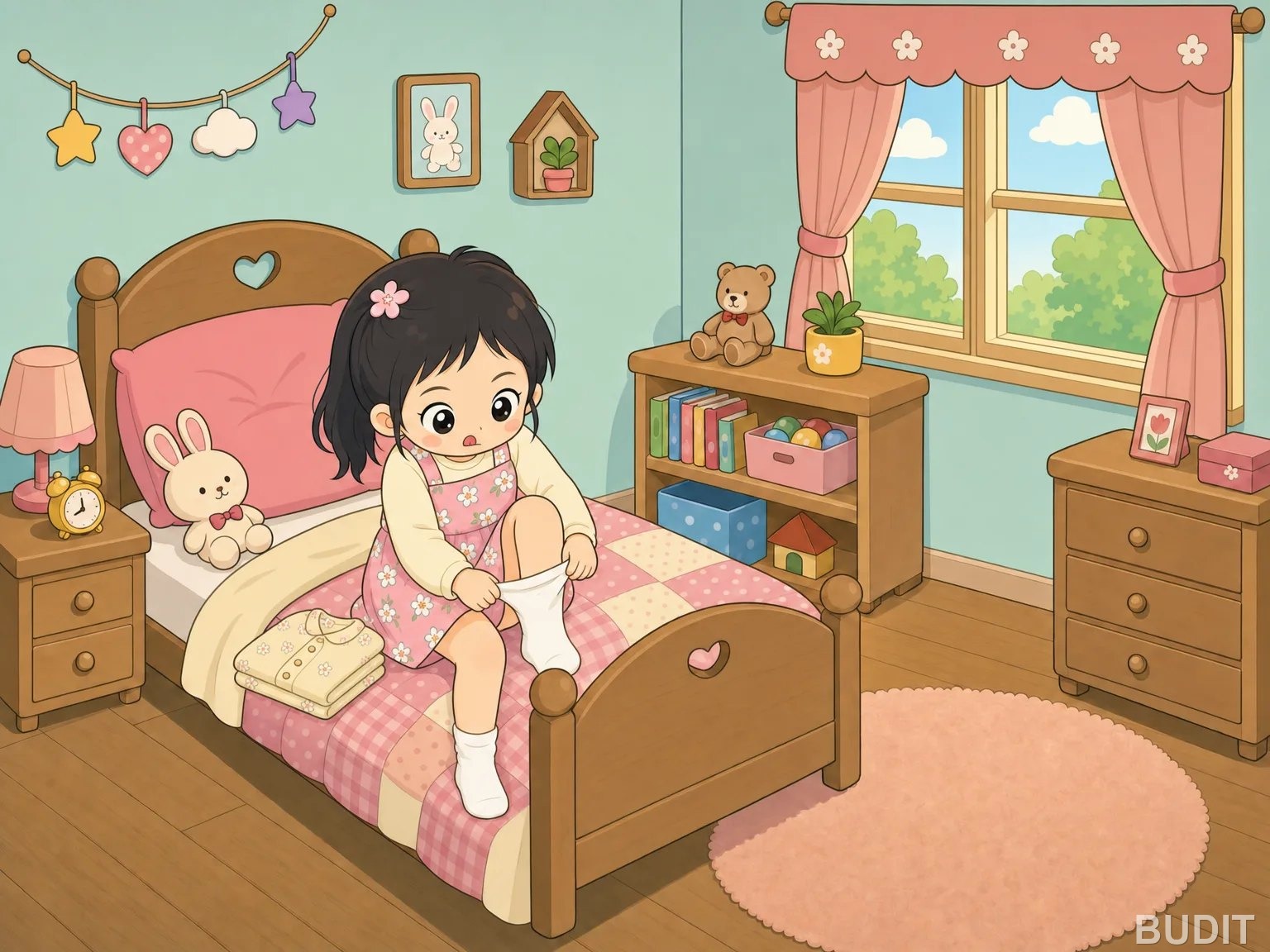
Photo: the 『Put on your clothes. Socks on!』 scene from the 『NoryBook』 picture book 『My Day』 (as of Nov 4, 2026). Everyday routines are full of chances for process praise, such as 『you tried again and again to put your socks on yourself』. Open the book
Be careful with inflated praise
Brummelman and colleagues had children aged eight to thirteen copy a famous painting and then varied the praise. Among children who heard inflated praise like 『that's an incredibly beautiful drawing!』, those with low self esteem avoided the hard picture when choosing the next one. Children with high self esteem actually chose the hard one more (Brummelman et al., 2014). The less confident a child is, the more they need words that point to what they really did rather than big praise.
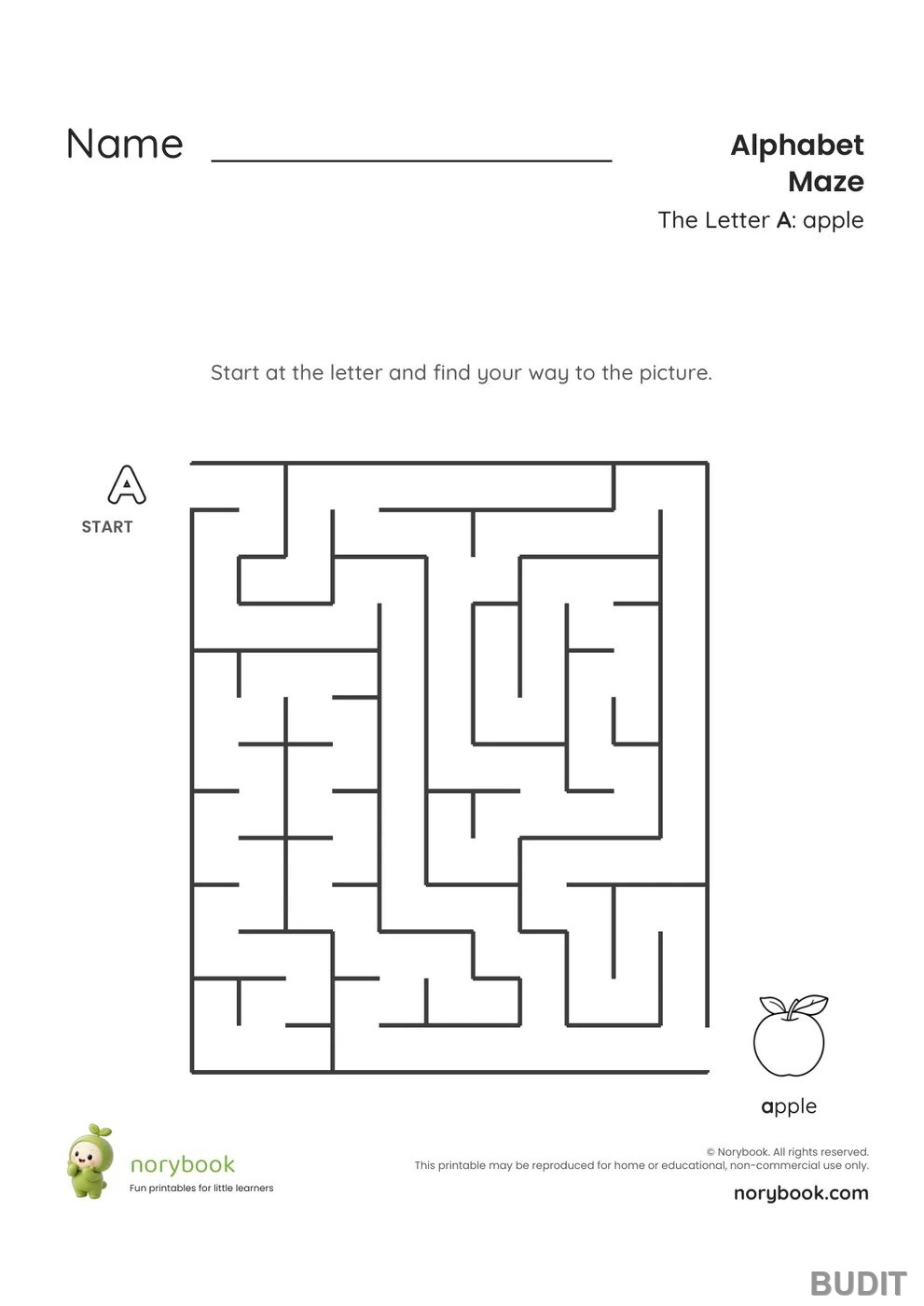
Photo: the 『NoryBook』 『Alphabet Maze』 sheet (as of Nov 4, 2026). When the child backs out of a dead end, you can say 『you found another way』. See the sheet
What to do at home
- Talk about what they did, not who they are. Instead of 『so smart』, praise the action: 『you kept at it』, 『that was a good way to do it』.
- Be specific. Rather than 『good job』, name one thing: 『you put the red block at the bottom so it didn't fall』.
- Say more when things go wrong. When the tower falls or a letter comes out crooked, ask 『how far did you get?』 and 『what could you try next time?』.
- Don't praise effort that wasn't there. Saying 『you worked so hard』 about something too easy doesn't fool a child. Pick the moments of real effort.
- Don't inflate. 『Your line is longer than yesterday』 lasts longer than 『the best in the world』, because it is true.
- Treat daughters and sons the same. In the research, boys heard more process praise. Name a daughter's effort with the same words.
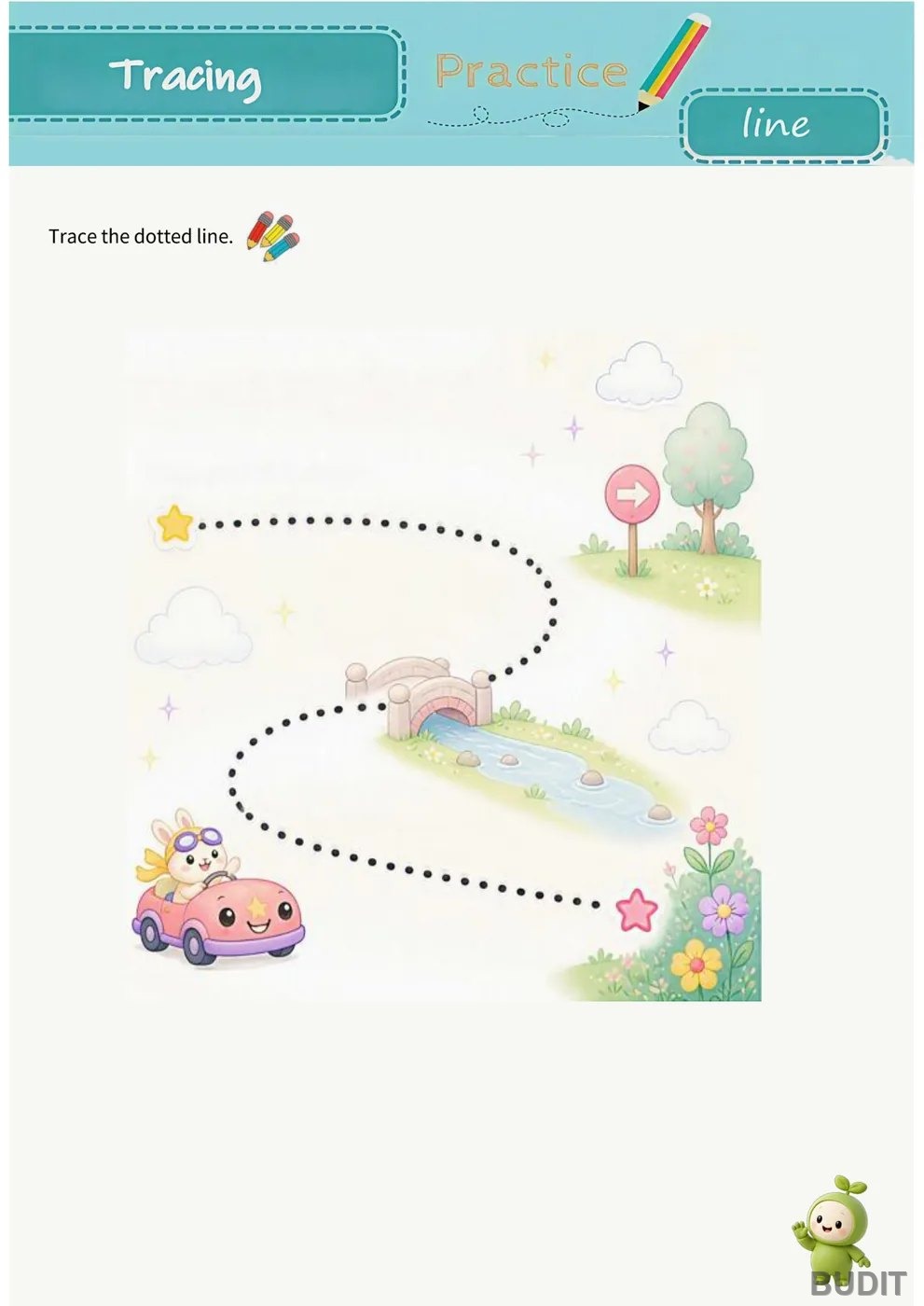
Photo: a page from the 『NoryBook』 『Line Tracing』 worksheet (as of Nov 4, 2026). Even if the line wanders, you can name what the hand did: 『you slowed down at the bend』. See the sheet
Questions people ask
Is 『good job』 wrong? No. Just add one thing about what was good, and it becomes process praise: 『Good job, you colored all the way to the end.』
Should I praise the process even when the result is good? Yes. Naming the strategy behind a good result helps the child reach for it again when the result is not good.
If I only praise effort, won't they think results don't matter? That is why you don't stop at 『you worked hard』 but also ask 『what could you try next?』. Naming both the effort and the change of strategy works well.
How often should I praise? In the research, what mattered was less the amount of praise than what was praised. Rather than praising more often, pick the moments of real effort.
How this continues in Budit
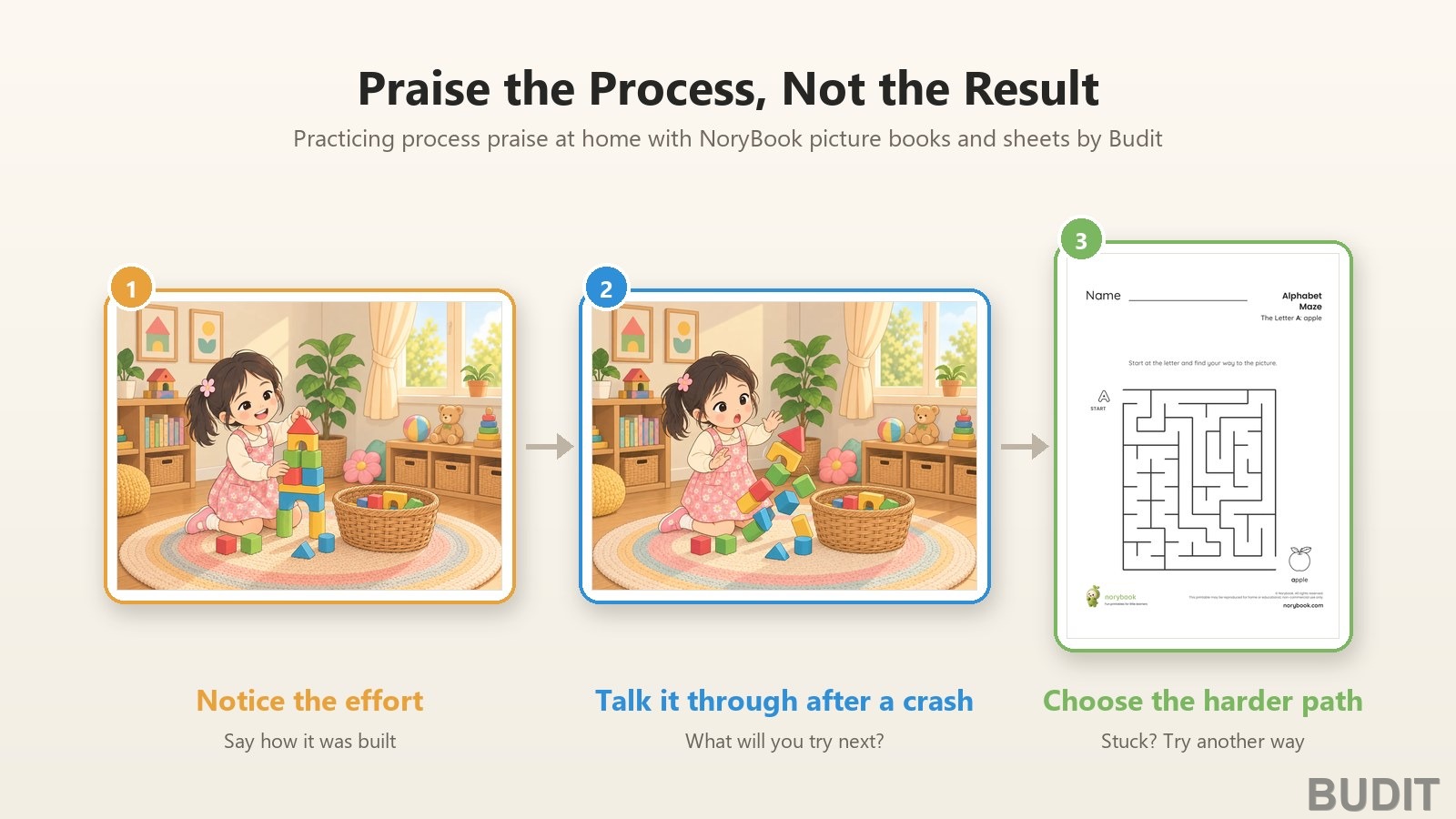
The three steps in the image at the top are the order for practicing process praise at home.
- 『Notice the effort』: in the block stacking scene of How Do You Feel?, talk together about how the tower was built. The first five pages can be read as a preview.
- 『Talk it through after a crash』: at the scene where the tower falls in the same book, ask 『you still got this far, what will you try next?』. The dressing scene in My Day works well too.
- 『Choose the harder path』: with the Alphabet Maze or Line Tracing sheets, try a slightly harder page and name the moment the child got stuck and found the way again.
Visit NoryBook · Open How Do You Feel?
Related reading: Emotion Coaching and Feeling Words 『A Feeling Gets Smaller Once It Has a Name』, Growing Scientific Curiosity 『How to Answer a Child's Why』, The Power of Coloring 『Focus and Eye and Hand Coordination』
References
- Mueller, C. M. and Dweck, C. S. (1998). Praise for intelligence can undermine children's motivation and performance. Journal of Personality and Social Psychology. View the paper
- Kamins, M. L. and Dweck, C. S. (1999). Person versus process praise and criticism: Implications for contingent self-worth and coping. Developmental Psychology. View the paper
- Cimpian, A., Arce, H. C., Markman, E. M. and Dweck, C. S. (2007). Subtle linguistic cues affect children's motivation. Psychological Science. View the paper
- Gunderson, E. A. et al. (2013). Parent praise to 1 to 3 year olds predicts children's motivational frameworks 5 years later. Child Development. View the paper
- Brummelman, E. et al. (2014). That's not just beautiful, that's incredibly beautiful! The adverse impact of inflated praise on children with low self-esteem. Psychological Science. View the paper
This article shares general information about development and education. Every child grows at their own pace. For specific concerns, please consult a pediatrician or a development specialist.