
What Order for Phonics
『A to Z, in order』 looks like the natural way. But twenty letters in, a child taught that way can make almost no words. Phonics runs in the order of sounds, not the order of letter names.
At a glance
| Question | What the research says |
|---|---|
| What is phonics | Learning the agreement between letters and sounds so a child can read a word they have never seen |
| In what order | Sound order, not alphabet order. Six letters (s, a, t, p, i, n) are enough to make words |
| Does it work | Systematic teaching beat unsystematic teaching, with the largest effect around school entry |
| What about sight words | Not words to memorize whole. Point out the irregular part and read the rest by sound |
| Where to start | With hearing and splitting sounds. Letters go on top of that |
Sounds come first
Our earlier article When to Correct Pronunciation 『Phonological Awareness』 described how splitting and comparing speech sounds forms the base of reading. Phonics is the next step. The child learns the agreement, 『c says k, a says a, t says t』, and strings the sounds together to read cat.
A meta analysis pooled studies that taught this agreement systematically, in a fixed order with a fixed method. Children taught systematic phonics read better than children who were not, and the effect was largest in kindergarten and first grade. Practice at blending letters into words helped struggling readers too (Ehri et al., 2001).
Sound order, not alphabet order
The phonics guidance published by the UK education department sets the first six letters as s, a, t, p, i, n (Letters and Sounds, 2007). The reason is simple. Those six letters alone make sat, pin, tin, pat, nap and tip. From the first week of letters, the child has the experience of 『I read that』.
Alphabet order is different. After a, b, c, d and e the child can make bad, cab and bed, little else, and has learned b and d side by side, mirror images that get confused. Changing the order changes the first few weeks.
Here is a rough sequence. Ages vary from child to child, so take the order and not the timing.
- Short vowels and common consonants. Start with s, a, t, p, i, n, then the short sounds of the five vowels a, e, i, o, u.
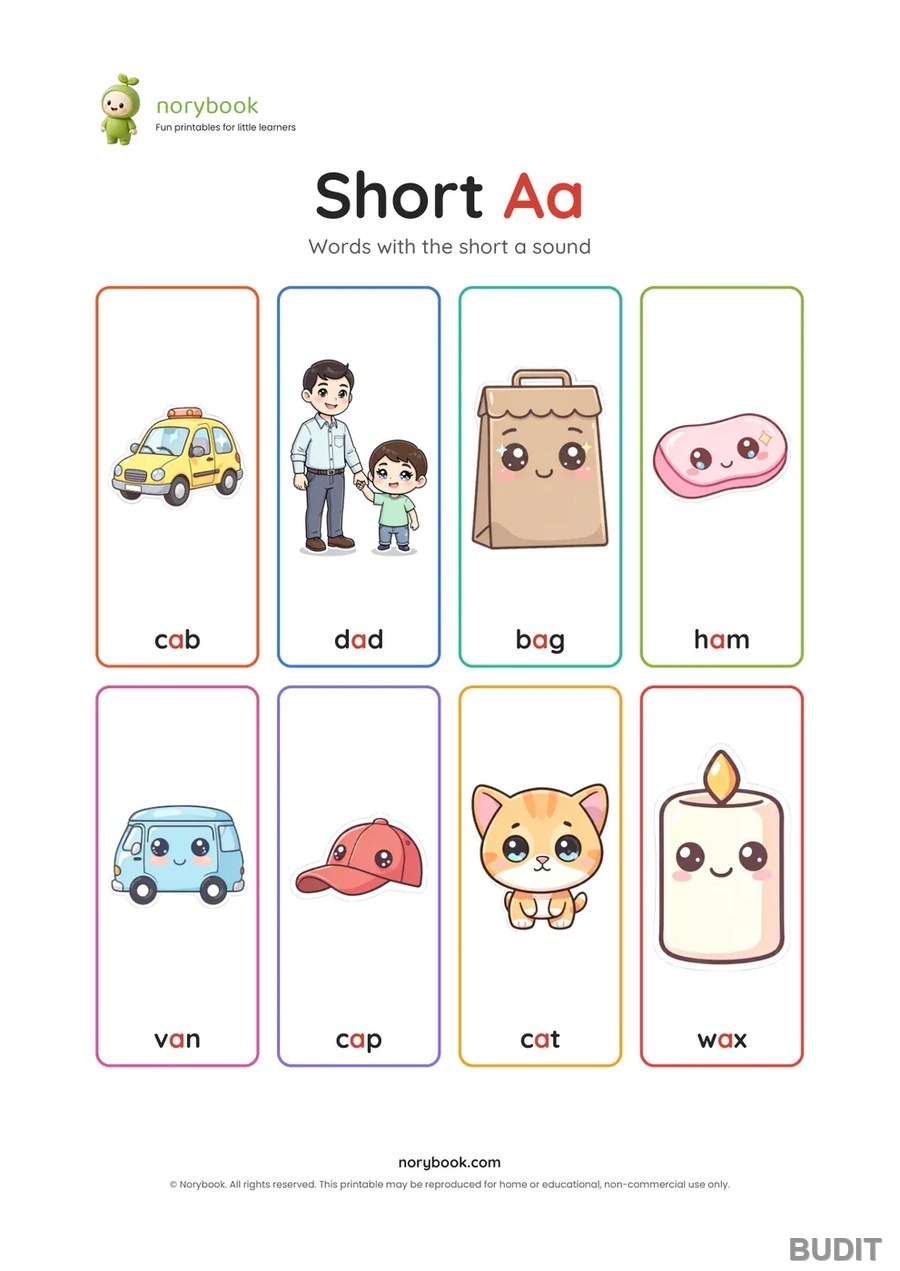
Photo: the first page of the 『NoryBook』 short vowel chart (as of Oct 7, 2026). One short vowel sound learned with picture words. See the material
- Three letter words (CVC). Consonant, vowel, consonant: cat, dog, sun, read aloud by blending. This is where reading first feels like reading.
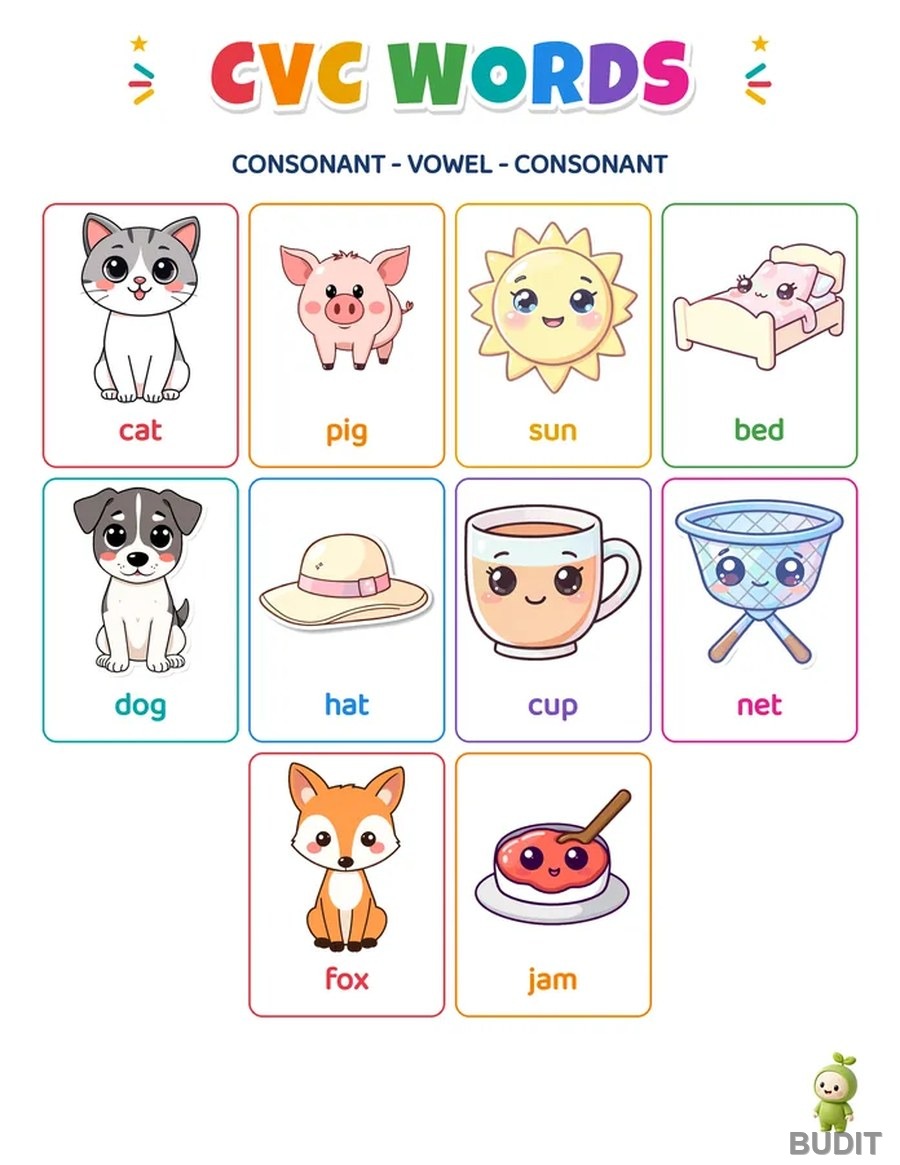
Photo: the first page of the 『NoryBook』 『CVC three letter words』 poster (as of Oct 7, 2026). The first words a child blends. See the material
- Consonant blends. bl, st, tr, where two consonants keep their own sounds side by side.
- Digraphs. sh, ch, th, where two letters make one new sound.
- Long vowels and their spellings. The a and e in cake, the ai in rain and the ay in day make the same sound, so they are grouped together.
Sight words are not words to memorize whole
Words like the, was and said turn up constantly and do not read by the rules. They are called sight words, and they are commonly described as 『words to memorize so you read them on sight』. The research says something different.
A child comes to read a word on sight not by storing it as a picture but by linking its sounds to its letters one by one and fixing that link in memory. This is called orthographic mapping (Ehri, 2014). So even with said, the s and the d are read by sound, and only the middle ai, which says 『e』, needs pointing out as 『this part is different』. Memorized whole, similar words blur into each other. Anchored by sound, they stay.
Two lists of high frequency words are widely used. The Dolch list has 220 words (Dolch, 1936). The Fry list has 1,000, and its first 100 make up close to half of all written English (Fry, 1980). There is no need to start with many. Ten at a time, found in picture books, is enough.
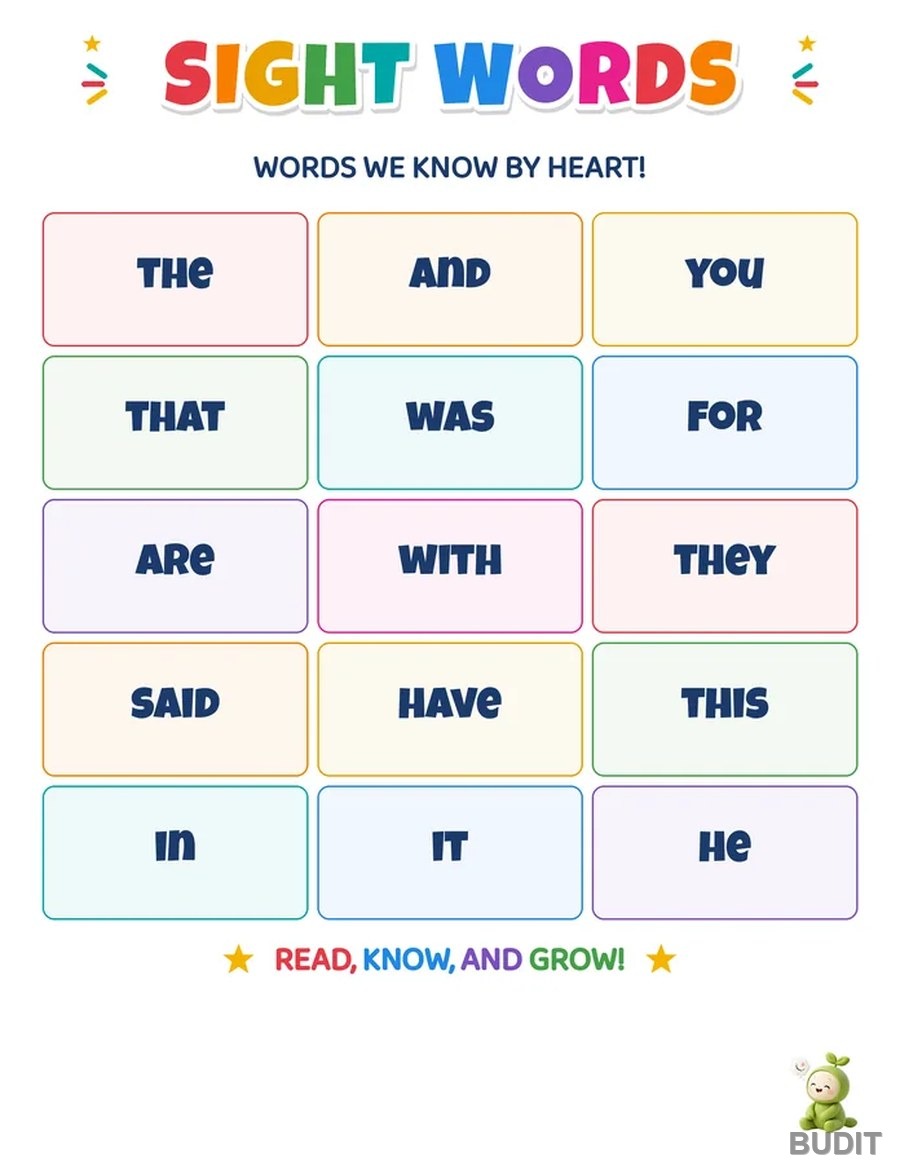
Photo: the first page of the 『NoryBook』 『Sight Words』 poster (as of Oct 7, 2026). Put it on the wall and point to the words found in picture books. See the material
What to do at home
- One sound a day. Today s, tomorrow a. Hunt for things around the house that start with that sound.
- Make words with six letter cards. Lay out s, a, t, p, i, n and let the child pick three and blend them aloud. Nonsense combinations are fine. Blending is the point.
- Find sight words in picture books. Pick one word of the day and turn pages looking for it. Read it aloud each time.
- Say it, then write it. Say a three letter word and let the child pick or write the letters. If it goes wrong, split the sounds again and say them slowly.
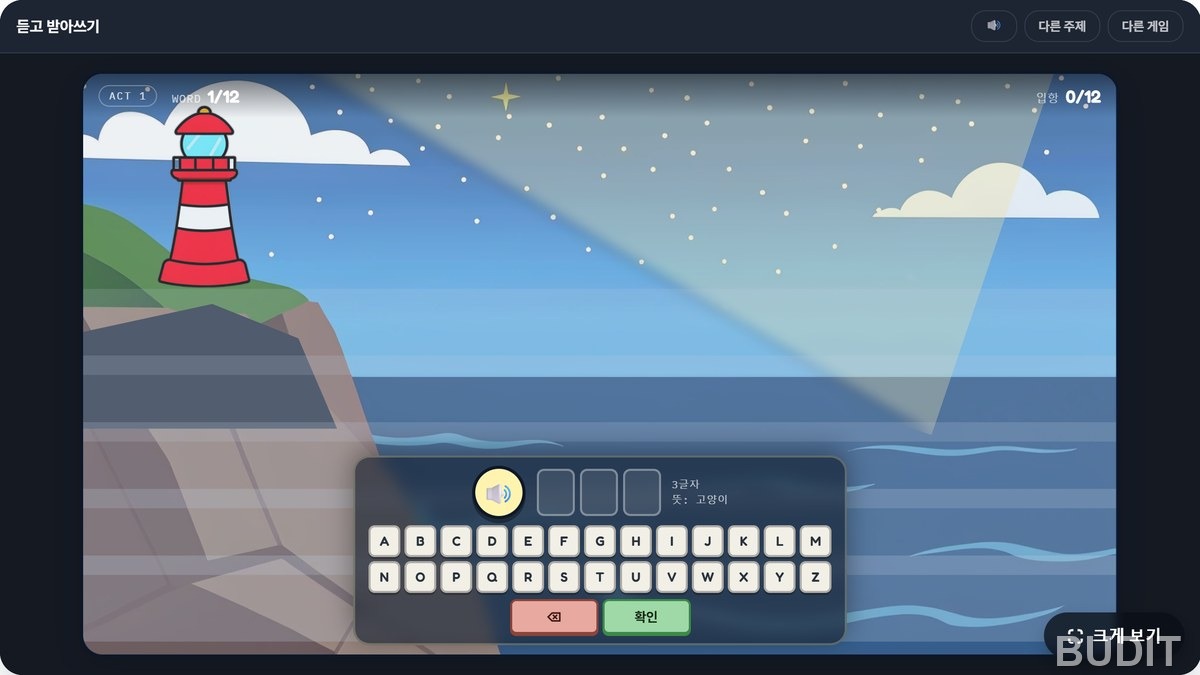
Photo: the 『NoryCard』 dictation game (as of Oct 7, 2026). Hear a word and pick the letters that build it. Open the game
Questions people ask
When should phonics start When the child shows interest in letters, usually around six or seven. Before that, games that hear and split sounds come first. The full picture on timing is in our earlier article When Should a Child Start Learning English.
Should letter names come first Names and sounds can go together, but reading uses the sounds. Knowing 『b』 as 『buh』 before 『bee』 makes word building faster.
How many sight words to begin with Ten at a time. The first 100 on the Fry list cover close to half of written English, so pick the ones that appear most in your picture books.
Once phonics is done, can the child read everything No. Phonics is the power to sound words out. Vocabulary, knowing what the words mean, and fluency, reading without stalling, grow separately. That is why phonics and reading aloud go side by side.
Is handwriting needed too Writing a letter by hand switches on the reading circuit alongside it. We covered this in Why Tracing Works.
How this continues in Budit
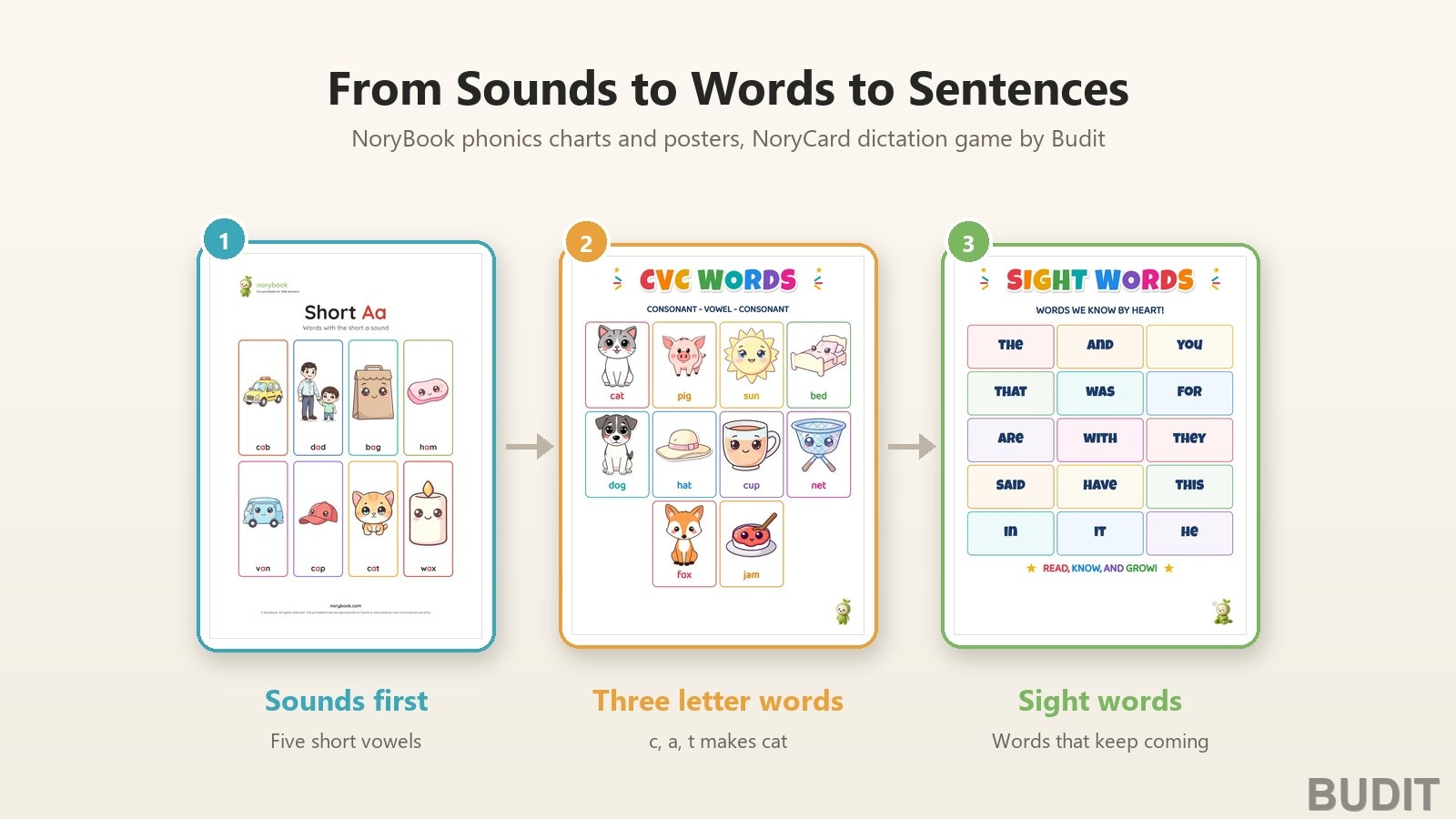
The three steps in the image at the top follow the order of this article.
- 『Sounds first』: the short vowel chart and the sound chart teach vowel and consonant sounds with picture words.
- 『Three letter words』: put the CVC poster on the wall and blend the sounds, then move on to the blends and digraphs poster.
- 『Sight words』: pick ten at a time from the sight words poster, and use the 『NoryCard』 dictation game to hear a word and pick its letters.
Browse phonics worksheets · Open the NoryCard games
References
- Ehri, L. C., Nunes, S. R., Stahl, S. A. and Willows, D. M. (2001). Systematic phonics instruction helps students learn to read: Evidence from the National Reading Panel's meta-analysis. View on Google Scholar
- Ehri, L. C. (2014). Orthographic mapping in the acquisition of sight word reading, spelling memory, and vocabulary learning. View on Google Scholar
- Fry, E. (1980). The new instant word list. View on Google Scholar
- Dolch, E. W. (1936). A basic sight vocabulary. View on Google Scholar
- Department for Education and Skills (2007). Letters and Sounds: Principles and Practice of High Quality Phonics. View on Google Scholar
This article shares general information about development and education. Every child grows at their own pace. For specific concerns, please consult a pediatrician or a development specialist.