


When Should Pronunciation Practice Start
『Should I be correcting my child's pronunciation now?』 Before you do, there is a skill worth building first: 『phonological awareness』, the ability to break speech into sounds and compare them.
What is phonological awareness?
『Phonological awareness』 is the ability to notice and play with the sound units that make up speech: words, syllables, beginning and ending sounds, and individual sounds. It generally develops from larger units to smaller ones (Anthony and Francis, 2005). A study that followed 67 preschool children for a year also found that the ability to notice rhyme developed before the ability to work with individual sounds, and that awareness of syllables and rhyme predicted later awareness of individual sounds (Carroll et al., 2003).
The table below shows the rough order, from larger units to smaller ones. Ages vary from child to child, so use it as a guide to the order only.
| Order | What children can do | Game idea |
|---|---|---|
| 1 | Break words into syllables | Clap three times for 『banana』 |
| 2 | Notice rhyme | 『Do cat, hat and bat sound alike?』 |
| 3 | Find first sounds | 『What starts with the b sound?』 |
| 4 | Split and blend individual sounds | Put the sounds c, a, t together to make cat |
A foundation for reading
At ages 4 and 5, children's ability to sort words by rhyme and by first sound predicted their later reading and spelling. When children who were weak at this were trained to group words by sound, their reading and spelling improved, and those who also practiced linking sounds to plastic letters improved the most (Bradley and Bryant, 1983). A meta analysis likewise found that practice with individual sounds helps with reading and spelling (Ehri et al., 2001).
A baby's ear tunes in early
Babies aged 6 to 8 months can hear differences between sounds from languages they have never heard, but by 10 to 12 months that becomes harder (Werker and Tees, 1984). How those sounds are heard matters too. In an experiment with American babies around 9 months old, those who heard Mandarin from native speakers who played with them in person kept their ability to tell Mandarin sounds apart, while babies who heard the same amount of Mandarin only on video or audio showed no such effect (Kuhl et al., 2003). Rather than just playing sounds from a screen, talk with your child and respond to them.
Model pronunciation instead of correcting it
- When your child says a word wrong, skip the 『No』 and simply say it back the right way.
- Enjoy how words sound alike through rhyming songs and word games.
- Play games about first sounds with pictures, so your child learns the sound and the meaning together.
- Keep practice short and frequent, and work on one sound at a time.
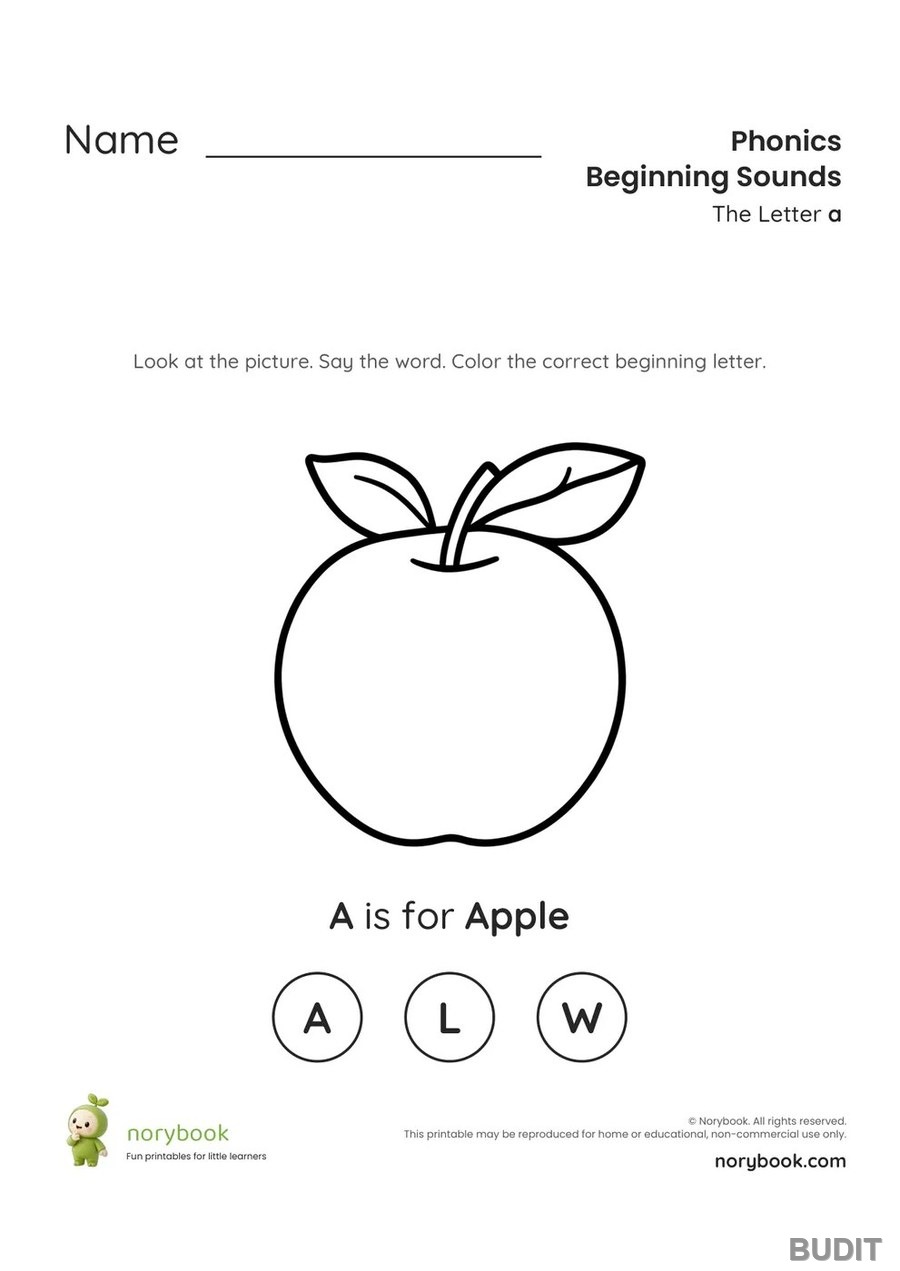
Photo: a page from the 『NoryBook』 『Pick the First Sound』 worksheet (as of Oct 19, 2026). Say the picture's name and choose its first letter from three. See it
Worth watching
Video: EBS 『Your Literacy』 Part 4, 『The secret of sounds that changes your child』, edited cut (official YouTube channel, Korean). It explains how word play that teaches letter sounds, together with reading aloud, builds the roots of literacy.
How this continues in Budit
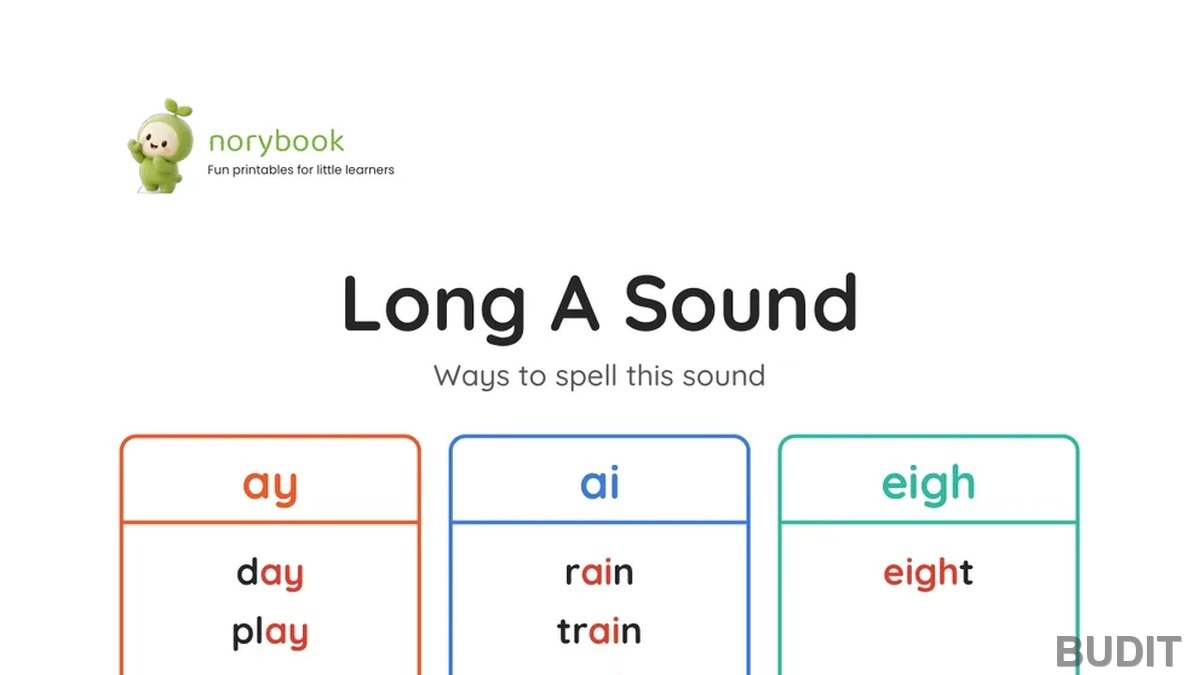
Using the phonics worksheets in 『NoryBook』 together with the phonics games in 『NoryCard』 lets your child practice in order: hear the sound, find it, then write it. The three steps in the image at the top are real materials and screens.
- 『Sound chart』: use the Sound Chart to gather words that share a sound and read them aloud.
- 『First sounds』: in the 『첫소리 찾기』 (find the first sound) game among the NoryCard games, listen for the first sound and find the word that matches.
- 『Trace first letters』: in First Sound Tracing, trace the names of pictures that start with the same letter.
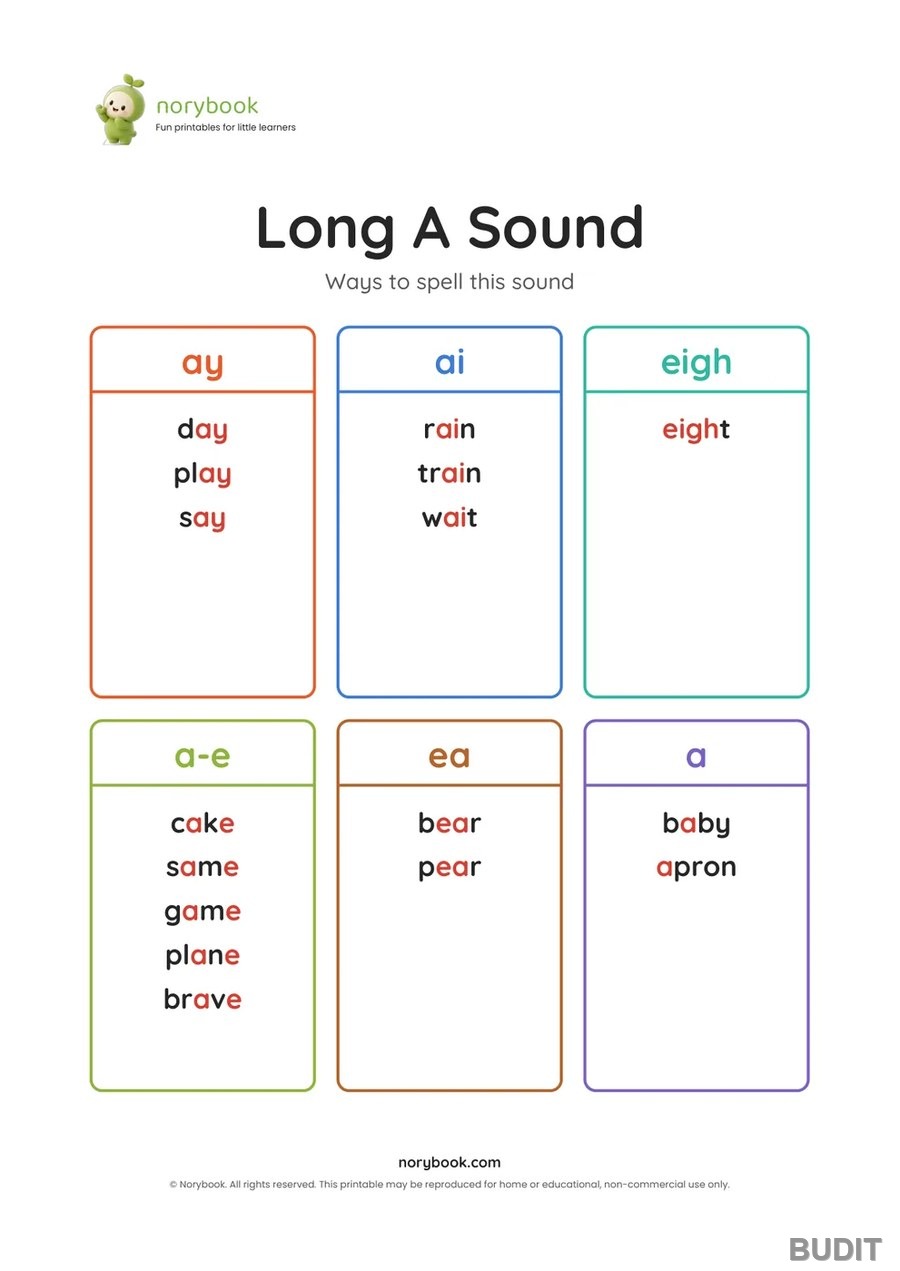
Photo: the first page of the 『NoryBook』 sound chart worksheet (as of Oct 6, 2026). One sound, such as long a, is shown across its spellings, to be read aloud and heard as the same sound. See the material
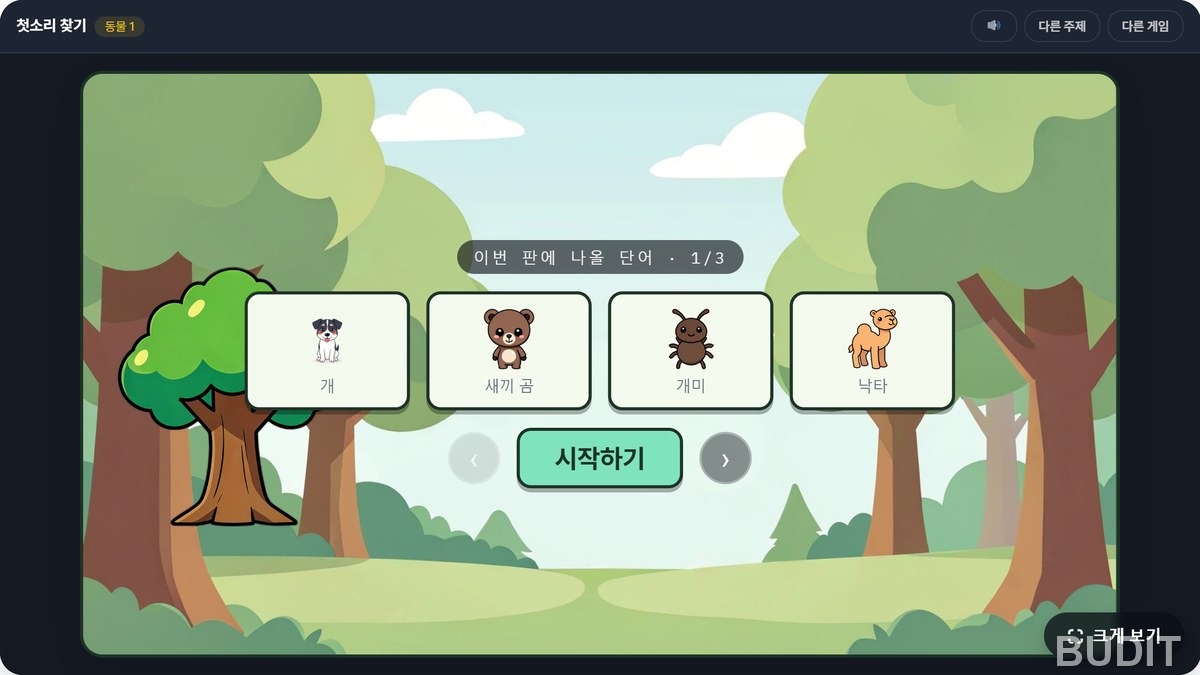
Photo: the 『NoryCard』 『첫소리 찾기』 (find the first sound) game (as of Oct 6, 2026). Hear the first sound and pick the matching picture. No letters needed. Open the game
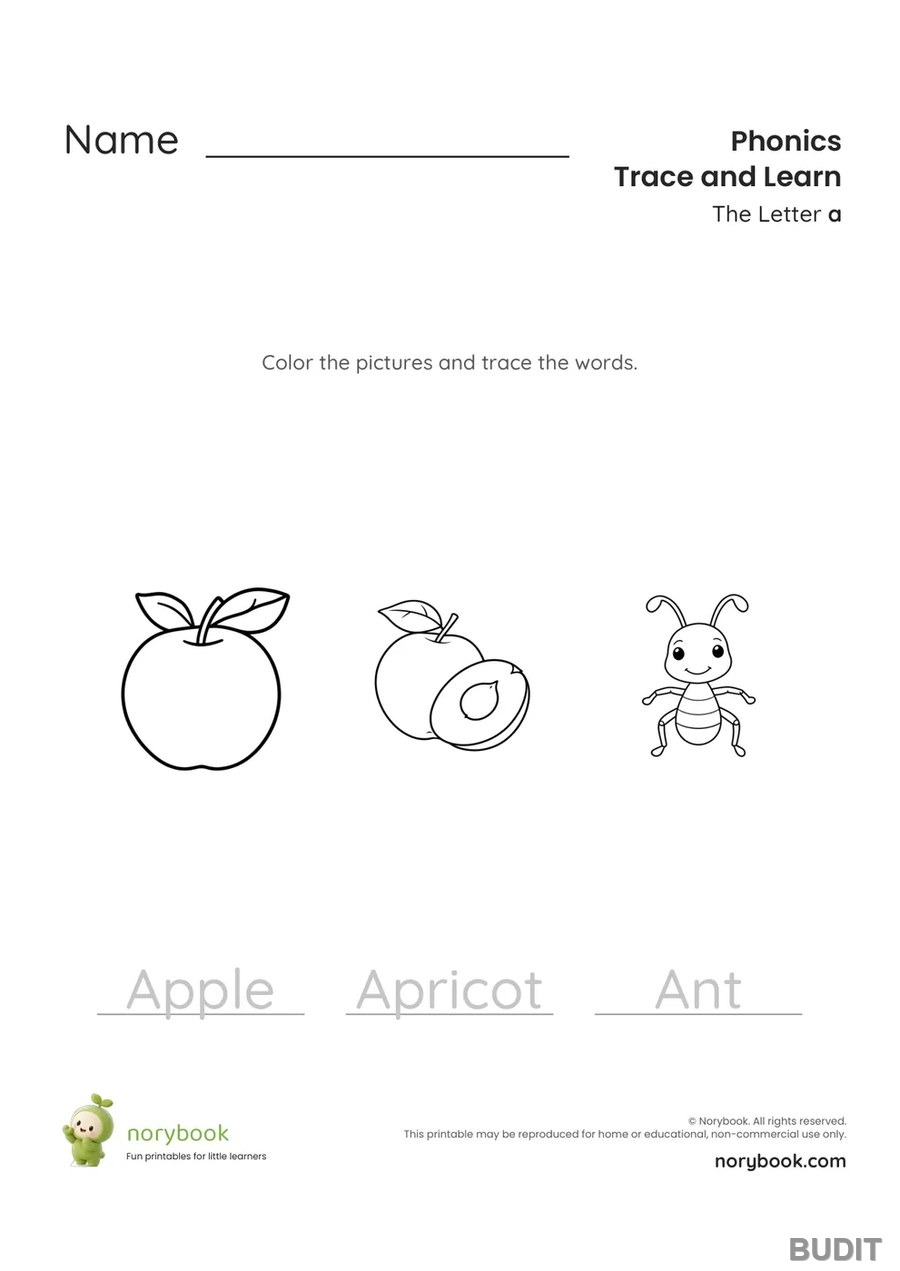
Photo: the first page of the 『NoryBook』 first sound tracing worksheet (as of Oct 6, 2026). After finding the sound, the child writes the names of pictures that start with that letter. See the material
Browse phonics worksheets · See all NoryBook materials
Related reading: What Order for Phonics 『From Sounds to Words, Then Sight Words』, Why Show Pictures and Words Together 『Dual Coding』, Why Game Review Helps Words Stick 『Retrieval Practice and Spacing』
References
- Anthony, J. L. and Francis, D. J. (2005). Development of phonological awareness. View on Google Scholar
- Carroll, J. M. et al. (2003). The development of phonological awareness in preschool children. View on Google Scholar
- Bradley, L. and Bryant, P. E. (1983). Categorizing sounds and learning to read: A causal connection. View the paper
- Ehri, L. C. et al. (2001). Phonemic awareness instruction helps children learn to read: Evidence from the National Reading Panel's meta-analysis. View the paper
- Werker, J. F. and Tees, R. C. (1984). Cross-language speech perception: Evidence for perceptual reorganization during the first year of life. View the paper
- Kuhl, P. K., Tsao, F. M. and Liu, H. M. (2003). Foreign-language experience in infancy: Effects of short-term exposure and social interaction on phonetic learning. View the paper
This article shares general information about development and education. Every child grows at their own pace. For specific concerns, please consult a pediatrician or a development specialist.