


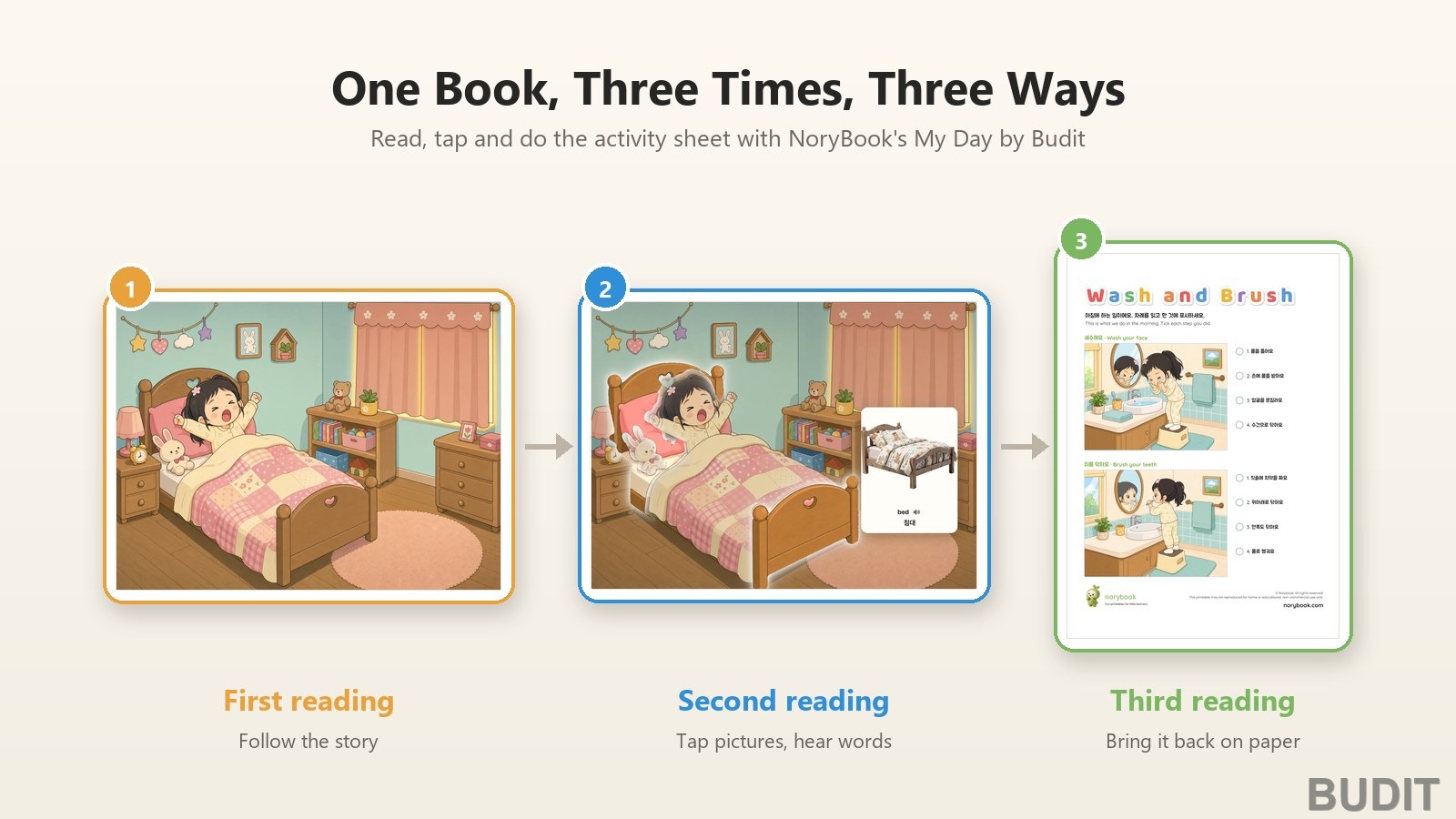
『That Book Again?』 Why Rereading the Same Book Works
Most parents have tried 『let's read a different one』 when a child brings the same book every night. The research is on the child's side. Rereading one book leaves more words behind than moving through new books.
At a glance
| Question | What the research says |
|---|---|
| Is the same book every time all right | Yes. Children who heard one book three times learned more new words than children who heard three different books |
| Why | Once the plot is familiar, attention moves from following the story to the words and the pictures |
| How many times | Around three readings showed a clear effect, and a short explanation of a word during reading added more |
| Just read it the same way | No. Ask questions on the second reading, and let the child bring the words back on the third |
One book three times beat three books
In one experiment, three year olds heard picture books that contained new words. One group heard the same book three times. The other heard three different books that contained the same new words. The children who remembered the new words better were the ones who heard the same book repeatedly, and the difference was still there a week later (Horst et al., 2011).
A study of preschoolers compared hearing a book once with hearing it three times. After three readings, children could say more of the new words themselves (Sénéchal, 1997). In kindergarten and early primary classrooms, simply rereading the same stories raised word knowledge, and brief explanations of words during reading raised it further (Biemiller and Boote, 2006).
Why repetition works
On the first reading a child's mind is busy. Who is in it, what happens next, and there is no room to linger on a single word. By the second and third readings the plot is known. Only then does attention drift to the corners of the pictures and to the words heard for the first time. Choosing the same book again is not a failure to get bored. It is coming back for what was missed last time.
This connects to the principle in our earlier article Retrieval and Spacing. Opening the same book a day later, then three days later, makes the child pull last time's words back out of memory, and a memory pulled out gets stronger.
Three readings, three ways
Reading the same book the same way every time wears the adult out first. Give each reading a different job and both of you read it fresh.
- First reading, follow the story. Read straight through. Answer only what the child asks, and let the plot land.
- Second reading, ask and point. 『What is this?』 『What happens next?』 When the child answers, hand the words back slightly expanded. Asking the child questions and expanding on their answers during reading was shown to build vocabulary and expression (Whitehurst et al., 1988). The method is in our earlier article Point, Tap and Talk.
- Third reading, the child brings it back. Let the child say the parts they know. Stop at 『what did it say here?』 and let them fill it in. Afterwards take it outside the book: draw, do the activity sheet, hunt for the words.
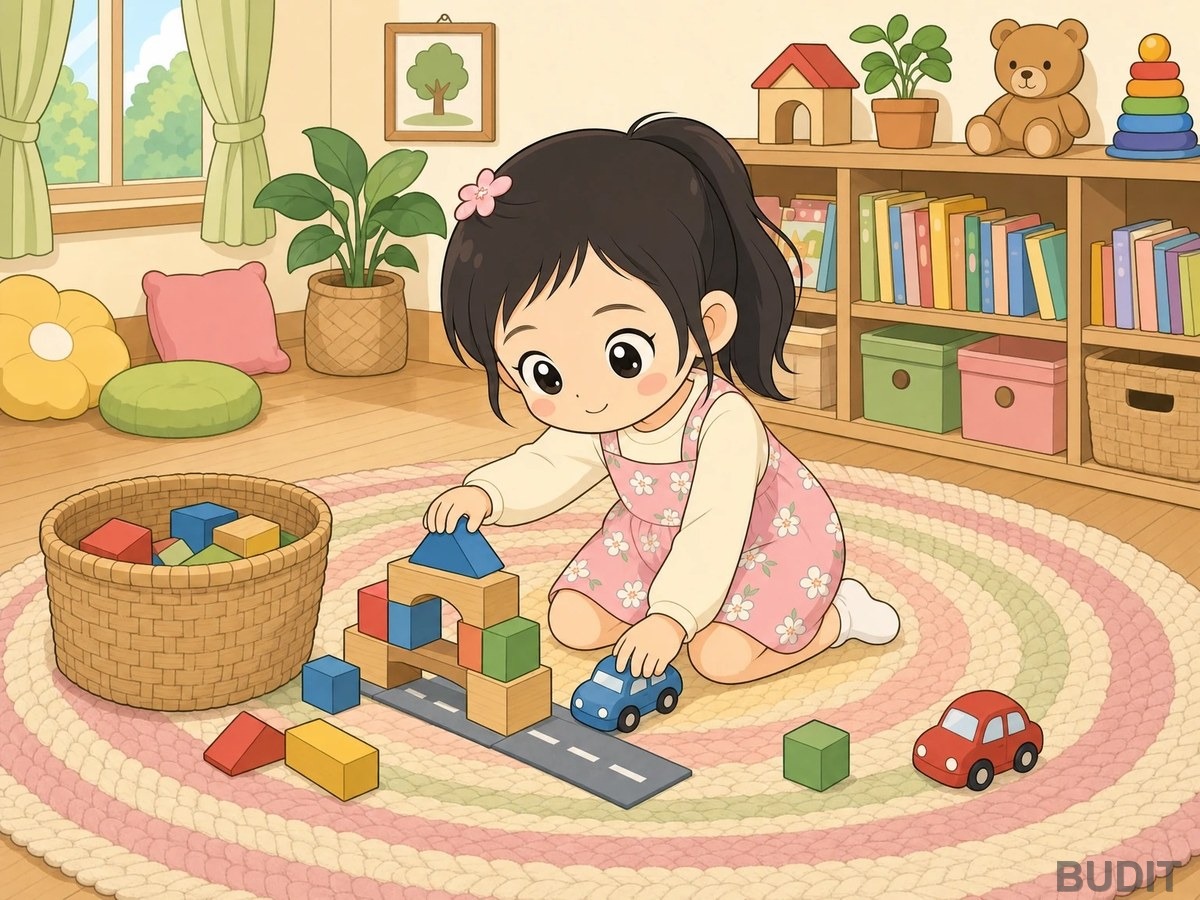
Photo: a scene from the 『NoryBook』 picture book 『My Day』 (as of Oct 9, 2026). It is a child's ordinary day, so the story stays familiar however many times it is read, and a different corner shows up each time. Open the book
For the child who picks the same book again
- Instead of 『again?』, try 『what will we find today?』. A child who is allowed to repeat stays longer.
- Change the reader. Mom's voice, Dad's voice, Grandma's voice reading the same book gives the child the same words in three different sounds.
- Put the new book next to the old one. A familiar book and a new book read together makes the new one easier to enter.
- Point out one word at a time. Three words across three readings is plenty.
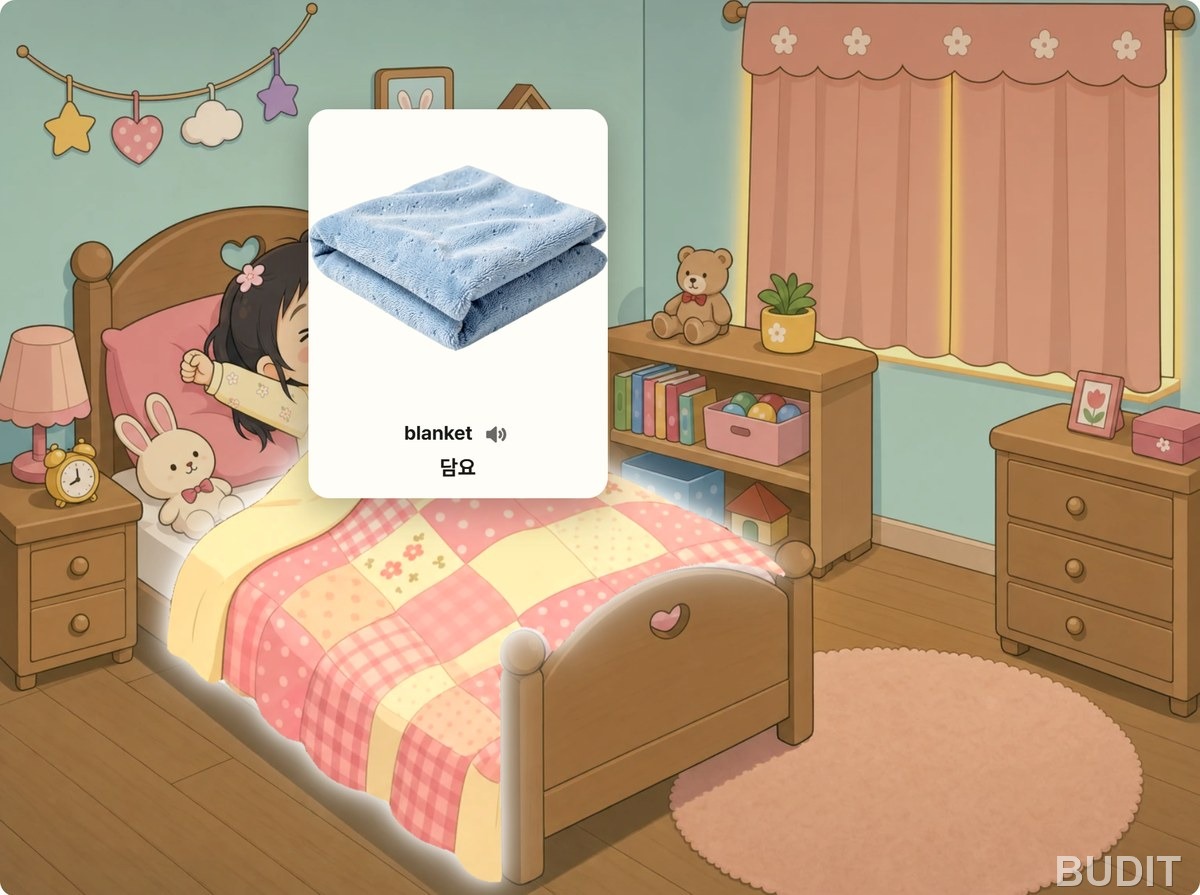
Photo: the blanket tapped in the 『My Day』 reader (as of Oct 9, 2026). On the second reading, tapping an object in the picture lights it up and shows its word card. Open the book
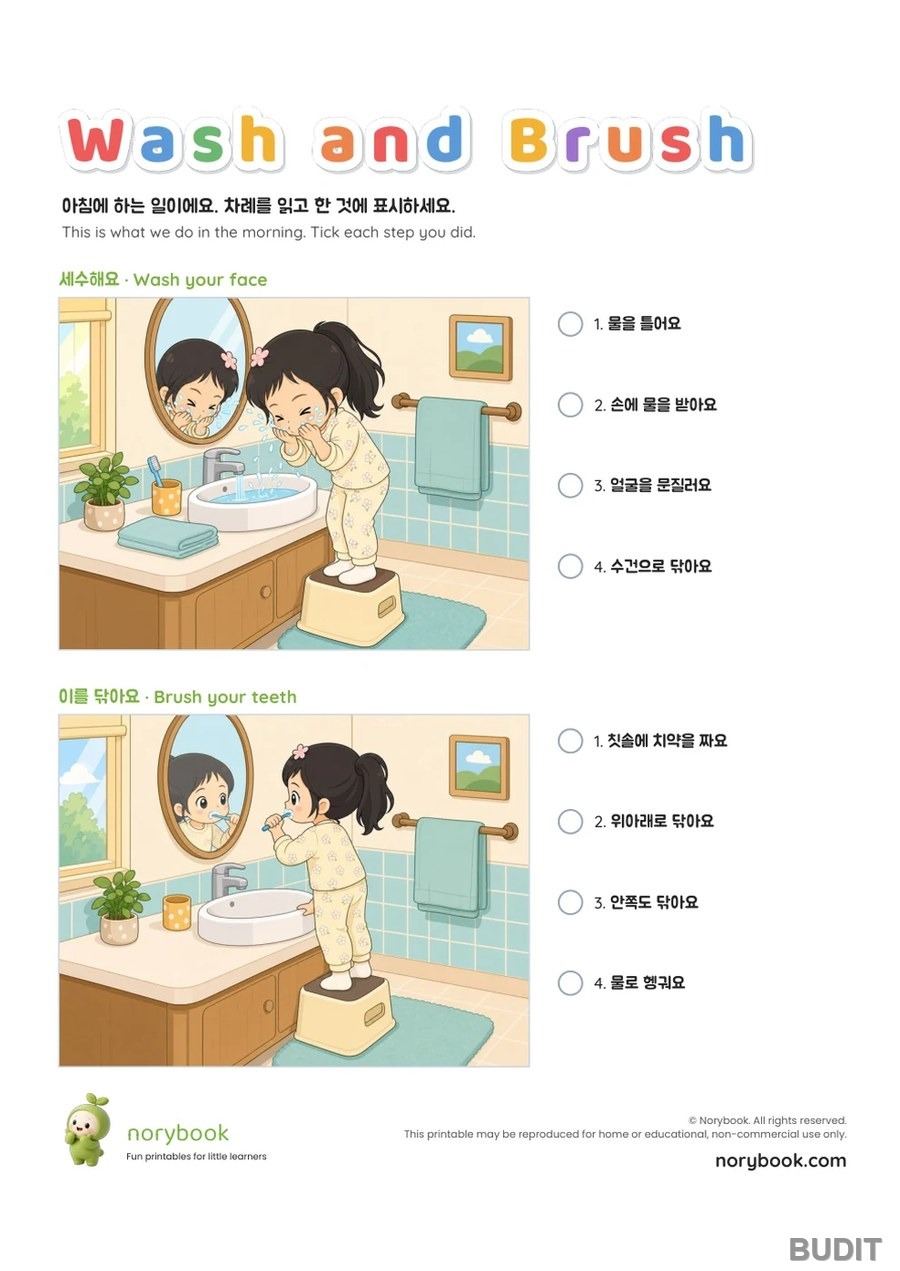
Photo: an activity sheet from 『My Day』 (as of Oct 9, 2026). After the third reading, the words from the book come back on paper. See the material
Questions people ask
How many times should I read it The studies showed a clear effect around three readings. If the child wants more, read more. The day the child reaches for a different book on their own is that book's graduation.
Will the same book stop them reading other books The opposite. A child who has come to know one book deeply knows how to linger in the next one. Keep one new book beside the familiar one.
My child has memorized it and pretends to read. Is that all right Yes. Reciting from memory is also practice at bringing words back, and matching the memorized words to the letters on the page is where reading begins.
Does this apply to English picture books Yes, and more so. The words are unfamiliar, so repetition does more work. Get familiar with the sounds first, then point at the pictures, and leave letters for later.
How this continues in Budit
The three steps in the image at the top are three readings of one book, 『My Day』.
- 『First reading』: turn the pages of My Day with the audio on, all the way through. The reading voice can be swapped for a parent's own.
- 『Second reading』: tap the objects in the pictures. Each lights up with a word card, which opens a moment to ask and answer.
- 『Third reading』: do the book's activity sheets and play the NoryCard games with the book's words.
References
- Horst, J. S., Parsons, K. L. and Bryan, N. M. (2011). Get the story straight: Contextual repetition promotes word learning from storybooks. View on Google Scholar
- Sénéchal, M. (1997). The differential effect of storybook reading on preschoolers' acquisition of expressive and receptive vocabulary. View on Google Scholar
- Biemiller, A. and Boote, C. (2006). An effective method for building meaning vocabulary in primary grades. View on Google Scholar
- Whitehurst, G. J. et al. (1988). Accelerating language development through picture book reading. View on Google Scholar
This article shares general information about development and education. Every child grows at their own pace. For specific concerns, please consult a pediatrician or a development specialist.