


Why Start Children's English with Everyday Words
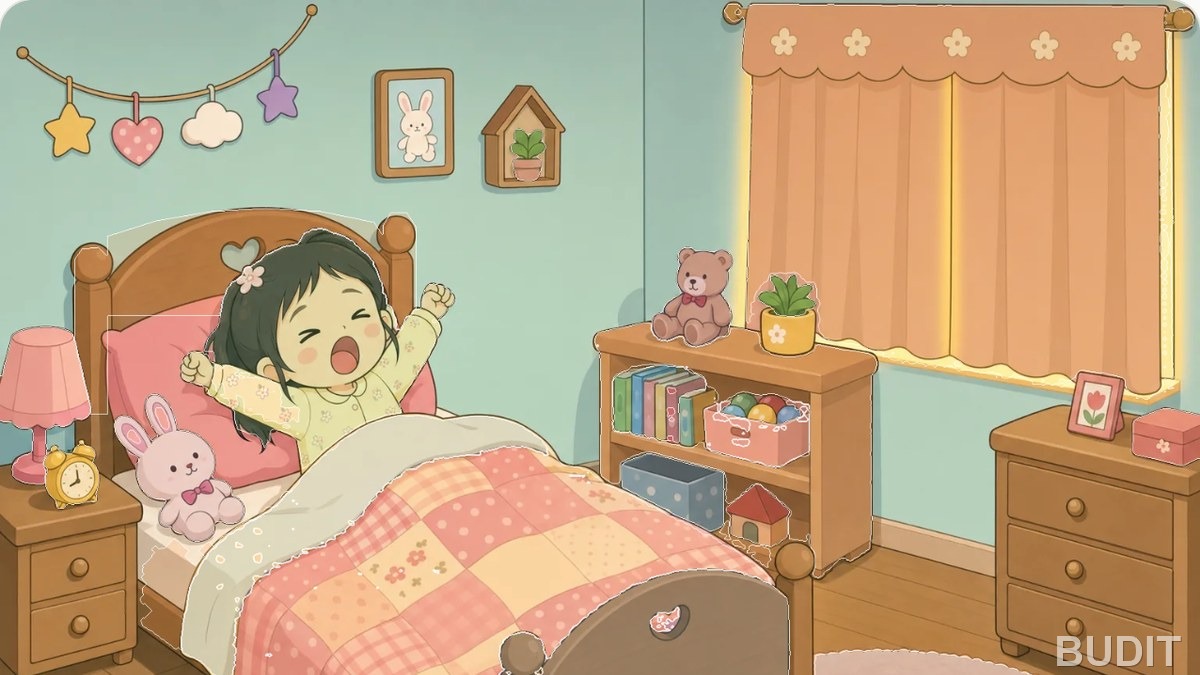
One day your child seems to be using new words all the time. This is often called the 『vocabulary spurt』. For a child at this stage, good words to start with are the everyday objects they see and touch.
What is the vocabulary spurt?
In a study where mothers kept a record of the words their children learned from 14 months of age, 13 of the 18 children went through a period, lasting up to three months, in which they learned new words much faster, and nearly three quarters of the words learned in that period were nouns. The other five children added words more gradually and evenly (Goldfield and Reznick, 1990). Another study of 38 children found that only 5 showed a clear 『spurt』, while the rest added words without any sudden change of pace (Ganger and Brent, 2004). Rather than comparing your child with others, follow your own child's pace.
Catching a word after one hearing
Young children can get a rough idea of what a new word means after hearing it just once. This is called 『fast mapping』 (Carey and Bartlett, 1978). For that rough idea to become a word the child really knows, though, they need to meet it again in many different situations.
Children grow with what they hear
Children who heard more speech addressed directly to them understood words faster and knew more words a few months later (Weisleder and Fernald, 2013). A classic study also found large differences between families in how much speech children hear (Hart and Risley, 1995). For children learning two languages, vocabulary in each language depended on how much of that language they heard (Hoff et al., 2012). So give your child plenty of everyday chances to hear English words too.
Why everyday words come first
- Children see and touch these things every day, so they meet the words again and again without extra effort.
- It is easy to point at them and say their names, so you and your child can look at the same thing while learning.
- Your child already knows the object from experience, so all you add is its English name.
- They grow easily into longer phrases, from bed to my bed to go to bed.
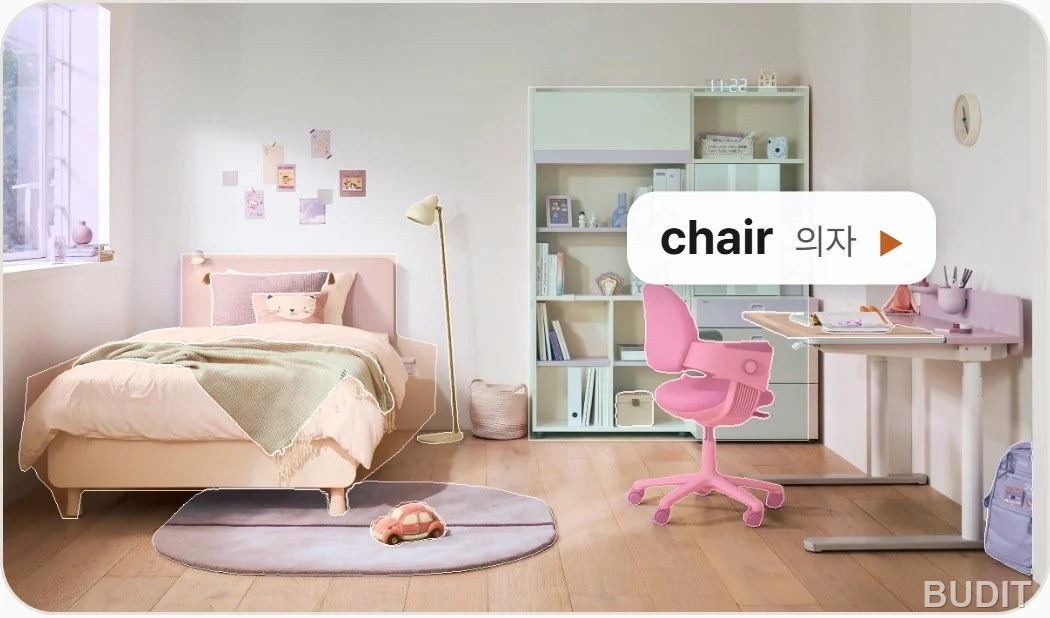
Photo: 『NoryBook』 Custom Cards (as of Oct 19, 2026). Upload a photo of your home and the things a child sees every day become English words. See it
Worth watching
Video: EBS 『Literacy Kindergarten』 on young children's vocabulary (official YouTube channel, Korean). It shows how playing market and visiting a grocery store can help young children build vocabulary.
How this continues in Budit
The 『물건 이름 찾기』 (find object names) feature in 『NoryBook』 finds the objects in a photo and gives you their English words. The image at the top shows real results from a sample picture.
- 『Find things in a photo』: in the object word demo, tap a sample picture and the objects in the room are found and marked.
- 『Name them』: the objects are listed as English words such as bed, rug, lamp and clock, along with their Korean meanings. With 『내 사진으로 해보기』 (try with my photo), you can use a photo of your own home.
- 『Learn with cards』: meet the same words again and again on cards with a picture, audio and meaning, like the word cards for My Day.
『Word cards』, 『Play games』 and 『Worksheets』 open for accounts that registered a book with a coupon (since Oct 15, 2026); reading and the NoryCard games need no login.
Related reading: Does Background English Work 『Playing It in the Background vs Listening Together』, Does a Parent Need Good English 『The Audio Does the Sounds, the Parent Does the Talking』, When Should a Child Start Learning English 『It Is the Method, Not the Age』
References
- Goldfield, B. A. and Reznick, J. S. (1990). Early lexical acquisition: Rate, content, and the vocabulary spurt. View the paper
- Ganger, J. and Brent, M. R. (2004). Reexamining the vocabulary spurt. View the paper
- Carey, S. and Bartlett, E. (1978). Acquiring a single new word. View on Google Scholar
- Weisleder, A. and Fernald, A. (2013). Talking to children matters: Early language experience strengthens processing and builds vocabulary. View the paper
- Hart, B. and Risley, T. R. (1995). Meaningful Differences in the Everyday Experience of Young American Children. View on Google Scholar
- Hoff, E. et al. (2012). Dual language exposure and early bilingual development. View the paper
This article shares general information about development and education. Every child grows at their own pace. For specific concerns, please consult a pediatrician or a development specialist.