


A Gift of Voice for Busy Parents
A late night at the office, a week away for work. If you keep thinking 『I missed story time again』, a few studies may put your mind at ease.
Hours together are not the whole story
A study of large national survey data from the United States found that the 『amount』 of time mothers spent with children aged 3 to 11 had no clear link to the children's behavior, emotions or school results (Milkie et al., 2015). There is no need to be too hard on yourself when time is short. Try instead to set aside a little time when your child has your full attention.
A voice reaches across distance
After a stressful task, girls aged 7 to 12 who only talked with their mother on the phone showed lower stress hormones and higher oxytocin (Seltzer et al., 2010). In a similar setup, girls who could only exchange instant messages with their mother showed no rise in oxytocin, and their stress hormone levels were as high as those of girls who had no contact with their mother at all (Seltzer et al., 2012). That is a good reason to call rather than only text when you are away. Why a parent's voice matters so much is covered in our earlier article A Parent's Voice Is Special.
When a live call beats a recording
Toddlers aged 24 to 30 months learned new verbs (words for actions) from a video chat in which the adult responded to them, but not from a recorded video that looked similar yet played on regardless of how the child reacted (Roseberry et al., 2014). So when you can, turn the pages of the same book together over a video call, and save the recorded voice for times when a call is not possible.
A reading plan for busy days
- On a calmer day, record your voice in advance.
- On days when you travel or work late, read at least one page of the same book together over a video call.
- When a call is not possible, have your child listen to the book in your voice with the caregiver at home.
- When you are back, take even five minutes to ask, 『What did you like best in that book?』
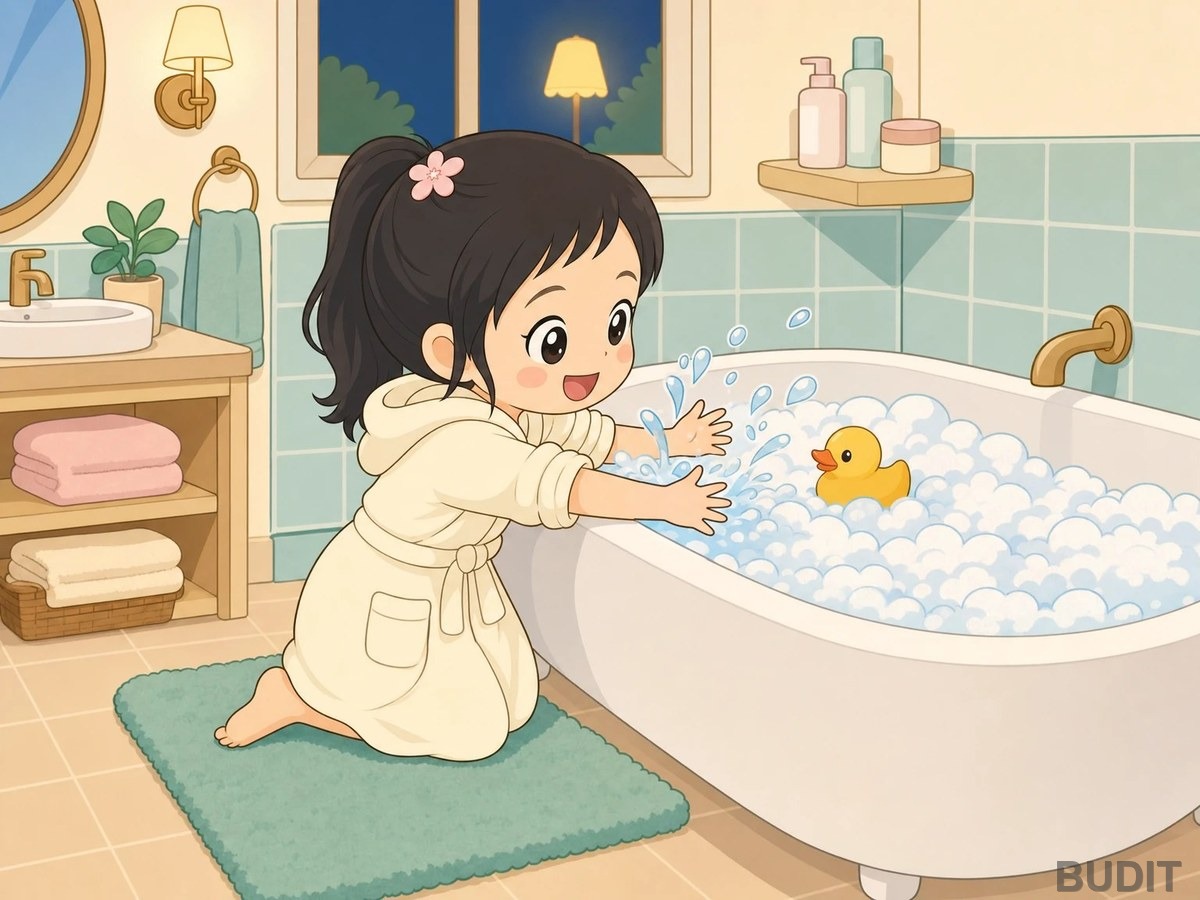
Photo: the bath time scene from the 『NoryBook』 picture book 『My Day』 (as of Oct 19, 2026). A page to turn together on the day you are back. See it
Worth watching
Video: EBS 『News Bridge』 on working mothers and their children's emotions (official YouTube channel, Korean, 2022). It explains what attachment theory says and talks about the good things a working mother can bring to her child.
How this continues in Budit
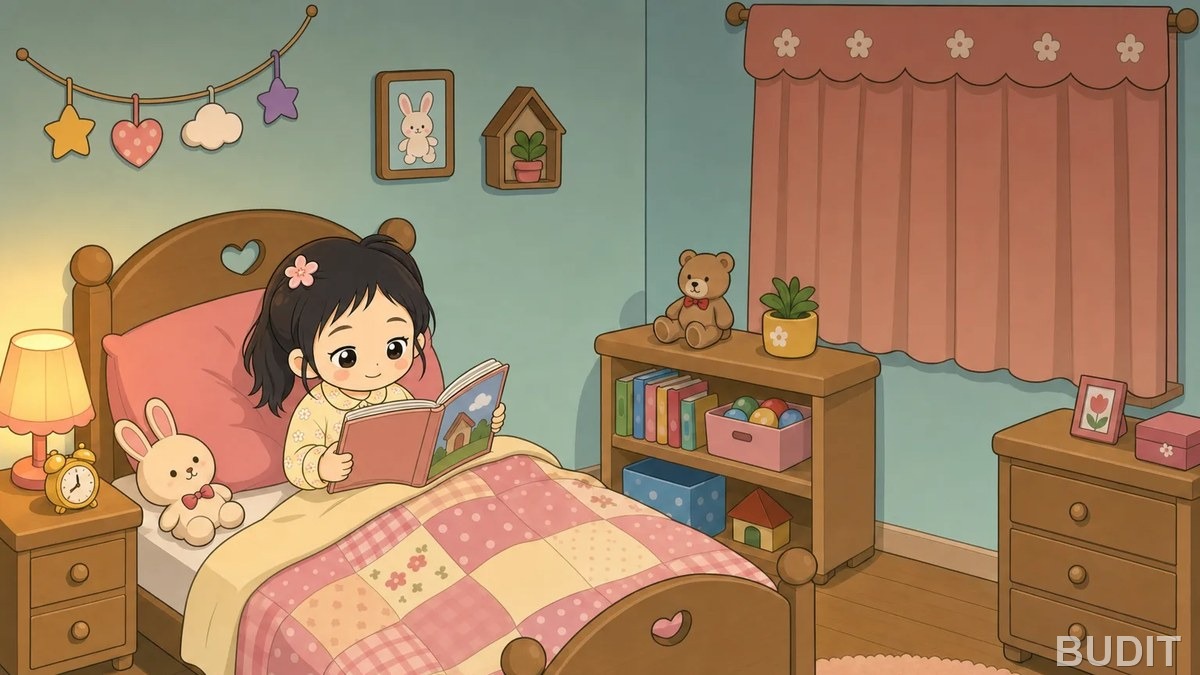
In 『NoryBook』, a parent records their voice once and, after logging in, can have picture books read in that voice. The three steps in the image at the top are real screens and materials.
- 『Record once』: as in the voice demo, read the sample sentences aloud for about 5 to 15 seconds. Once you log in, the recording is available as 『내 목소리』 (my voice) under 『읽어주는 오디오』 (reading audio).
- 『A book in your voice』: with the caregiver at home, your child turns the pages of My Day and hears your voice.
- 『Together again』: when you are back, do the same book's activity sheet together and talk about the day.
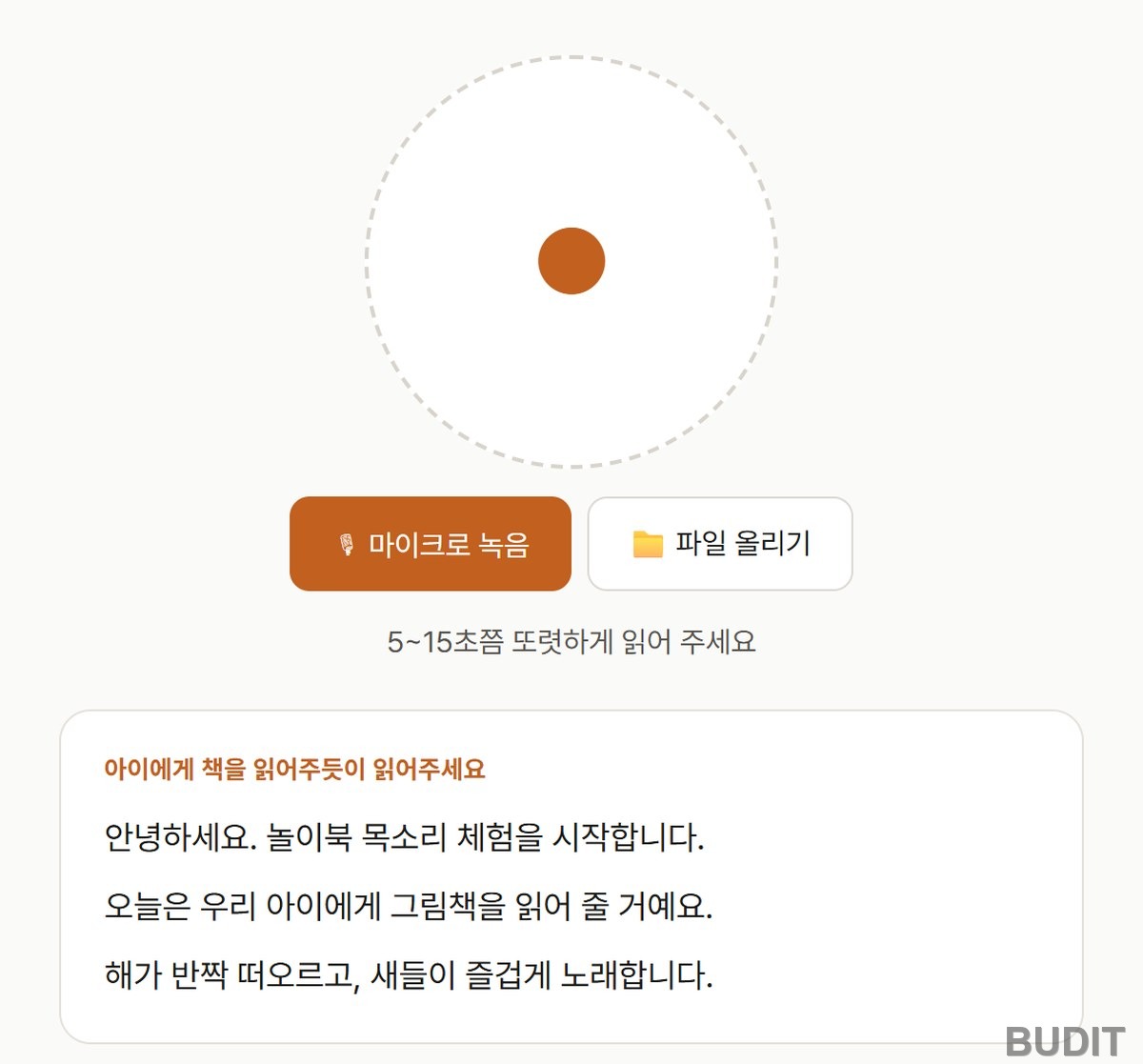
Photo: the 『NoryBook』 voice demo (as of Sep 17, 2026). After you allow the microphone, a 3, 2, 1 countdown starts and you read the sample sentences. Five to fifteen seconds is enough. Try it
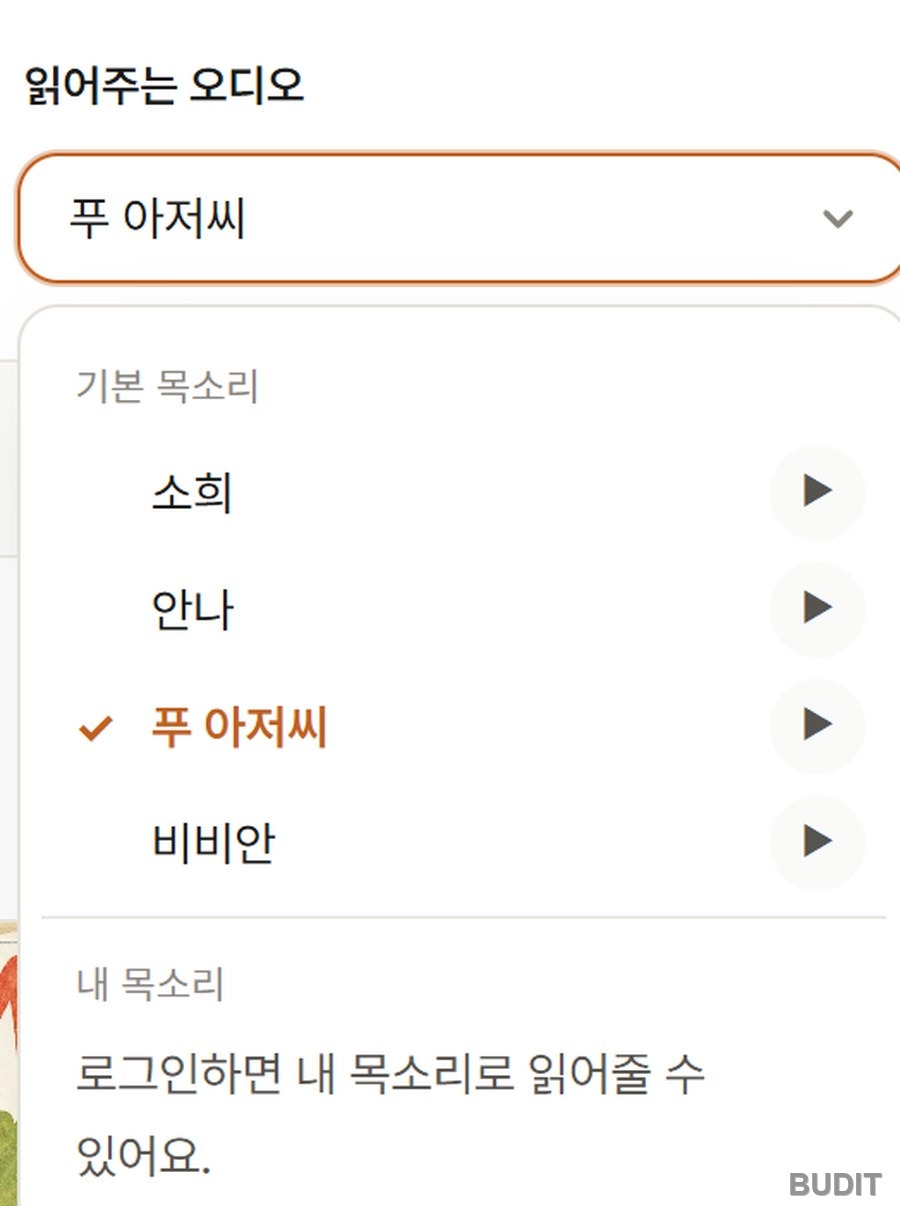
Photo: the 『reading audio』 picker inside a picture book (as of Sep 17, 2026). A recorded voice is chosen from this list.
Related reading: When to Start Reading Aloud 『Hearing Before Birth』, The Comfort of a Book Read in a Parent's Voice 『Attachment』, A Book Read in Mom's or Dad's Voice 『The NoryBook Voice Demo』
References
- Milkie, M. A., Nomaguchi, K. M. and Denny, K. E. (2015). Does the amount of time mothers spend with children or adolescents matter? View the paper
- Seltzer, L. J., Ziegler, T. E. and Pollak, S. D. (2010). Social vocalizations can release oxytocin in humans. View the paper
- Seltzer, L. J. et al. (2012). Instant messages vs. speech: Hormones and why we still need to hear each other. View the paper
- Roseberry, S., Hirsh-Pasek, K. and Golinkoff, R. M. (2014). Skype me! Socially contingent interactions help toddlers learn language. View the paper
This article shares general information about development and education. Every child grows at their own pace. For specific concerns, please consult a pediatrician or a development specialist.