


What Is Transfer of Learning
『She solved all of them at home, so why did she miss them on the test?』 『He says he learned it at school, so why can't he use it at home?』 The two questions parents ask most often are the same question. Using something learned in one place in another place is called 『transfer of learning』. A child who has learned a lot and a child who uses what they learned are different children, and the goal of study is always the second. The research says two things: transfer does not happen on its own, and there are ways to make it happen.
Video: a concept met in the news moving on to a reasoning question and the concept map (no sound)
At a glance
| Question | Answer |
|---|---|
| What transfer is | Using knowledge or skill learned in one situation in a different situation |
| Near and far transfer | Moving to a similar problem is near transfer; moving to another subject or to daily life is far transfer. The farther, the rarer |
| Why it fails | Children remember the surface of a problem (the numbers, the picture, the setting) and do not see the structure underneath (the principle) |
| How to raise it | Compare two examples, mix up practice, explain why. All three worked in research |
| The other meaning of transfer | Not only using it straight away, but learning the next thing faster is transfer too |
Where you learn and where you use it are different places
In a 2002 review Barnett and Ceci gathered the transfer research and sorted it by 『from where to where』. Moving to a similar problem within the same subject went fairly well, but 『far transfer』 across subjects, out of the classroom and across time was hard to demonstrate. Transfer failing is not the child's fault; it is how human memory works. A memory is stored together with the look of the place where it was learned, and in another place that look is missing, so the memory does not come out.
Structure underneath, not the surface
In a 1983 experiment Gick and Holyoak had people read a story and then solve a problem that looked completely different on the surface but ran on the same principle. Those who read one story solved few. But those who read two stories with the same principle and wrote down 『how the two stories are alike』 solved noticeably more. The moment two examples sit side by side and the common point is found, the mind drops the surface and grips the structure. That structure is the key that comes out in the new problem.
Chi and VanLehn summed this up in 2012 as 『seeing deep structure』. A child who does not transfer is not a child who does not know; it is a child looking only at the surface of the problem. Deep structure is hard to see alone, and becomes visible when two examples are compared or when the child is asked to explain 『why』.
Mixed practice shows the structure
In a 2008 study Kornell and Bjork taught painting styles with paintings. Those who saw several painters' works mixed together identified the painter of a new painting far better than those who saw one painter's works in a block. Mixing keeps you comparing 『how is this different from that』, and the comparison grips the structure. The interesting part is that most participants felt they had learned more from the blocked version. Practice that is good for transfer feels harder while you are doing it.
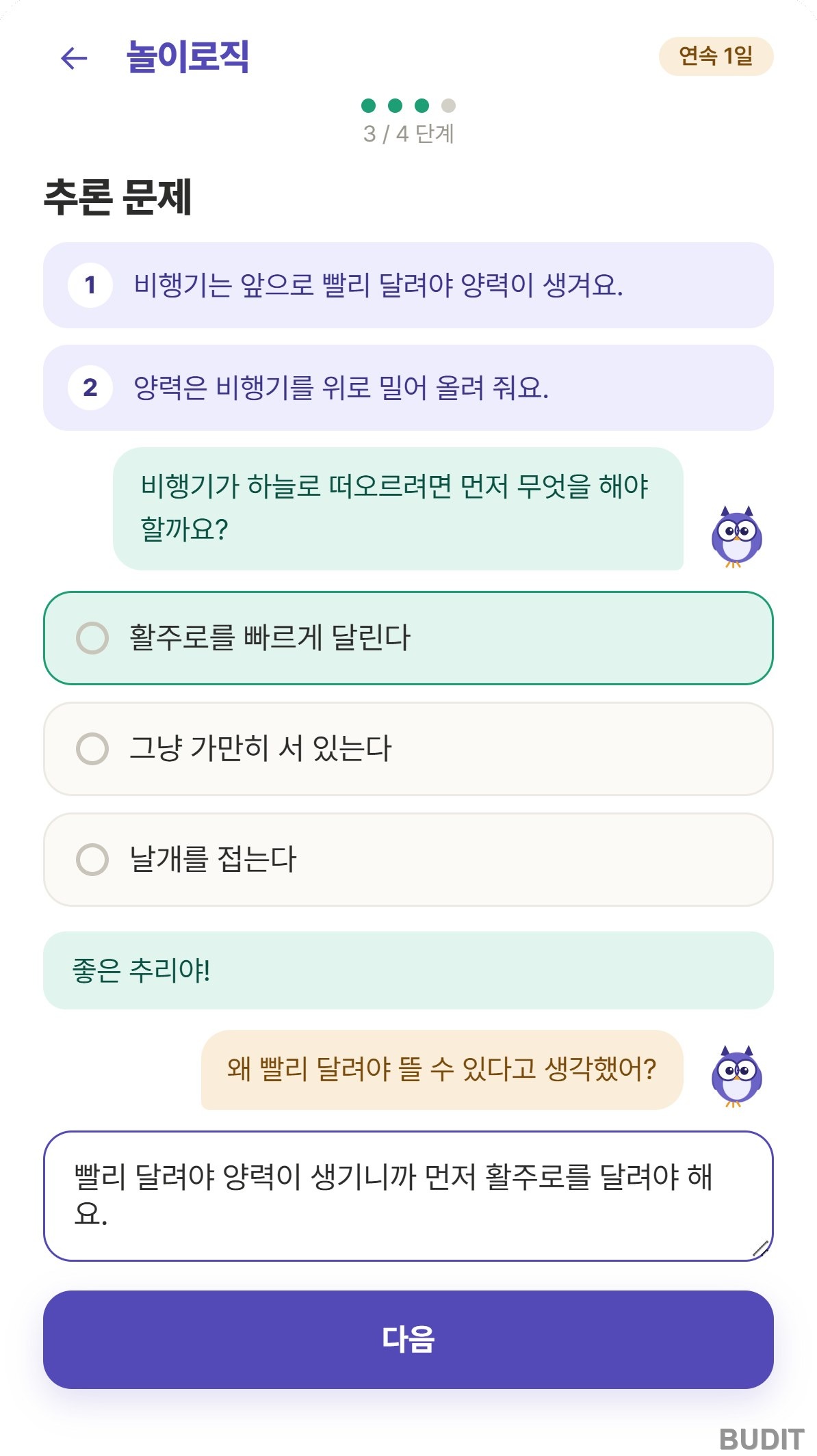
Photo: a 『NoryLogic』 reasoning question (as of November 5, 2026, Korean interface). The same concept is placed in a different scene and asked with two clue cards; after choosing, the child answers 『why do you think so?』. It is the place where two things that look different get compared. Open NoryLogic
The other face of transfer
In a 1999 paper Bransford and Schwartz argued that measuring transfer only as 『can they solve it right now』 misses something. A child who has learned something may not solve the new problem on the spot, but learns it faster and asks better questions when taught. They called this transfer as 『preparation for future learning』. The transfer a parent can actually see looks more like this than like a right answer. A child who says 『this is like that thing from before』 in front of something new is a child in whom transfer is happening.
Try this at home
- After learning one thing, find one more example. After 『fractions』, put a pizza and a clock side by side, two things that look different, and ask 『where are they the same?』.
- Do not work through the workbook one unit at a time; mix in the previous unit. Two or three of every ten problems from last week.
- Ask 『why did you do it that way?』 even on correct answers. While explaining, the child starts talking about the structure instead of the surface.
- Pull it out in daily life: working out a discount at the store, spotting a word from class in the news. Knowledge used once outside the classroom comes out again next time.
- Not solving it right away is fine. When 『this is like that』 comes out, transfer has begun.
Earlier we wrote about the power to know one's own thinking in What Is Metacognition 『A Child's Power to Know Their Own Thinking』 and about what is lost when thinking is handed to a tool in What Is Cognitive Debt 『Does the Mind Rest When AI Does the Thinking』. Transfer happens where those two meet: only what a child thought through for themselves moves to another place.
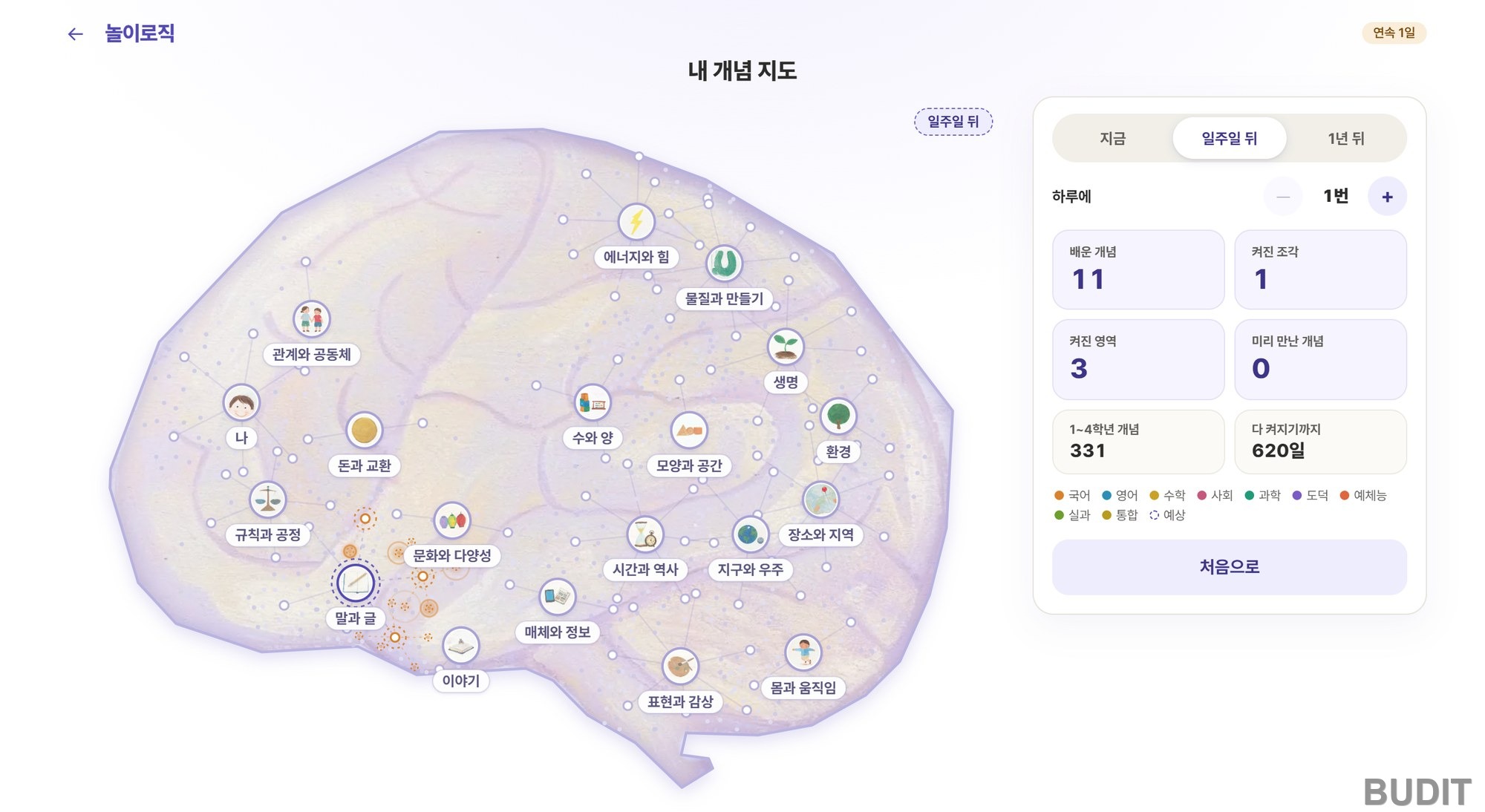
Photo: the 『one week on』 preview of the 『NoryLogic』 concept map (as of November 5, 2026, Korean interface). Concepts from finished stories light up and linked concepts are joined by lines, where the child sees 『this is that thing from before』. See the concept map
Frequently asked questions
Doesn't solving more problems raise transfer too? Solving many problems of the same shape makes a child faster at that shape. When the shape changes they are stuck again. Transfer needs 『experience comparing different shapes』 more than volume. Five problems in different shapes beat ten in the same shape.
My child explains badly. Should I keep asking? Clumsy explanations are fine. The benefit comes from trying to explain, not from explaining well. If the answer is 『just because』, switch to a question that compares two examples: 『then why did you solve this one differently?』.
Mixed practice makes my child struggle more. Yes. Mixed practice is harder while it is happening, and children feel they learned less. The participants in the research felt the same, and the results said the opposite. Even if you cut the amount, keep the mixing.
How Budit continues this
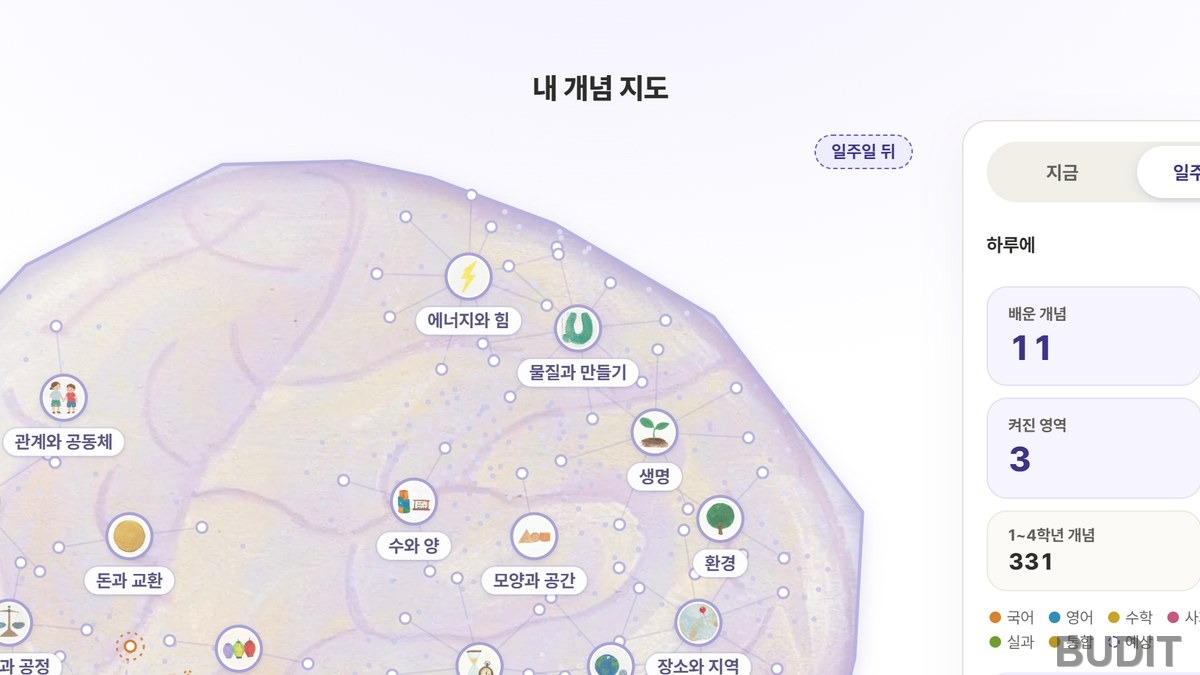
The three steps in the picture at the top are how 『NoryLogic』 aims at transfer.
- 『From the news to a concept』: each day's NoryLogic story starts from that day's news and leads to one curriculum concept. A concept learned in a scene outside the classroom comes out inside the classroom too.
- 『Again in another scene』: the reasoning question puts the same concept in a different situation and asks with two clue cards. It is the place where two things that look different get compared.
- 『Linked on the map』: the concept from a finished story lights up on the concept map, and linked concepts are joined by lines. The child sees 『this is that thing from before』 with their own eyes.
The order of one session is in Getting Started with NoryLogic 『One Story a Day, Read and Think Three Times』, and the principles behind that order are in Read, Answer, Explain, Write 『There Is a Reason for This Order』.
Related reading: What Is Metacognition 『A Child's Power to Know Their Own Thinking』, What Is Cognitive Debt 『Does the Mind Rest When AI Does the Thinking』, Children Who Trust AI Answers As Is 『Automation Bias and the Habit of Thinking First』
References
- Barnett, S. M. and Ceci, S. J. (2002). When and where do we apply what we learn? A taxonomy for far transfer. Psychological Bulletin. Source
- Gick, M. L. and Holyoak, K. J. (1983). Schema induction and analogical transfer. Cognitive Psychology. Source
- Chi, M. T. H. and VanLehn, K. A. (2012). Seeing deep structure from the interactions of surface features. Educational Psychologist. Source
- Kornell, N. and Bjork, R. A. (2008). Learning concepts and categories: Is spacing the "enemy of induction"? Psychological Science. Source
- Bransford, J. D. and Schwartz, D. L. (1999). Rethinking transfer: A simple proposal with multiple implications. Review of Research in Education. Source
This article covers general developmental and educational information; every child develops at a different pace. For specific concerns, consult a pediatrician or a developmental specialist.