


Read, Answer, Explain, Write
What should come after a child reads something? Having them read it once more looks easiest, but research points to a different order. Recall what was read, explain the reason, and write it in your own words. These three are not a new method. They are learning principles tested over decades.
At a glance
| Step | Principle | What the research says |
|---|---|---|
| Answer | Retrieval practice | Recalling from memory lasts longer than rereading |
| Explain | Elaborative interrogation | Answering 『why is that?』 yourself helps facts stick |
| Write | Generation effect | What you produce yourself is remembered better than what you only read |
| Taken together | A comparison of ten learning techniques | Practice testing rated high, while rereading and highlighting rated low |
Recalling beats rereading
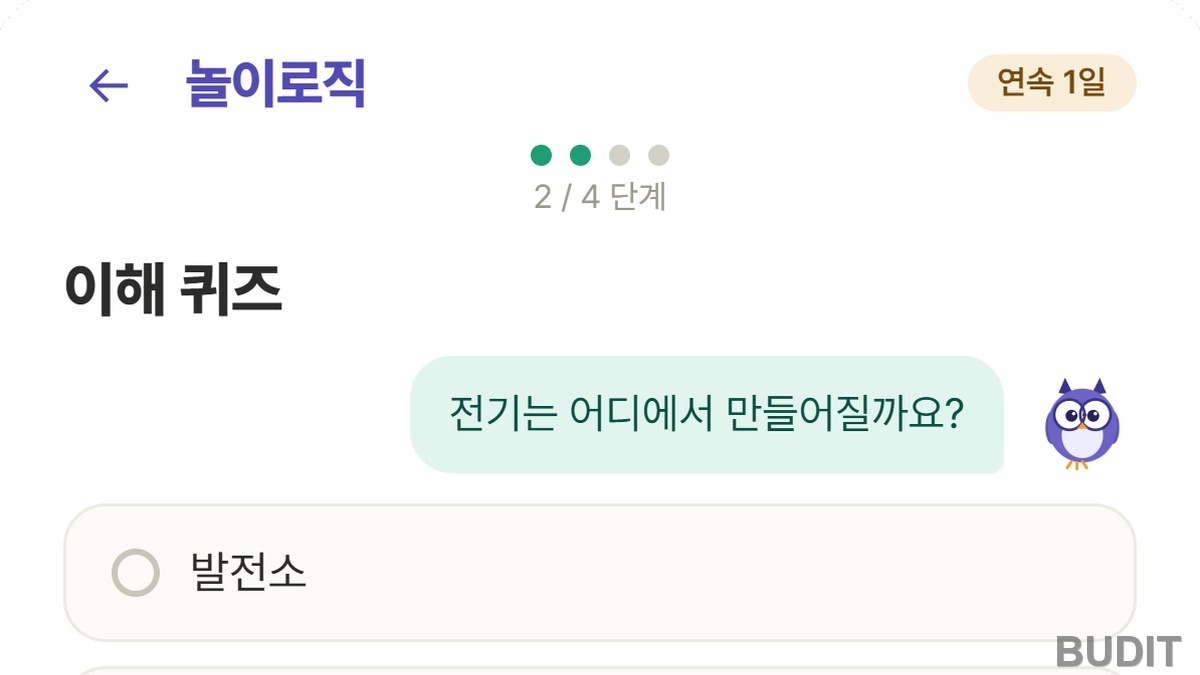
Roediger and Karpicke had university students read a text. One group then read the same text again, and another group wrote down what they could remember. After 5 minutes, the group that reread remembered slightly more. But after two days and after one week, the group that had recalled remembered more (Roediger and Karpicke, 2006). Because the act of recalling is itself studying, this is called 『retrieval practice』.

Photo: the comprehension quiz for the 『NoryLogic』 story 『Where does electricity come from?』 (as of Nov 5, 2026; NoryLogic is currently in Korean). Right after reading, the child recalls one fact without looking back at the text. Visit NoryLogic
Answering 『why?』 makes facts stick
Pressley and colleagues had people memorize sentences such as 『the hungry man got into the car』. One group answered for themselves 『why did that man do that?』. Another group read sentences with the reason already attached. The group that gave their own reasons remembered better who did what (Pressley et al., 1987). This is called 『elaborative interrogation』. While you come up with a reason, the new fact gets tied to what you already know.
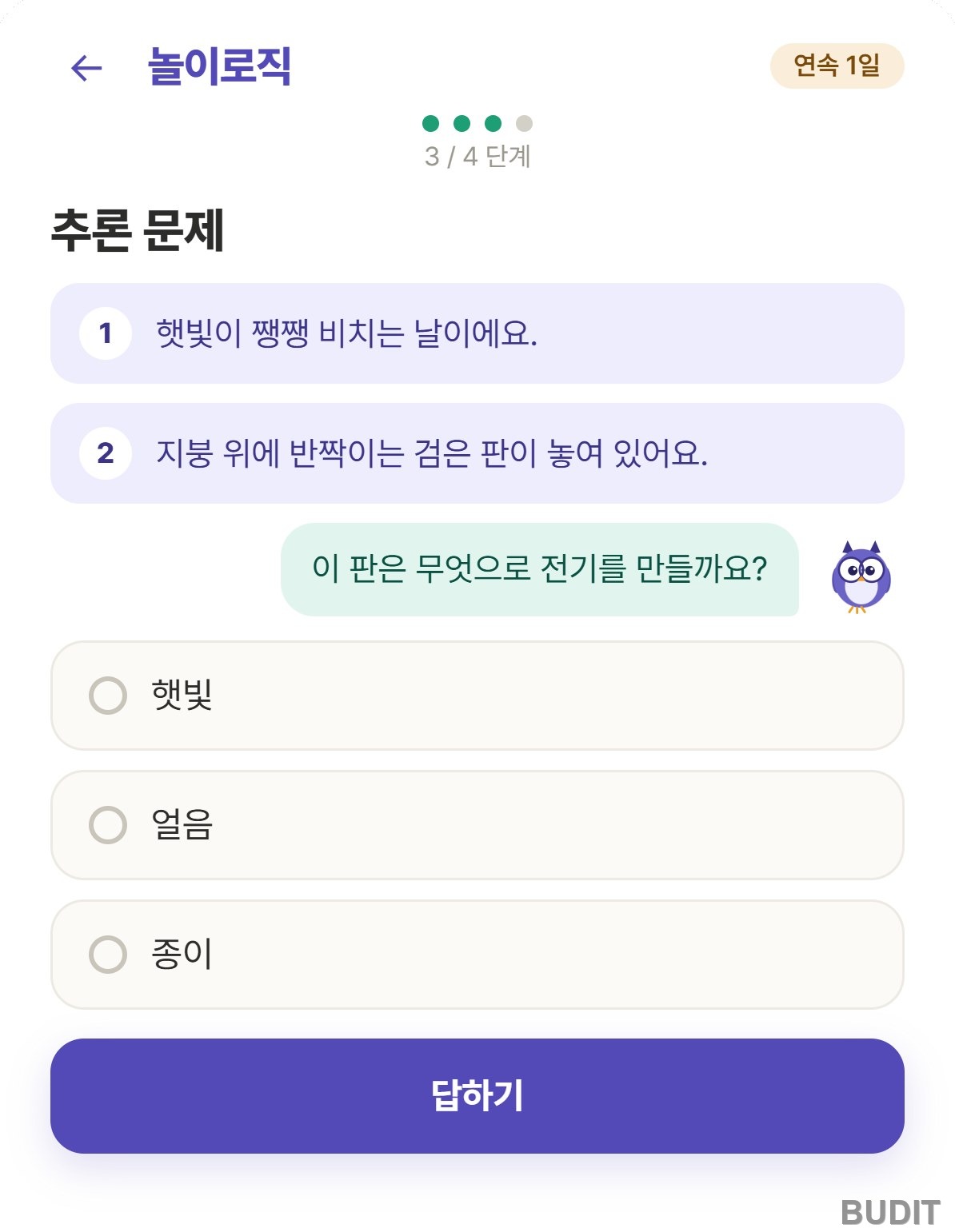
Photo: the reasoning question for the same story (as of Nov 5, 2026). After the child looks at two clues and chooses an answer, 『why do you think so?』 follows.
What you produce yourself stays longer
Slamecka and Graf compared reading a word as it is with coming up with the word yourself from a cue and its first letter. Words people came up with themselves were remembered better, and the difference showed up again across several experiments with different conditions (Slamecka and Graf, 1978). This is called the 『generation effect』. Reading a sentence someone else wrote and writing one sentence in your own words leave marks of different depth in memory.
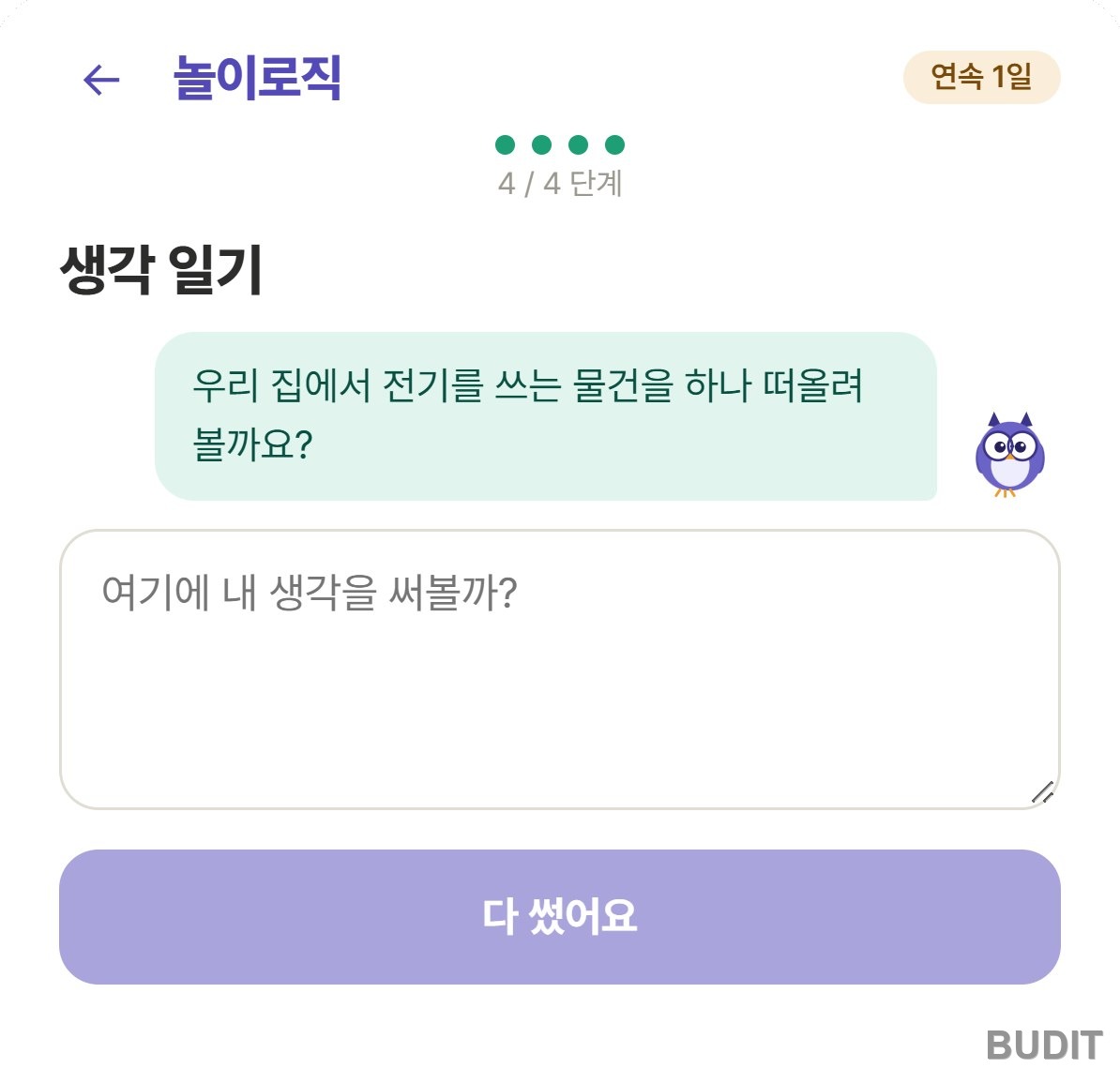
Photo: the thought journal for the same story (as of Nov 5, 2026). The child answers, in their own words, a question linked to the story.
Taken together
Dunlosky and colleagues took ten learning techniques students commonly use and rated how useful each is, based on the research so far. Practice testing and distributed practice rated high, and elaborative interrogation and self explanation rated moderate. Rereading and highlighting, the ones students use most, rated low (Dunlosky et al., 2013). A familiar method is not always the one that sticks.
Why the order matters
The three principles work on their own, but in order they support each other.
- Read: first read and learn what the concept is.
- Answer: close the text and recall one fact. Thinking can only be built on what can be recalled.
- Explain: after choosing an answer, give the reason. Facts connect to each other.
- Write: write a sentence or two linked to your own experience. What was learned becomes your own.

Photo: the reading screen for the same story (as of Nov 5, 2026). It is the first of the four steps.
What to do at home
- Close the book and ask. 『Can you tell me one thing you remember from what you just read?』 is enough.
- Do not give a score. Recalling is practice, not a test. A wrong answer just means checking again.
- Add one 『why?』 after the answer. Ask when the answer is right, too.
- Have them write a sentence or two. Writing in their own words matters more than writing a lot.
- Recall once more the next day. 『What did we read yesterday?』 is a review.
Questions people ask
Won't a quiz feel like a test? One or two questions, with no score, in a mood where being wrong is fine, is closer to play. Look at whether the child recalled, not whether they got it right.
Is rereading useless? No. Rereading is needed when first trying to understand. But once a text is understood, closing it and recalling lasts longer than reading it once more.
What about a child who cannot write yet? Do it out loud. If the child speaks and an adult writes it down, the child is still producing it themselves.
How this continues in Budit
The three steps in the image at the top are what follows reading in one 『NoryLogic』 session.
- 『Answer first』: NoryLogic puts a comprehension quiz right after reading. An explanation follows once an answer is chosen.
- 『Give the reason』: in the reasoning question the child looks at clues, answers, and then writes an answer to 『why do you think so?』.
- 『Keep it in your own words』: the child writes a sentence or two in the thought journal, and once the session is finished the record lights up on the concept map.
If you are new, start with Getting Started with NoryLogic to see the order of one session.
Related reading: Why Game Review Helps Words Stick 『Retrieval Practice and Spacing』, The Power of 『Why Do You Think So?』 『Explaining It Yourself Deepens Learning』, A Two Sentence Thought Journal 『Writing Sorts Out Thinking』
References
- Roediger, H. L. and Karpicke, J. D. (2006). Test enhanced learning: Taking memory tests improves long term retention. Psychological Science. View the paper
- Pressley, M., McDaniel, M. A., Turnure, J. E., Wood, E. and Ahmad, M. (1987). Generation and precision of elaboration: Effects on intentional and incidental learning. Journal of Experimental Psychology: Learning, Memory, and Cognition. View the paper
- Slamecka, N. J. and Graf, P. (1978). The generation effect: Delineation of a phenomenon. Journal of Experimental Psychology: Human Learning and Memory. View the paper
- Dunlosky, J., Rawson, K. A., Marsh, E. J., Nathan, M. J. and Willingham, D. T. (2013). Improving students' learning with effective learning techniques. Psychological Science in the Public Interest. View the paper
This article shares general information about development and education. Every child grows at their own pace. For specific concerns, please consult a pediatrician or a development specialist.