


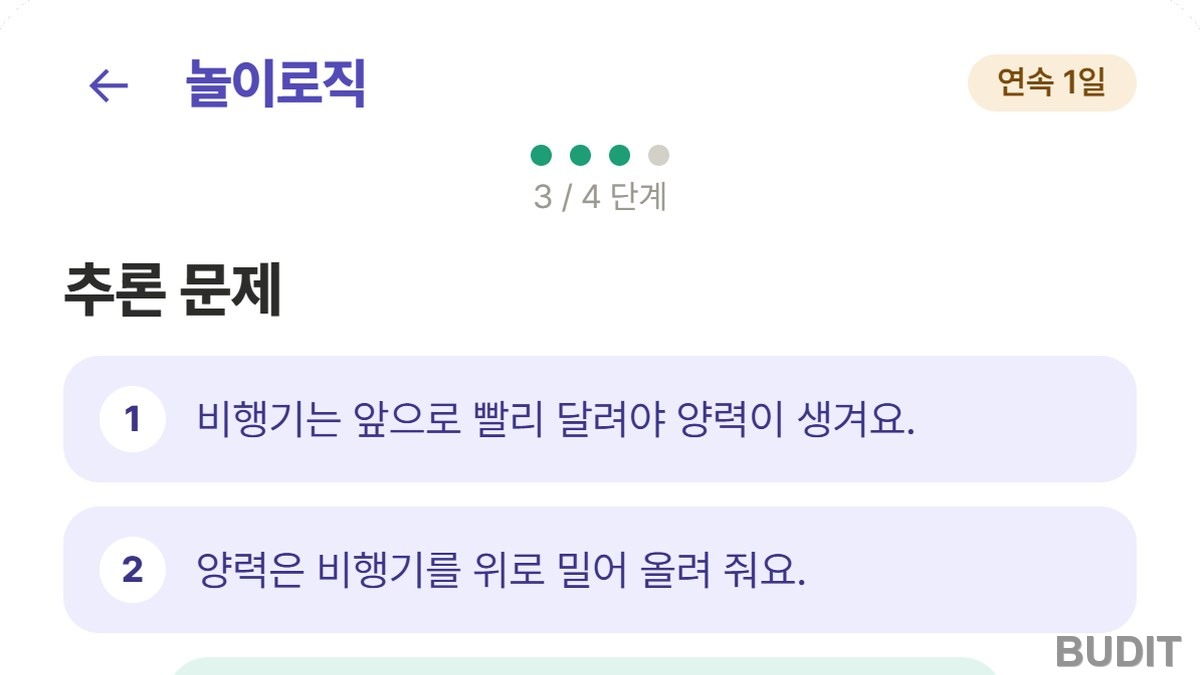
The Power of 『Why Do You Think So?』
When a child gets an answer right, it is easy to stop at 『good job』. But learning deepens less at the moment of a right answer than at the moment a child puts 『why I think so』 into words. Researchers call this 『self explanation』. One question about the reason, asked after the answer, takes a child's thinking one step further.
At a glance
| Question | What the research says |
|---|---|
| Does explaining really help | Students who explained a text to themselves line by line understood it better than those who read it twice |
| Does it carry over to new problems | Primary pupils asked to explain applied what they learned to new problems more often |
| Even young children | Preschoolers who explained learned how a toy worked better than how it looked |
| What does it make them notice | Children who explained 『why』 grouped things by hidden causes rather than looks |
Explaining line by line builds understanding
Chi and colleagues had middle school students read a text about the human circulatory system. One group explained each sentence to themselves, asking 『what does this mean?』, while another group read the same text twice. Students who explained scored higher on understanding, and those who explained the most built an accurate picture of how the heart and blood vessels work (Chi et al., 1994).
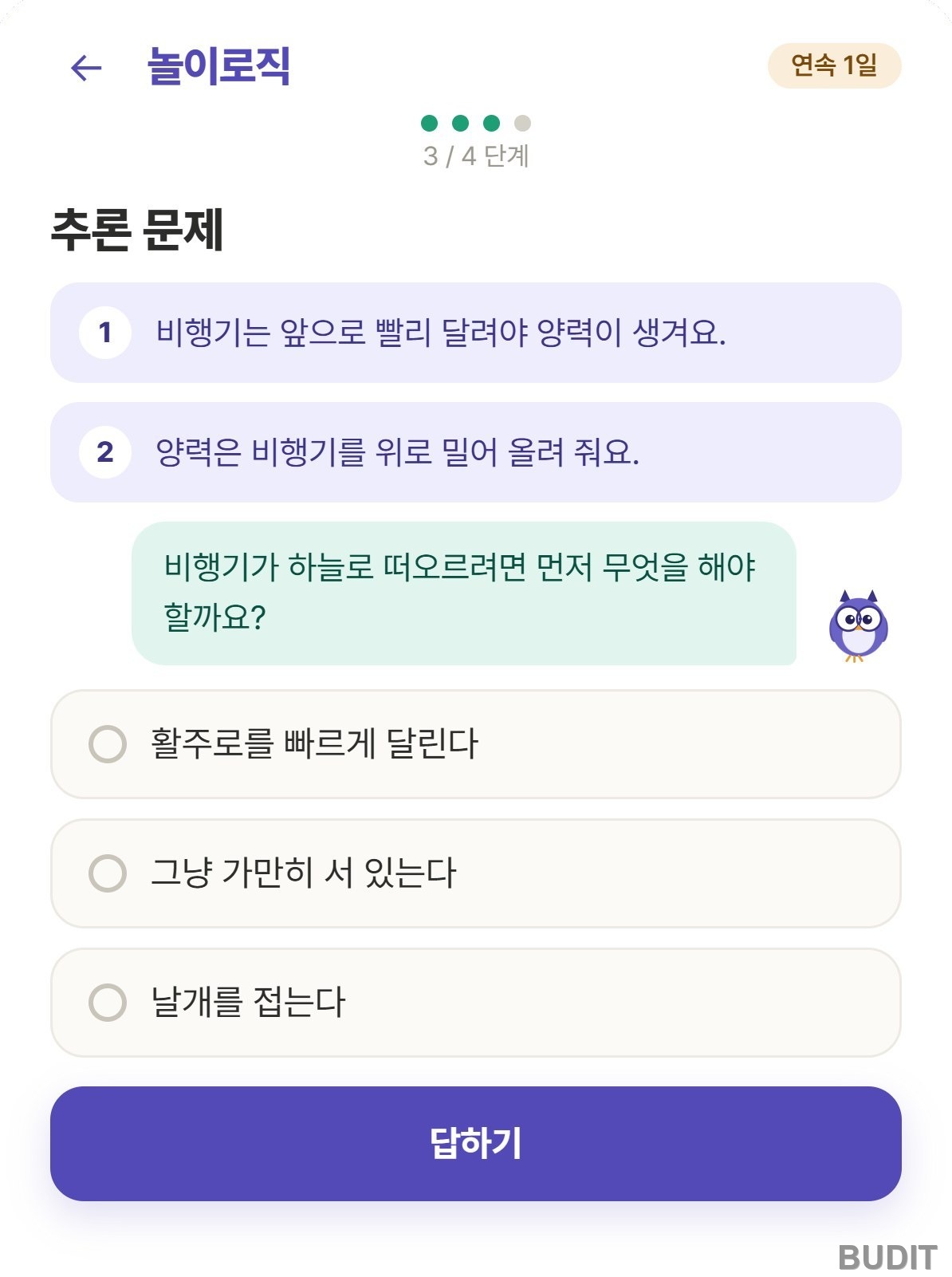
Photo: the reasoning question in the 『NoryLogic』 story 『How do planes fly?』 (as of Nov 5, 2026; NoryLogic is currently in Korean). The child looks at two clues and chooses an answer. Visit NoryLogic
Explaining carries over to new problems
Rittle-Johnson taught equation problems to children in grades three to five and asked some of them to explain 『why this way works』 for each solution. Children who explained applied the method to unfamiliar kinds of problems more often, and the effect was still there two weeks later (Rittle-Johnson, 2006). Saying the reason, more than getting one more answer right, became the bridge to the next problem.
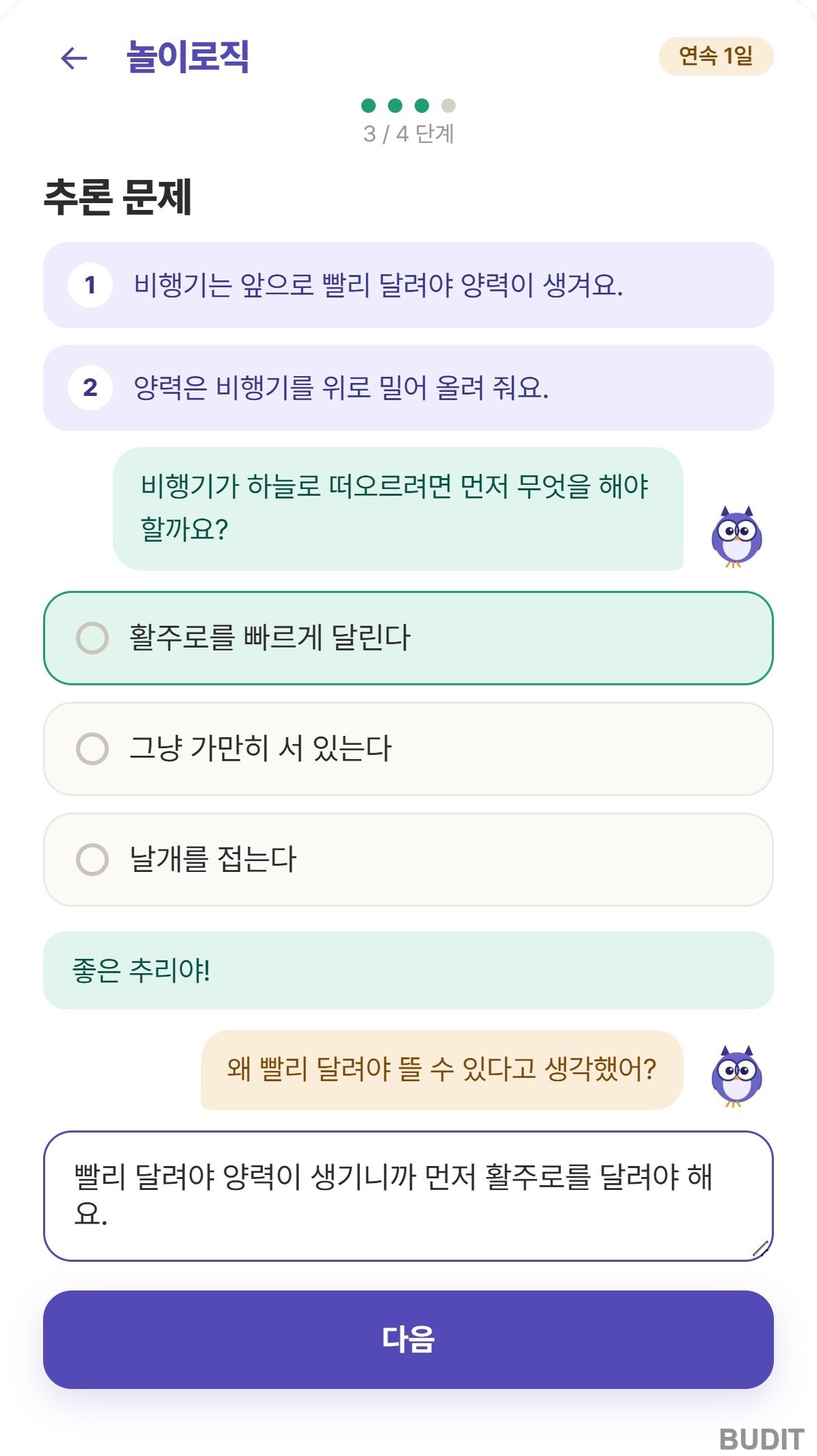
Photo: the same question after an answer was chosen (as of Nov 5, 2026, with a sample answer typed in). Right or wrong, a question asking for the reason follows, such as 『why do you think you need to go fast to take off?』, and the child writes an answer. Visit NoryLogic
Young children grasp the principle when they explain
Legare and Lombrozo showed children aged three to six a toy made of gears. Children asked to explain how it worked learned how the gears turn each other better than children who only watched or described it, and applied that principle to a new toy. They remembered surface details like the color of the gears less well (Legare and Lombrozo, 2014). Explaining moves a child's eye from 『how it looks』 to 『how it works』.
An experiment by Walker and colleagues found something similar. When five year olds were asked to explain 『why』, they grouped things by shared hidden properties rather than by looks (Walker et al., 2014).
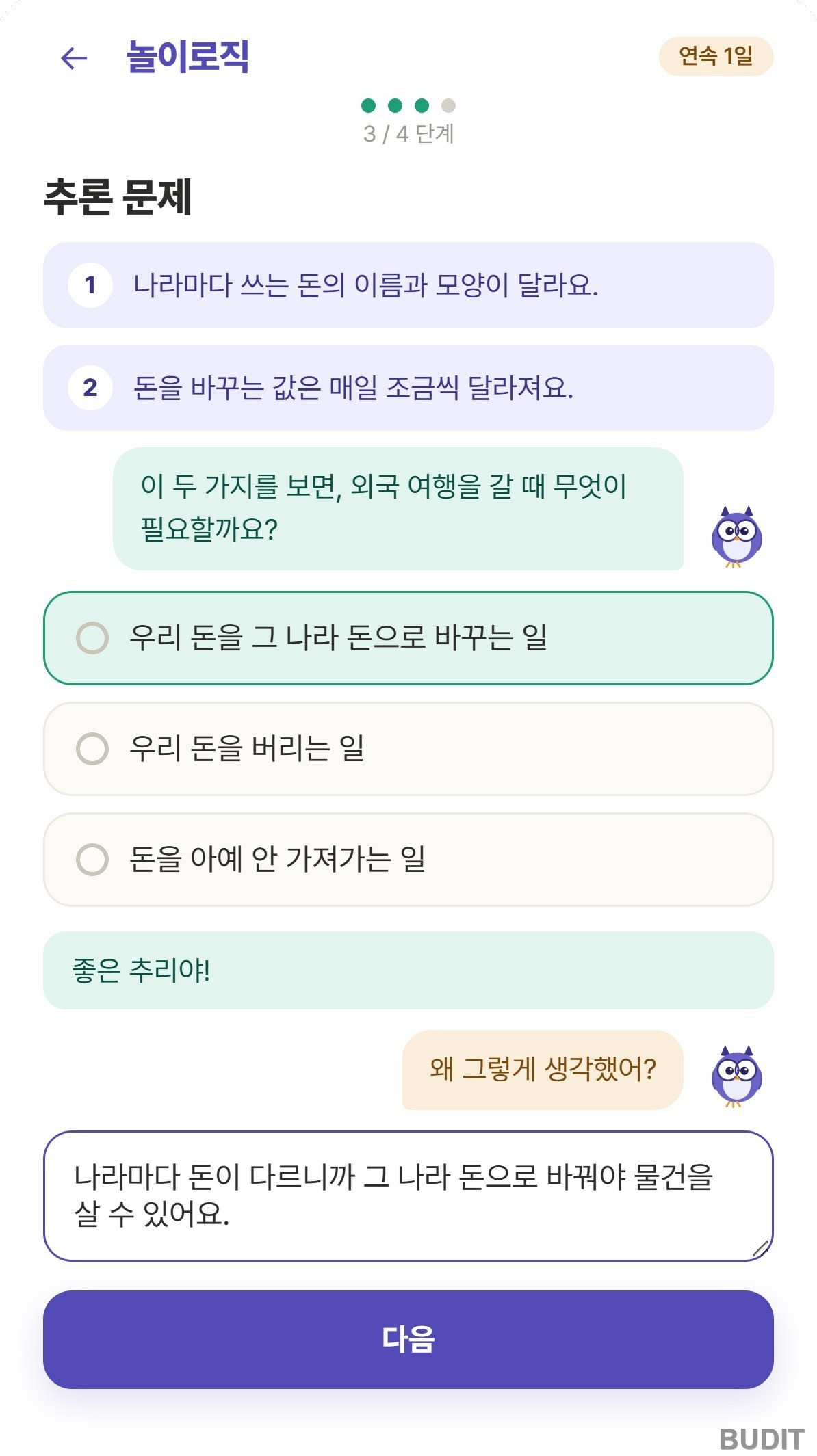
Photo: the reasoning question in the 『NoryLogic』 story 『Every country has its own money』 (as of Nov 5, 2026, with a sample answer typed in). The same order of asking for reasons is used in economy stories as well as science. Visit NoryLogic
What to do at home
- Ask even when the answer is right. If 『why?』 only comes after mistakes, children hear it as a scolding. Ask the same way when they get it right.
- Rephrase as 『how did you know?』. If 『why?』 feels heavy, 『where did you see that?』 or 『what made you think so?』 work too.
- Have them point to the clue. Pointing to the place in the text or picture that gave them the idea makes the explanation concrete.
- Don't fix a wrong explanation right away. Asking one more question, such as 『then how did this happen?』, gives the child a chance to fix it themselves.
- Explain out loud yourself. 『I thought it would rain because the clouds are dark』 shows what a reason sounds like.
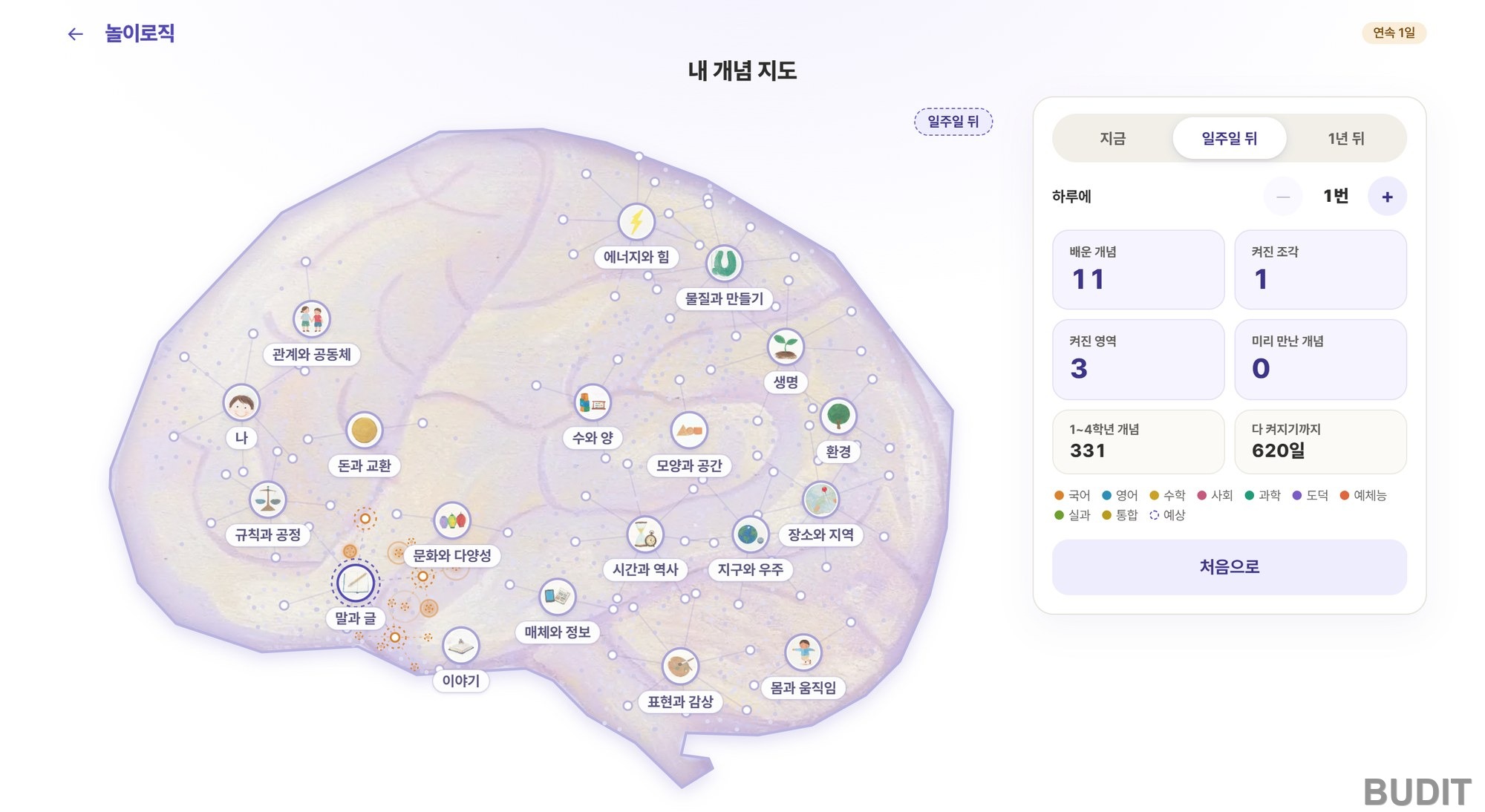
Photo: the 『NoryLogic』 concept map (as of Nov 5, 2026, previewing one week ahead). A story finished with reasons is kept as a record, and the linked curriculum concepts light up on the map. See the concept map
Questions people ask
My child just says 『just because』. That is natural at first. Narrow it down with a question that points to a clue: 『So it just felt that way. What did you see in the picture?』
Won't they get tired of being asked every time? You don't need to ask for every problem. Once or twice a day, on a problem the child thought hard about, is enough.
Is it fine to leave a wrong explanation alone? Rather than correcting it at once, show one more clue. An explanation the child corrects themselves lasts longer.
How this continues in Budit
The three steps in the image at the top are the order of a 『NoryLogic』 reasoning question.
- 『Look at the clues』: a reasoning question in NoryLogic starts with two clue cards.
- 『Answer and write the reason』: as soon as an answer is chosen, 『why do you think so?』 follows. Instead of the machine explaining the answer, the child explains.
- 『Mark it on the map』: when the session ends, a record is kept and the linked curriculum concepts light up on the concept map.
If you are new, start with Getting Started with NoryLogic to see the order of one session.
Related reading: Children Who Trust AI Answers As Is 『Automation Bias and the Habit of Thinking First』, Growing Scientific Curiosity 『How to Answer a Child's Why』, Background Knowledge Changes Reading Comprehension 『We Read What We Already Know』
References
- Chi, M. T. H., De Leeuw, N., Chiu, M. H. and LaVancher, C. (1994). Eliciting self explanations improves understanding. Cognitive Science. View the paper
- Rittle-Johnson, B. (2006). Promoting transfer: Effects of self explanation and direct instruction. Child Development. View the paper
- Legare, C. H. and Lombrozo, T. (2014). Selective effects of explanation on learning during early childhood. Journal of Experimental Child Psychology. View the paper
- Walker, C. M., Lombrozo, T., Legare, C. H. and Gopnik, A. (2014). Explaining prompts children to privilege inductively rich properties. Cognition. View the paper
This article shares general information about development and education. Every child grows at their own pace. For specific concerns, please consult a pediatrician or a development specialist.