



How NoryLogic stories are made
A 『NoryLogic』 story is not something an AI dashes off. It starts from the day's news, rises to a curriculum concept, gets a child level text and three questions, an illustration and a voice, and at the end a person has to check it before it goes live. Here are the five steps a story takes before it reaches a child, with real numbers and screens.
At a glance
| Step | What happens | Numbers |
|---|---|---|
| Choosing news | The day's issues come from BigKinds, run by the Korea Press Foundation | 1,200 issues and 22,025 articles over 40 days |
| Turning it into a concept | The event stays out. Only the concept underneath goes in | 19 pieces of the world, 6 categories |
| Linking to the curriculum | Each story is attached to standards of the 2022 revised elementary curriculum | 611 standards, 88 areas |
| Pictures and videos | A person picks from illustration candidates, and only videos from vetted channels are attached | About 12 candidates per slot, 34 approved channels |
| Checked by a person | Copyright, safety, facts, reading level and structure are checked before approval | 316 approved out of 559 reviewed |
1. It starts from the news
The starting point is the news. The day's issues and related articles come from 『BigKinds』, the news big data service run by the Korea Press Foundation. Over 40 days in the summer of 2026 we collected 1,200 issues and 22,025 articles, and now the day's batch is collected automatically every night. Article text is never copied. A quotation is at most one sentence with its source named, and news photos are not used, for copyright reasons.
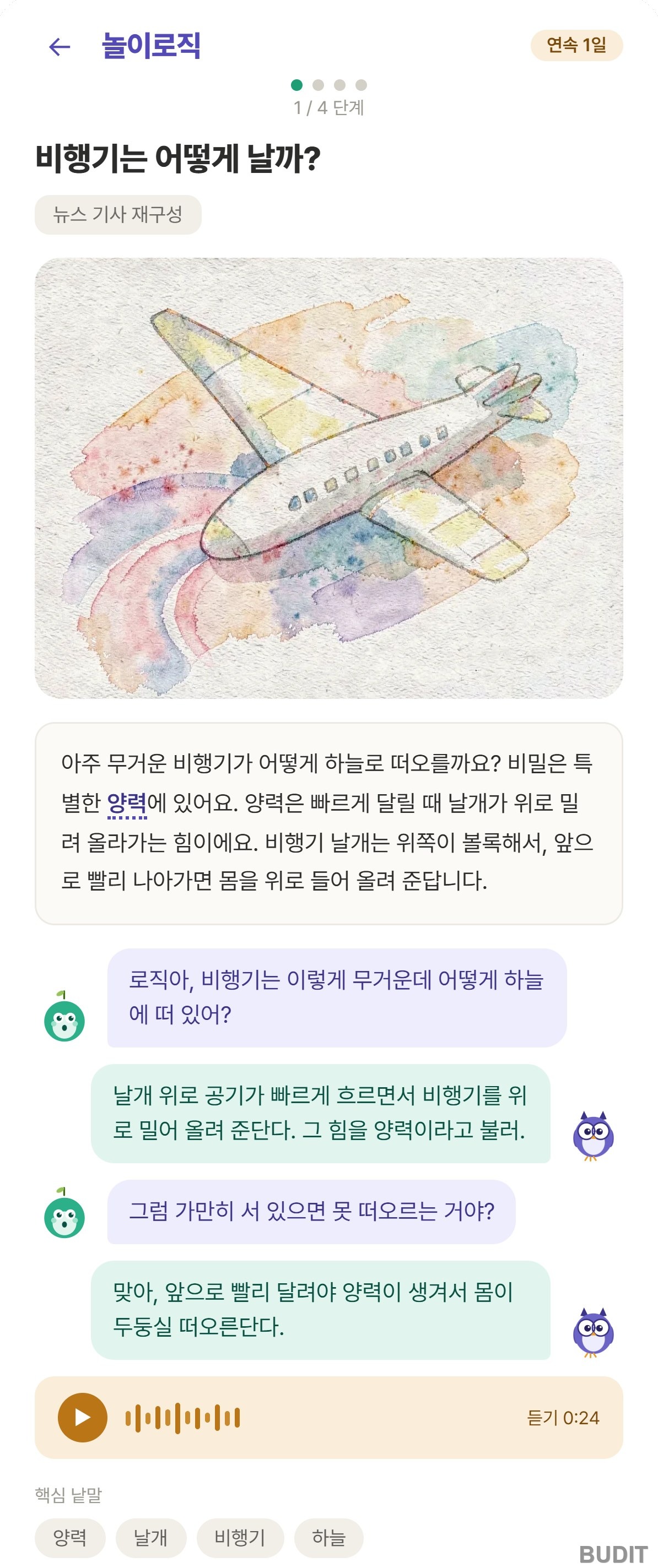
Photo: the reading screen for the 『NoryLogic』 story 『How does an airplane fly?』 (as of Nov 5, 2026; NoryLogic is currently in Korean). Under the title is the label 『rewritten from a news article』. Visit NoryLogic
2. The concept goes in, not the event
The news is only the entrance. The event itself does not go into the child's text. The concept underneath is brought out instead. A crime story becomes 『why do we have laws?』, and an exchange rate story becomes 『every country has its own money』. Each concept is placed in one of 19 『pieces of the world』 (me, relationships and community, rules and fairness, money and exchange, words and writing, stories, media and information, culture and diversity, numbers and quantity, shapes and space, places and regions, time and history, life, matter and making, energy and force, Earth and space, environment, expression and appreciation, body and movement), and on the child's screen these appear as six categories: current affairs, general knowledge, finance and economy, science and technology, nature and environment, history and culture.
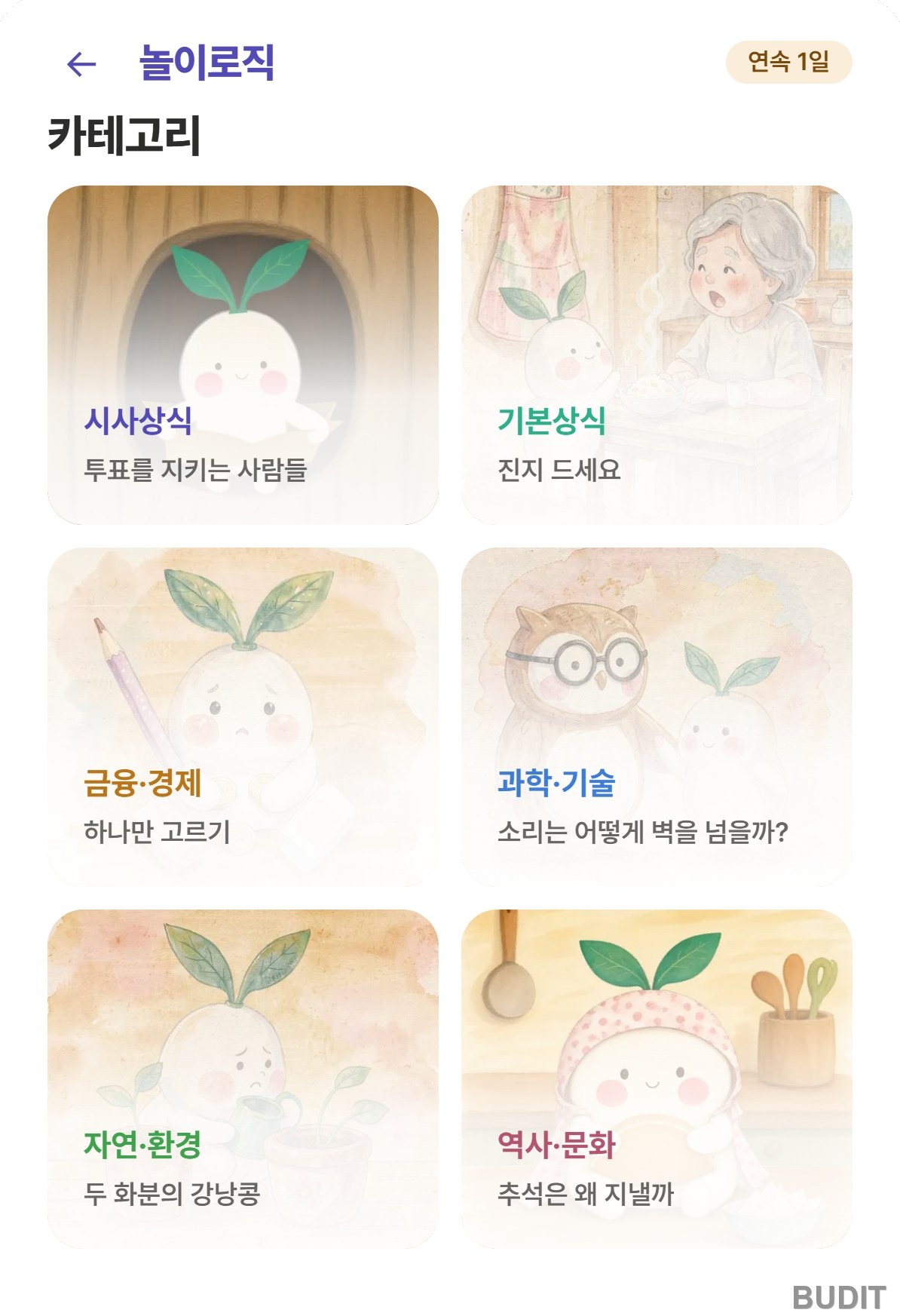
Photo: the 『NoryLogic』 categories screen (as of Nov 5, 2026). The 19 pieces of the world appear to the child as six strands.
The text is written for seven to nine year olds. One concept per sentence, hard words explained on the spot, and no invented facts or numbers. Incidents are softened, and no judgment about who is right goes in. Two characters carry the conversation in the text. 『Hogi』, a sprout, asks first in the child's place, and 『Logic』, an owl with glasses, asks back and thinks together with the child rather than lecturing.
3. It is linked to the curriculum
Each story is attached to achievement standards of the 2022 revised elementary curriculum. There are 611 standards, 100 for grades 1 and 2, 231 for grades 3 and 4 and 280 for grades 5 and 6, across 88 areas. By subject they are math 121, science 102, Korean 87, social studies 49, physical education 49, integrated subjects 48, English 40, practical arts 39, art 26, music 26 and ethics 24. Each story is linked to one to four standards. A word overlap rule first picks about 30 candidates, an AI chooses among them, and a person checks and corrects the result in the 『curriculum mapping』 panel of the review screen. The child never sees a standard code such as one starting with 『2수01』. The concepts from finished stories simply light up on my concept map.
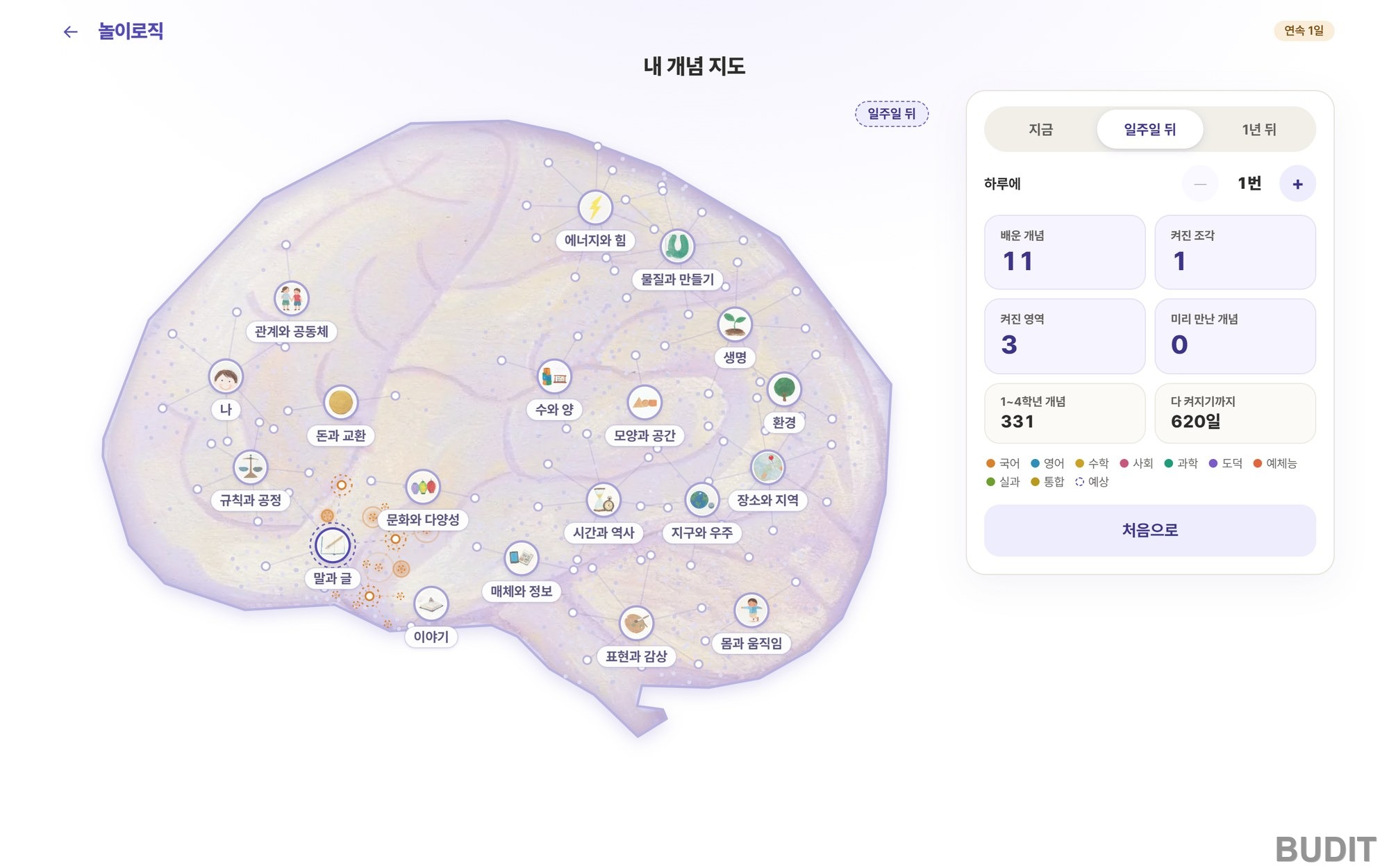
Photo: 『NoryLogic』 my concept map (as of Nov 5, 2026, the one week preview at one session a day). The 331 concepts for grades 1 to 4 are the 100 standards for grades 1 and 2 plus the 231 for grades 3 and 4.
The three questions are built at this step too. The comprehension quiz has three options and the answer must be in the text. The reasoning question must be solvable from two clues, and after the answer comes 『why do you think so?』. The thought journal is a question with no right answer.
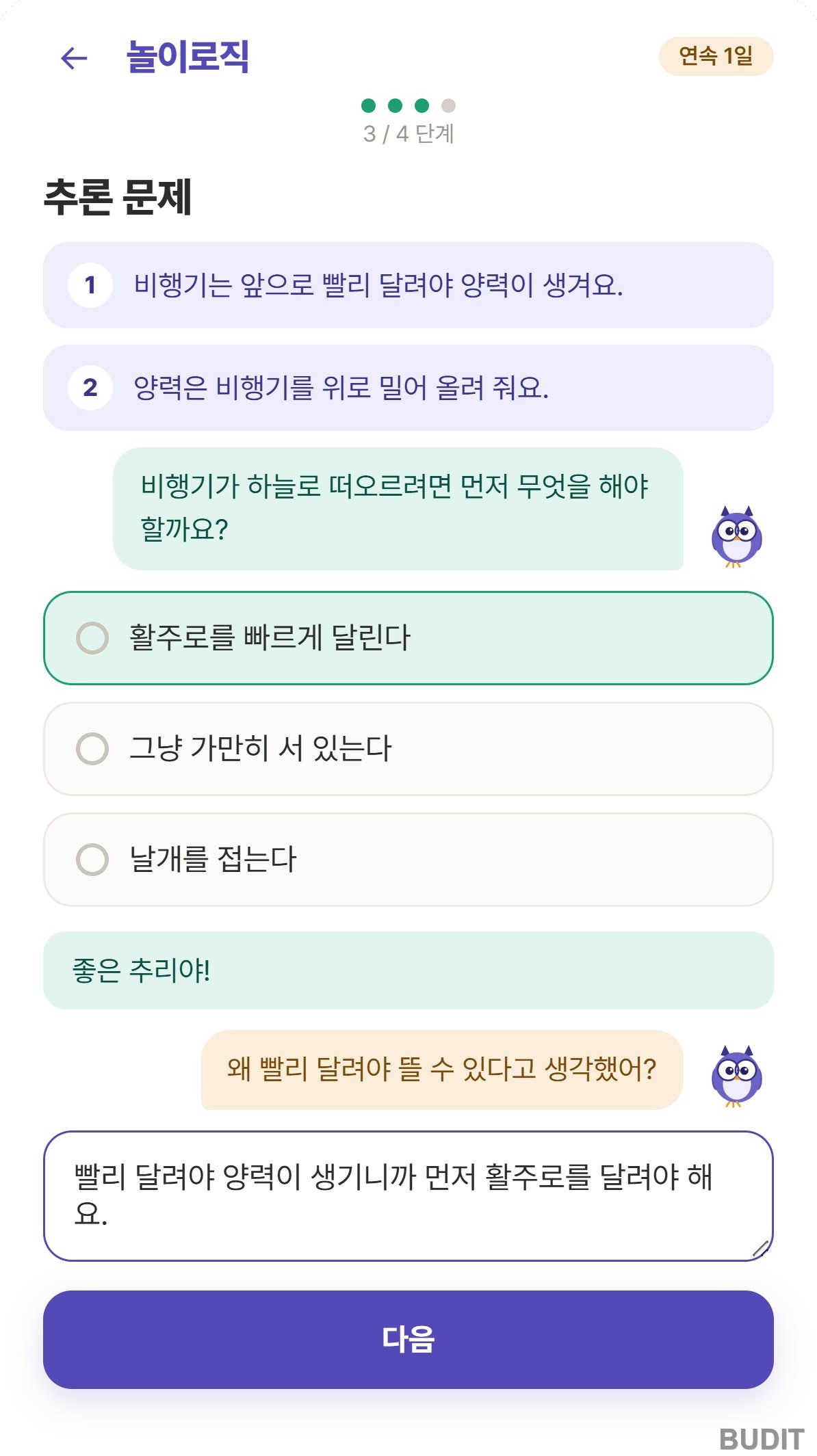
Photo: the reasoning question for the same story (as of Nov 5, 2026, with an example answer filled in). Whether it can be solved from the clues alone is one of the review items.
4. Pictures and videos are chosen
Instead of news photos, illustrations are drawn on our own server in a watercolor style. Each story has two slots, the home card and the reading screen, and for each slot about 12 candidates are drawn and a person picks one. No text goes into the pictures, and no real people, flags, party or company marks or frightening scenes are drawn. If a candidate shows stray letters or awkward hands, it is redrawn. As of early November 2026, all 316 published stories have pictures chosen for both slots.
For videos, YouTube channels were screened on four criteria, whether they can be embedded, whether they suit ages seven to ten, whether they connect to the curriculum, and whether they are trustworthy, and only 34 channels were approved. About 48,400 videos from the approved channels were classified by subject, grade band and safety, and for each story a person attaches from the candidates. The child sees at most two videos per story, played through the cookie free YouTube player.
5. A person checks before it goes live
The last step is review. The review screen has panels for the one line summary, text, words, conversation, quiz, reasoning, journal, illustration, fact check, curriculum mapping, video and voice, and five things are checked.
- Copyright: no copied sentences, and any quotation is one sentence with its source.
- Child safety: nothing frightening or one sided.
- Facts: numbers, years and names, where mistakes are most likely, are checked again. A fact check runs once more right before approval, and if it has not run, the approve button asks again.
- Reading level: the quiz answer is in the text, and the reasoning can be solved from the clues.
- Structure: all four screens connect without gaps.
There is deliberately no automatic approval, because approval means publication. In the review at the end of October 2026, 559 drafts (120 curriculum concepts and 439 news based) were examined. All 120 curriculum concept stories were approved, 181 news stories were approved, and 229 news stories were sent back, mostly because they overlapped with topics already approved or were too shallow. The 316 that remain are the stories children read today. The voice is generated at approval, and if it sounds off, it is remade from the review screen.
Frequently asked questions
Is the text written by AI? The draft is. But choosing the topic, choosing the picture, linking to the curriculum and approving are done by people. A story no person has approved never reaches a child.
Isn't the news too hard or too frightening for children? The event does not go into the text. Only the concept beneath it goes in, anything covered is written gently, and review looks at it again.
Does today's news become today's story? News is collected and drafted overnight, and in the morning a person reviews and approves. Only approved stories go live, so a story appears the same day or a few days later.
How this continues at Budit
The three steps in the picture at the top are the road one story takes to a child.
- 『From news to concept』: a concept is drawn out of the day's BigKinds issues and written as a child level text.
- 『Linked to the curriculum』: attached to one to four of the 611 standards, with three questions and pictures.
- 『Checked by a person』: only stories approved on the five items are published on NoryLogic.
If you are new, start with Getting Started with NoryLogic to see the order of one session.
Related reading: Getting Started with NoryLogic 『One Story a Day, Read and Think Three Times』, How to Read the Concept Map 『Stories Light Up on the Curriculum』, When Your Child Asks About the News 『Read Together and the News Becomes a Lesson』
References
- Korea Press Foundation. BigKinds news big data analysis service. Visit
- Ministry of Education (2022). Elementary school curriculum (Notice No. 2022-33). National Curriculum Information Center. Visit
- Korea Institute for Curriculum and Evaluation. Student assessment support portal, achievement standards. Visit
This post describes how NoryLogic is made as of November 2026. The process and the numbers may change.