


When Your Child Asks About the News
『Why doesn't that plane fall?』 『Why did fuel get more expensive?』 A child's questions often start with the news. Korean primary school students in grades 4 to 6 watch online video for 143.6 minutes a day on average (Korea Press Foundation, 2025 survey of teen media use). Blocking the news is hard, and leaving a child to watch alone is worrying. Research points to a third way: read together, ask, and let the child make questions of their own. NoryLogic is currently in Korean.
At a glance
| Question | What the research says |
|---|---|
| Does media education work | After a year of lessons, students found the purpose, point of view and missing information in a text better |
| What does it change | Across 51 studies, knowledge, critical viewing and awareness of media influence all grew |
| What deepens understanding | Reading improved in classes where children generated their own questions |
| What to do at home | Pick one news item and read it together with three questions: what, why and how |
Students taught media literacy read differently
Hobbs and Frost compared students at a high school that built media literacy into a year of English lessons with students at a school that did not. The students who had the lessons were better at finding what a text or video was for, whose point of view it took, what techniques it used and what it left out, and their reading and writing scores did not fall behind (Hobbs and Frost, 2003). The eye for reading the news is a skill that grows when taught.
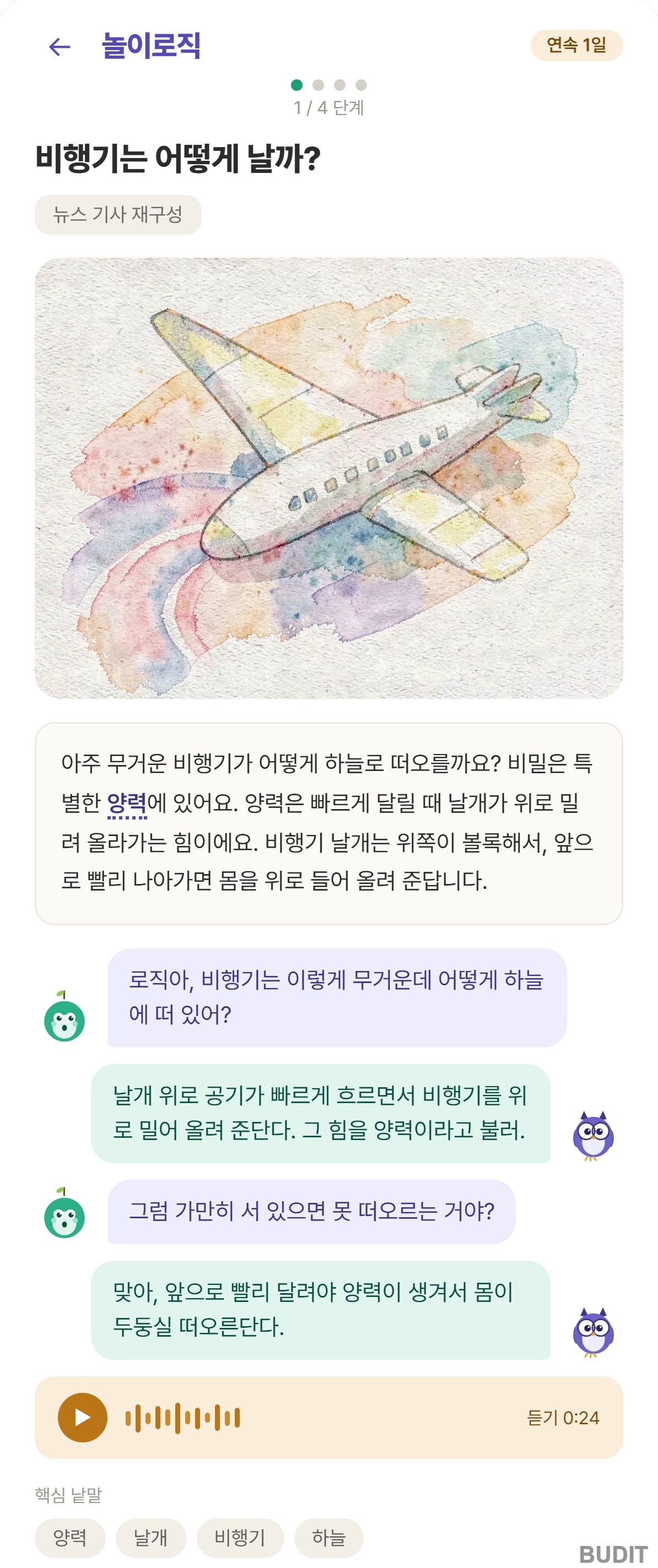
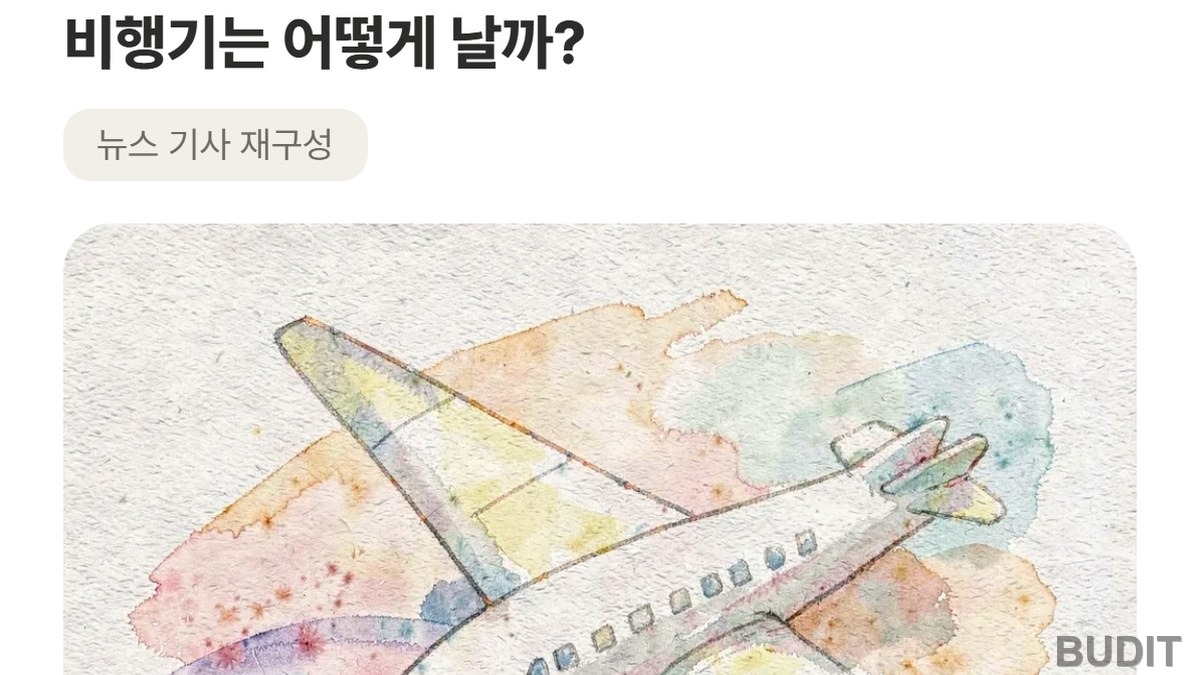
Photo: the 『NoryLogic』 story 『How does a plane fly?』 (as of Nov 5, 2026). A story that starts from the news, rewritten at a child's level, with 『rewritten from a news article』 shown under the title. Visit NoryLogic
The effect runs from knowledge to attitude
Jeong and colleagues analyzed 51 studies that measured the effects of media literacy education. Those who received it knew more about media, viewed messages more critically and were more aware of how media affected them. The effects appeared regardless of age and were larger when there were more sessions (Jeong et al., 2012). Short conversations, often, add up more than one long talk.
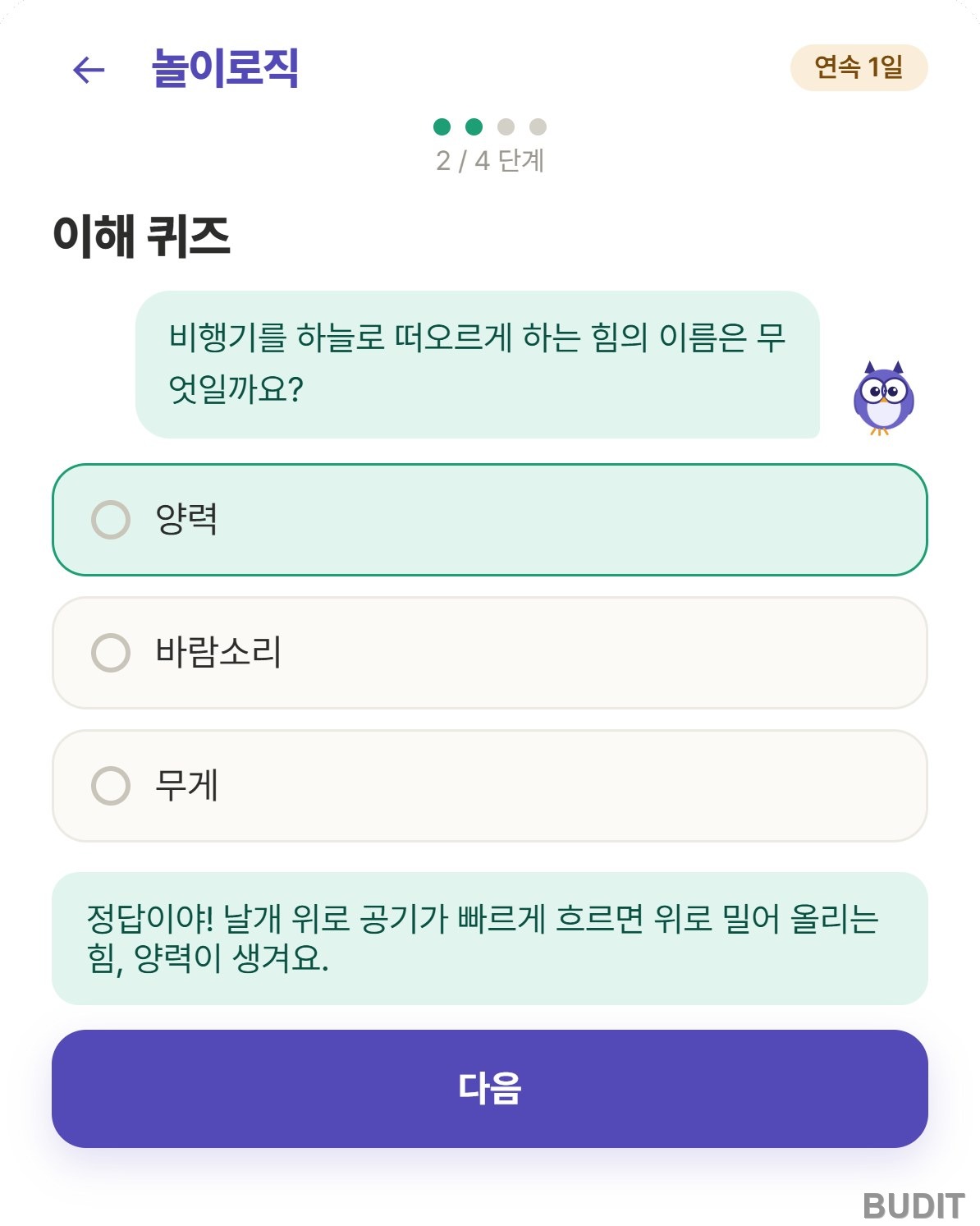
Photo: the comprehension quiz for the same story (as of Nov 5, 2026). Right after reading, the child checks one 『what is it』.
Children who make questions understand more deeply
Rosenshine and colleagues reviewed 26 studies of lessons in which students were taught to generate their own questions about what they read. Classes taught question generation scored higher on reading comprehension than classes that were not, and the effect was especially large when question words such as 『who, what, why, how』 were given as prompts (Rosenshine et al., 1996). Making a question before finding the answer deepens reading.
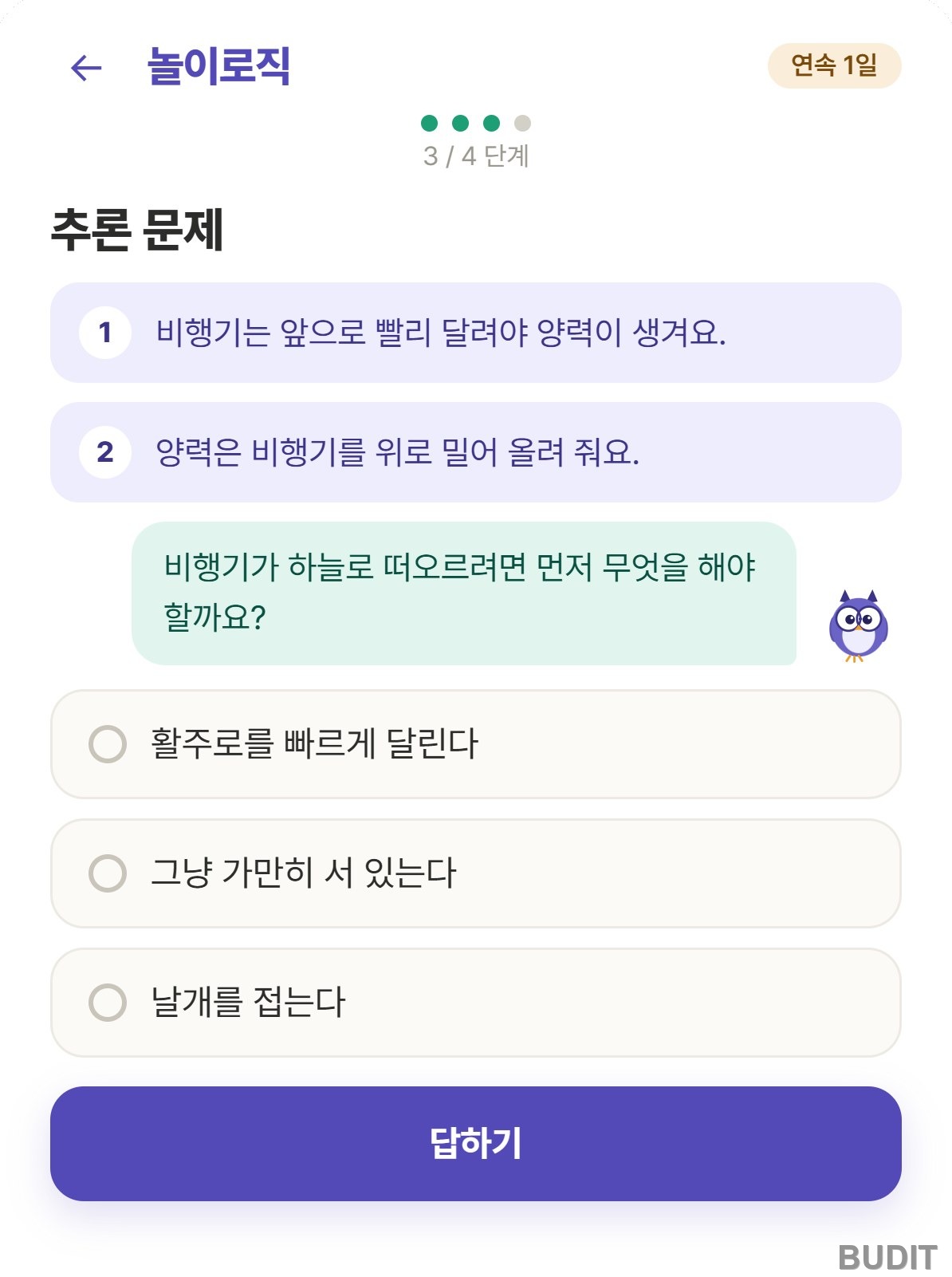
Photo: the reasoning question for the same story (as of Nov 5, 2026). From two clues the child thinks through 『why is that』 and 『what then』.
What to do at home
- Pick only one item a day. What the child asked about first is the best material.
- Read with three questions, in order: 『what is it』 (what happened), 『why is that』 (what the reason is), 『what then』 (what I, or we, would do).
- Let the child make a question. 『Can you tell me one thing you'd like to ask this news?』 is enough. Not knowing the answer is fine.
- Point once at 『who is speaking』. Ask 『who said this?』 and 『might someone think differently?』 and point of view comes into view.
- End frightening news with one fact and one reassurance. Leave a sentence the child can hold on to, such as 『our home is safe right now』.
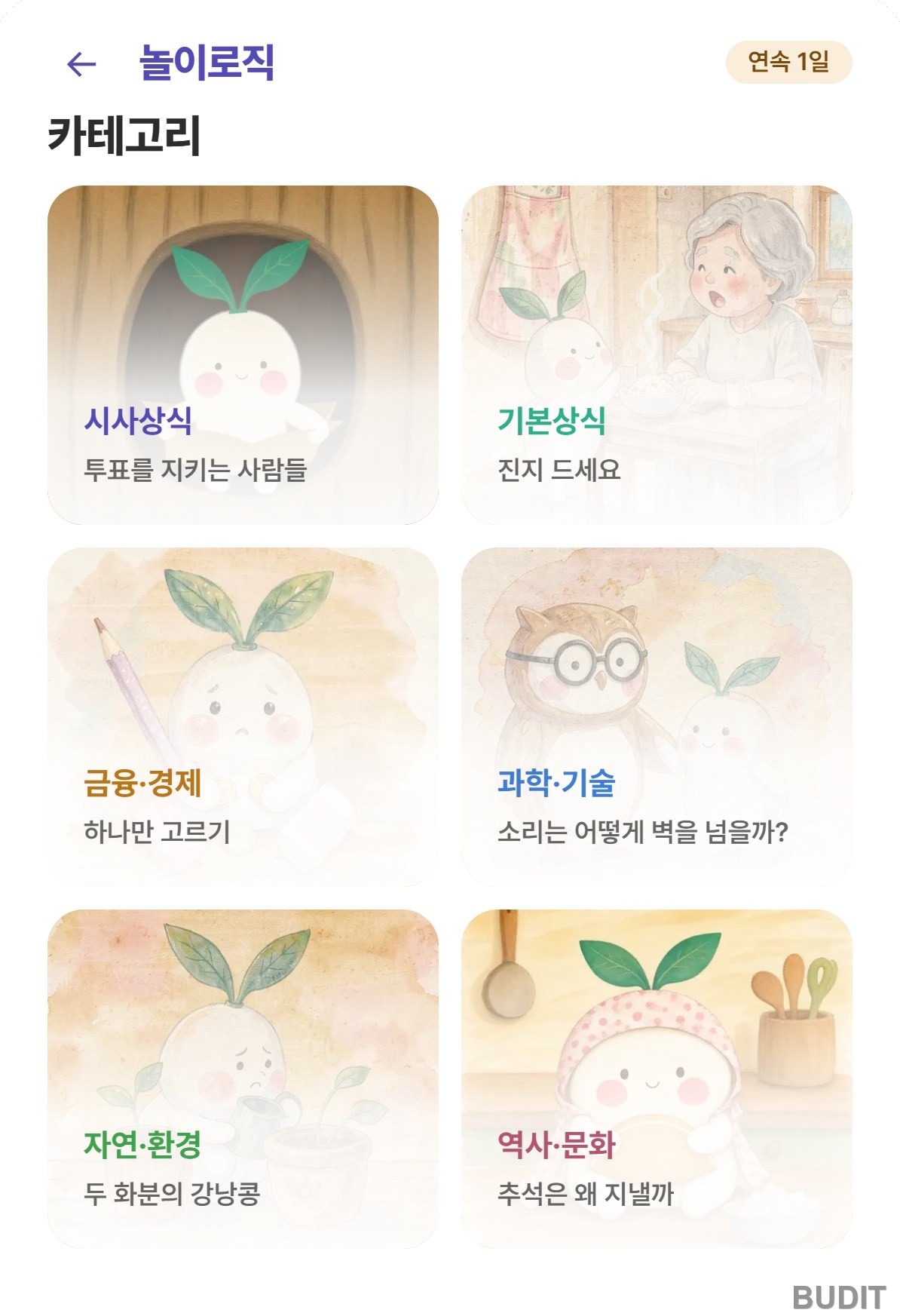
Photo: 『NoryLogic』 categories (as of Nov 5, 2026). Six strands, from current affairs to science and technology, so the child can keep reading in the direction they asked about. See the categories
Questions people ask
From what age can we watch the news together? News video as it is, is hard and intense for early primary children. An adult choosing one item and retelling it in a child's words works from the preschool years.
What if I don't know the answer either? 『I don't know either, shall we look it up together?』 is the best answer. Finding out what you do not know is itself how media is read.
What about frightening news? If the child asked, do not avoid it, but answer briefly. One fact, one thing adults are doing about it, and one line about how our own home is doing is enough.
How this continues in Budit
The three steps in the image at the top are the order for reading the news together with 『NoryLogic』.
- 『The news in a child's words』: NoryLogic rewrites topics chosen from the news as stories at a child's level, and marks them 『rewritten from a news article』 under the title.
- 『Read with three questions』: the comprehension quiz covers 『what is it』, and the reasoning question covers 『why is that』 and 『what then』. After choosing an answer, the child writes a reply to 『why do you think so?』 in their own words.
- 『Keep reading where the question came from』: in the categories, pick the strand the child was curious about, such as current affairs or science and technology, and read the next story.
If you are new, start with Getting Started with NoryLogic to see the order of one session.
Related reading: Where to Start Explaining Hard News 『One Basic Concept First』, Children Who Trust AI Answers As Is 『Automation Bias and the Habit of Thinking First』, The Power of 『Why Do You Think So?』 『Explaining It Yourself Deepens Learning』
References
- Hobbs, R. and Frost, R. (2003). Measuring the acquisition of media literacy skills. Reading Research Quarterly. View the paper
- Jeong, S. H., Cho, H. and Hwang, Y. (2012). Media literacy interventions: A meta analytic review. Journal of Communication. View the paper
- Rosenshine, B., Meister, C. and Chapman, S. (1996). Teaching students to generate questions: A review of the intervention studies. Review of Educational Research. View the paper
- Korea Press Foundation (2025). 2025 survey of media use among Korean teenagers.
This article shares general information about development and education. Every child grows at their own pace. For specific concerns, please consult a pediatrician or a development specialist.