



How One Story a Day Adds Up
Two hours crammed into the weekend, or ten minutes every day: which one stays? Research points to short and daily. And what makes it daily is not the child's willpower, but a small frame that fixes 『when, where and what』. Here is what research says about how habits form, and how to keep one story a day going at home. NoryLogic is currently in Korean.
At a glance
| Question | What the research says |
|---|---|
| How long does a habit take | A new behavior took 66 days on average to become automatic, ranging from 18 to 254 days |
| What if a day is missed | Missing one day did not materially affect habit formation |
| What raises follow through | People who decided 『when and where』 in advance reached their goals more often |
| Cramming or spreading out | With the same study time, those who spread it out remembered longer |
Habits take 66 days on average, and one missed day is fine
Lally and colleagues asked people to choose one new behavior to do every day in the same situation, and to record daily how much it happened 『without thinking』. Reaching the top of that automaticity curve took 66 days on average, and varied from 18 to 254 days depending on the person and the behavior. Missing a single day did not materially affect how the habit formed (Lally et al., 2010). That is longer than the saying 『21 days makes a habit』, but one missed day does not mean starting over.
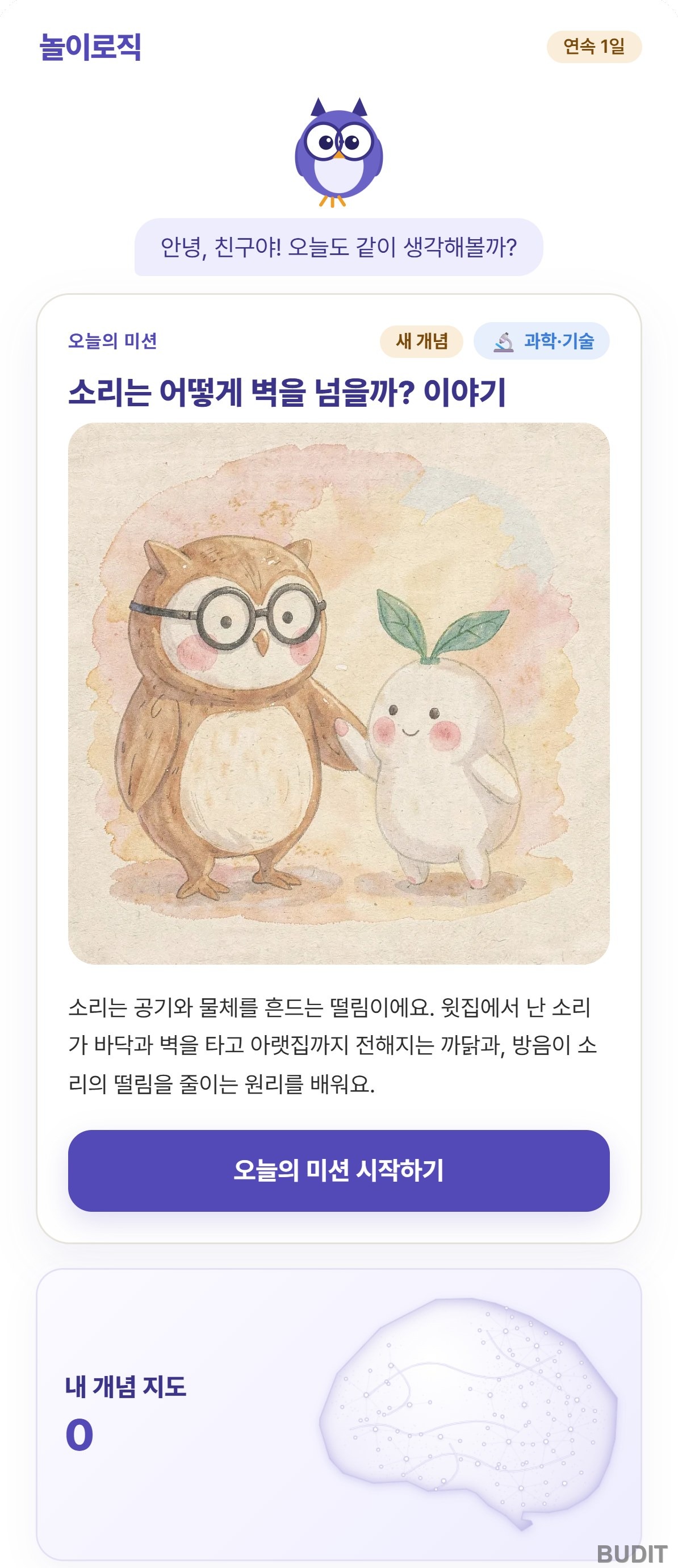
Photo: the 『NoryLogic』 home screen (as of Nov 5, 2026, first visit without logging in). One story for today is already set, and the streak of days appears at the top right. Visit NoryLogic
Deciding 『when and where』 raises follow through
Gollwitzer separated setting a goal from deciding in advance when and where to act, in the form 『when situation X arises, I will do Y』. He called the latter an 『implementation intention』. Across many experiments, people who formed implementation intentions acted on their goals more often than people who only set the goal. When the situation arrives, the action follows without a fresh decision (Gollwitzer, 1999). 『Let's work hard』 is weaker than 『one story at the table after dinner』.

Photo: the 『NoryLogic』 settings screen (as of Nov 5, 2026). Turning on the 『daily learning reminder』 sends a notification at the chosen time. The reminder remembers the 『when』 for you.
Spreading out beats cramming
Cepeda and colleagues gathered hundreds of experiments comparing studying the same material in one block with studying it across separate days. With the same total study time, those who spread it out remembered more later, and the difference appeared again and again from young children to adults (Cepeda et al., 2006). This is why ten minutes a day lasts longer than two hours on the weekend.

Photo: the 『In a week』 preview of the 『concept map』 (as of Nov 5, 2026, projected at one session a day). One story a day lights up about ten concepts in a week.

Photo: the 『In a year』 preview of the same map (as of Nov 5, 2026, projected at one session a day). Preview numbers are projections and may differ from actual results. See the concept map
What to do at home
- Fix one time and one place. Attach it to something that already happens, such as 『at the table after dinner』, and there is nothing extra to remember.
- One story at a time. Even if the child wants more, save it for tomorrow. Wanting more pulls the next day along.
- Let a missed day go. One missed day has little effect on the habit. Do not do 『two today because we missed yesterday』.
- Prepare instead of resolving. Keep the device in its place and the reminder on, and the child has fewer decisions to make.
- Look at what has piled up together. Once a week, look at the lit concept map or the journal entries and say 『look how much we did』.
Questions people ask
Can we rest on weekends? Resting does not break the habit. But if the 『when』 wobbles, a fresh decision is needed again, so on weekends it is easier to keep the same place and change only the time.
What if the child does not want to? Sitting down with a smaller amount is better than skipping. Reading alone and stopping is fine. What matters is that sitting in that place at that time continues.
How many days until it runs on its own? It varied from 18 to 254 days by person and behavior. Expect an adult to hold the frame for about two months.
How this continues in Budit
The three steps in the image at the top are the order for keeping one story a day going with 『NoryLogic』.
- 『Open it at the set time』: in NoryLogic today's mission is already chosen when you arrive, so there is nothing to pick. The 『daily learning reminder』 can be turned on in settings.
- 『Do one story』: reading, a comprehension quiz, a reasoning question and a thought journal make one session of about ten minutes.
- 『See what has piled up』: finished stories light up on the concept map, and the streak of days shows on the home screen.
If you are new, start with Getting Started with NoryLogic to see the order of one session.
Related reading: Why Game Review Helps Words Stick 『Retrieval Practice and Spacing』, Getting Started with NoryLogic 『One Story a Day, Read and Think Three Times』, Screen Time, Alone or Together 『The Same Screen Turns on Who Is Sitting Beside the Child』
References
- Lally, P., van Jaarsveld, C. H. M., Potts, H. W. W. and Wardle, J. (2010). How are habits formed: Modelling habit formation in the real world. European Journal of Social Psychology. View the paper
- Gollwitzer, P. M. (1999). Implementation intentions: Strong effects of simple plans. American Psychologist. View the paper
- Cepeda, N. J., Pashler, H., Vul, E., Wixted, J. T. and Rohrer, D. (2006). Distributed practice in verbal recall tasks: A review and quantitative synthesis. Psychological Bulletin. View the paper
This article shares general information about development and education. Every child grows at their own pace. For specific concerns, please consult a pediatrician or a development specialist.