


How to Read the Concept Map
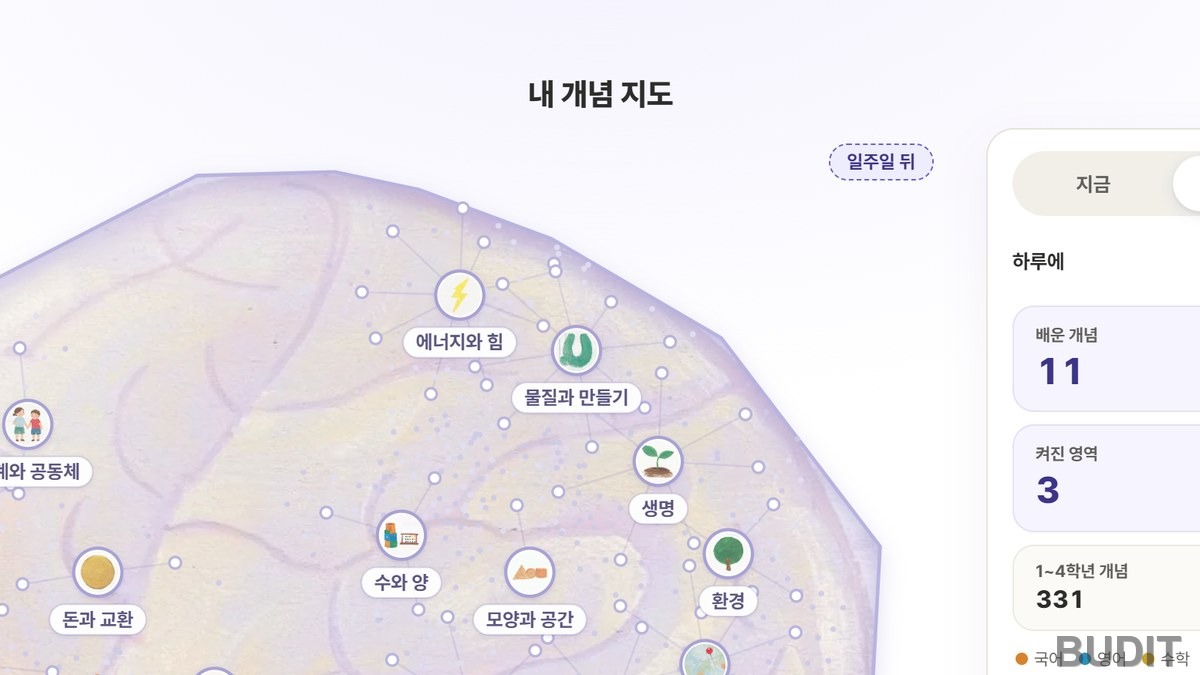
It is hard to see at a glance how the story a child read today connects to what they learn at school. The 『concept map』 in 『NoryLogic』 lights up, as dots on a brain shaped map, the primary school curriculum concepts linked to the stories the child has finished. Here is what sits on the map, what the numbers mean, and how to look at it together at home, with real screens. NoryLogic is currently in Korean.
At a glance
| What | Details |
|---|---|
| Where to open it | The concept map box on the home screen, or norylogic.com/brain |
| Based on | The 611 achievement standards of Korea's 2022 primary school curriculum |
| Three layers | 19 pieces, 88 areas, 611 standards |
| When dots light up | When a session is finished, for the concepts linked to that story |
| Previews | 『Now』, 『In a week』, 『In a year』, and how many sessions a day |
Open it from the home screen
On the home screen, tap the concept map box below today's mission and the map opens to fill the screen. The number in the box is the count of concepts lit so far.
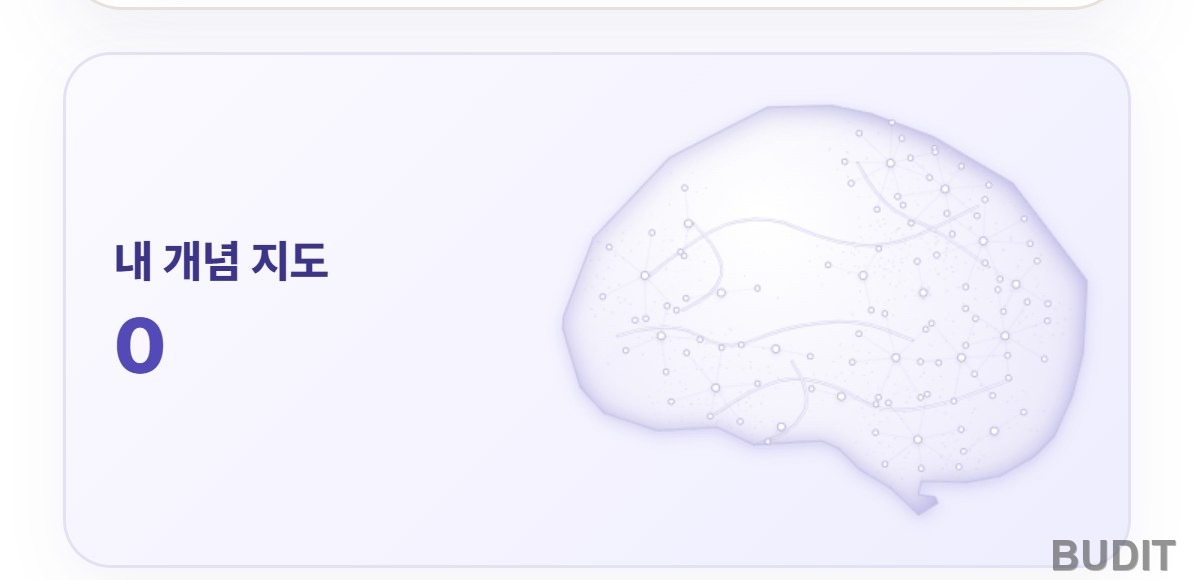
Photo: the concept map box on the 『NoryLogic』 home screen (as of Nov 5, 2026, first visit without logging in). Open NoryLogic
The map has three layers
- 19 『pieces』: the large labeled spots on the map. They divide the world by where a child meets it: me, relationships and community, rules and fairness, money and exchange, speech and writing, stories, media and information, culture and diversity, numbers and amounts, shapes and space, places and regions, time and history, living things, matter and making, energy and force, Earth and space, environment, expression and appreciation, and body and movement.
- 88 『areas』: the middle dots around each piece. They are the areas the curriculum sets for each subject, such as force in daily life in science, carried over as they are.
- 611 『standards』: the smallest dots. They are the learning goals Korea's 2022 primary school curriculum sets across eleven subjects: 100 for grades 1 and 2, 231 for grades 3 and 4, and 280 for grades 5 and 6.
Curriculum codes never appear on screen. Tapping a dot shows only a name a child can read.
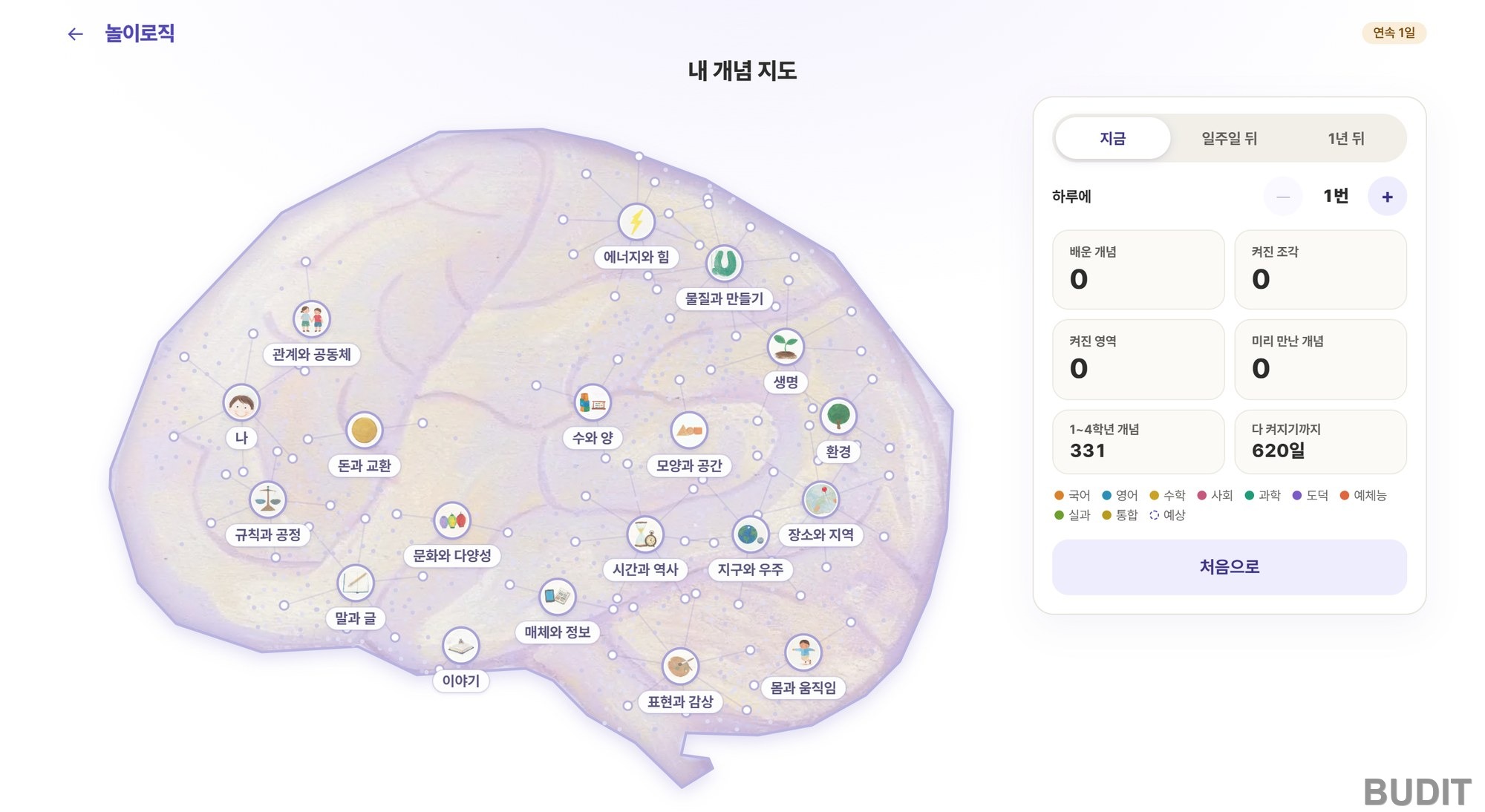
Photo: the 『Now』 view of the concept map (as of Nov 9, 2026, before any story is finished). The labeled spots are the 19 pieces. See the concept map
Finishing a story lights up dots
When a session is finished, the standards linked to that story light up in subject colors, and the light spreads to their areas and pieces. One story is linked to between one and four standards. The colors stand for Korean, English, math, social studies, science, ethics, arts and physical education, practical arts and integrated subjects, and dots drawn with a dotted line are projections of what will light up next.
The dots that can light up are the 331 concepts for grades 1 to 4. The 280 concepts for grades 5 and 6 are counted separately as 『concepts met early』 when a story touches them first.
How to read the six numbers
- 『Concepts learned』: the number of standards lit so far.
- 『Pieces lit』: how many of the 19 pieces have a light on.
- 『Areas lit』: how many of the 88 areas have a light on.
- 『Concepts met early』: how many grade 5 and 6 concepts a story has touched first.
- 『Concepts for grades 1 to 4』: the total that can light up, 331.
- 『Days until all lit』: the projected number of days until nearly all grade 1 to 4 concepts are lit at the pace you set.
『Now』, 『In a week』, 『In a year』
The three buttons at the top right switch the map. 『Now』 shows only what is really lit. 『In a week』 and 『In a year』 are previews of how far the map will light up if the child keeps going. Change how many sessions a day (one to four) with the buttons next to 『per day』 and the numbers change with it. Leave the map open and it moves to the 『In a week』 preview after a moment.
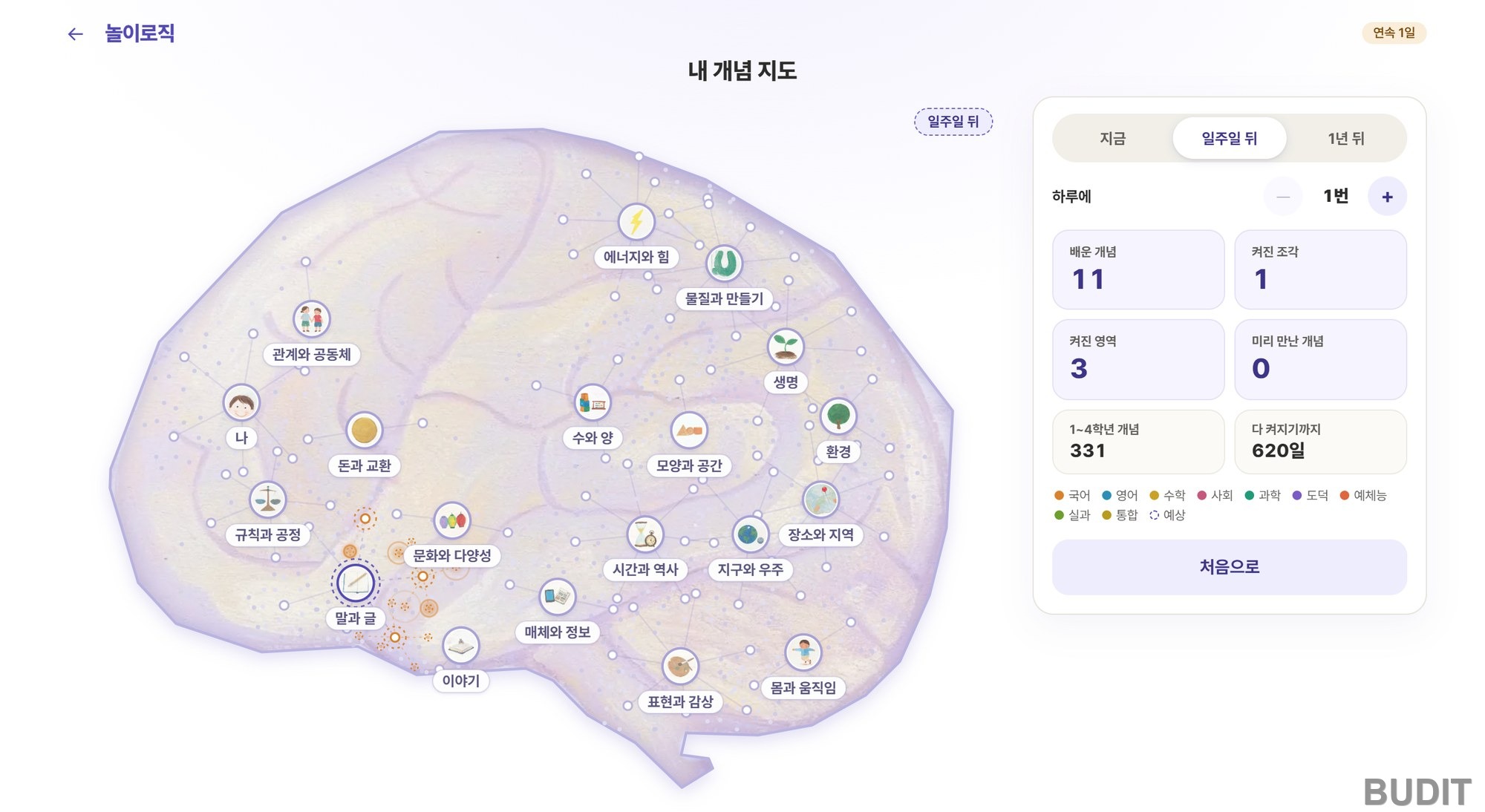
Photo: the 『In a week』 preview (as of Nov 5, 2026, projected at one session a day).
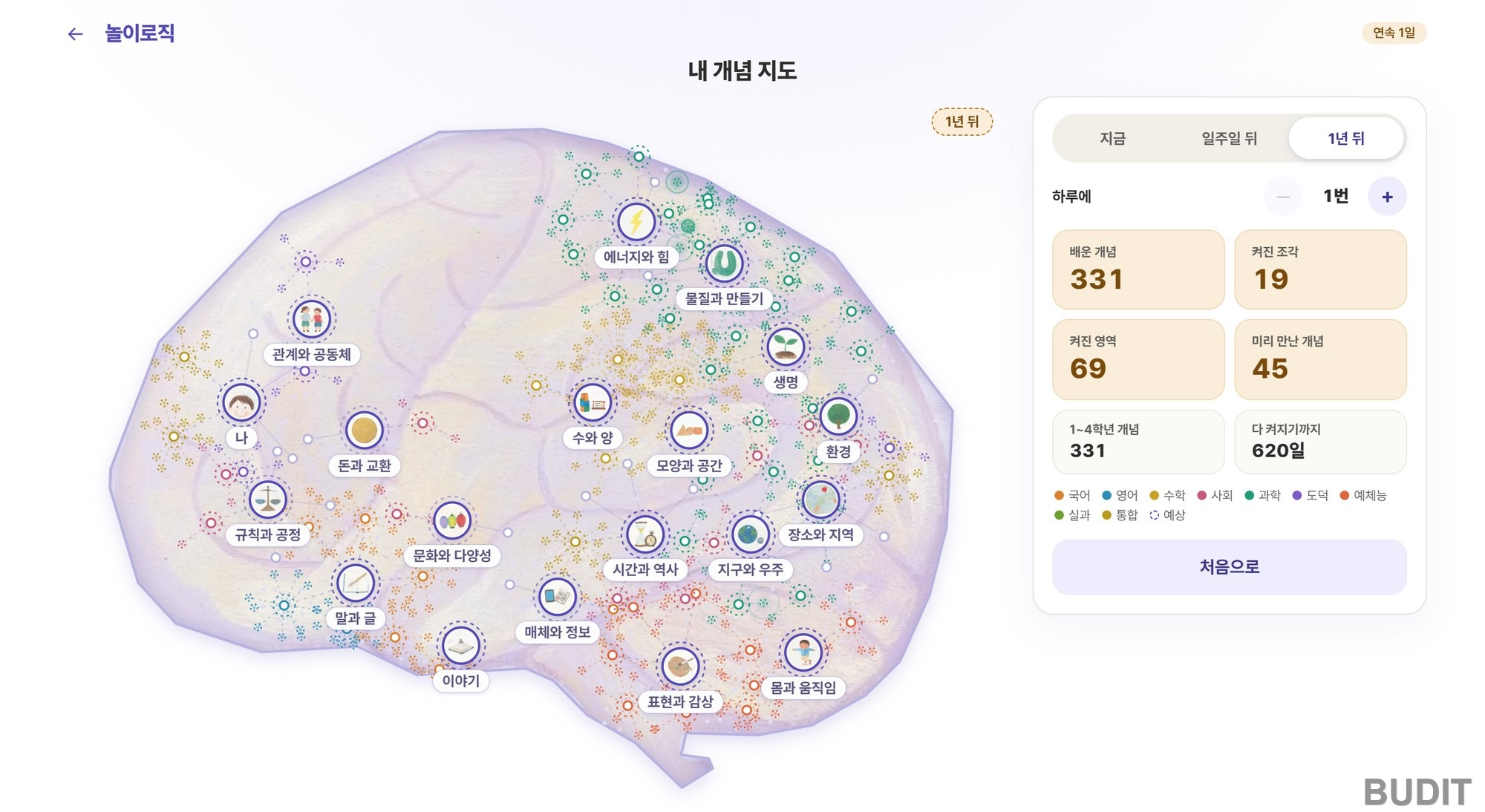
Photo: the 『In a year』 preview (as of Nov 5, 2026, projected at one session a day). Preview numbers are projections and may differ from what really happens.
On a phone, the map sits on top and the numbers below.
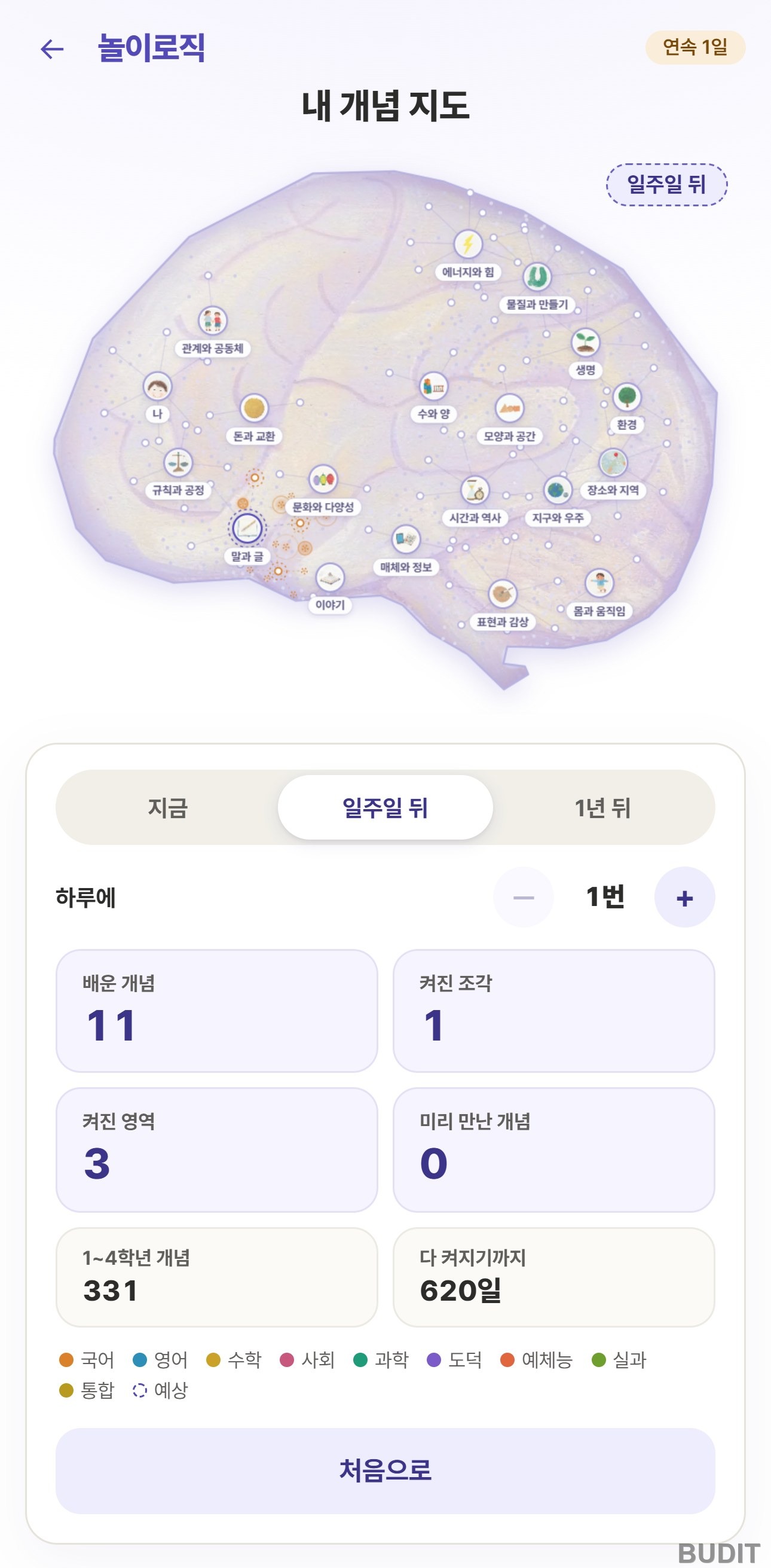
Photo: the concept map on a phone (as of Nov 5, 2026, previewing one week ahead).
It connects to the focus areas
The 『focus areas』 chosen on the first visit are these same pieces. Choose 『energy and force』 or 『money and exchange』 and stories that cover that piece are recommended first when today's mission is picked. You can change this any time under 『Settings』 at the bottom of the home screen.
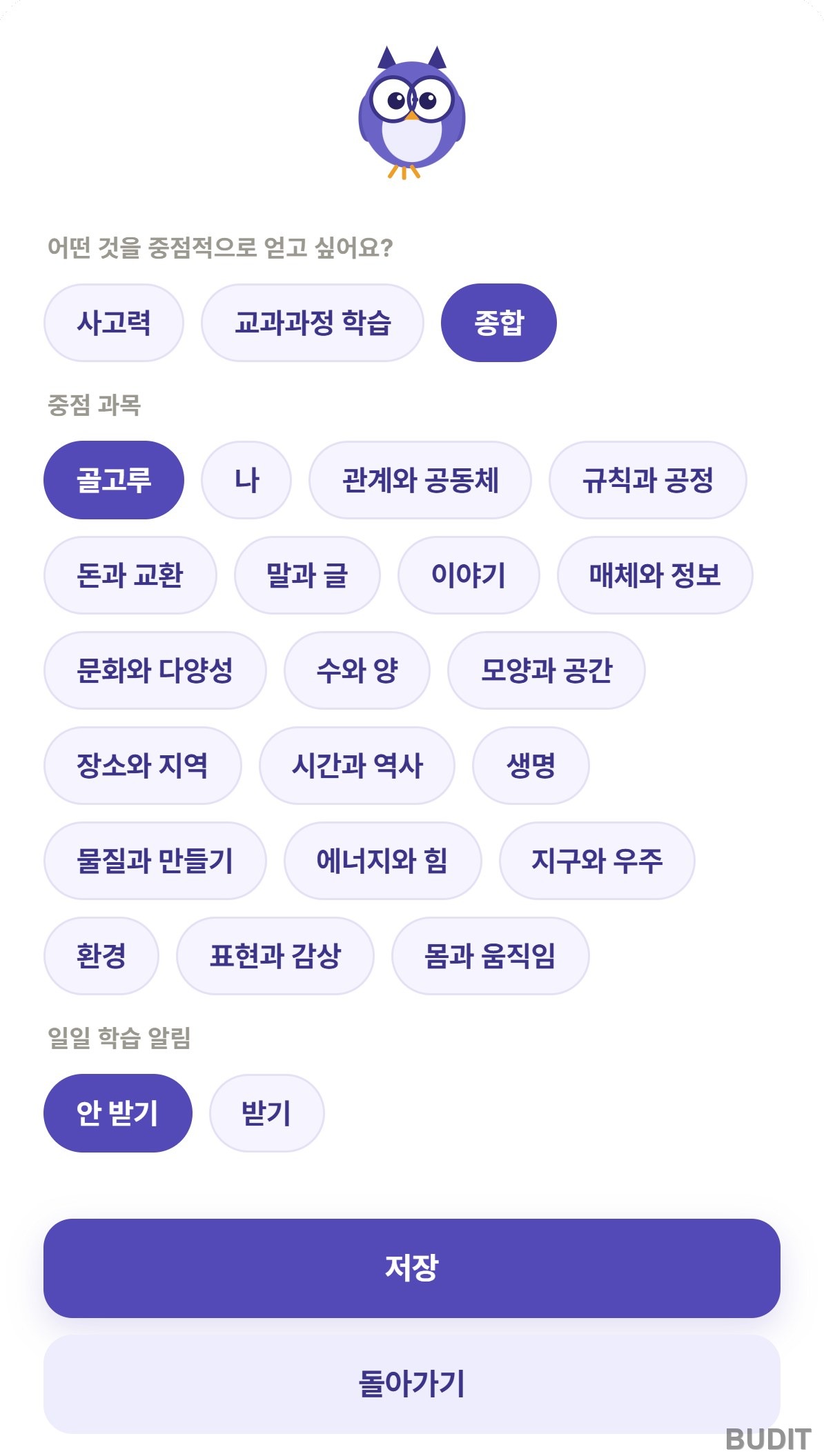
Photo: the 『NoryLogic』 settings screen (as of Nov 5, 2026). The focus area names are the same as the piece names on the map.
How to use it at home
- Look at it together once a week. Point to a spot that lit up and ask 『which story was this?』.
- Find the empty pieces together. Decide what to read next with 『shall we light this one up next week?』.
- Do not make the numbers the goal. Whether the child can retell the story in their own words matters more than the number of dots.
- Do not compare it with the school schedule. The map is not a test range. It shows how wide a world the child has met.
Good to know
- The map can be viewed without logging in. Log in to keep a record.
- 『In a week』 and 『In a year』 are previews. Only the stories the child has finished really light up.
- The links between stories and standards are checked and confirmed by a person.
- The standards follow the 2022 revised national curriculum for primary schools by Korea's Ministry of Education.
- The screens are currently in Korean.
See the concept map · Start NoryLogic
Related reading: Getting Started with NoryLogic 『One Story a Day, Read and Think Three Times』, Where to Start Explaining Hard News 『One Basic Concept First』, Background Knowledge Changes Reading Comprehension 『We Read What We Already Know』